

Nobody with a purchasing budget is buying your technology. They are buying insurance against becoming the person who championed a vendor that failed.
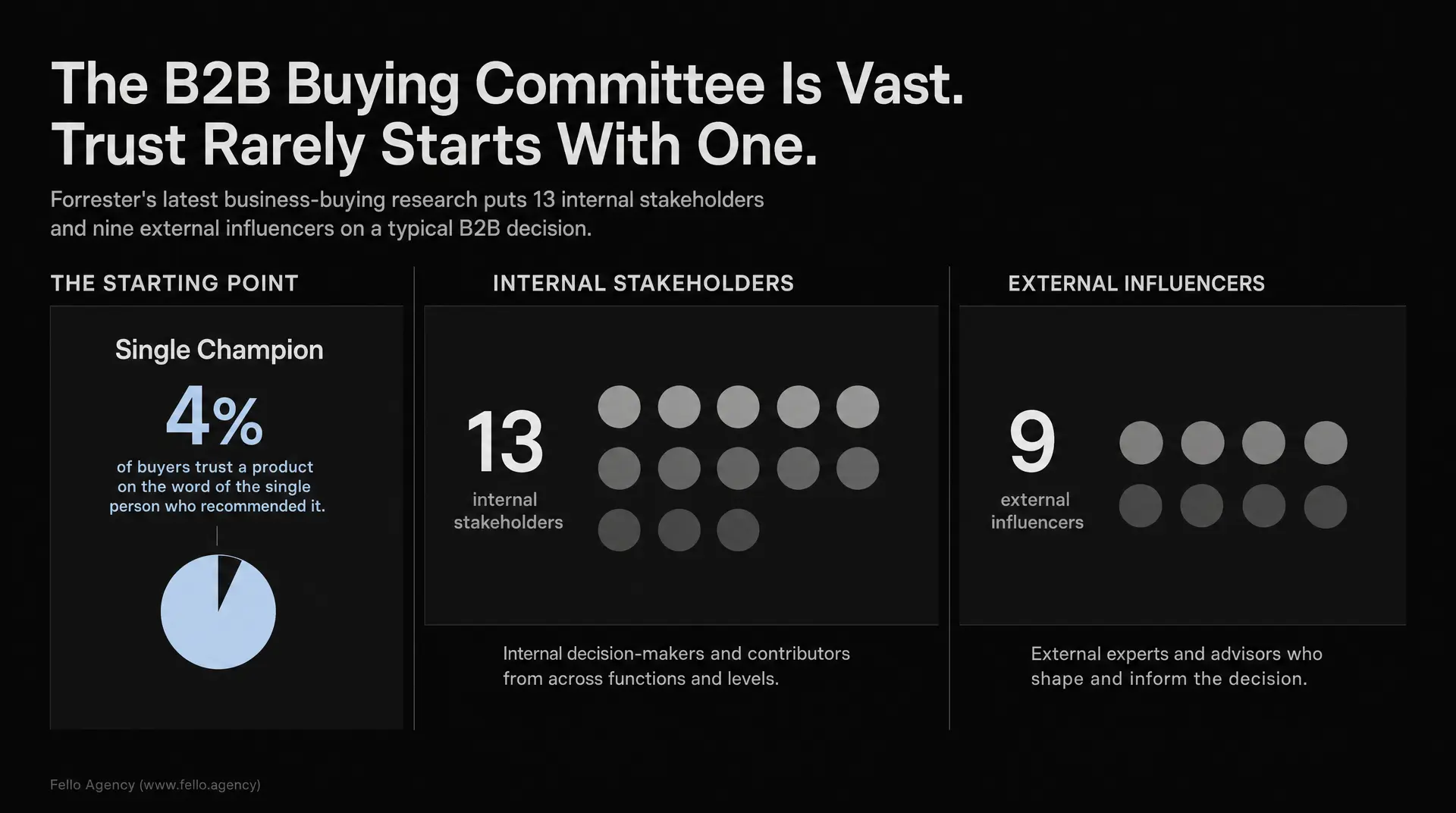
A client of ours lost Amazon on that arithmetic - the science held, the price worked, and still no manager inside would put a name on a company whose brand looked like a weekend Figma project. Only 4% of buyers trust a product on the word of the single person who recommended it, and the rest of the committee has to recognize you on sight.
The founders counted the contract as the loss. They had actually surrendered the right to say "we work with Amazon," the one line that opens the next 10 meetings and makes the next raise easier, and the whole failure was fixable for well under $50,000.
Key Takeaways
Standard marketing budget percentages fail for seed-stage deep tech companies because BCG research shows over 80% of these ventures build physical products without trackable acquisition costs.
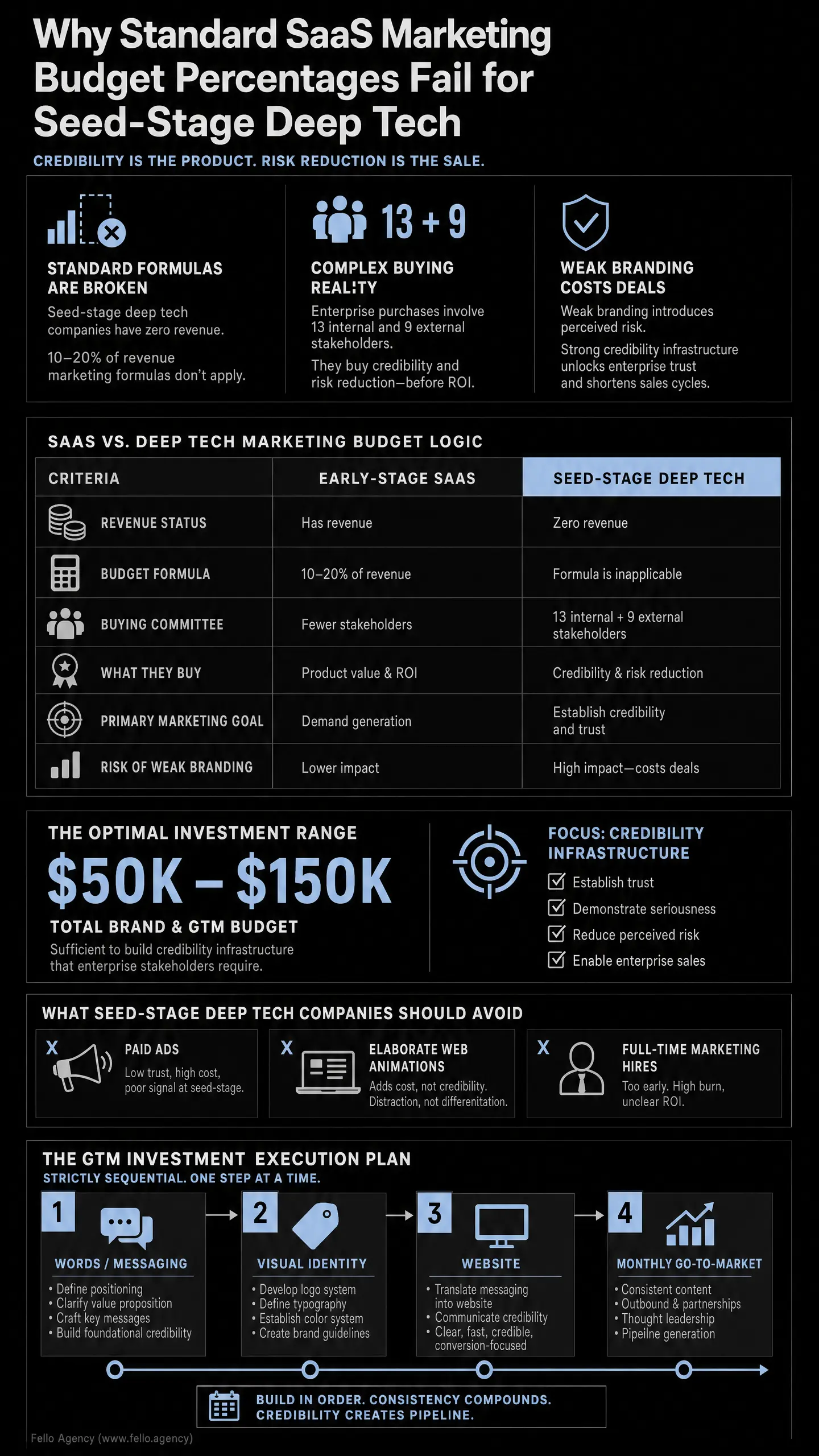
Foundational brand and go-to-market strategy for a seed-stage deep tech startup requires an investment between $50,000 and $150,000 to effectively translate complex technologies for multiple buyer audiences.
Dual-use deep tech startups require higher marketing budgets than single-vertical companies because founders must fund distinct communication strategies and separate the vocabulary used across defense and commercial markets.
Defining messaging alignment must precede visual design because McKinsey's 2026 B2B Pulse identified inconsistent information across internal teams as the primary reason buyers switch suppliers.
Visual design fundamentally shapes buyer trust, with Stanford web credibility research demonstrating that 46% of user evaluations regarding a website's legitimacy rely directly on visual elements.
Deep tech startups should prioritize desktop-first website design because approximately 80% of the sector's web traffic originates from computers rather than mobile devices.
Seed-stage deep tech startups should avoid paid advertising campaigns because their total addressable markets are typically too small to generate statistically significant A/B testing data.
Why Do Standard Marketing Budget Percentage Rules Fail for Seed-Stage Deep Tech Companies?
Search this question and every answer lands in the same place. Spend 10 to 20% of the raise on marketing. Sometimes 15 to 25% against runway.
Those benchmarks come from companies that already have revenue. Gartner's 2024 CMO survey put the average marketing budget at 7.7% of company revenue. A seed-stage deep tech company has no revenue to take a percentage of.
The SaaS math runs on acquisition cost, lifetime value, and payback period. It assumes each customer costs a knowable amount and spending more gets you more. Deep tech has none of that. BCG's investor research found that more than 80% of deep tech ventures build physical products and take 25 to 40% longer between funding stages than other tech companies. Nobody clicks an ad and becomes your customer. There is no CAC to optimize.
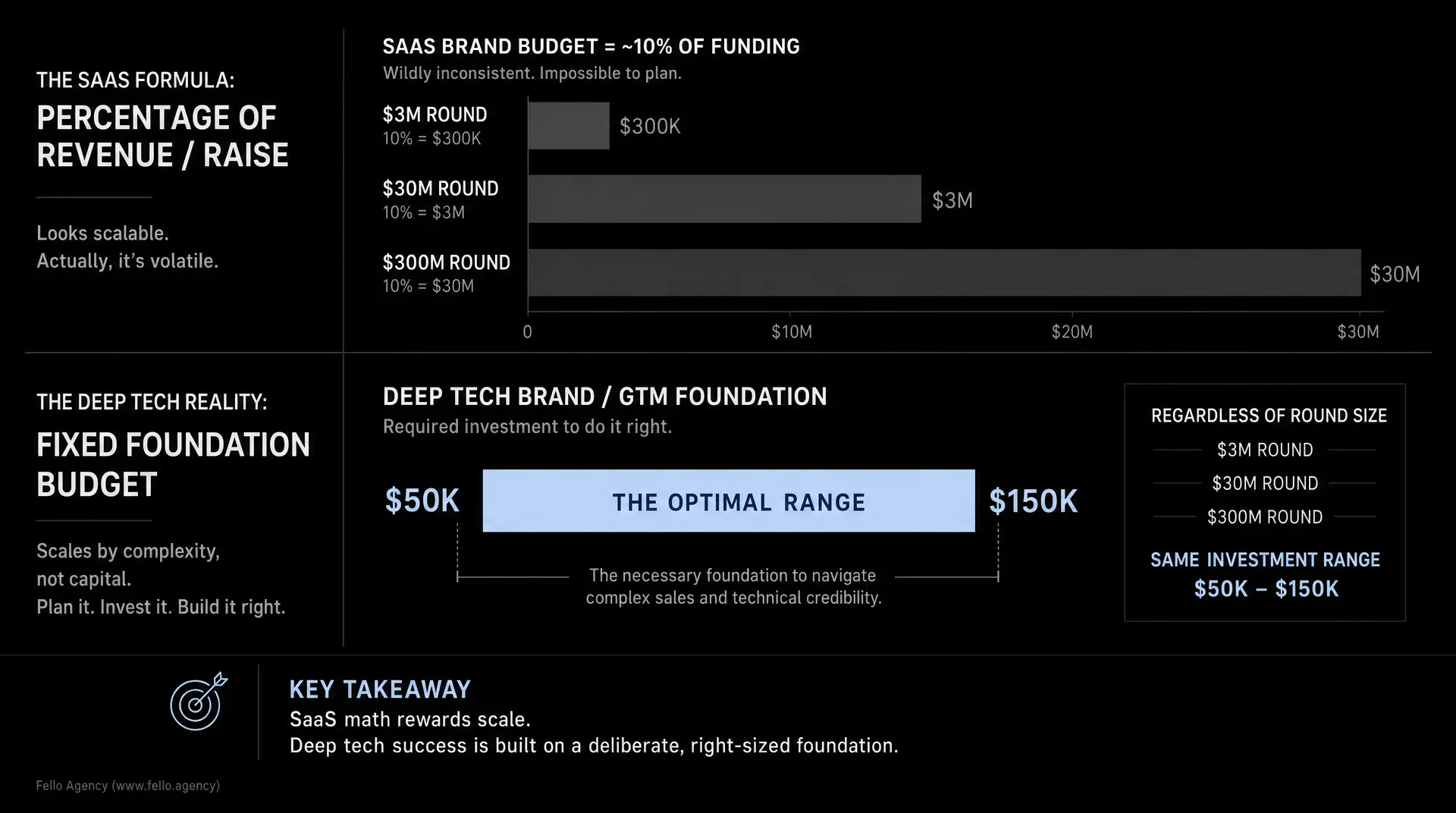
Run the formula on a $3 million seed and it hands back $300,000 to $600,000. Look, I've watched founders take that seriously. At that spend you're buying activity. Run it on a $300 million raise and it says $30 million, when that company needs roughly $200,000 of foundational brand and go-to-market work. The formula is off by two orders of magnitude at both ends, because the work scales with how hard your technology is to explain. The size of the round has nothing to do with it.
What Factors Determine Brand and Go-To-Market Budgets for Seed-Stage Deep Tech Startups?
Below about $30,000, the output stops holding together. Nobody gets enough hours to understand the technology, so the deck says one thing, the site says another, and the founder says a third. We run a 60-second test at Fello. If we can't explain a client's product to a stranger in a minute, every asset we make will be surface level. Under $30,000, nobody ever gets to the 60 seconds.
Above $150,000 at seed, you're buying things you don't need still. Technical buyers spot over-branding a mile away. A pre-revenue company with a $200,000 identity system looks like the money went to the wrong place.
Inside the range, two things move the number: how hard the company is to explain, and how many audiences have to understand it. Forrester's latest business-buying research puts 13 internal stakeholders and nine external influencers on a typical B2B decision. Your one-pager gets forwarded a dozen times to people who never met you, and every one of them has to get the same story.
A medical device company selling to one buyer type sits at the low end. A defense company that has to be legible to investors, primes, and a program office all at once sits at the high end. Dual-use sits higher still, because you're funding two communication strategies and policing the vocabulary between them. We had an additive manufacturing client mixing defense and commercial vocabulary in the same materials. They were failing in both markets. In my experience the vertical matters far more than the round size.
And for anyone who thinks they're buying a logo: roughly half of that money goes to strategy and research. The visuals are the other half.
What Is the Long-Term Cost of Weak Visual Identity and Branding in Deep Tech?
We worked with a company that had a real shot at Amazon. The kind of engagement that changes a company's trajectory.
They lost it. Not on technology, not on price. They couldn't get champions inside Amazon to put their name forward, because they didn't look legitimate enough to be worth the internal risk. The visual identity was weak. There was no one-pager to send after the meeting. Nobody on their side described the company the same way twice.
A mid-level manager will not stake a reputation on a vendor whose brand looks like a weekend Figma project, because that manager is the one who gets blamed if it goes sideways. LinkedIn's B2B Institute found that only 4% of buyers purchased a product known solely by the function recommending it. The rest of the committee has to recognize you too.
Founders count the contract as the loss. The bigger loss was never getting to say "we work with Amazon." That one line opens the next 10 conversations, makes the next round easier, and gives every future buyer a reason to take the first meeting. Reference customers compound. They lost an asset that would have paid out for years.
Everything that went wrong was fixable for well under $50,000.
Why Is an Outdated Website a Major Positioning Risk for Deep Tech Startups?
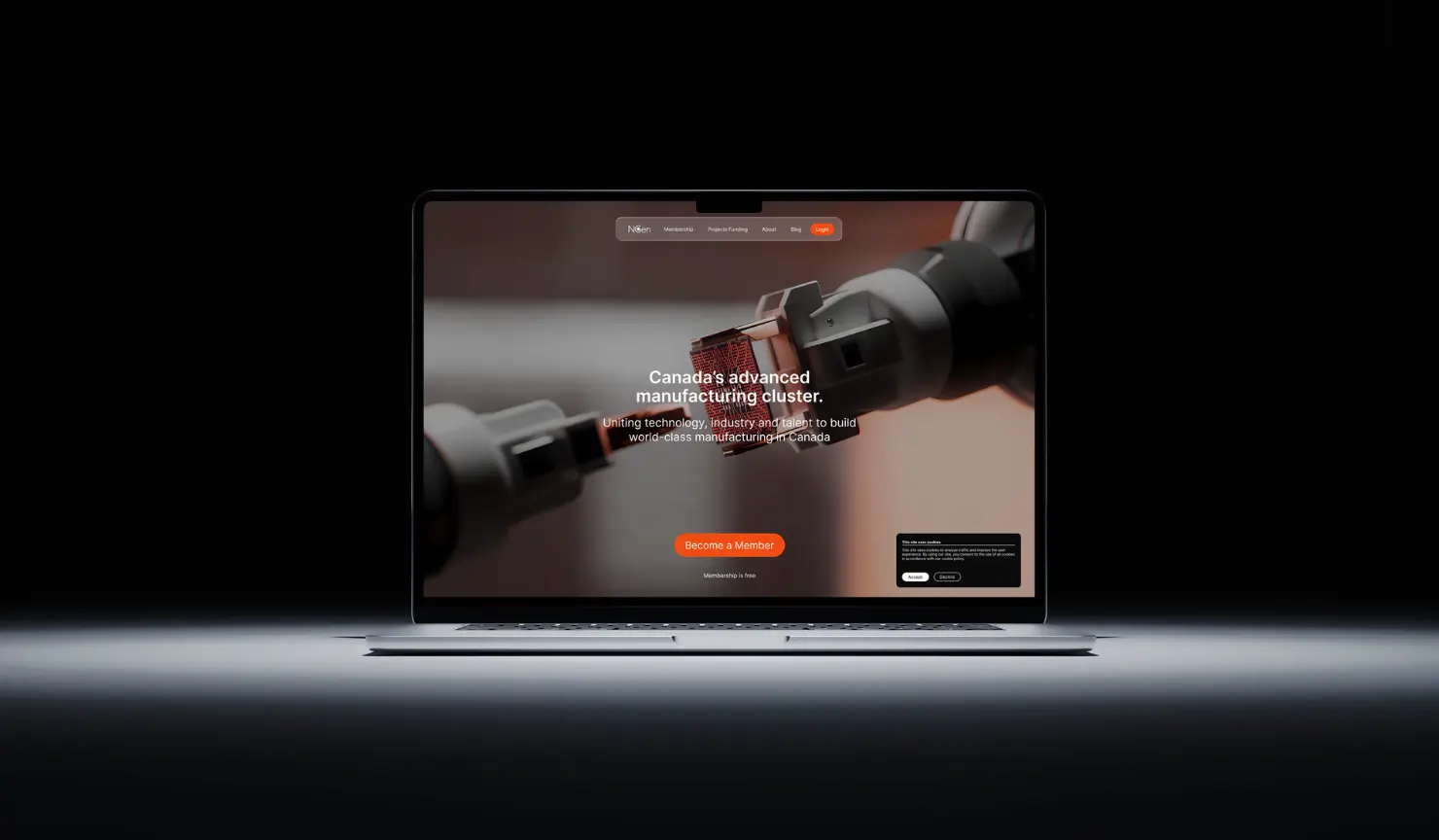
Roughly seven in 10 deep tech companies that call Fello say a version of the same sentence. Our website doesn't reflect what we actually do anymore.
It comes out mid-call. We pull up the site to look at it together and they stop us. Ignore the website, let me send you the deck, it's more current.
So the single asset every investor, customer, and journalist checks first is the one the company has already privately written off. 6sense found that 81% of buyers choose their preferred vendor before they ever speak with sales. Your salesperson hasn't said a word, and the site has already told the buyer whether you're legitimate.
There's usually a pivot underneath it. The company raised its seed on a vision-stage brand built to excite investors. Then the product moved, from quantum sensors to quantum networking, and the wrapper stayed. Procurement teams buy credibility, and a vision brand doesn't carry any. When sales spends the first 10 minutes of every call explaining what the company is not, that's a positioning failure baked into the identity, and it gets more expensive every quarter it stays open. I call it the "we'll brand it after Series B" graveyard, and it's full.
What Is the Optimal Sequence for Deep Tech Brand and Go-To-Market Investments?
If you take one thing from this piece, take the sequence. Most wasted money gets spent in the wrong order.
The words come first. What you do, who it's for, why it matters, said the same way by everyone in the company. If you can only afford one thing, buy this. It sits upstream of the deck, the website, every sales call, and the next raise. McKinsey's 2026 B2B Pulse found that inconsistent information across teams is now the top reason buyers switch suppliers. Three versions of the story from three people costs you deals now and renewals later.
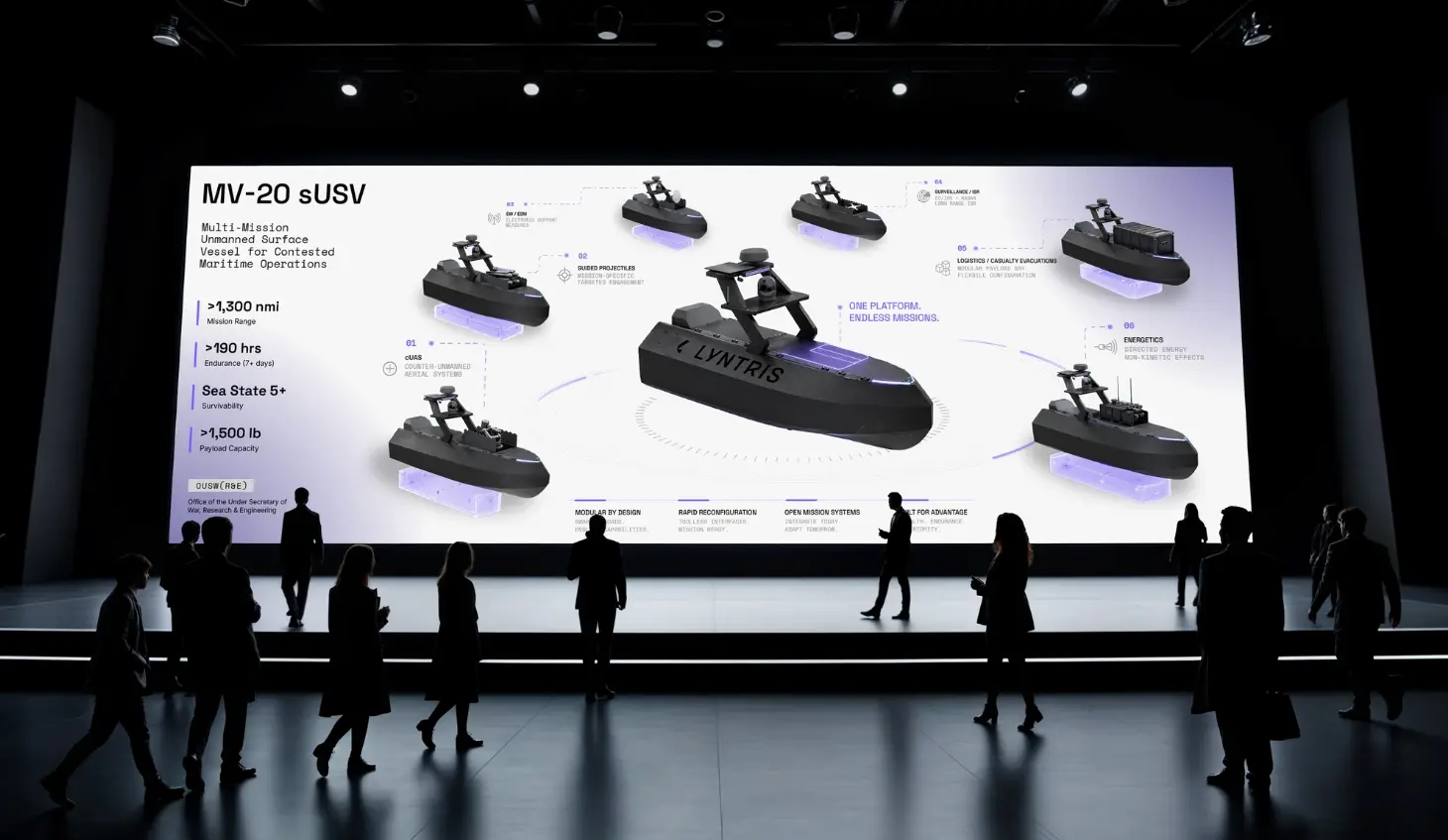
Our version starts with interviews in a fixed order. The client's customers first, then sales, then marketing, then leadership. The question that unlocks most of it: what is the biggest thing your customers don't understand about you? Those four groups usually describe four different companies. You know the work is landing when all of them start using one sentence. For Lintris, a defense company building autonomous systems, that sentence became "the quiet layer of modern defense." It names what the program manager gets and never mentions the technology.
Only then do you touch the visuals. Logo, colors, typography, a visual guide. This is where credibility gets manufactured, and it's less subjective than technical founders think. Stanford's web credibility research found that 46% of what people said while judging a site's credibility was about visual design. We had a manufacturing and medical device client whose brand didn't land until we changed the typography to IBM Plex, and the whole thing immediately read as professional. Founders want to start here because it's the part you can see. Alignment is invisible and it's worth more.
The website comes third and applies the first two. A short mission statement in the H1, proof directly under it, and a reason for a serious buyer to keep scrolling. Technical terminology goes on solution pages. Above the fold is for the outcome. We build on Framer so marketing can publish in three minutes without a developer, and we design desktop first because about 80% of the traffic we see for deep tech clients comes from a computer. Nobody approves a seven-figure purchase on a phone.
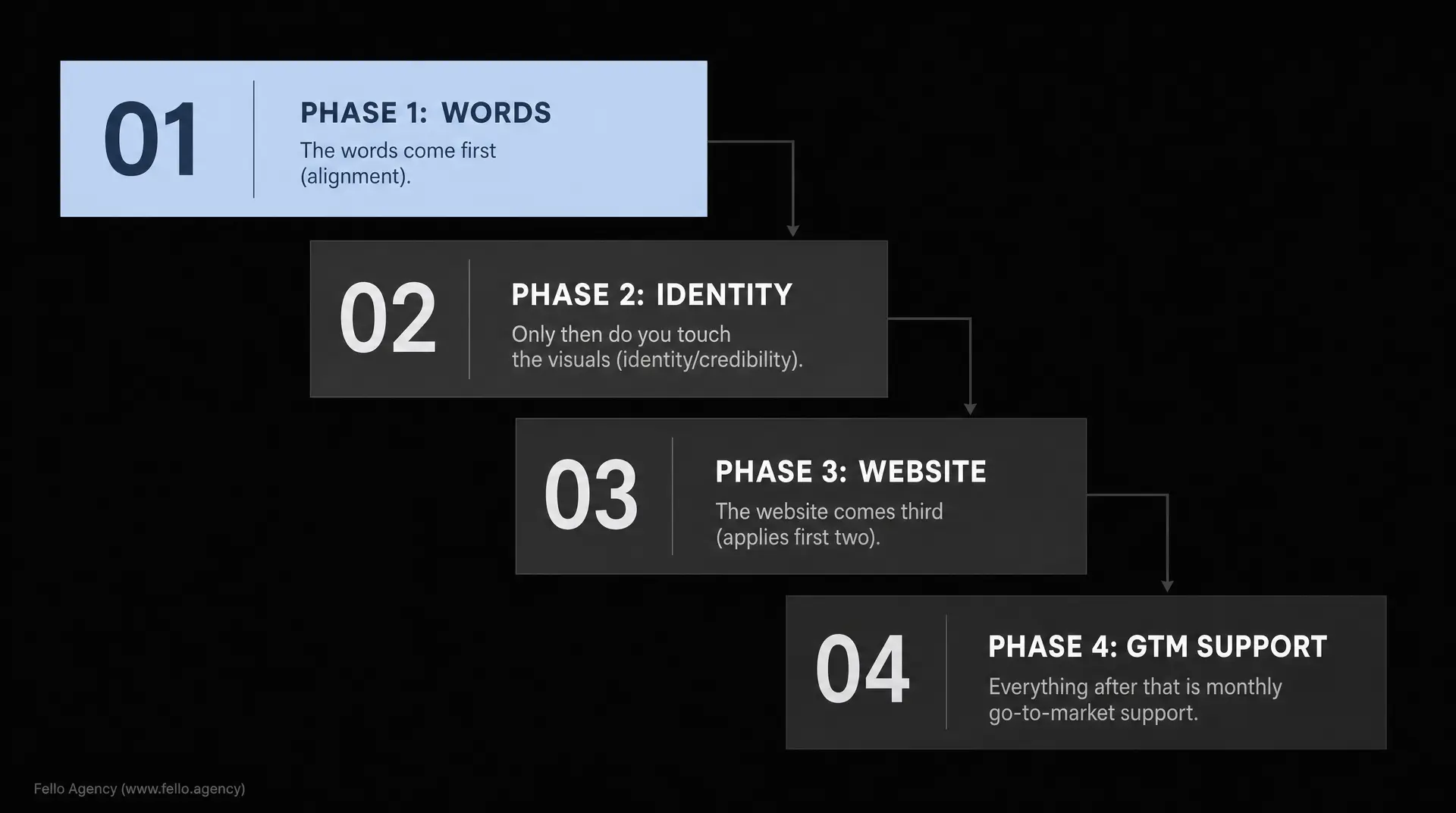
Everything after that is monthly go-to-market support, once the foundation exists. With $40,000, you do the words properly and stop. With $150,000, you do all four. What you never do is start at the website, which is what most companies do and why so many end up with a beautiful site that says nothing.
Which Marketing and Go-To-Market Investments Should Seed-Stage Deep Tech Companies Skip?

Paid advertising, first. Your buyer will not find you through a LinkedIn ad, and your market is too small for the data to mean anything. We've built strategy for a defense company whose realistic total addressable market was five people on the planet. You cannot A/B test five people. If a board member pushes for ads, ask what cost per lead would actually tell you. In deep tech, CPL rewards volume, and volume at seed means students and consultants filling out your form.
Skip the elaborate website too. Every custom interaction and scroll animation is money not spent on figuring out what you're saying.
And skip the full-time marketing hire until Series A. This one gets pushback, usually from marketers. At seed there isn't enough surface area for a full-time person to work on. The real argument for the Series A hire is ownership of the record: which messages land with which buyers, which channels produce real conversations, what sales keeps hearing on calls. That job only exists once there's enough activity to measure.
If you're the marketing leader who joined at seed anyway, you're the general contractor for the foundation, and nobody needs programs still. Be honest with the CEO about the fractional CMO math too. The retainer is the small number. The $30,000 to $50,000 a month of execution needed to implement the strategy is the real one.
When Should Deep Tech Startups Initiate Brand and Go-To-Market Strategy Development?

The work takes four to six weeks. If you're already out raising your Series A, you're six weeks too late, because the deck is circulating right now saying whatever it currently says. Companies that get this right treat the seed close as the trigger and call before the round closes or in the first weeks after.
It can go faster when it has to. We built a complete brand and website for a haptics company in a month and a half so they could launch at CES and open conversations with major OEMs. It worked because nobody ran a democratic feedback loop. We tell clients what's going to happen rather than presenting three options, and we ask during scoping how many decision-makers will be involved, because that headcount forecasts the timeline better than anything else.
How Should Founders Frame Brand Investments as Credibility Infrastructure to a CFO?

Don't use the word brand.
Say communication strategy. Say marketing investment. A $50,000 website goes into the spreadsheet as a lead generation asset with a forecast attached: this many inbound conversations, at this quality, inside this window. When we tightened Sphere's brand guidelines and rebuilt their site around numbers and their buyers' actual working lives, traffic jumped 50%, lead flow tripled, and the enterprise conversations that followed were a tier up.
I use Fello's own rebrand as the case study in these rooms. We moved from a purple and black identity to white, black, and gray specifically to build trust faster, and the caliber of incoming deals changed. Then I pull up the client's top three competitors. In nearly every landscape review I've sat in with a CEO and CFO, all three have top-tier design and messaging. Treat that as the entry fee.
At the end of the day, the frame that lands with finance is risk. Brand investment is credibility infrastructure. A consistent system shortens procurement because it lowers perceived vendor risk in front of a committee. When a lead arrives already understanding what you do and why it fits, you're kind of skipping a level. The vetting phase is gone and you go straight to negotiation. Track it through email response times and how easily deals move in the days after launch, rather than MQLs.
What Is the Total Recommended Brand and Go-To-Market Budget for Seed-Stage Deep Tech Startups?
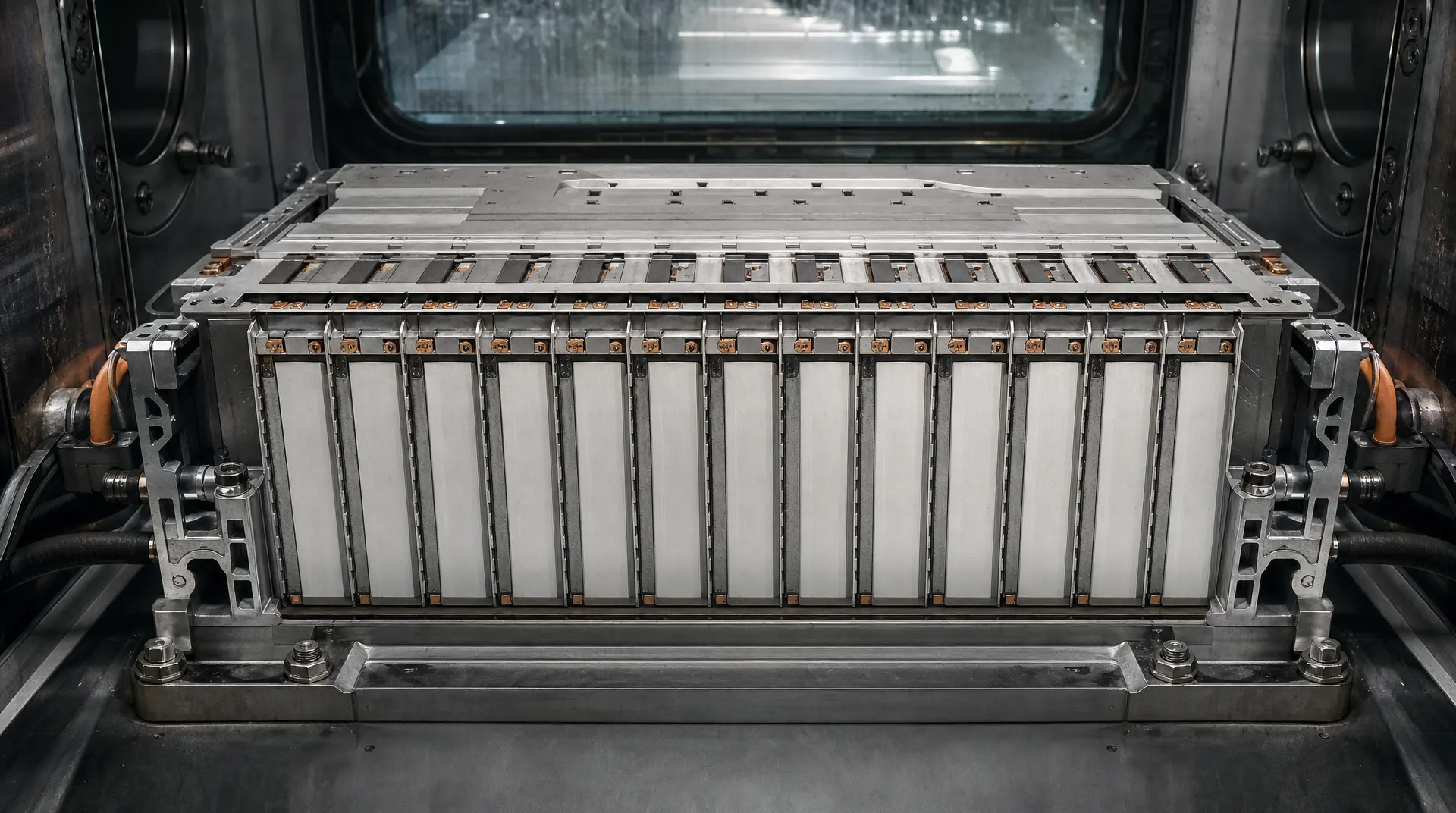
Most deep tech founders come from serious technical backgrounds, and that training rewards precision and hedging. Branding rewards conviction. I call it the PhD curse. The founders who break through stop saying "solid-state electrolyte architecture" and start saying "we make batteries that last forever." It's a different muscle, and it's a specialism, the same way their technology is.
The budget question has a simple answer. $50,000 to $150,000, spent in order, words before pictures.
The harder question is whether you start now or after you've lost something to find out it mattered.
Frequently Asked Questions
How do you justify pausing paid media to a revenue-hungry board?
Tell the board paid media at this stage destroys capital. According to the Demand Gen Report, while buyers notice ads, fewer than one-third say they positively impact brand perception. Prioritize credibility assets first. You cannot A/B test a skeptical enterprise committee.
Should early go-to-market budgets target multiple buyer personas?
Yes, because you are never selling to a single champion. Forrester notes a typical B2B purchase now involves 13 internal stakeholders and nine external influencers. Your budget must fund a communication strategy that is instantly legible to engineers, procurement, and executives alike.
How do you measure the ROI of seed-stage credibility infrastructure?
You track deal velocity and sales cycle compression, not MQLs. Since 81% of buyers select a preferred vendor before engaging sales, ROI is measured by how easily your champions bypass vetting phases and move directly into procurement negotiations.
Why must sales and marketing messaging tightly align before Series A?
Because narrative fragmentation kills deals. The McKinsey Global B2B Pulse found that inconsistent information across teams is the top reason buyers switch suppliers. Your seed budget must fund shared vocabulary. If sales and marketing tell two different stories, you lose credibility instantly.
How do extended deep tech sales cycles alter early marketing spend?
They render short-term demand generation metrics useless. BCG reports deep tech investments require 25% to 40% more time between funding stages. Your seed budget must build durable, compounding assets - like strong technical architecture documentation - that survive years-long procurement cycles.
Your Creative Partner for Innovation That Matters
From advanced tech to transformative healthcare, Fello helps visionary teams shape perception, launch products, and lead industries.

Let’s keep in touch.
Discover more about high-performance web design. Follow us on Linkedin and Instagram.