

The invoice is the cheapest thing a bad agency will ever hand you.
The real bill comes due six months after launch, when your own sales team quietly builds a Notion page and starts sending buyers that instead of the site you paid for.
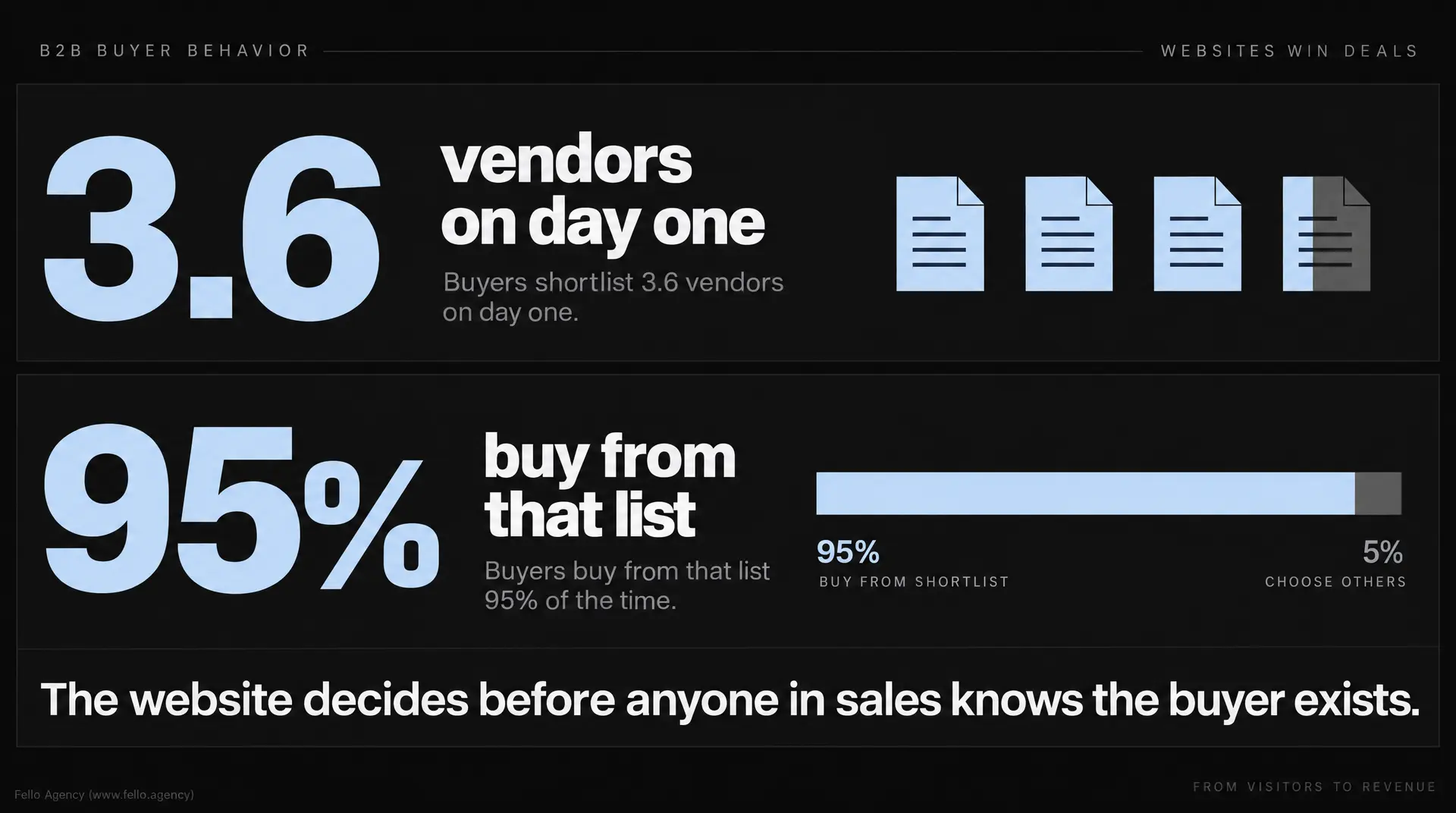
That workaround is a confession that the deal was already lost, because buyers shortlist 3.6 vendors on day one and buy from that list 95% of the time - the website decides before anyone in sales knows the buyer exists.
Key Takeaways
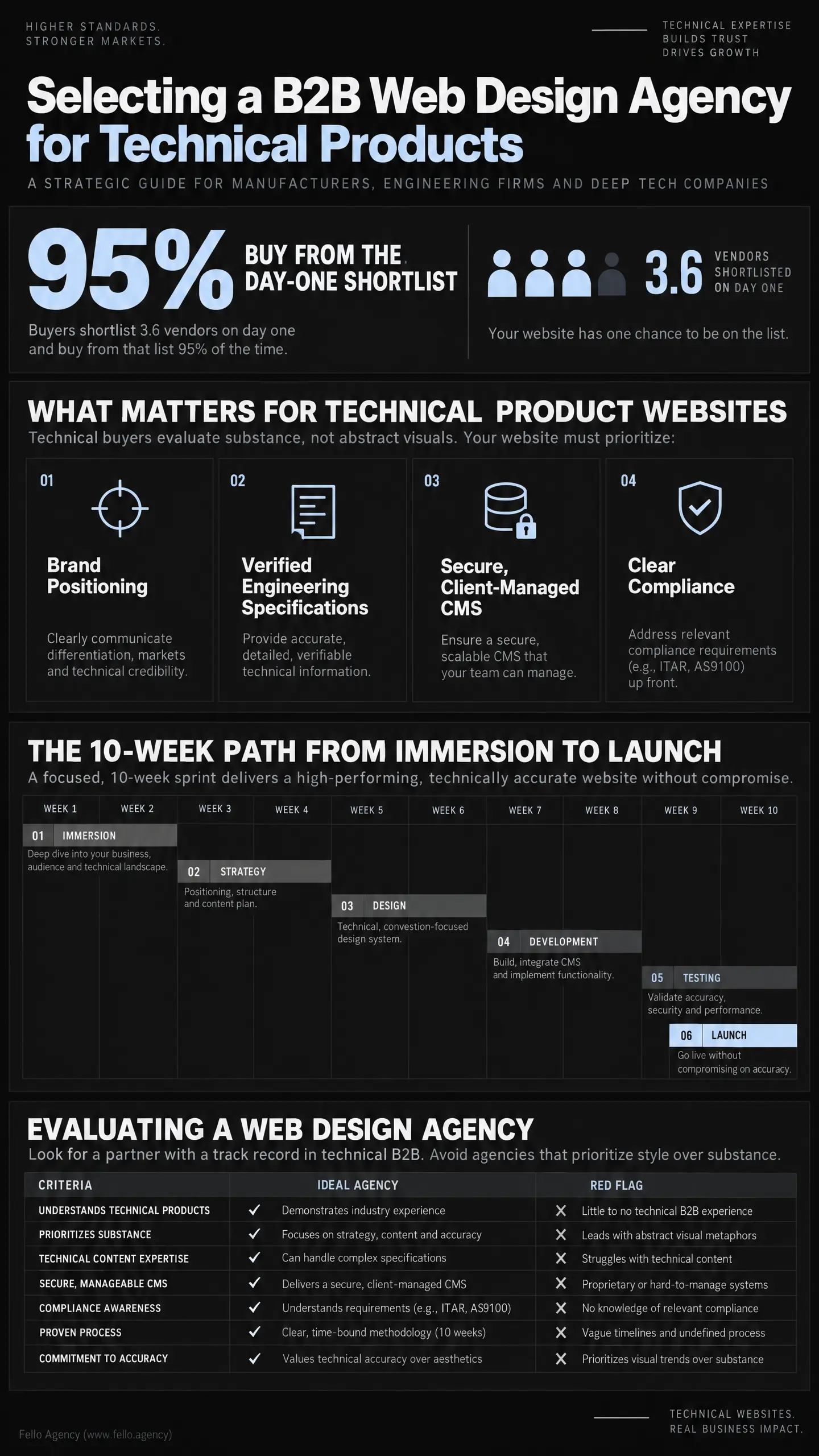
According to 6sense research, B2B buyers shortlist 3.6 vendors on day one and purchase from that initial list 95% of the time, making early website positioning critical.
Technical web pages must replace abstract marketing metaphors with ungated engineering specifications, CAD files, and material tolerances placed visibly at the top of the page.
Defense-sector web design agencies must restrict backend draft access by citizenship, as preliminary product descriptions can inadvertently violate ITAR regulations by exporting controlled technical data.
Engineering credentials like ISO 9001, AS9100, and CMMC must display directly on homepages and quote pages to pass immediate 10-second buyer filter evaluations.
Organizing B2B technical website entry points by pain point satisfies the 74% of buyers who prioritize problem-centric content over role-based navigation during the procurement process.
A fully editable B2B technical website typically costs $30,000 to $60,000, while comprehensive Series A rebranding ranges from $50,000 to $150,000 with half the budget allocated to strategy.
What Are the Core Responsibilities of a Web Design Agency for Technical Products?
Most agencies think the job is a website. For a technical product the website is the last link in a chain, and the agencies that skip the chain are the ones that burn you. This goes for software too. If your buyer is a CISO or a platform architect, everything below applies to you.
One number frames the job. 6sense's 2025 buyer research found buyers had 3.6 vendors shortlisted on day one and bought from that initial list 95% of the time. Your site does most of its selling before anyone in sales knows the buyer exists.
Why Must Web Design Agencies Prioritize Brand Positioning Over Visual Design for Technical Products?
The words come first. What the product is, in words a smart non-specialist can repeat. Who pays for it. Why it exists now rather than five years ago. If those three sentences are not settled before design starts, the designer settles them for you with a stock metaphor and a gradient.
Companies skip this because they think they already know the answer. Honestly, most do not. The quantum company above had a homepage written in the language of the seed round instead of the language of the customer. I watched a quantum sensing founder get passed on by three venture funds for the same reason. The homepage answered physics questions while the associates were writing memos about whether this was a business. Moving the physics one click off the homepage and putting customer traction up top was the fix.
Whether the positioning comes from a B2B branding agency or a strategist inside the web team matters less than this: it ends in one sentence your sales team confirms is true in the market and your engineers confirm is technically accurate. Then somebody can open Figma.
How Should Web Design Agencies Write Accurate Technical Website Copy for Chief Engineers?

Every technical statement on the site needs a source and a sign-off from one of your engineers. I enforce this as a rule, and it is also the law for objective claims. The FTC's substantiation policy says advertisers and their agencies need a reasonable basis for objective claims before they publish. Nobody needs a footnote under the mission statement. The number on the product page is a different story.
We ran a lost deal analysis for a defense-adjacent photonics company and found that their previous agency had added AI and cloud-connected claims to the site. Neither was true. That copy cost them a seven-figure program, and it only surfaced because we called the buyer who walked instead of reading the sales team's summary.
Why Do Technical Product Web Pages Require Real Engineering Specifications Over Abstract Metaphors?

Engineers read a tolerance the way I read a price. If your capability page says "high precision" instead of publishing the number per material, thickness and process, you have an adjective problem, and no design fixes an adjective problem. The agency's job is to drag the real specs, integration docs, CAD files and certifications out of your team and put them where an engineer looks first, with nothing in front of them. In Demand Gen Report's 2024 content survey, 51% of buyers said there were too many steps to reach what they wanted. An engineer who hits a form in front of a datasheet assumes you are hiding the price and leaves.
We rebranded an advanced manufacturing client by throwing out the abstract startup imagery for spec tables, certifications on the homepage, named customers and unpolished photos of the machines on the floor. Less pretty. Also the first version of their site an engineer could actually use. A logo gets you the meeting. A number an engineer can verify gets you into the assembly.
Why Is a Client-Managed CMS Crucial for B2B Technical Product Web Design Projects?
If you don't have a proper CMS, there is no point in even having a website. My benchmark is blunt: once a post is written, your team publishes it in three minutes. I watched a client with a legacy backend, built by a developer they had already fired, take three months to upload one guest blog about a technology they had acquired. That is a 10 minute task. For three months the acquisition looked like it had not happened.
Training belongs in the scope. I treat it as a hard line. An agency that treats it as an add-on is planning to bill you for every headline change for two years.
How Should Web Agencies Structure Website Pages for B2B Technical Product Buying Committees?
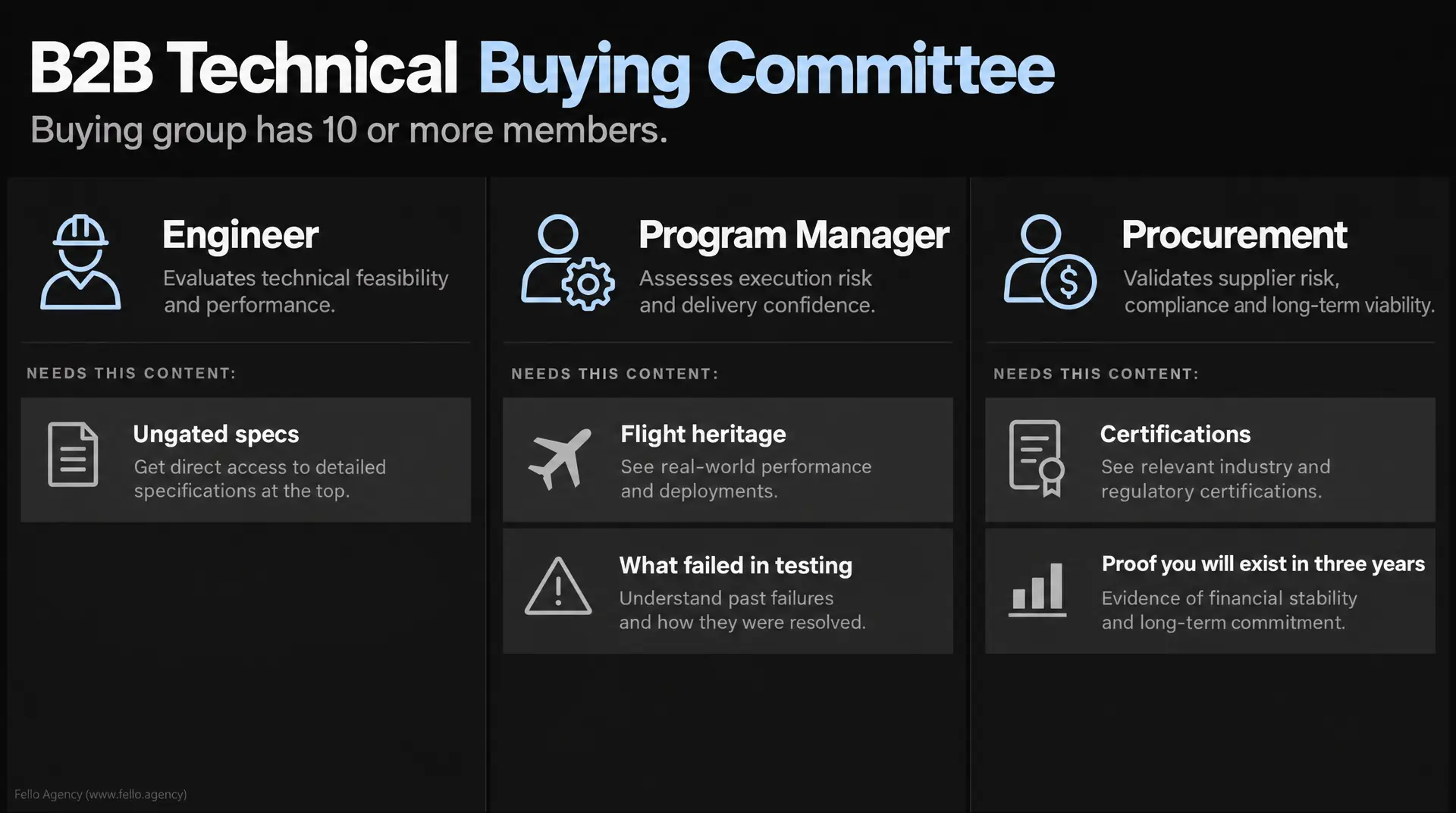
6sense's buyer studies put the typical buying group at 10 or more members, on purchases averaging about $250,000. A robot arm that costs more than a house gets bought by a committee of eight over a year, and one hero message cannot carry all of them. The engineer wants ungated specs at the top. The program manager wants flight heritage and what failed in testing. Procurement wants certifications and proof you will exist in three years. Each gets their own section, and the sections do not bleed. No certification badges inside the spec table.
One nuance worth arguing about. In the same Demand Gen survey, 74% wanted content organized by issue or pain point, against 48% by business role. Both are right, at different depths. Organize the entry point by the problem the buyer walked in with, then stack the evidence under it by who is reading. For Sphere, an XR platform selling into factories, medical and defense, we built distinct industry pages with ROI metrics up top, and leads went up 3x. I have written a longer breakdown of how B2B tech websites should be structured if you want the page-by-page logic.
Build every page to be forwarded, because the page your champion sends up the chain is the only pitch you make to their boss. One of our clients lost a deal with Amazon because their visuals made them look like a joke. The manager on the Amazon side would not put an illegitimate-looking vendor in front of his boss and risk his own name. The tech was fine. The page was not.
What Are the Speed and Accessibility Requirements for Technical Product Websites in Government Procurement?
Our client data shows about an 80/20 split of desktop to mobile traffic. Big buying decisions are computer buys, and a lot of those computers are locked-down machines inside a program office or on a plant floor, running an old browser with autoplay blocked and a filter in front of every third-party script. A homepage that is one giant hero video dies there. Optimize for desktop first and mobile last, and check that the page still says something with the video blocked.
Then measure. Google's Core Web Vitals thresholds are LCP under 2.5 seconds, INP under 200 milliseconds and CLS under 0.1 at the 75th percentile. Hitting them does not guarantee your site loads on a defense contractor's laptop, but an agency that cannot tell you what their last three launches scored never measured at all. Section 508 binds federal agencies and what they procure, not your marketing site, but the people evaluating you live inside that standard all day and their browsers are set up for WCAG 2.0 Level AA. Build to it. Within 30 seconds a government buyer decides whether you are a real company or a slide deck with a cage number.
Where Should Technical Product Websites Display Engineering Certifications and ITAR Compliance Evidence?
Certifications are a filter question, and engineers ask it in the first 10 seconds. ISO 9001, AS9100, ISO 13485, CMMC. Put them on the homepage and the quote page where the filtering happens, not on an About page nobody scrolls to. State your ITAR registration plainly too, and word it as registration. DDTC itself says registration is not a certification of ITAR compliance, and writing "ITAR certified" on your homepage tells a prime's compliance officer you do not know that.
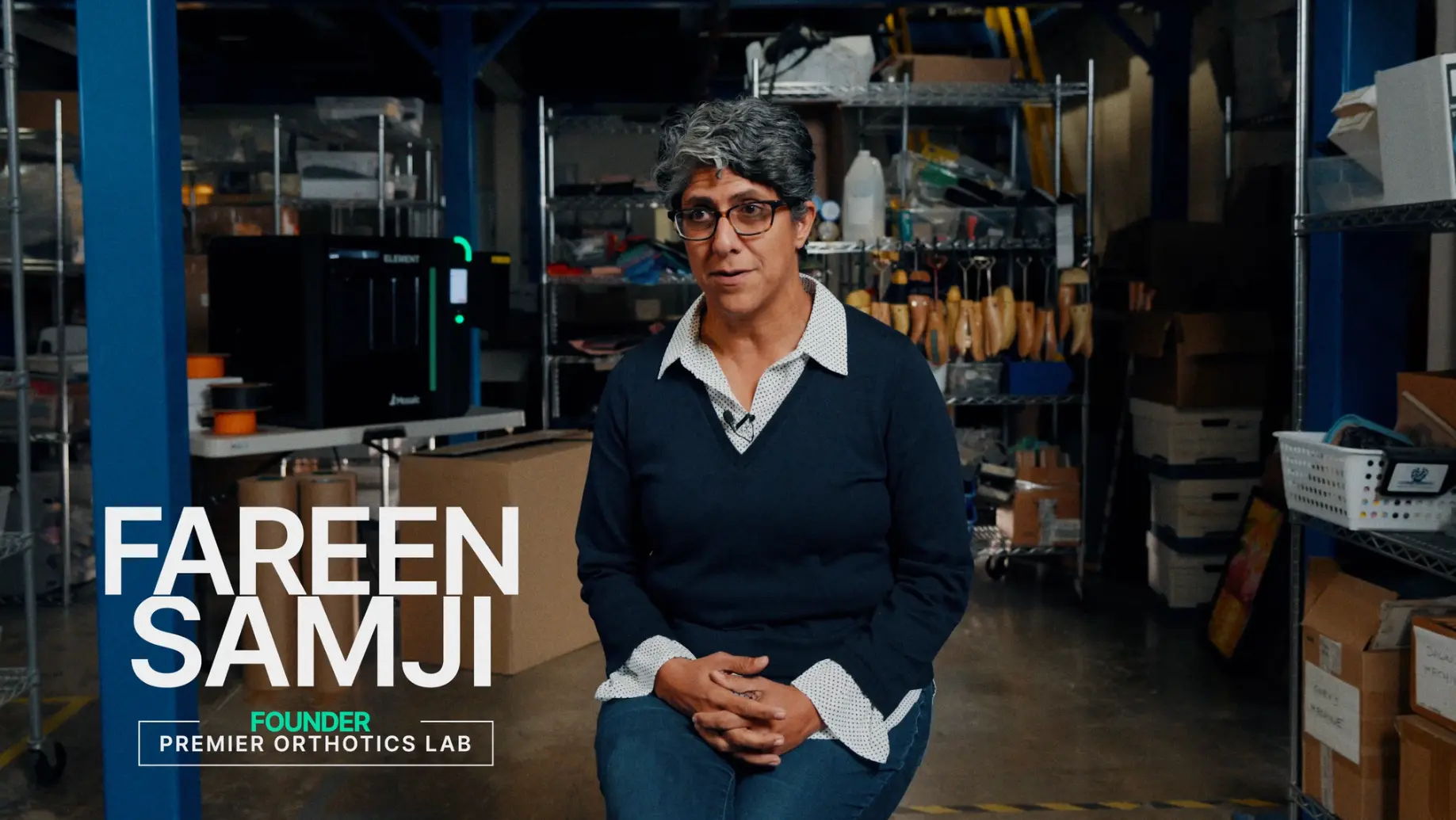
A client of ours called NGen does this right. Credentials up front, form after. Compare that with 20 PDFs in a resources folder and a line about being "trusted by industry leaders," which engineers filter out as noise. Same rule for case studies. Tell them from the customer's side, with the frustrating months before and the numbers after, never in your own product voice. For Mosaic Manufacturing we shot the orthotics case study videos from the business owner's perspective rather than the printer's, and inbound leads went up 25% inside two months.
What Are the Best Questions to Ask a B2B Technical Web Design Agency on the First Call?
Send the agency your current site and your sales deck a week before the call. Then make them work for it.
Why Ask B2B Web Agencies to Provide Live Website Examples Built for Engineering Audiences?

A good answer is a URL you can click right now, with spec sheets, integration docs, a certifications block and a CTA that says "request a technical brief" instead of "start your free trial." They can tell you who the buyer was and what changed in the pipeline after launch.
A bad answer is a gorgeous portfolio of DTC brands, a fintech and a couple of SaaS startups where everything looks like it belongs on Dribbble. I watched an industrial robotics company hire exactly that agency. Six-figure deals, a 12 to 18 month cycle, and the agency built them a SaaS website. Free trial button in the hero. Three pricing tiers. A chatbot, for a robot arm bought by a committee over a year. Customers' engineers could not find a spec sheet, so sales emailed PDFs after every call. Within six months the sales team had quietly built their own Notion page and was sending that instead. The invoice was the cheap part. The expensive part was a sales team routing around the thing you paid for and spending their evenings fixing it.
Run this test on everyone, and hold us to it as well. Every project on our (work page)(/work) is a live URL for that reason.
How Do You Evaluate a B2B Web Agency's Copywriter for Technical Product Expertise?
Do not ask it that way. Everyone says yes. Ask this instead: "Explain our product back to me right now in two sentences." Make them do it live, after they have had your site and deck for a week. It is a little aggressive. Soften the wording if you want, but do not skip it.
A good answer is two clean sentences from the person who will actually write your pages. They will probably get one detail wrong, and that is fine, because now you watch how they handle the correction. A sharp follow-up question means a writer who can survive a room with your chief engineer. Then ask who on their team has been corrected by a chief engineer, and what they got wrong. Good agencies have a story. Most have nothing, because nobody has done the work.
A bad answer is a pivot to process. Their discovery phase, their methodology, how the copywriter comes in later. The copywriter coming in later is the problem. Agencies will argue that bringing the writer in after discovery avoids premature assumptions, and they are half right. But after discovery and absent from discovery are two different things, and most agencies mean the second one. The writer gets a transcript, a deck and a Notion doc and writes from a translation of a translation. Your chief engineer does not care how good the notes were. He cares whether the person who wrote his product page understood it well enough to ask a question he had to think about, and that only happens if the writer is in the room when he gets excited and when he waves something away. If a strategist runs the interviews and hands notes to a writer, you've built a game of telephone and the engineer is going to catch it on the first draft.
Why Is Verifying a Web Agency's In-House Development Team Critical for ITAR Technical Data Security?
A good answer is names. The designer and the developer are on this call or the next one, and they are the same people who show up in week six. Small senior teams say this without hesitating because they have nobody to hide behind.
A bad answer is "our production team" or "our delivery partners." That means the people who pitched you disappear at signature and your project goes to whoever is cheapest that month, with zero context on your product. In defense this goes past quality. ITAR technical data is narrower than most marketers think. It covers the information needed to design, produce or test a defense article and excludes general descriptions of what the thing does. The trouble is that first drafts of defense product pages are full of exactly that detail before counsel strips it out. If a foreign national on the agency side can open those drafts in the backend, you may have exported controlled data before you hit publish. Ask who has backend access, by name and citizenship, before you sign.
What Post-Launch Maintenance and Ownership Costs Should You Clarify With a Technical Web Agency?
A good answer is nothing you are forced to pay for. You own the site, your team is trained on the CMS, and the agency is around for real work when you want it. Say your CRO wants a landing page for a new vertical two weeks before a trade show. Your own marketer builds it in an afternoon on the existing template, and you call the agency only for new video or a repositioning. Any retainer buys output you can point to.
A bad answer is a mandatory "website service fee." I have seen agencies charge $500 a month for absolutely nothing except holding the keys. If you cannot publish a page without opening a ticket, you are renting a website, and the landlord sets the pace of your marketing. That pace is always slower than your competitor's.
How Should Technical Web Agencies Source Visuals for Unphotographable or Classified Products?
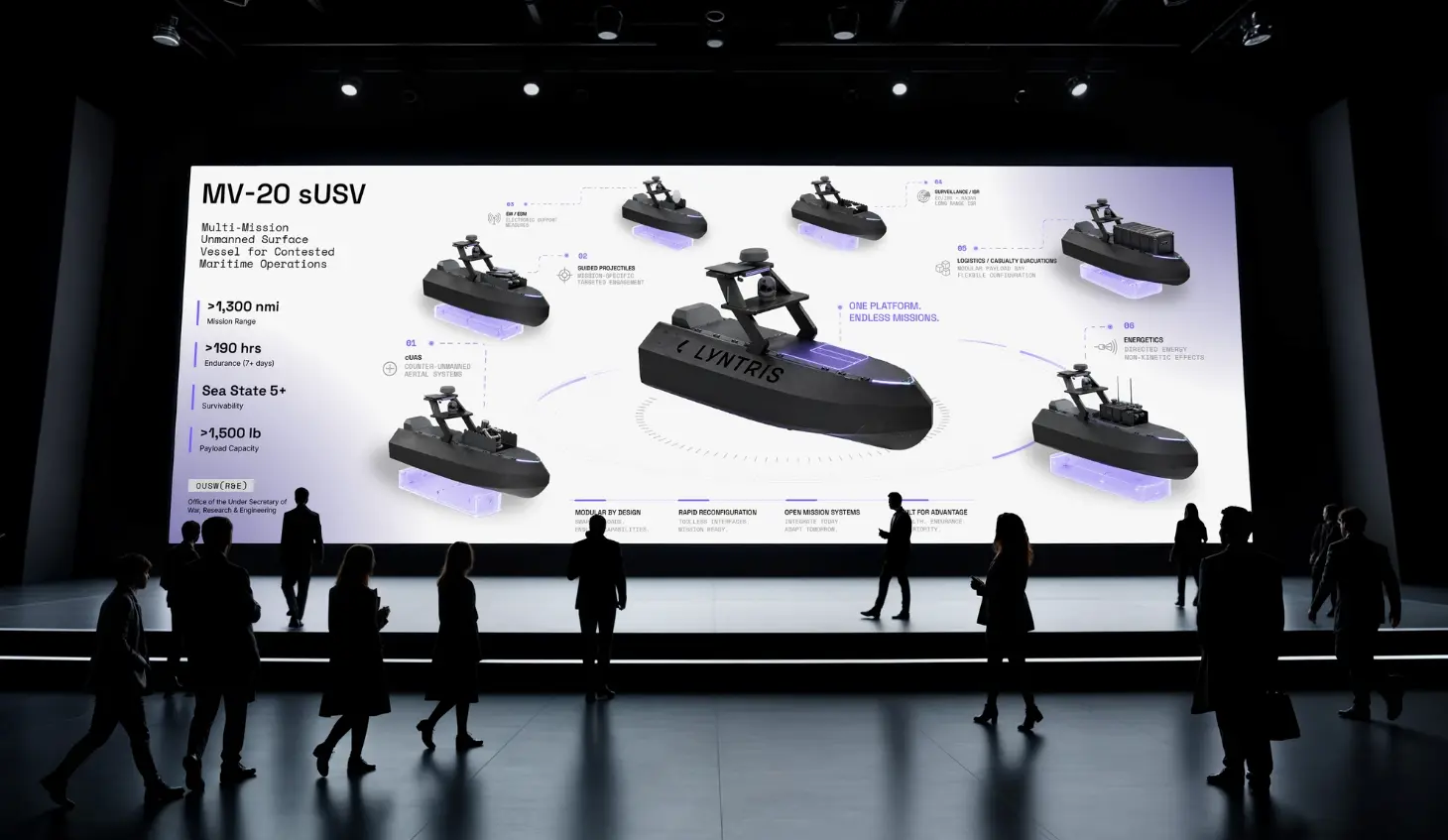
Most of our clients have this problem. The product sits inside a dilution fridge at a few millikelvin, or it is classified, or it does not exist still as hardware.
A good answer is a mix chosen by audience, with restraint. Pair 3D renders with real footage of the actual team in the actual lab, so the render is anchored to something physical. Render the product in air, water or on land when real footage is restricted. Use macro shots and abstracted process footage when the process itself is proprietary. And know when to go uglier. I advised an aerospace thermal subsystem supplier to pull a polished 3D render from their deck and replace it with an unappealing photo of the unit bolted to a vibration table, plus a slide on what cracked in testing. The program manager trusted the ugly photo. Too much polish looks like vaporware. A high-budget CGI reel is the hallmark of a legacy contractor, and it screams: this doesn't exist still.
A bad answer is stock imagery or AI-generated visuals. The robotics agency used stock, and a prospect asked on a call whether the homepage photo was actually the product. It was not. An engineer spots a fake in seconds, and once they do they assume your services are as generic as your imagery. If it looks like bullshit, no one is going to want to work with it.
How Do You Assess a Web Agency's Content Management System Recommendation for Technical Constraints?
A good answer is a specific recommendation tied to your constraints, with the tradeoffs said out loud. We build most of our sites in Framer because the design-to-development handoff disappears. Four years ago a life science project took us six months going from Figma to WordPress. The same scope is two months now. We build custom templates with SEO and blog structures set up so a non-technical marketer runs the site alone. I manage our own blog on it, which is how I know the three-minute benchmark is real and not a sales line. I wrote up why we build on Framer with the full argument.
Then the honest part. Your site lives and dies on Framer's server, and you cannot export the code. If you work in a classified sector and need to self-host, Framer is disqualified, and so is any cloud CMS where people you have not vetted can reach the backend. An agency that says "we do everything in Framer" or "we do everything in WordPress" without asking about your hosting and access requirements has not thought about your buyer for one second.
A bad answer is "whatever you prefer." Or a hard-coded site with no CMS at all, which sends every change back through a developer forever. I also do not trust agencies that lean on a builder's built-in AI generation to produce pages. Those sites turn into recognizable templates fast. Your stuff is going to look the same as everyone else's, and buyers will assume your services are the same too.
How Should You Evaluate a Technical Web Design Agency's Project Cost and Pricing Transparency?
A good answer is real numbers with real reasons. For a startup, a fully editable site typically runs $30,000 to $60,000 because of the custom templating. A Series A rebrand with the site included usually lands between $50,000 and $150,000, and roughly half of that should go to strategy and research rather than visuals. The ranges differ for reasons the agency can name without checking notes. Copy was in or out. The product could not be shot. A dual-use company selling to both a farmer and a colonel needs two communication strategies and pays for both. More decision-makers on your side means a longer timeline, and I ask for that headcount during scoping for exactly this reason.
A bad answer is one flat price for everyone, or a refusal to discuss money until "we understand your needs" followed by a quote in the next breath. Be wary at the top end too. For a Series A to Series B company, spending far past $100,000 on brand and site starts to look suspicious to a technical buyer. It reads as money spent on looking like a company instead of being one.
What Are the Major Red Flags When Evaluating B2B Technical Web Design Agencies?

Each of these on its own predicts a bad outcome. Two together and you should stop returning their emails.
They lead with awards. Awards tell you other designers liked the work. Ask whether an engineer bought from it, and watch how long the pause is. Closely related: not one technical case study in the deck, not one project where the buyer was an engineer, a procurement lead or a program office. That agency is about to learn your industry on your dime, and you pay tuition twice, once in the invoice and once in the deals you lose while they learn.
Copy is "your responsibility." An agency that will not own the words will not own the result, and you end up asking an engineer to write product pages at midnight. A quote before discovery is the same disease from the other side. Nobody can price a technical site without knowing how many audiences you sell to and how much of the product can be shown. If they quoted before asking how many decision-makers sit on your side, they have never run a project with a board involved.
If the answer to "who builds it" changes after signature, so does the quality. If the portfolio is all consumer or SaaS-lite, the free trial buttons and three-tier pricing pages are the tell, and you will get one too. If a plant manager and a program manager sound the same to them, they cannot write for either one.
Two more that people miss. Look at the agency's own site and social. If it is full of AI generated slop, they will not spend on your visuals either. I also look at who is on the team and what they say publicly about AI. A shop where every designer is two years out of school and the founder posts about shipping sites in a weekend with a prompt is telling you how your site will get made. And any agency that needs a 90-day audit before a recommendation has no playbook for your space. A specialist needs two to five weeks.
How Can Technical Companies Accurately Compare Web Design Agency Proposals with Differing Scopes?
You will get three proposals that all say "website" and none of them will include the same things. Normalize before you compare anything.
Start with copy: strategy plus writing, or "client to provide." Then photography and renders, meaning who shoots, who models and who pays the 3D artist. Then integrations, meaning CRM, marketing automation, gated downloads and analytics. Then the CMS build, custom editable templates plus training or a hard-coded page set. Then post-launch, a defined iteration window versus a retainer you never asked for. Put all five on one page and mark each proposal in or out.
A $40k quote with copy and a $40k quote without are not the same quote. The second one is a design fee with a $30,000 to $50,000 communication strategy problem still attached, because that is what it costs to compress a technical founder's explanation into one narrative that sales and engineering both sign. Somebody pays that either way. The only question is whether it is priced in the proposal or extracted from your team's evenings.
When the budget is tight, cut deliverables rather than quality. Every serious client I have worked with drops the second video before they drop the standard. I don't think it's a matter of skimping out on quality. I think it's a matter of skimping out on deliverables. And ask where the money goes. A $100,000 budget should show up on the screen, in the copy and in the assets, not in account management.
Last, the hidden costs nobody puts in a proposal. The two that become emergencies the week before launch, every time, are the trade show booth graphics and the three-page technical product doc sales suddenly needs. Put both on the grid now with a price next to them.
What Is the Ideal Web Design Process Timeline for B2B Technical Products?
Immersion, weeks 1 and 2. The writer and the strategist sit with your engineering team before anyone opens a design tool. Two days minimum, on site if there is a plant to walk. They read the lost deal notes, listen to recorded sales calls and read the email threads that followed. They call the buyers who walked and ask what the winning competitor said. They find out what pisses off your customers the most and where your reps have built scar tissue explaining what you are not. Nothing gets written still.
Positioning, weeks two through four. One sentence: what it is, who pays for it, why now. Sales confirms it is true in the market. Engineering confirms it is accurate. Then the page architecture per buyer, a brand kill list of every legacy asset that dies in the transition, and a list of every technical claim with the engineer signing off on it. A specialist is prescriptive here. You are paying them to decide. I have watched founders stall for nearly two years running four separate communication workshops instead of letting anyone decide.
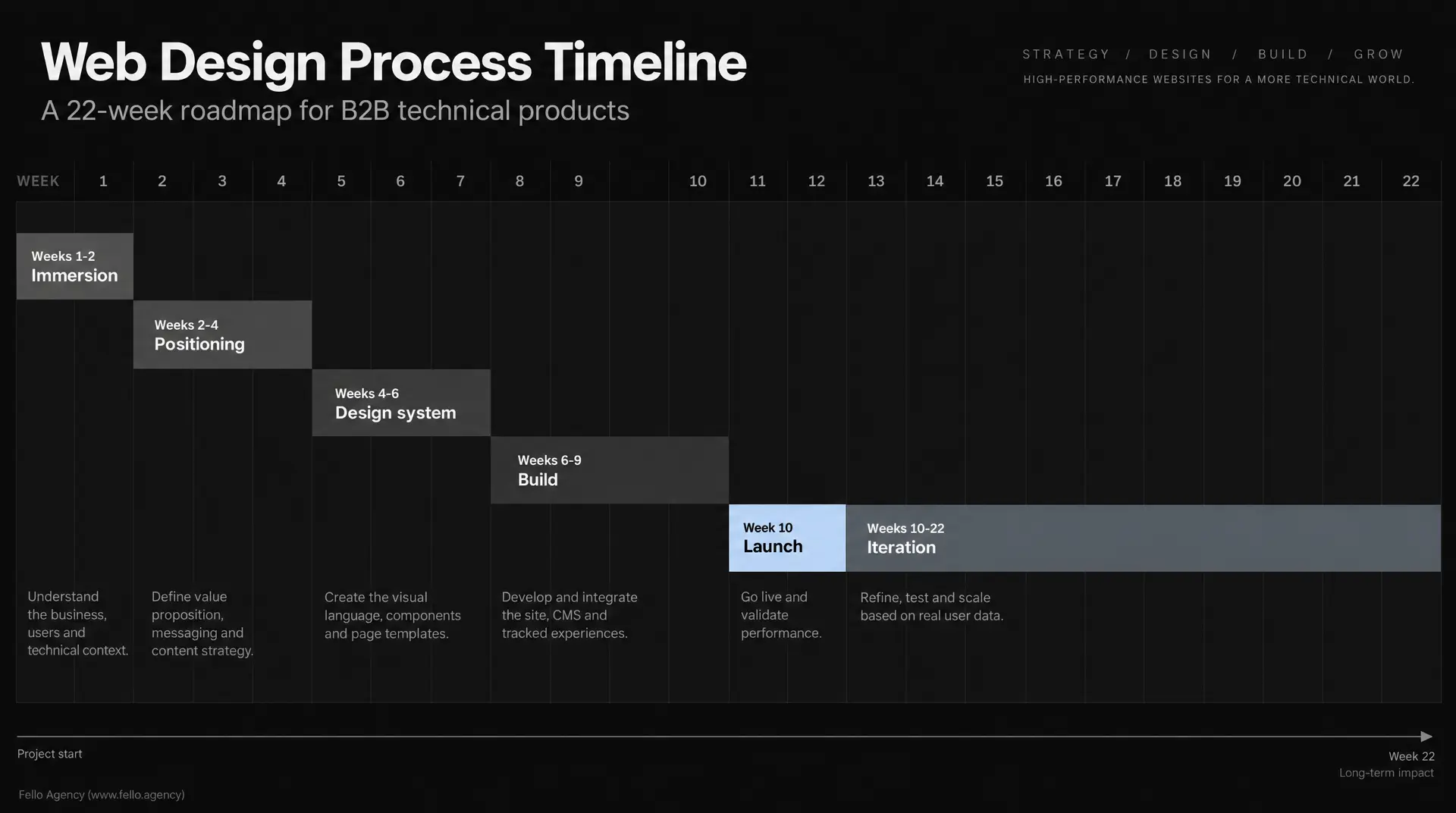
Design system, weeks four through six. Typography, color, layout rules, components. Consistency gets locked here, because the fastest way to look like a science project instead of a business is a font that drifts from the brand guide on page nine. Homepage first, since it is the asset your champion forwards to the committee. Then the buyer pages.
Build, weeks six through nine. Straight into the CMS, no handoff to a separate dev shop. Templates for product pages, case studies and blog get built so your team adds the next one without calling anyone. Your team trains while the build is happening, so launch day is not their first login.
Launch, week 10. Redirects mapped, analytics live, the marketing team publishing on their own. In a compressed sprint you will give up a revision round to hit this date. Say yes. We ran a full brand and site sprint for a haptics company in 14 days, and it worked because the client handed us decisions instead of scheduling another review. You don't want to be moving slow in tech, you're going to get killed. And if you disappear mid-sprint, expect a fee. We added one after a construction tech client vanished for months and came back expecting to pick up the next morning.
Iteration, weeks 10 through 22. Treat the first 90 days as a working hypothesis. Sit in on new sales calls and watch how buyers react to the positioning. If a buyer reacts to something we did not predict, that is a finding, not a failure. Measure the site by sales velocity rather than traffic: faster replies to outbound, shorter first calls, fewer PDFs sent after them. The site is done when the sales team stops working around it.
When Should Technical Companies Delay Hiring a B2B Web Design Agency?

If you do not have positioning still, do not buy a website. Fix the positioning first. I have watched founders stall for two years in workshops, and I have watched others skip the step entirely and get a $70,000 homepage that says nothing. Same mistake in different clothes. If there is no budget for a strategist, write a founder's thesis, a long essay on what you believe and why the market needs this now, and test it on your sales team and your engineers. With budget, spend three to five weeks with someone who hands you back one sentence that says what you are and who pays you. Then design.
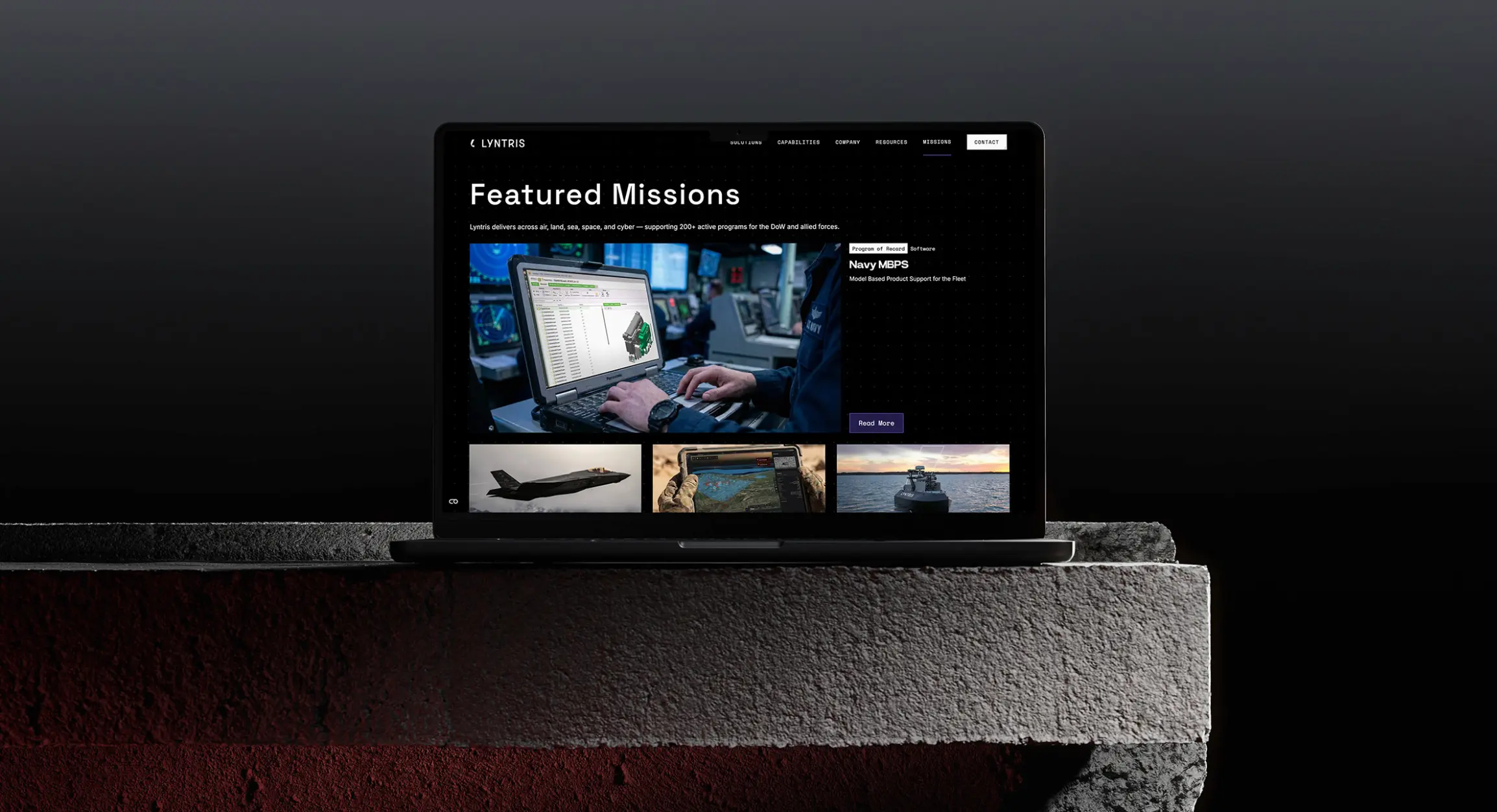
If you need a landing page in two weeks, use a template and a freelancer. A good agency cannot help you in that window and a bad one will pretend it can. Save the budget for the real site and run every question above on whoever you hire when you get there. For transparency: Fello is a B2B web design agency in Toronto that works with deep tech, defense, aerospace and industrial companies, with clients including Lenovo, Qualcomm, Mosaic and Lyntris, and we build in Framer with positioning done before design. We are a small senior team, so if you need a 200 page enterprise rebuild in six weeks, we are not the right fit, and I would be skeptical of anyone who says they are. The tuition for choosing wrong gets paid in deals lost while your sales team works around the site you already bought, and that bill dwarfs any retainer.
Frequently Asked Questions
Should we hire an agency that recommends gating all our technical content to drive MQLs?
Absolutely not. Buyers initiate 79% of seller engagements and the first vendor contacted wins 8 in 10 deals. If your agency puts a form in front of a datasheet, they are killing your pipeline. Make technical specs frictionless, or buyers will find a competitor who does.
How should a prospective agency design for a complex B2B buying committee?
They must build pages specifically designed to be forwarded. The average B2B buying group has 10 or more members. Since 72% of buyers share content with colleagues, an agency must organize technical evidence by pain point to arm your internal champion, rather than just building a shiny homepage.
How do we evaluate if an agency understands the broader GTM strategy?
Ask how they integrate the site with your other channels. McKinsey found buyers use an average of 10 interaction channels during a purchase. If the agency treats the website as a standalone brochure rather than the central hub that anchors your field events and campaigns, they aren't strategic enough.
What is the clearest indicator that a web design agency will actually impact our pipeline?
They measure success by sales velocity, not just traffic. A strong agency wants to know if their work shortened your 10.1-month buying cycle or increased your lead-to-opportunity rate. If their primary KPIs are bounce rates and design awards, they do not understand how marketing drives revenue.
Should we trust an agency that only wants to publish long-form technical whitepapers?
No. You need an agency that balances depth with brevity. While engineers require rigorous specs, 67% of buyers find short-form content valuable for decision-making. A competent agency extracts the core narrative from your whitepapers and surfaces those insights directly on the page to reduce friction.
Your Creative Partner for Innovation That Matters
From advanced tech to transformative healthcare, Fello helps visionary teams shape perception, launch products, and lead industries.

Let’s keep in touch.
Discover more about high-performance web design. Follow us on Linkedin and Instagram.

