


Photo by Ted Balmer on Unsplash
I say this to defense clients all the time: your website is an export.
If you lead marketing at a military aircraft manufacturer, that line should change how you look at every page, deck, booth screen, video, and LinkedIn post you approve. By 2026, the teams that win are not the teams that stay silent. They're the teams that build a system that lets them say the right things, to the right people, without creating risk.
At Fello, we work with deep tech and defense companies on this exact problem. We're currently in the process of obtaining formal ITAR registration to match the security and access controls we already apply to defense work. I've spent close to 10 years around defense marketing, export-sensitive content, NDAs, and technical buyers. I've also marketed defense tech directly to DOD program managers. So this is the checklist I'd run if I were in your seat right now.
You already know your job is political, strategic, and long-game. You are protecting programs that live for decades. You are selling readiness, deterrence, and industrial strength across changing budgets, changing administrations, and changing public narratives. That means compliance and storytelling have to work together. If they don't, you either overshare or disappear.
Neither one helps you win.
Why This Matters in 2026
A lot of defense marketing teams still treat compliance as something legal handles at the end. That mindset is too slow and too dangerous now.
The category has changed. Younger decision-makers are coming in. Visual trust matters more. Search matters more. Program narratives move faster. Your competitors are getting better at brand, better at visuals, and better at framing national security value in a way that lands with operators, primes, politicians, and procurement teams.
At the same time, ITAR risk is sitting in normal marketing behavior. A website update. A trade booth loop. A prototype photo. A PDF download. A 3D render. A cloud CMS. An AI prompt. One careless move and you have a problem nobody budgeted for.
So yes, this is a compliance article. It is also a commercialization article. The real advantage is building a review system that gives your team permission to move with confidence.
Start with the Legal Reality
Under ITAR, technical data is broader than most marketers think. It includes information needed to design, develop, produce, use, or maintain a defense article. That means what looks "light" to a marketing team can still be controlled. Range, load, power, integration detail, maintenance cues, geometry, and form-factor clues can all create exposure.
The next part surprises people even more. ITAR treats disclosure to a foreign person, even inside the U.S., as an export. Put that beside a public website or a globally visible social post and the risk gets obvious fast.
And let's be super clear here. A lot of this data is unclassified and still controlled. Controlled does not mean classified. I keep repeating that because it's the misconception that gets teams in trouble. People think if it is not stamped secret, it is fine to publish. That is the wrong mental model.
The penalties are not small. Knowing violations can carry $1,000,000 fines and 20 years per violation. Deemed export issues are also a growing share of ITAR enforcement. So if your marketing team is still operating as if compliance is a final checkmark, you are already behind.
Where Aircraft Manufacturers Get Exposed
The risk usually does not start with some dramatic leak. It starts with routine marketing work.
One team updates a product page. One BD person posts a proud prototype photo. One old deck gets reused at a conference. One outside production crew films more than they should. One agency contractor opens a folder they never should have seen. These are normal moments. That's exactly why they're dangerous.
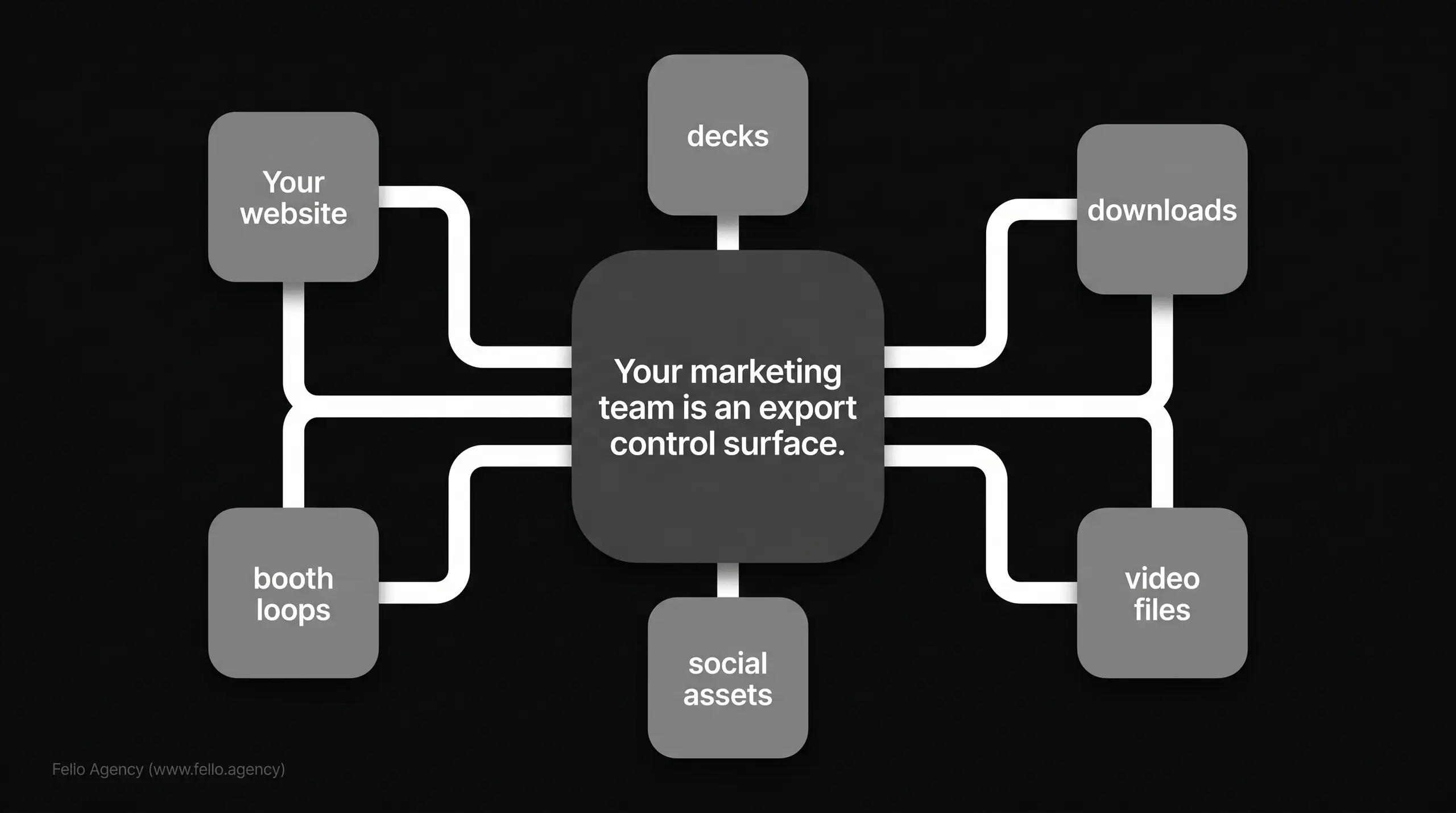
This is why I say your marketing team is an export control surface. Your website, decks, downloads, booth loops, social assets, and video files all sit on that surface. Under ITAR, disclosure through the worldwide internet or trade shows can trigger the same export logic as moving a physical item.
Trade events are a massive blind spot. I tell clients all the time: the trade booth is a foreign visit. At AUSA or EuroSatory, foreign delegations are all over the floor. Every screen, every handout, every ad-lib answer, every visual on your monitor is part of that exposure. Most teams still treat the booth like a normal expo. ITAR does not.
Video is another sleeper risk. A camera captures far more than a brochure. It picks up serial numbers, GPS metadata, facility perimeters, interface states, mounting details, operational tactics, and environmental context. You can create an export in 4K before anyone in legal even knows the shoot happened.
Then there's the old-content trap. "Approved for public release" is not a one-time stamp. Context changes classification. A detail that was fine two years ago can become sensitive once a new integration, end user, or program context enters the picture. If you don't have a re-review habit, you are trusting stale approvals in a live environment.
Build a System That Lets You Say More
A lot of ITAR marketing ends up weak because teams strip out everything interesting. I've said it before and I'll say it again: most ITAR-compliant marketing is actually just vague marketing.
That does not help legal. It does not help BD. It does not help the brand. It just creates dead air and lets competitors own the narrative.
The fix is building a counsel-approved vocabulary before you build campaigns. I always say general description is the magic line, and nobody knows where it is until the company defines it. Your team needs a public language system that has already been tested, approved, and documented.
For an aircraft program, I want the public story anchored in mission readiness, survivability, allied interoperability, industrial base strength, sustainment logic, and sovereignty. That gives you real room to speak. It also lines up with what your actual audiences care about.
Look at the room you're selling into. The pilot cares about trust, survivability, and real-world usefulness. The general cares about readiness, deterrence, integration, and force posture. The politician cares about jobs, domestic manufacturing, allied strength, and why the spend makes sense for the long term. Same aircraft. Different stakes.
This is where a lot of pages go wrong. They try to speak to everybody at once. The result is watered down and forgettable. Your job is to make the message sharper, not flatter.
And keep the workflow tight. When a program changes, a partner changes, or a new FMS angle enters the picture, the language gets reviewed again. That discipline is the moat. That's how you publish confidently while everyone else is hesitating.
Your Website Needs to Speak Business
I separate technical talk from business talk. Your website needs to speak business first.
That matters in every deep tech category, and it matters even more in defense. Your aircraft homepage should not open with a wall of performance data. Lead with what changes for the force, the operator, the alliance, and the industrial base. Put the deeper proof underneath. Let the room get oriented first.
If you lead with dense specs, you make senior stakeholders do too much work. They will not do it. Your page has to answer a bigger question right away: why does this conversation matter now?
Segment the Room Early
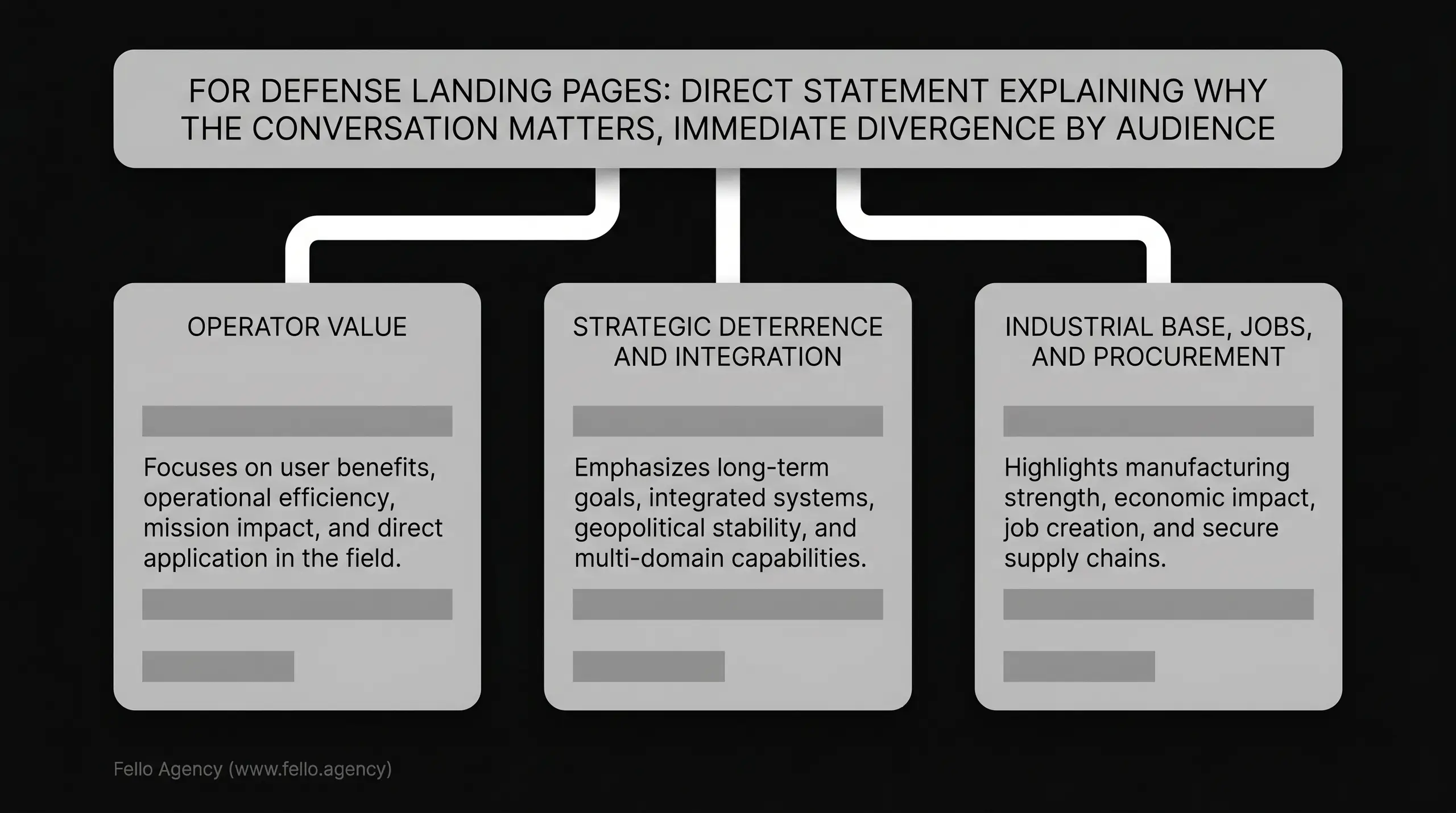
For defense landing pages, I like one high-trust hero, one direct statement that explains why the conversation matters, and then immediate divergence by audience. This structure works because aircraft programs always have multiple stakeholders with conflicting agendas.
One path can focus on operator value. One can focus on strategic deterrence and integration. One can focus on industrial base, jobs, and procurement logic. The page still feels unified. The proof just gets organized properly.
We use this thinking all the time. For Sphere, we built distinct industry paths instead of one generic story, and the new website more than tripled lead generation. I'm applying that same logic right now in a CMS revamp for a U.S. defense company, shifting the message away from raw specs and toward a broader mission narrative.
And yes, proof has to sit high on the site. I care a lot about that. Case studies, testimonials, approved visuals, cleared team credibility, and resource pages all matter. If a company has no real proof system, buyers feel it immediately.
Find out what pisses off your clients the most. In aircraft programs, that might be sustainment drag, pilot workload, integration delay, budget pressure, or mission ambiguity. Start there. Your messaging gets a lot sharper when you start from the pain.
Visualize the Invisible Advantage
Aircraft marketing has a brutal challenge. Some of the most important advantages are invisible.
Electronic warfare. Sensor fusion. Cyber-hardening. Networked mission value. Decision speed. Software-level superiority. You can't always film that cleanly, and you definitely cannot always explain it with public specs.
That is where strong visual systems matter. High-fidelity CGI, 3D motion, and immersive simulations can help you show mission effect without exposing controlled detail. That's a huge difference. I care about showing what changes in the field. I do not care about dumping out the guts of the platform just to look technical.
At Fello, we've built that muscle in other hard categories. Lenovo said our XR campaign "set a new standard for how we communicate innovation." Qualcomm said our visuals made the impact of a complex collaboration "clear and compelling." For Nord Quantique, we turned quantum error correction into a story that helped drive an 80% traffic lift in six weeks. For Mosaic Manufacturing, clarifying complex industrial value helped booked meetings rise 15% in two months. Same principle here. Translate complexity into trust.
Use Abstraction with Proof
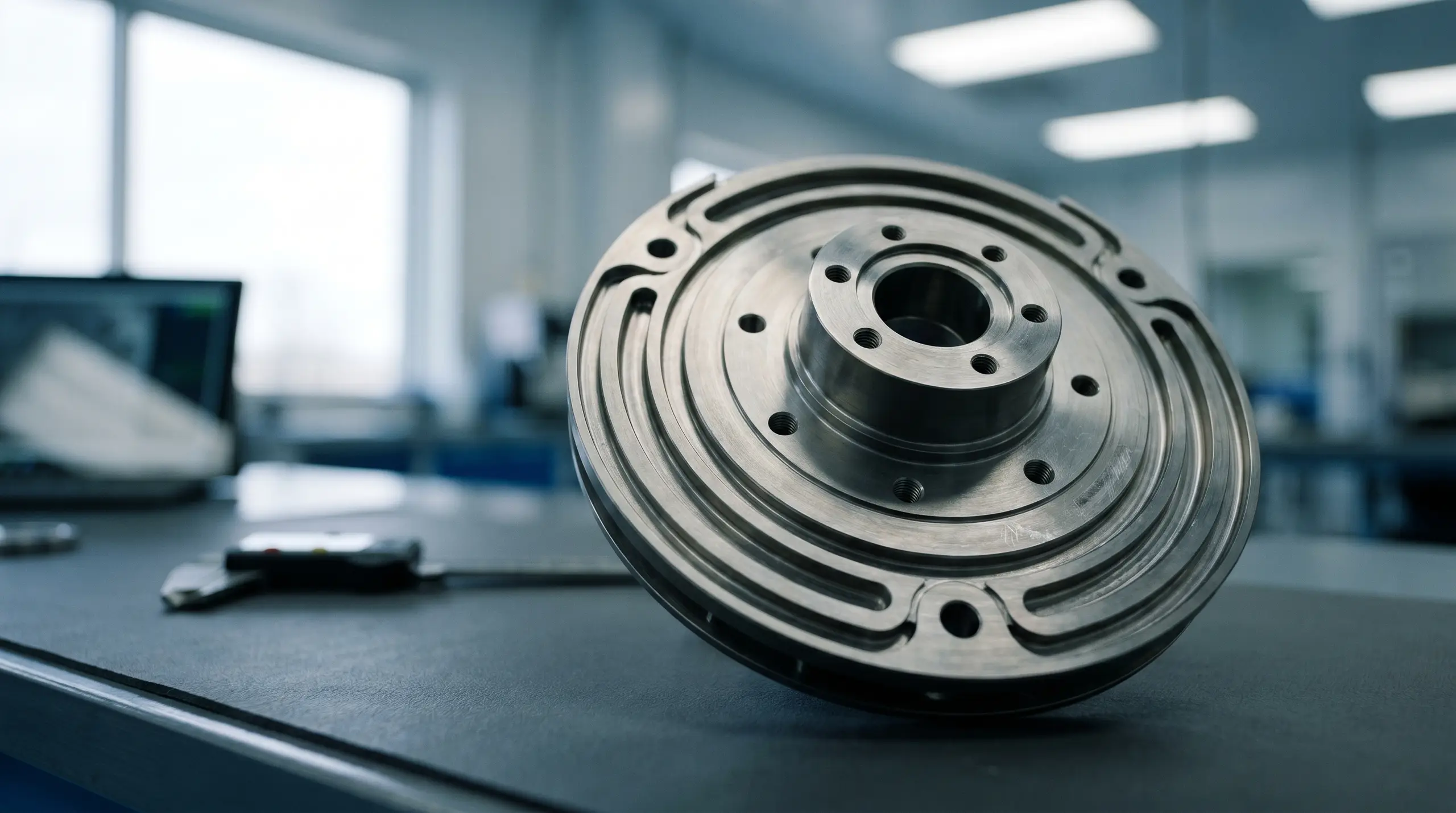
I believe in CGI. I also believe too much polish can look like vaporware.
Defense buyers, especially the younger ones, can smell fake confidence fast. A glossy animation alone does not build trust. Pair the abstraction with real signals. Cleared manufacturing footage. Sanitized interfaces. Training simulations. Lab sequences. Field exercises. A serious voice. Strong sound design. A page that feels like a briefing, not a perfume ad.
Sometimes a declassified aesthetic works really well here. Clean black and white. Serious typography. Layouts that feel closer to a technical dossier than a lifestyle campaign. It creates the right kind of gravity.
Show the Work
I also like a found-footage layer when the audience is technical. A shaky test clip. A rough field sequence. A failure moment that has been cleared properly. That kind of content can build real procurement trust because it shows you're actually in the dirt doing the work.
This is one of the big shifts I've seen in defense. Buyers still want polish, but they want proof inside the polish. Competence is the product.
One aerospace and defense founder told us the images we created for a counter-drone platform "helped me attract engineers to join my team." That is the power of visuals that feel grounded. They move programs forward.
Anduril proved the bigger market point. They pushed stronger branding and stronger visual language, and the legacy players started copying it. That should tell you exactly where this category is headed.
Win the Optical War in the Bid Room
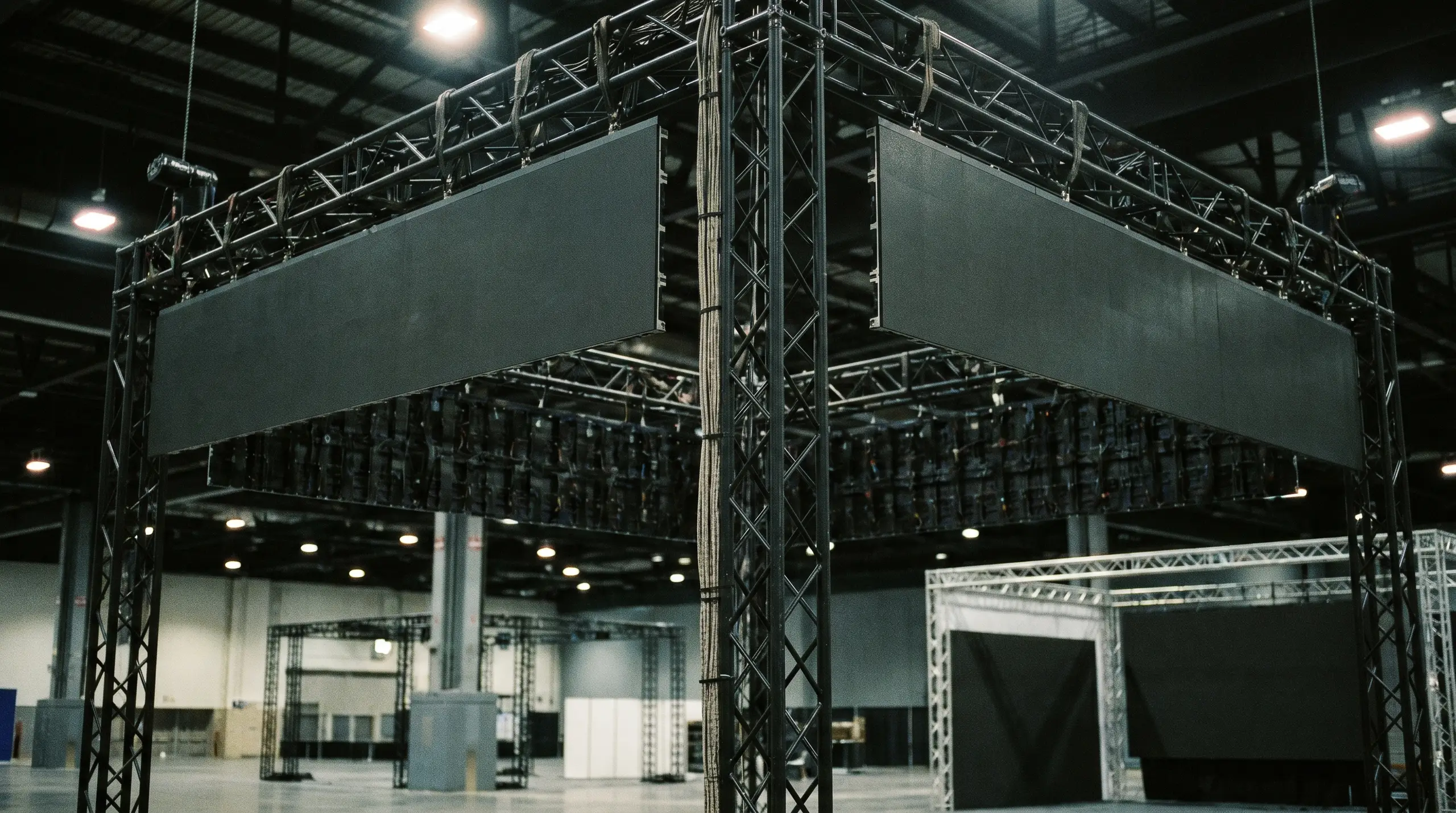
Let me be blunt. If you can't visually show the contract that you're trying to land, you are not getting the contract.
Your program capability overview, your trade show reel, your congressional brief, your field test documentation, and your white paper companion video all have different jobs. Each one gets watched on a different screen, in a different context, by a person with a different decision to make.
On the trade show floor, attention is short. I like no narration, all atmosphere, and a clear visual hook. In a program manager briefing, I want tighter logic, stronger sequencing, and proof of seriousness. In a congressional setting, the emotional frame matters more. Safety, readiness, jobs, allied security, industrial resilience. That's where the room is.
This is where your deck quality matters too. You are selling your website. You are selling yourselves. Dress for the client that you need. If your materials look dated, the room starts making assumptions about your capability, your maturity, and your internal discipline.
White papers still matter a lot in defense. Good ones are not just educational. They are quietly helping write future RFPs. And during long aircraft sales cycles, content supports human selling. It does not replace it. A controlled monthly video update, a cleared factory-floor sequence, or a behind-the-scenes look at sustainment capability can keep a program alive in the buyer's mind much better than another generic nurture email.
Audit Your CMS, Agency Access, and AI Stack

Your CMS is an ITAR liability if the wrong people can access draft content. I do not care how modern the platform looks if you cannot answer basic questions.
Where is the server? Who can log in? Who can export files? Where are the design files stored? Did you verify the citizenship of every person touching the work? Does your NDA include export-control flow-down language? Can a foreign national on an outside team see draft content before review? If you do not know those answers, the stack is weak.
This matters because even standard technical files can be controlled. CAD/CAM files with tolerances are a very clear example. So treat detailed 3D models, design views, and close-up renders with real discipline. Controlled detail can leak through a visual just as easily as it can through a paragraph.
And I'm hard on AI here. AI in your workflow is an ITAR question nobody is asking still. If someone pastes controlled content into a cloud tool, you have created a risk that is very hard to unwind. On top of that, AI-generated slop creates a second problem. Your materials start looking generic, and people start wondering if the capability is generic too.
LinkedIn needs discipline too. LinkedIn for me has always been a verification tool. In defense, use it that way. Show legitimacy. Show people. Show mission. Show approved milestones. Move the audience toward a controlled next step. Do not use it as a dumping ground for prototype closeups and loose technical pride posts.
Move in Weeks, Not Quarters
I do not believe in the 90-day audit trap for defense marketing. Ninety days of diagnosis is eternity.
While one team is still mapping workflows in a deck, the competitor is refreshing their site, updating their booth story, improving search, and taking over the conference narrative. You don't wanna be moving slow in tech. You're gonna get killed.
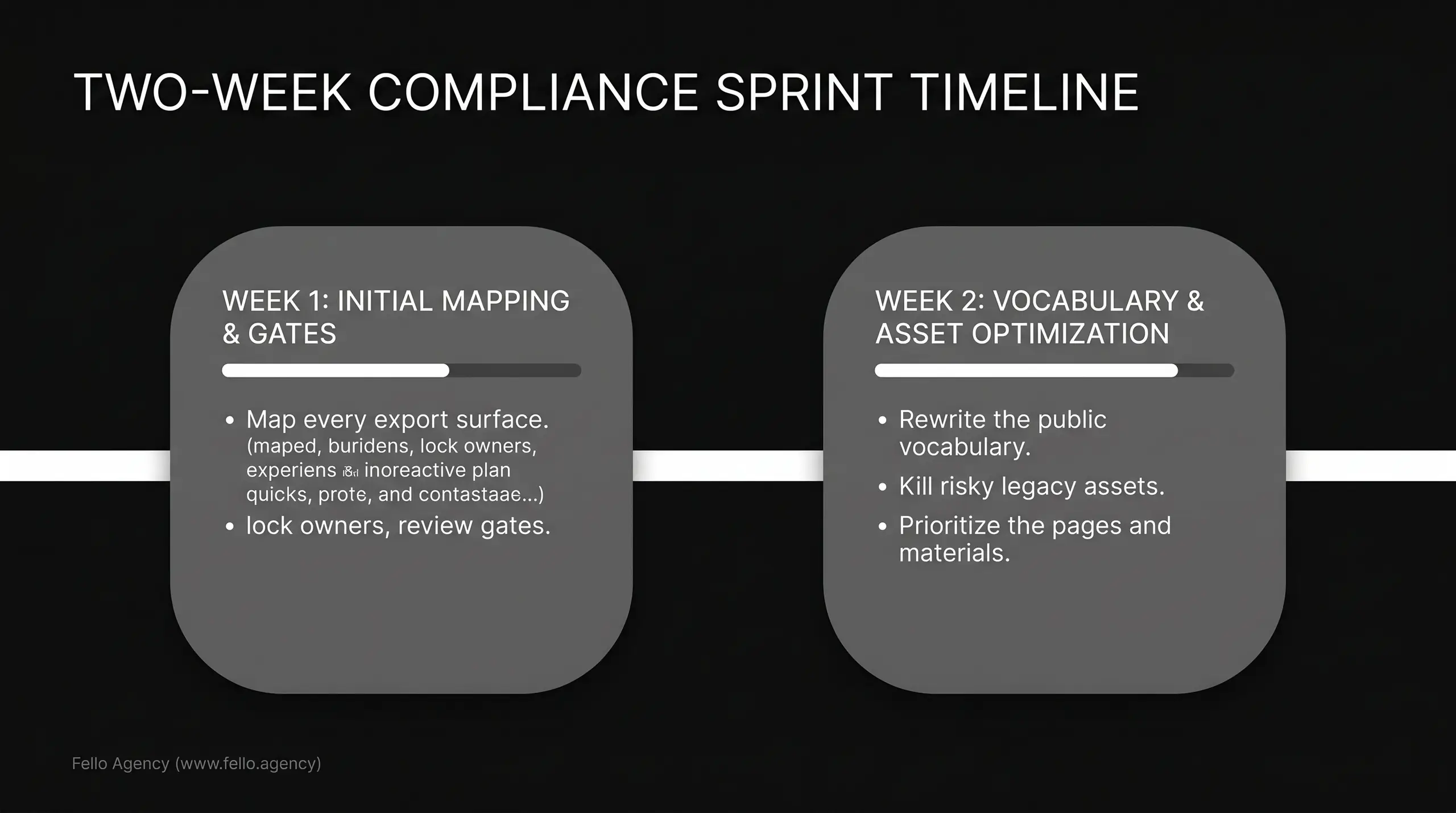
I would run a two-week compliance sprint. In the first few days, map every export surface across the website, decks, handouts, social, video, and agency access. Then lock owners, review gates, and approval logic. In week two, rewrite the public vocabulary. Kill risky legacy assets. Prioritize the pages and materials that matter for the next live opportunity.
At Fello, speed is built into how we work. We keep the team lean on purpose. We've launched a high-quality site in under two months for a client facing a CES deadline, and we helped a dual-use defense and oil client go to market in two weeks. Speed matters. You just pair it with governance. Fast and controlled wins very heavily.
Final Word
Here's the plain-English version.
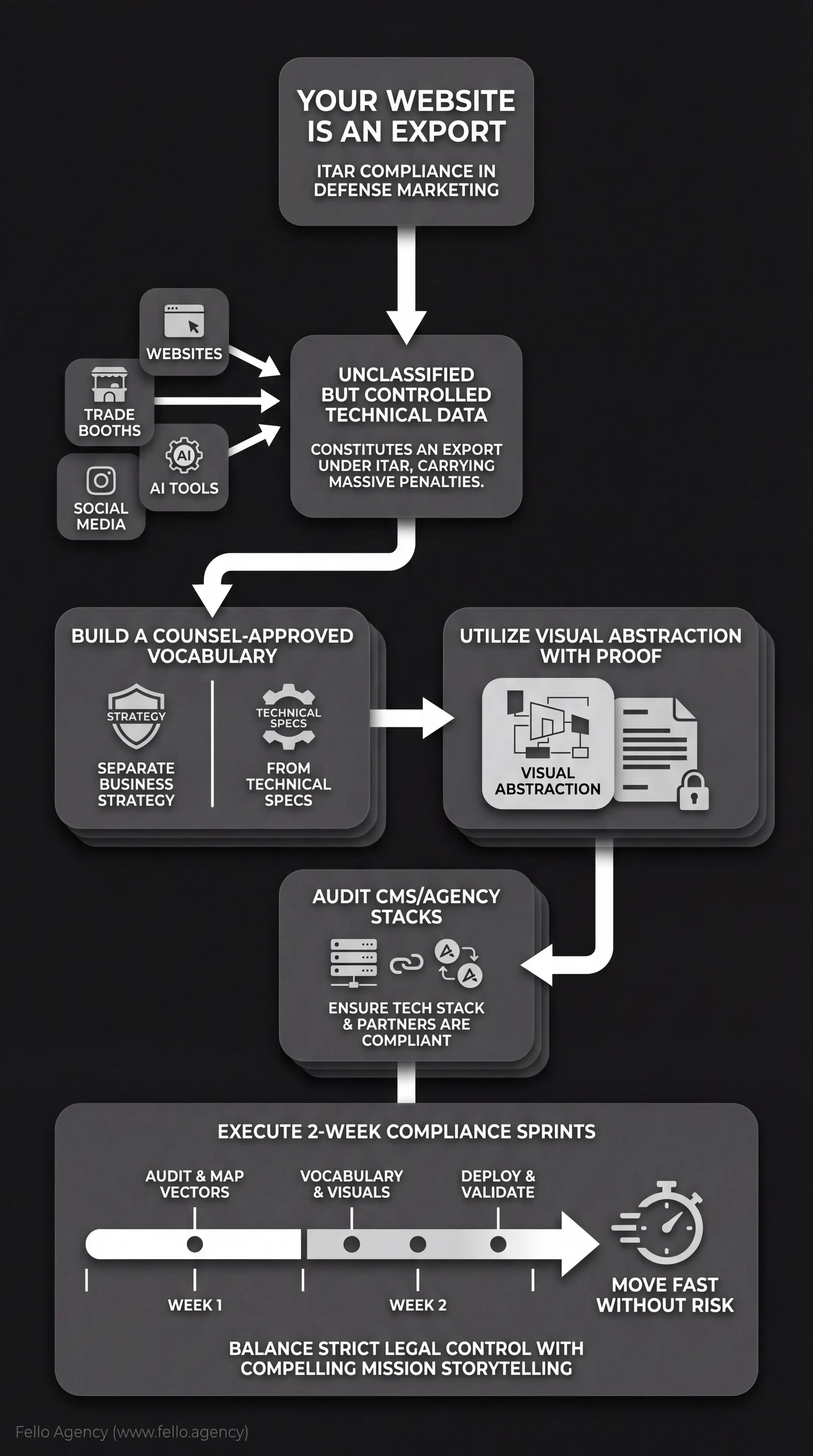
Treat every asset like an export surface. Close the gap between legal and marketing. Re-review old content when the context changes. Build a vocabulary your team can actually use. Lead with readiness, sovereignty, and mission value. Show invisible advantage with serious visuals and real proof. Audit your CMS, outside access, and AI use. Then move.
Look, military aircraft programs are long, political, and brutally competitive. Silence won't protect you. Sloppy marketing will hurt you. The edge goes to the team that can publish material that is compliant, compelling, and on time.
Take this stuff seriously because your competitors will, and they will win the deal.
Frequently Asked Questions
How do we market aircraft for Foreign Military Sales (FMS) without triggering ITAR violations?
You start by defining a sanitized, counsel-approved vocabulary. Under ITAR, releasing details to a foreign national - even for an FMS pitch - is legally an export under 22 C.F.R. §120.50. You must sell the mission value, deterrence, and interoperability first, keeping controlled integration data out of the initial room.
Does gating our unclassified aircraft spec sheets behind a lead capture form satisfy ITAR requirements?
Absolutely not. A gated form does not verify citizenship. If a foreign national downloads it, you just committed an export violation. Because any details needed for a U.S.-listed defense item are controlled, publishing unclassified specs on a web form carries massive liability. Treat gated assets like open web pages.
Are closed-door congressional briefing materials subject to the same export control rules as public marketing?
Yes, they are. Even in closed-door Capitol Hill briefings, you cannot guarantee the citizenship of every staffer in the room. Disclosing unclassified technical data to a foreign person inside the U.S. is a deemed export. Your congressional decks must focus strictly on domestic jobs, budget logic, and strategic readiness.
What is the corporate liability if an outside marketing agency accidentally leaks technical defense data?
The liability falls on you, and it is brutal. Knowing export violations carry up to a $1,000,000 fine and 20 years' imprisonment per instance. Defense primes are consistently cited for unauthorized access by contractors. If your agency NDA lacks strict export-control flow-down language, you are holding the grenade.
How can we showcase our engineering edge for recruitment without exposing controlled technical data?
You visualize the mission, not the mechanics. Showing dimensional tolerances or CAD/CAM material callouts is explicitly classified as clearly controlled technical data under ITAR. Instead of exposing the platform's internal guts, leverage sanitized lab environments, cleared field-testing footage, and strategic mission-impact stories to attract top-tier engineering talent safely.
Your Creative Partner for Innovation That Matters
From advanced tech to transformative healthcare, Fello helps visionary teams shape perception, launch products, and lead industries.


Let’s keep in touch.
Discover more about high-performance web design. Follow us on Linkedin and Instagram.

