


I'm Zach Ronski. I'm a Marketing Director at **Fello Agency** in Toronto. We work with companies doing the heavy stuff - AI, robotics, quantum, advanced manufacturing, MedTech, defense tech. The kind of tech that changes industries, not just app icons.
Here's what I've learned after a decade of watching brilliant teams win... and watching other brilliant teams lose for reasons they didn't even realize were happening.
In 2026, proving ROI isn't a spreadsheet problem. It's a trust problem. It's a speed problem. It's a "can your buyer repeat your value in one sentence?" problem.
And if your marketing doesn't fix those three things, your pipeline will always feel fragile.
This is the 5-step strategy I use with B2B tech CMOs and VPs of Marketing who are under real pressure. Board pressure. CEO pressure. Sales pressure. The kind where you don't get credit for "brand awareness." You get credit for revenue.
Why proving ROI in 2026 feels brutal
You're getting hit from both sides.
On one side, budgets are tighter. Gartner reported marketing budgets averaged 7.7% of company revenue in 2024. That's not a "nice to know." That's the context you're operating in.
On the other side, expectations are higher. Gartner also found 64% of CMOs say they don't have enough budget to execute their strategy. So you're expected to do more, with less, while your CEO still wants predictability.
Now add AI.
If everybody's super, then nobody is. That quote from The Incredibles is basically the marketing landscape now. Content is cheap. Generic "thought leadership" is basically free. Your competitors can flood LinkedIn with perfectly readable paragraphs of nothing.
So the question becomes simple: what can't be faked?
Trust. Proof. Customer reality. Visual credibility. A sales story that sounds like money.
That's what ROI looks like in 2026.
The buyer is moving fast (even when your industry isn't)

A lot of deep tech deals are long. I've seen sales cycles stretch 18 to 24 months in aerospace, defense, and MedTech. No one needs convincing there.
But don't fall asleep thinking "we have time."
DemandGen reported 87% of B2B technology buyers completed their purchase within six months. Even if your segment is slower, your buyer's attention span is not.
They'll move on. They'll shortlist someone else. They'll "come back later" and never come back.
And shortlists are brutal.
DemandGen also found 86% of enterprise B2B buyers only shortlist products they already know. Read that again. They don't shortlist "best." They shortlist "known."
Then they buy predictably. DemandGen reported 71% of buyers purchased their top-ranked choice on that shortlist.
So if you want ROI, you need to show up early, look legitimate, and make your story repeatable. That's not fluffy brand talk. That's math.
Your buying committee is smaller than you think
People love saying, "enterprise buying committees are huge." Sometimes, sure.
But DemandGen reported 96% of B2B buying groups have five or fewer stakeholders.
That means your marketing needs to hit a tight set of brains, with a tight set of fears. CEO, CFO, technical lead, procurement, and maybe the end user or ops owner.
If your website can't speak to all of them fast, you're creating friction you'll never see. Sales will just tell you, "they went dark."
Cool. That's expensive.
Alright. Let's fix it.
Step 1: Build an ROI narrative your buyer can repeat
Your website needs to speak business.
I'm going to say it the way I say it to technical founding teams: you can be the smartest person in the room and still lose. Buyers don't pay you for intelligence. They pay you for outcomes.
Deep tech teams fall in love with technical talk. Specs. Architecture. Features. It's normal. It's also where pipeline goes to die.
You need business talk first.
Business talk is "make money," "save money," "reduce risk," "move faster," "stay compliant," "win deals," "avoid downtime." It's the language that gets repeated in boardrooms, factories, and procurement meetings.
And no, that doesn't mean dumbing anything down. It means leading with the part that matters.
How I get to a real story (fast)
At Fello Agency, we run strategy like a commercialization exercise, not a brainstorming club. We do research in sequence. We start by interviewing customers first, then sales, then marketing, then leadership. It's a simple reason.
Customers tell you what they actually bought. Sales tells you what deals almost died over. Marketing tells you what's getting traction. Leadership tells you where the company needs to go.
Then we build the narrative around value, past deals, and the real pain your buyer is living with. I always want to know one thing: what pisses off your clients the most? Because that's where urgency comes from.
When a buyer feels seen, they lean in.
Segment your ICPs like your quarter depends on it
A lot of our clients market to more than one industry. Dual product focus. Dual use. Two or three ICPs that speak totally different languages.
If you try to blend them, your message becomes mush. Everyone feels like you're "kind of for them." Nobody feels like you're for them.
We implemented this for Sphere by creating distinct industry pages that spoke directly to different ICPs in factories, medical tech, and defense. That lets each buyer land on a page where the examples, language, and outcomes feel familiar.
And it gives you something else: clean measurement. You can see which stream is producing meetings, which stream is producing downloads, and which stream is producing garbage.
Personalization isn't a "nice-to-have" anymore. ON24 found personalization can generate 4× more demo or meeting requests. That's not magic. That's what happens when the buyer feels like you built this for them.
ON24 also reported personalizing CTAs and content can boost engagement by about 68%. Again, simple. Relevance wins.
"Sell a lifestyle, even in technology"
This is where B2B people get uncomfortable. They hear "lifestyle" and think consumer ads.
I'm not asking you to turn into a sneaker brand. I'm telling you how humans buy.
They buy a future. They buy relief. They buy status. They buy the version of themselves that looks smart after deploying your product.
Not how smart the device is, but how much smarter you're going to be.
If your messaging can't describe what changes in the buyer's life, you're leaving money on the table.
Step 2: Turn your website into a trust machine
You are selling your website. You are selling yourselves.
In 2026, the buyer's first serious meeting with you is often your homepage. And if that homepage looks like a science fair project, you're done.
Branding is authentication. It's how your company proves it's real.
A lot of founders believe in what they built. They just never authenticated it. So the market doesn't believe them.
If it looks like bullshit, no one's gonna want to work with it.
What "trust" actually looks like on a tech website
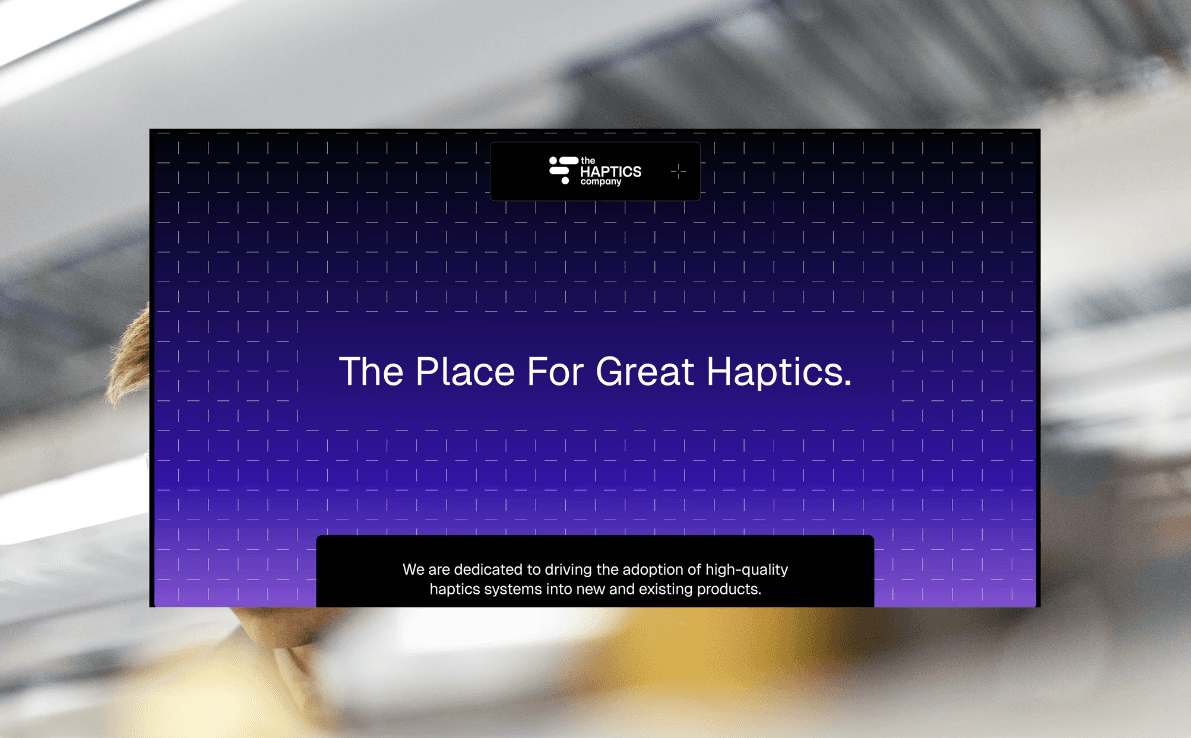
I'm very opinionated here. Homepages and landing pages need to lead with ROI metrics and case studies. Specs come later.
Your buyer is not trying to admire your engineering. They're trying to reduce risk. They're trying to justify the purchase internally. They're trying to avoid being the person who picked the wrong vendor.
So the site needs to make that easy.
I push a specific structure for deep tech sites. It starts with a credibility-heavy hero. Then you show proof. Then you show product assets. Then you show testimonials. Then you make the CTA obvious. Then you build a resource layer.
When teams don't do this, the site becomes a brochure. It becomes a museum. And your marketing ROI becomes hard to defend because the core conversion layer is weak.
The ugly truth: bad visuals cost deals
I've seen a client lose a deal with Amazon solely because their visuals were poor. Not product. Not pricing. Visual trust.
I've also seen a warehouse and logistics company pushed up the enterprise ladder, then basically told their decks weren't cutting it. The message was clear: if you don't look legitimate, you don't get in the room.
That's why I'm blunt with CFOs.
You expect your clients to spend hundreds of thousands of dollars on you, if not millions. If you can't spend a simple $100,000 to look your absolute best, to have a solid brand, then you don't deserve the business.
It's not me trying to be edgy. It's human behavior.
The budget conversation (without the word "branding")
A lot of boards hear "branding" and think colors.
So we don't frame it that way when we need CFO buy-in. We frame it as communication strategy and marketing investment. A $50,000 website is not an art project. It's a lead generation tool.
For Series A and Series B companies, we typically advise budgeting $50,000 to $150,000 for a rebrand, depending on complexity. I'm also going to tell you something that surprises people.
Spending significantly over $100,000 can look suspicious to technical buyers. It can signal vaporware. You want premium. You don't want performative.
Half of the budget should go into research and strategy anyway. The work that goes behind the art is what creates clarity.
And the other practical point: your marketing team needs to run the site.
If you don't have a proper CMS, there is no point of even having a website.
Step 3: Build proof assets that close the trust gap
In 2026, generic content is noise. Proof cuts through.
And proof isn't a single PDF that nobody reads. Proof is a system of assets that makes your buyer feel safe. It makes sales conversations easier. It makes procurement faster.
This is where Fello lives. Technical fluency meets cinematic storytelling. We speak "engineer" and "executive." Then we build assets that look like they belong in a million-dollar deal.
Because they do.
Video is the fastest credibility shortcut (when it's done right)

Wyzowl reports 89% of businesses use video as a marketing tool. So you're not special for having video.
The advantage is quality, story, and placement.
Wyzowl also found 93% of marketers say video delivered strong ROI. I agree, but I'm going to add a condition.
Video works when it's proof. When it's customer reality. When it's specific.
When we worked with Mosaic Manufacturing, we used video case studies to show the operational benefits and lifestyle reality of being an orthotics business owner using their device. That's not "cool technology." That's "my shop runs better."
That kind of proof helped support results like a 25% jump in inbound leads and a 15% rise in booked meetings within two months after we reframed messaging and assets. That's pipeline. That's ROI.
I also like building "sizzle reel" proof for multi-use products. We did that for an XR client, Shapes, so prospects could see multiple applications fast. It helps buyers connect the dots without needing an hour-long call.
One thing I'll always say: video should never replace good copy. Copy is foundational for SEO, messaging discipline, and sales clarity. Video amplifies it.
When you can't show the product, you still need to show the product
Defense, hardware, quantum, classified systems. Sometimes the product is unfinished. Sometimes it's redacted. Sometimes it's invisible.
You still need proof.
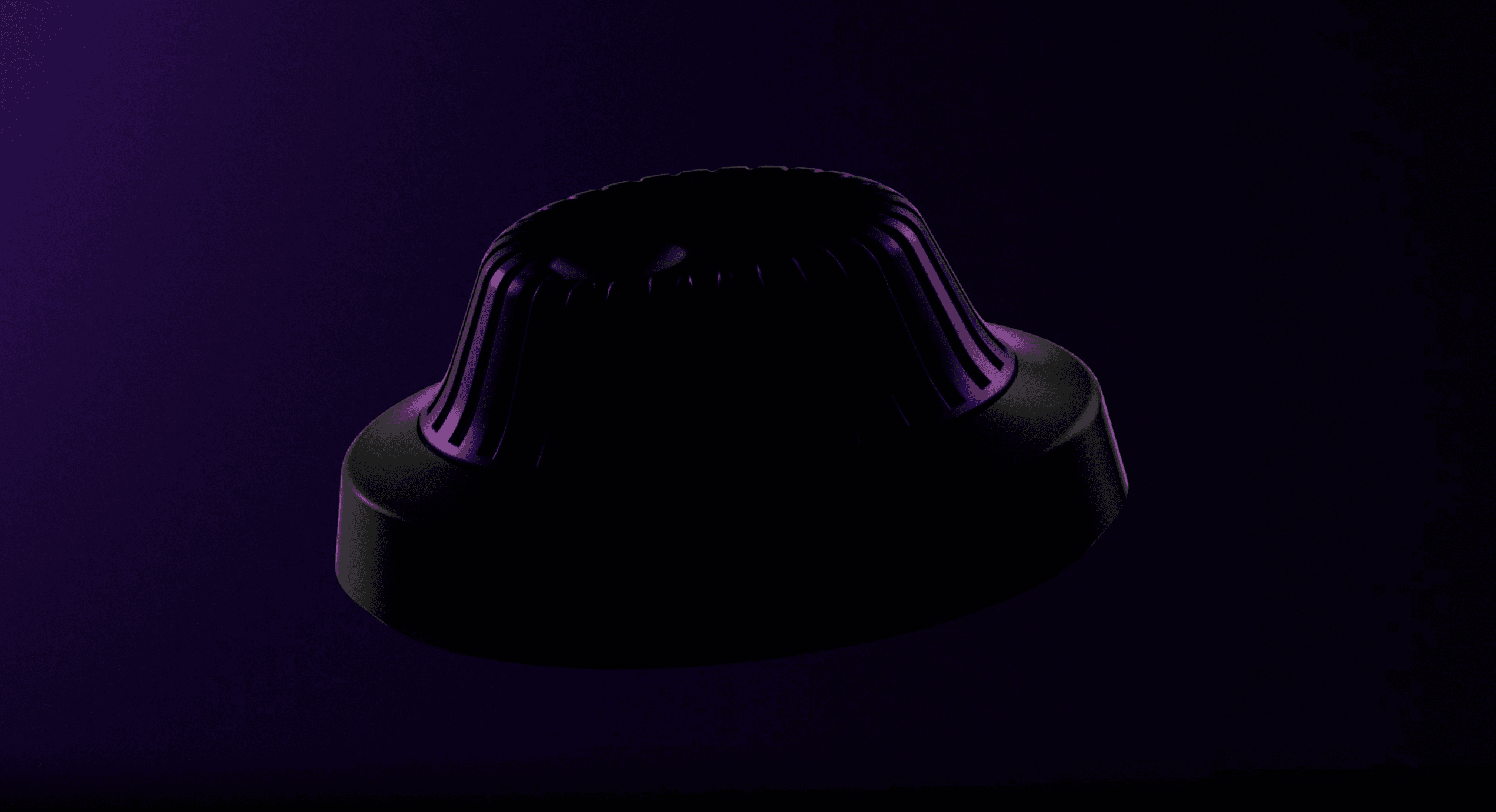
We've used high-fidelity 3D renders to help early-stage defense companies visually communicate their concept to potential investors when the physical product wasn't there still. We also worked with a confidential Canadian counter-drone company where renders and pitch decks enabled them to secure a significant funding round.
That's not "nice creative." That's making the thing fundable.
For classified work, renders are also how you show performance without violating security. You can simulate environments like water, air, and land. You can show scenarios you can't film.
Then you ground it with reality. High-quality lab videos. The team in the room. The engineering presence. That stops vaporware skepticism.
You still need a driver behind the car.
Repurpose aggressively (because budgets are real)
CMOs are under budget pressure. I get it.
So when you spend on a big proof asset, you squeeze it. Hard.
We use a "bang for your buck" model. One strong case study video can become a written case study PDF, multiple sales one-pagers, a set of social cuts, event booth loops, and website modules.
That's how you turn "content spend" into a system that keeps paying you back.
Step 4: Measure micro-conversions that predict revenue
If your sales cycle is long, last-click attribution will make marketing look useless. That's the game.
So you need interim metrics that are hard to argue with. You need signals that show intent building, even before the deal closes.
This is where a lot of teams get lazy. Or they get overwhelmed.
I've seen companies not even check Hotjar or Google Analytics. They're chasing "KPIs" while not measuring the basics that come way before the sale.
What I look at first when marketing isn't working
I diagnose the people and the process before I diagnose the creative.
How involved is the internal team? Do they care? Do they respect what an agency can do? Are they actually going to execute? Or are we making assets that die in a Google Drive folder?
Then I look at measurement. Are you tracking what's happening on the website? Are you seeing where prospects drop? Are you seeing which pages are doing the heavy lifting?
If you don't know that, proving ROI becomes a political argument instead of a performance argument.
Micro-conversions that matter in real B2B buying
In long-cycle B2B, micro-conversions show you who's serious. They also show you which message is landing.
I care a lot about case study engagement. Not just views. Repeat views. Time on page. People bouncing back to pricing or contact pages after reading proof.
I care about proof video behavior. Completion rates. Replays. Which segments get watched and which get skipped.
I care about content downloads that are actually useful, like brochures and technical PDFs. I use those to capture contact info and keep resonance during the slow middle of the funnel.
I also care about segmented path performance. If you have separate vertical pages, you should know which vertical is producing meetings and which one is producing tire kickers.
This is how you build a forecastable story for your CEO. You stop saying "marketing is doing stuff." You start saying, "this segment is heating up, here's the evidence, and sales should focus here."
Write content that helps buyers write their future RFPs
A lot of marketing teams write white papers to "educate."
I'd rather help write their future RFPs.
We've built PDF and white paper strategies in manufacturing that keep nurturing leads over long cycles. The content is designed to be pulled into internal docs. It's designed to be forwarded. It's designed to make your buyer look smart internally.
That's ROI. It's not flashy. It's lethal.
And it matches what I believe about commercialization. Even if you have to pay early users, getting that first story, that first case study, that first proof point is worth it. It creates momentum you can measure.
Step 5: Remove friction so marketing can move at market speed
You don't want to be moving slow in tech. You're gonna get killed.
Speed isn't a vibe. Speed is structural. It's tools, training, and autonomy.
This is where "ROI" gets real, because if marketing can't ship, marketing can't learn. If marketing can't learn, marketing can't improve CAC. If marketing can't improve CAC, you're back in board meetings defending your existence.
The 3-minute CMS rule
I have a benchmark: your team needs to be able to publish a blog post in three minutes.
If they can't, the system is broken.
I've seen clients with legacy backends take three months to upload a guest blog post. That's not a small issue. That's a go-to-market handicap.
That's why we sell fully autonomous, editable website systems as a core value proposition. We build in training as a hard requirement. Marketing needs independence. Otherwise you're waiting on developers for basic updates while the market moves.
And we've proven speed matters. We've used Framer to launch a high-quality website in under two months for a client who needed to hit a CES deadline. That's the pace you need in 2026.
Align sales enablement to real conversations
If you want ROI, your sales team has to use what you build.
So stop making assets that look pretty and die. Build things reps actually want in the middle of a deal. One-pagers that answer the hard questions. Two-pagers that make procurement easier. Case studies told from the customer's voice. Explainers that reduce confusion.
I use a Star Wars analogy for this. Your client is your Padawan. They need a guide. They don't need a vendor.
Sales enablement should help reps guide. It should help them teach. It should help them control the narrative without overselling.
Because overselling and under delivering is the fastest way to lose trust in tech. Once credibility is gone, it's over.
We've built sales systems like a mobile-first toolkit for a field sales software client, replacing scattered collateral and making presentations smoother. We've built outbound assets for Campfire that helped increase demo booking conversion from cold emails by 1.6%, and their onboarding videos improved early retention and activation by 20%.
That's revenue-adjacent work that shows up in numbers.
A lean partner moves faster (and that matters)
Fello Agency is intentionally small, around 10 - 11 core people. No bloated account teams. Clients work directly with the people doing the work.
We also built the agency from the ground up without venture capital. That changes how you operate. You don't get to move slow. You don't get to hide behind process.
That's why clients say things like Sphere's Head of Marketing, Alexandra Corey: "The new website has more than tripled our lead generation efforts." And why Prollenium's CMO, Kaitlin Daley, said, "Fello delivered smart, strategic creative that elevated our brand."
When the work is right, the ROI gets easier to defend.
What I'd do in the next 30 days (if ROI was on the line)
First, I'd fix the homepage story. One sentence. Business language. ROI-first. Proof right under it. Your website needs to speak business.
Second, I'd build one flagship proof asset. A real case study. Told from the customer perspective. Video if the contract size demands it.
Third, I'd segment the site for your top ICPs so you can measure which stream is producing meetings. Personalization drives response. The data backs that up, and your pipeline will too.
Fourth, I'd set micro-conversions with your sales leader. Not vanity metrics. Real intent signals that predict revenue.
Fifth, I'd remove friction. CMS autonomy. Training. Three-minute publishing. Marketing ships faster, learns faster, and starts compounding.
That's the playbook.
You can call it branding. You can call it demand gen. I don't care. I call it commercialization.
And in 2026, the companies that win very heavily are the ones that look legitimate, move fast, and prove value in plain language. Every single time.
Frequently Asked Questions
How do I justify brand investment to a CFO who only cares about lead gen?
Stop calling it 'branding.' Frame it as 'risk reduction' and 'commercialization.' In a market where 86% of enterprise buyers only shortlist products they already know, a weak brand is a deal-killer. Your CFO needs to understand that if you look like a science fair project, you don't get the meeting.
Is video marketing actually worth the high production cost for B2B tech?
Yes, but only if it functions as 'proof,' not just a sizzle reel. 93% of marketers report strong ROI from video because it acts as a credibility shortcut. Whether it's a customer case study or a high-fidelity render of a classified defense system, video validates that you aren't vaporware.
How can we market to multiple distinct industries without diluting our message?
Do not blend them. Create distinct pages for each ICP (e.g., Defense vs. MedTech) so the language and outcomes feel specific. Data shows personalization can generate 4x more demo requests. If you try to speak to everyone at once, you sound like you're for no one, and technical buyers will bounce.
Why isn't our marketing shortening the sales cycle?
You likely aren't arming your buyer to sell you internally. Since 96% of buying groups have five or fewer stakeholders, you need assets that speak business to the CFO and specs to the engineer. Provide 'proof assets' - calculators and one-pagers - that help your champion write their future RFP.
We have a long sales cycle. Should we still worry about speed?
Absolutely. Even in deep tech, buyer attention spans are short. 87% of B2B tech buyers complete purchases within six months. If your marketing team can't ship a landing page in days - or a blog in three minutes - you are structurally too slow to capture intent before they move on.
Your Creative Partner for Innovation That Matters
From advanced tech to transformative healthcare, Fello helps visionary teams shape perception, launch products, and lead industries.

Let’s keep in touch.
Discover more about high-performance web design. Follow us on Linkedin and Instagram.

