


Your site is getting visits.
SEO is working. Paid is driving clicks. LinkedIn is doing its thing.
Then you sit in the revenue meeting and the same question comes back: where's the pipeline?
I'm Zach Ronski, Marketing Director at Fello Agency in Toronto. We build brands and websites for B2B tech companies in AI, robotics, quantum computing, advanced manufacturing, MedTech, and defense tech. We've done 50+ projects, and we stay lean on purpose. No bloated account teams. No fluff. Just sharp, strategic creative.
And I'll tell you the hard truth.
Most B2B tech websites don't have a traffic problem. They have a conversion problem. More specifically, they have a clarity and trust problem.
Forrester found nearly 90% of global business buyers said their purchase process was stalled in 2023. That's what you're fighting. Delay. Doubt. Internal politics.
And buyers do a lot of their work before they ever talk to your team. One review says 57 - 70% of the decision process is complete before a buyer engages a sales rep.
So if your website is unclear, you don't just lose a form fill. You lose the deal before it becomes a deal.
That's why I'm writing this. In 2026, your website has to act like a revenue asset. It has to turn attention into pipeline.
The 2026 buying reality: self-serve is normal, trust is rare
Buying is moving digital fast.
Gartner predicted 80% of B2B sales interactions would happen through digital channels. That's basically the world we're in now.
And Gartner also says 61% of B2B buyers prefer an overall buying experience with no sales rep involvement.
That doesn't mean buyers hate humans. It means they hate being forced into a call too early. They want to learn on their terms first.
So your website has to do two things at once.
It has to support self-serve research, and it has to set up a strong human conversation when the buyer finally wants it. That's the "connection" part I always come back to. Your site should connect to your sales process, not restart it.
Your website needs to speak business
I say this constantly because it's the core issue: your website needs to speak business.
Deep tech companies default to technical talk. It feels safe. It feels accurate. It also loses pipeline when it's the first thing a buyer sees.
Business talk is simple.
It tells the buyer what changes in their world. It tells them what gets faster, cheaper, safer, or easier. It shows them why the operational change is worth it.
And operational change is the whole sale. Every deep tech company we work with is trying to convince someone to stop doing things the old way so they can save money or make money.
Price pressure forces ROI language
In North America and Europe, at least one-third of B2B buyers say price is the primary influence on purchase decisions.
That matters because price questions show up early now. Your website has to carry ROI language from the start. Not as hype. As clear value.
This is why I push teams to lead with outcomes on homepages and landing pages. ROI first. Proof second. Technical depth after.
A simple translation method that works
Here's the practical way I translate deep tech messaging.
I ask the team to explain the capability in plain language. Then I ask one question: "So what?"
"So what?" forces you into business outcomes. Time saved. Risk reduced. Downtime avoided. Throughput increased. Headcount freed up. Compliance made easier.
You can keep the specs. Specs matter. They just belong after the buyer believes the business story.
Sphere: business-first pages built for real ICPs
Sphere is a clean example.
They were an XR collaboration platform selling into factories, medical tech, and defense. Three different worlds. Three different objections. Three different buying triggers.
We built distinct industry pages that spoke directly to each ICP. Then we spent a huge amount of time watching website recordings to see what users did, where they got stuck, and what made them move forward.
We also led with ROI and clear outcomes. When that story landed, the site became a tool the team could actually send in outreach and partner conversations. That work helped increase lead generation by 3x.
That's what "speak business" looks like. You remove translation work for the buyer.
Prove substance in the first 10 seconds
Deep tech buyers are skeptical for a reason.
They've seen companies oversell and under deliver. They've watched startups promise the stars and fail. They've sat through decks that felt like science fiction.
So credibility has to show up fast. Not buried in paragraph seven.
This is why I'm blunt about visuals and branding.
If you're selling multi-million dollar deals and your website looks cheap, it's over. The buyer makes a decision immediately. They won't tell you. They just stop responding.
Professional-level visuals and branding are a prerequisite.
How buyers judge "substance" quickly
Substance is evidence.
A strong product video helps. Animation helps when you can't show the hardware in the real world. Clean, enterprise-grade design helps because it signals seriousness. Credible logos and partnerships help. Case studies help the most.
On our own Fello website, once we started showing off the work and the bigger companies we were working with, people trusted us faster. They could see we were real. They could see we were in the room with serious teams.
That's what buyers want to feel. Safety.
Mission without proof gets ignored
I get approached by "mission-led" companies that don't have substance. Space firms selling merch before they've launched anything. Teams talking about IPOs when there's no product in market.
We can spot bullshit a mile away. Enterprise buyers can too.
If you want to talk mission, show the work through video, animation, and proof. Show how you're getting there. That's what earns trust.
Case studies are pipeline fuel (even if you can't share numbers)
A lot of B2B teams treat case studies like a nice-to-have content piece.
I treat them like a weapon. They prove product-market fit.
And they matter more now because buying is slow and collaborative.
A HubSpot survey found 60% of buyers spend one to six months evaluating before buying. That's a long time for doubt to creep in.
That same survey found 54% of buyers need buy-in from one to two colleagues. So your website can't only convince one person. It has to help that person convince the room.
And your champions often have less power than you think. Forrester reported 71% of Millennial and Gen Z B2B buyers have less decision-making authority than older buyers.
They do the homework. They shortlist vendors. Then they need ammo to sell internally.
Case studies are that ammo.
No surprise that 94% of B2B marketers rate testimonials and case studies as the most effective content tactics.
Mosaic Manufacturing: sell the lifestyle, even in technology
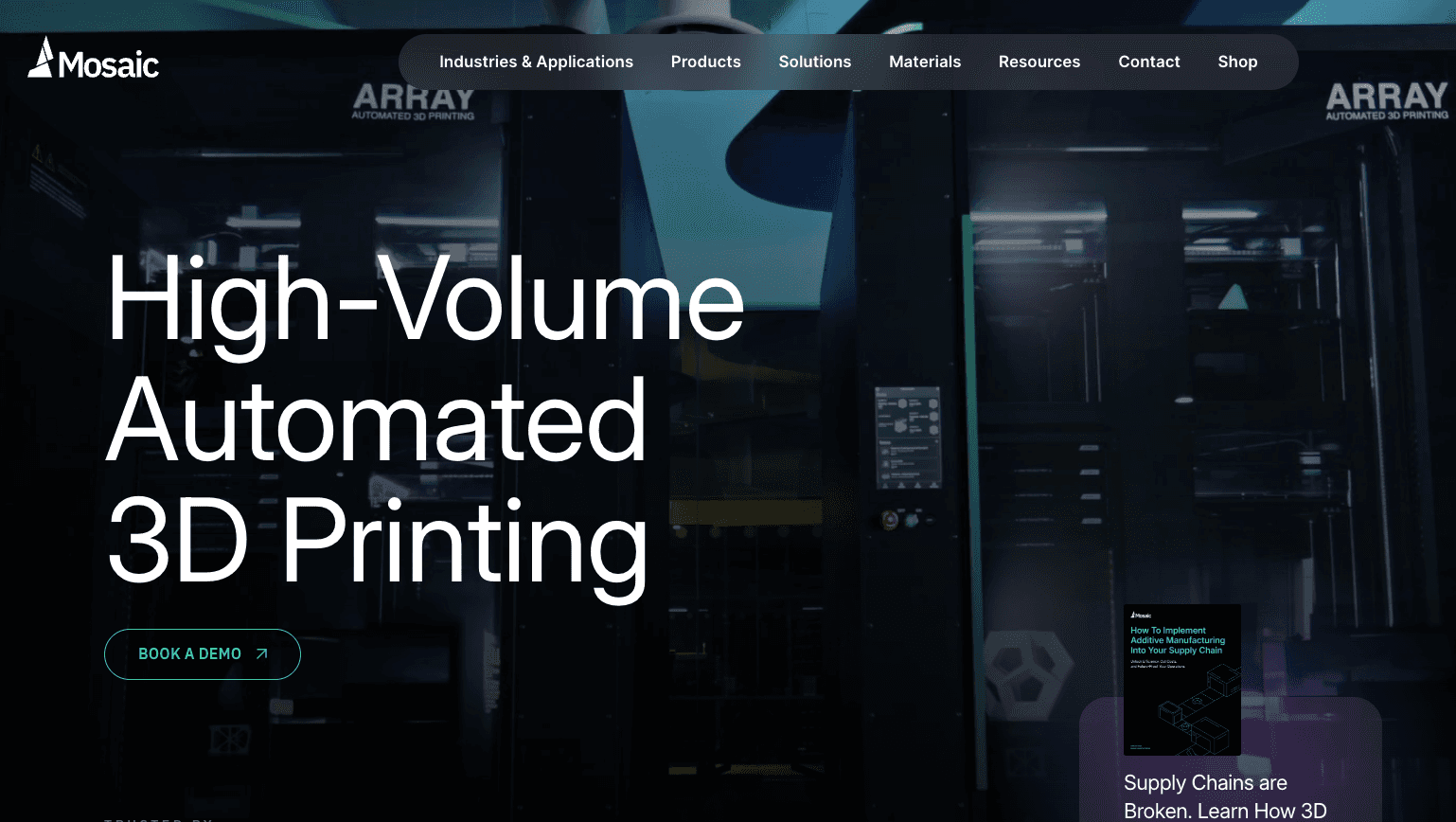
Mosaic develops industrial 3D printing technology. One of their challenges was that technical specs were overshadowing the value for non-engineers.
For their orthotics work, we used video case studies on the website. The goal was simple. Show what it's like to be an orthotics business owner using the device. Show the day-to-day. Show the operational benefit.
That's "sell a lifestyle, even in technology." It's "not how smart the device is, but how much smarter you're going to be" because you used it.
That work helped Mosaic increase inbound leads by 25% and booked meetings by 15% within two months. Those video assets also became central for investor decks, social campaigns, and trade show presentations.
Pipeline follows proof.
If you can't share metrics, share the change
A lot of enterprise accounts won't let you publish numbers. I get it. We see that constantly.
You can still build a case study that sells.
Show the before state. Show the friction. Show the approach. Show the after state in operational terms. Add a quote that's approved. Add visuals that make it real.
Also be careful with the data you publish. Overselling kills credibility fast. You want honest, believable proof.
Build the website like a highway
I use a highway metaphor because it matches how buyers actually behave.
Some people are ready to exit and talk to sales right now. Others are just driving. They're learning, comparing, and looping in colleagues.
You need lanes for both.
At Fello, we separate pages into landing pages and collector pages. Landing pages help close deals. Collector pages build brand loyalty and a following.
Landing pages: one page, one audience, one action
A landing page needs focus.
It should speak to one ICP and one buying context. It should carry ROI language. It should show proof that matters to that industry. Then it should make the next step obvious.
This is where industry pages win.
Sphere sold into factories, medical tech, and defense. We built different pages because each market needed different language. That made outreach easier, and it made the site easier to navigate.
This also keeps your marketing relevant. Gartner says 73% of B2B buyers actively avoid suppliers who send irrelevant outreach or content. Relevance protects pipeline.
Collector pages: the pages buyers forward internally

Collector pages build trust over time.
Think partnership pages, mission pages, about pages, and strong case study hubs. These pages don't always convert on the first touch. They keep you remembered. They make you feel legitimate. They help buyers justify.
They also act like internal "share links." Your champion forwards them to the VP. The VP checks if you look serious. Procurement checks if you look stable. It's part of the deal, even if nobody says it.
"Request a demo" can't be your only door in 2026
A lot of B2B sites treat "Request a Demo" like the only conversion path.
That leaves pipeline on the table, because a lot of visitors are not ready still.
A HubSpot survey found 75% of B2B buyers prefer to gather information independently. That same survey found 57% of buyers made a purchase without any sales rep interaction.
You don't have to love it. You have to design for it.
Brochure downloads are still underrated
One of my favorite tactics is a high-value download, like a brochure or an insights asset.
It works because it matches real buying behavior. The buyer isn't ready for a call. They still want something concrete. They download it. You capture contact info. You keep brand resonance during a long cycle.
It also makes follow-up easier. They raised their hand.
Just make sure the asset is valuable. Gating fluff trains buyers to ignore you.
Human selling still wins when the stakes are high
I'm also clear about this: human selling matters.
In B2B tech, you might be selling to an older audience. You might be dealing with long security reviews. Deal cycles can run six months to two years depending on what you sell.
And buyers still want experts when it matters most. Forrester says product experts have the greatest influence on helping buyers find the right solution.
So build self-serve paths, then create a smooth handoff to humans. When the buyer finally talks to sales, the conversation should feel continuous. Connection beats restarts.
Fix the hidden killer: your website is hard for your own team to manage
Here's a practical one that a lot of people ignore.
Marketing can't move fast when the website is a nightmare to update.
This is why I ask early: "Find out what pisses off your clients the most" about the current website. A lot of the time it's the platform. Teams are stuck on builders they can't use. They need a dev for every update. Landing pages take weeks. Nothing gets tested.
That slows pipeline because speed matters.
And speed isn't only internal. It impacts conversion too.
One review found pages taking longer than three seconds can lose around 40% of visitors. Another part of that same review notes each extra second of delay can cut conversions by roughly 7%.
If you're paying for traffic, slow pages increase CAC silently.
At Fello, one of the key promises we push is an editable, autonomous website. Your team should be able to ship changes without begging engineering. That's how you keep up.
Measure friction. Fix it every week.
I'm not impressed by dashboards that don't change behavior.
I care about what makes buyers stall, and how fast you fix it.
That's why we watch recordings. We look at Hotjar. We look at Google Analytics. We check the early indicators that show up way before revenue.
You'll spot the truth fast. People scroll past a key claim. They get stuck on jargon. They miss the CTA. They bounce on a slow-loading page.
Fix those things and conversion moves.
One review found the median B2B landing page conversion rate is around ~2.9%. That's your sanity check.
And small shifts can matter. That same review notes adding social proof can boost conversions by about 7 - 14%. Logos and testimonials sound basic. They work because buyers want safety.
Get alignment early so the site doesn't get ripped apart at the end
Deep tech websites get political.
Engineering wants technical density. Sales wants demo buttons everywhere. Leadership wants vision. Brand wants polish. Investors want the story to sound big.
If you wait until the end to align that, the project drags forever.
We avoid that by pulling decision makers in early and making brand reviews feel like discussions. Mood boards are a big tool for us here. They force opinions out early, before design becomes "real."
We used that approach with a life sciences educational platform that had picky stakeholders. I'm not going to name them. The mood board exercise got the C-suite involved and aligned. The result was a website the whole team was impressed with.
The competitor question that helps you stand out
During discovery, I ask clients: "What do you think your competitor thinks?"
It forces honesty. It forces a different angle. It helps you stop sounding like every other vendor in the category.
When brands look outside the box, they can win very heavily on their website. Difference gets remembered.
A 30-day plan to turn traffic into pipeline
You might not have six months for a full rebuild. Most CMOs don't.
You can still create real momentum in 30 days if you stay focused.
In week one, tighten the homepage story. Rewrite the hero in business language. Put proof close to the top. Remove jargon that only internal teams understand. Clarity makes the site sell.
In week two, pick one ICP that can drive revenue this quarter and build one landing page for them. Keep it sharp. Make it specific. Add proof. Then give sales a link they'll actually use.
In week three, build one collector page that increases trust. A partnership page is an easy win. A clean case study hub works too. The goal is something a buyer can forward internally without embarrassment.
In week four, add a conversion bridge for mid-intent visitors. A valuable brochure download is one of the simplest. Pair it with fast follow-up so the buyer feels a human connection when they're ready. At the same time, fix speed issues and start watching recordings weekly.
If you run this plan, the quality of sales conversations changes quickly. Buyers show up with context. They ask better questions. They're closer to a decision.
That's pipeline.
Commercialization wins. Websites are part of that fight.
A lot of deep tech companies are amazing at building. They're slower at going to market.
I wish more teams treated commercialization like life or death. Move 10x faster than you think you should. Get users. Get stories. Put proof in the market.
Your website is one of the fastest places to do it. It runs 24/7. It talks to every buyer before you do. It can build trust, qualify leads, and keep deals warm during long cycles.
So make the site speak business. Sell the sizzle and back it with evidence. Build lanes that match how your buyers actually buy. Keep the human thread ready when they raise their hand.
Do that and traffic stops being noise. It becomes pipeline.
Frequently Asked Questions
How significantly does page speed influence B2B conversion rates?
Website performance is a critical financial lever. Data indicates that pages taking longer than three seconds to load can lose ~40% of visitors. Furthermore, each additional second of delay decreases conversion rates by roughly 7%, directly increasing customer acquisition costs (CAC) for paid traffic.
What is the current prevalence of 'sales-free' B2B buying?
Modern buyers demand autonomy over access. Recent surveys reveal that 61% of B2B buyers now prefer a buying journey with no sales rep involvement. This shifts the burden to your website to facilitate self-service research and complete evaluation independently.
Why is vendor content often ignored by B2B prospects?
Generic marketing creates immediate friction. Approximately 73% of B2B buyers actively avoid suppliers who distribute irrelevant content. To retain attention, websites must segment messaging by industry or role rather than relying on broad, feature-based specifications.
How does the generational shift in B2B buyers impact sales strategies?
Younger buyers drive research but often lack final sign-off. About 71% of Millennial and Gen Z buyers report having less decision-making authority than older counterparts. Your website must equip these 'champions' with shareable, verification-focused content to sell your solution internally.
Who holds the most influence in the B2B vendor selection process?
Subject matter experts are the primary trust anchor. Research indicates buyers gain more value from interactions with product experts than from general sales reps. Websites should facilitate direct access to technical leadership to accelerate trust during the evaluation phase.
Your Creative Partner for Innovation That Matters
From advanced tech to transformative healthcare, Fello helps visionary teams shape perception, launch products, and lead industries.

Let’s keep in touch.
Discover more about high-performance web design. Follow us on Linkedin and Instagram.

