

You read silence as neutral. It is the sound of a technical buyer deciding against you and never telling you why.
The engineer who cannot find a starting price assumes you are too expensive and moves on, so the number never comes up, the loss never enters your pipeline, and you explain the flat quarter to your board by blaming a market that went quiet.
Your homepage argues your case in rooms you will never enter, and where it says nothing, a stranger settles the matter for you.
Key Takeaways
Framer's lack of HTML export for self-hosting disqualifies the platform for defense and aerospace websites that must secure controlled technical data within internal IT environments.
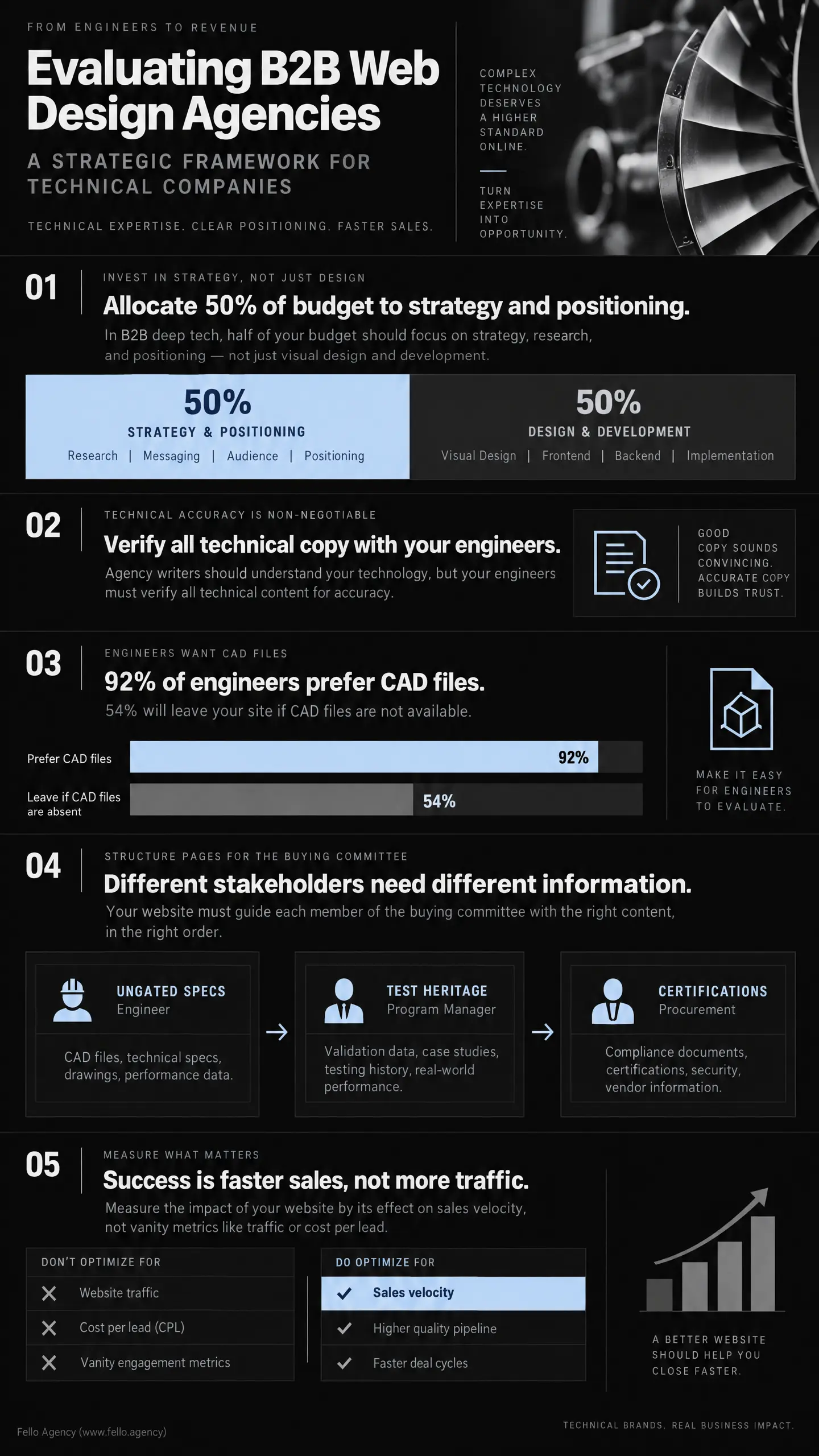
B2B web design agencies must require a client-side engineer to sign off on every technical claim to prevent inaccurate messaging from costing seven-figure hardware contracts.
Ungated CAD models are critical for manufacturing websites because 92% of engineers prefer suppliers that provide them and 90% of downloaded parts result in a purchase.
Hardware web pages must structure information vertically to match the buying committee, placing ungated specs first for engineers, test history second for managers, and certifications last for procurement.
A fully editable B2B website built on custom templates typically costs between $30,000 and $60,000, while a comprehensive Series A visual rebrand ranges from $50,000 to $150,000.
Web design agencies evaluating highly concentrated deep tech markets with as few as 140 total buyers should measure success through accelerated sales velocity rather than volume-based cost-per-lead metrics.
How Should You Evaluate a B2B Web Design Agency?
You know what a website is. You have probably bought two or 3 been disappointed by at least one. So I am skipping the sermon and getting to how I would vet a b2b web design agency if I were in your seat with a board asking why pipeline is flat.
Why Prioritize Positioning Over Visual Design When Evaluating a B2B Web Design Agency?

This is the whole test. Everything else is detail.
An agency that opens with mood boards will hand you a beautiful shell you cannot fill. I watched a quantum sensing founder get passed on by three venture funds during a Series A because the homepage was a physics abstract. It answered every technical question and no business question. The associate reading it was writing a memo about whether this was a business, and the sensor barely came up. We moved the physics one click off the homepage and put customer traction where the abstract used to be. Words fixed that, and no redesign would have.
So ask how the agency arrives at the first three sentences on your homepage. Mine have to answer what the product is, in words a smart non-specialist can repeat, who pays for it, and why it exists now instead of five years ago. Founders think those sentences are a description. They are a decision. If you do not make it on the page, a 26-year-old associate makes it for you on a Sunday night.
The answer tells you what you are buying. If they reach those sentences by interviewing your customers, then sales, then marketing, then leadership, in that order, you are buying strategy. If they reach them in a kickoff workshop, you are buying a design project with a strategy sticker on it. A real B2B branding agency puts roughly half the budget into research and positioning before a pixel moves. I tell CFOs that ratio upfront because it is the part they will never see in the final files.
How Should You Evaluate a B2B Web Design Agency's Technical Copywriting Capabilities?
"We collaborate on messaging" is agency code for "your product marketer writes it and we fit it to the layout." You can survive that on a SaaS site. In hardware and defense it is a liability with a dollar figure attached.
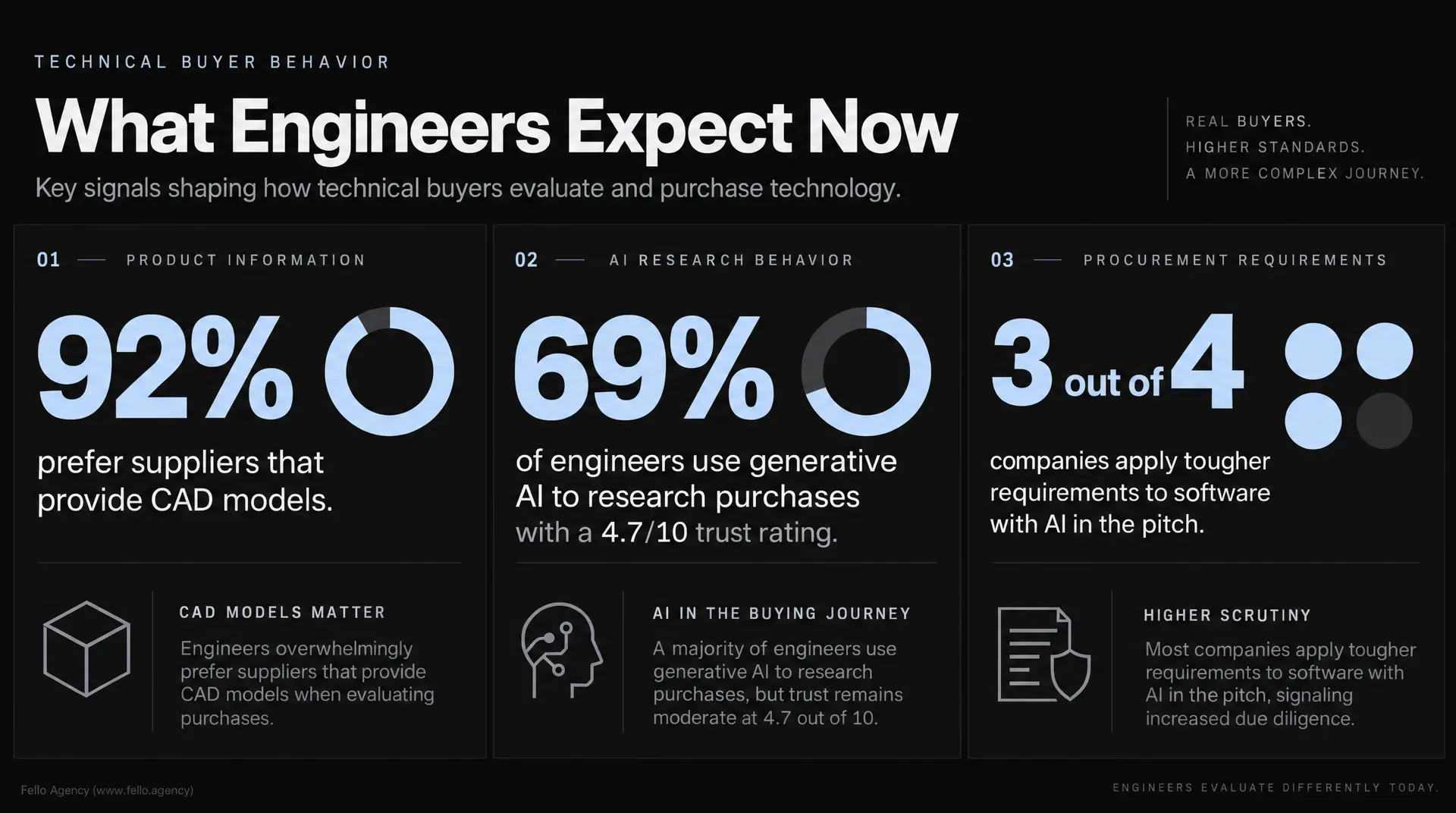
We ran a lost deal analysis for a defense-adjacent photonics company, skipped the internal workshop, and called the buyers who walked. A previous agency had added AI and cloud-connected claims to the website that the product did not support. Two phrases nobody in engineering signed off on, and a seven-figure program went to someone else. Buyers are getting stricter about exactly this. G2 found nearly three out of four companies now apply tougher requirements to software with AI in the pitch than to software without it.
My rule is that every technical statement on a page needs a source and a sign-off from an engineer on the client's side before it goes live. Ask if that is their process. If the question confuses them, they have never written for someone who reads a tolerance the way I read a price.
Ask who writes, by name. Copy quietly goes to the most junior person or to a tool, and your buyers can smell both. Engineers use generative AI to research purchases, 69% of them by GlobalSpec's latest count, and they rate their trust in its answers at 4.7 out of 10. They know what the output reads like. If your capability page reads like it, they assume the product is just as generic.
Why Is Content Management System Usability Important When Evaluating a B2B Web Design Agency?
The CMS conversation is the boring one. It is also where I have watched the most sites die.
My benchmark: once the post is written, can your marketing coordinator publish it in three minutes? I had a client whose backend was built by a developer they later let go. Nobody could touch it. One guest blog about a technology they had acquired took three months to get live, and that is a five-to-10 minute job. If you do not have a proper CMS, there is no point having a website.
I publish Fello's blog myself on the same tools we recommend, because I want to know if what I am selling works for someone who does not write code. Ask who on their team ships their own content. If it is the developer, they have not felt the pain.
Then ask what they build on and make them defend the why. Most of our sites ship on Framer because a Figma-to-WordPress handoff that took six months on a life science site four years ago now takes two. You do not want to be moving slow in tech, you will get killed. But Framer does not offer HTML export for self-hosting, which disqualifies it the moment a client has to host inside a controlled environment. Cloud-hosted Webflow, WordPress, and HubSpot carry their own problem there. The moment a foreign national on the agency team can open a draft page holding controlled technical data, your CMS is an export control liability. If they cannot talk through that without flinching, keep them away from your (defense or aerospace)(/industries/defense-aerospace) site.
One hard line I hold on every project is that the agency trains your marketing team on the backend before launch, in a session, with your people driving. If training is not in the proposal, you are buying a dependency. The $500 a month "website service fee" that follows is rent on your own site.
How Do Live Portfolio URLs Help Evaluate a B2B Web Design Agency's Sector Expertise?
A screenshot in a PDF is a screenshot. Get the address, open it in an incognito window so your own history does not flatter it, and judge it the way your buyer would.
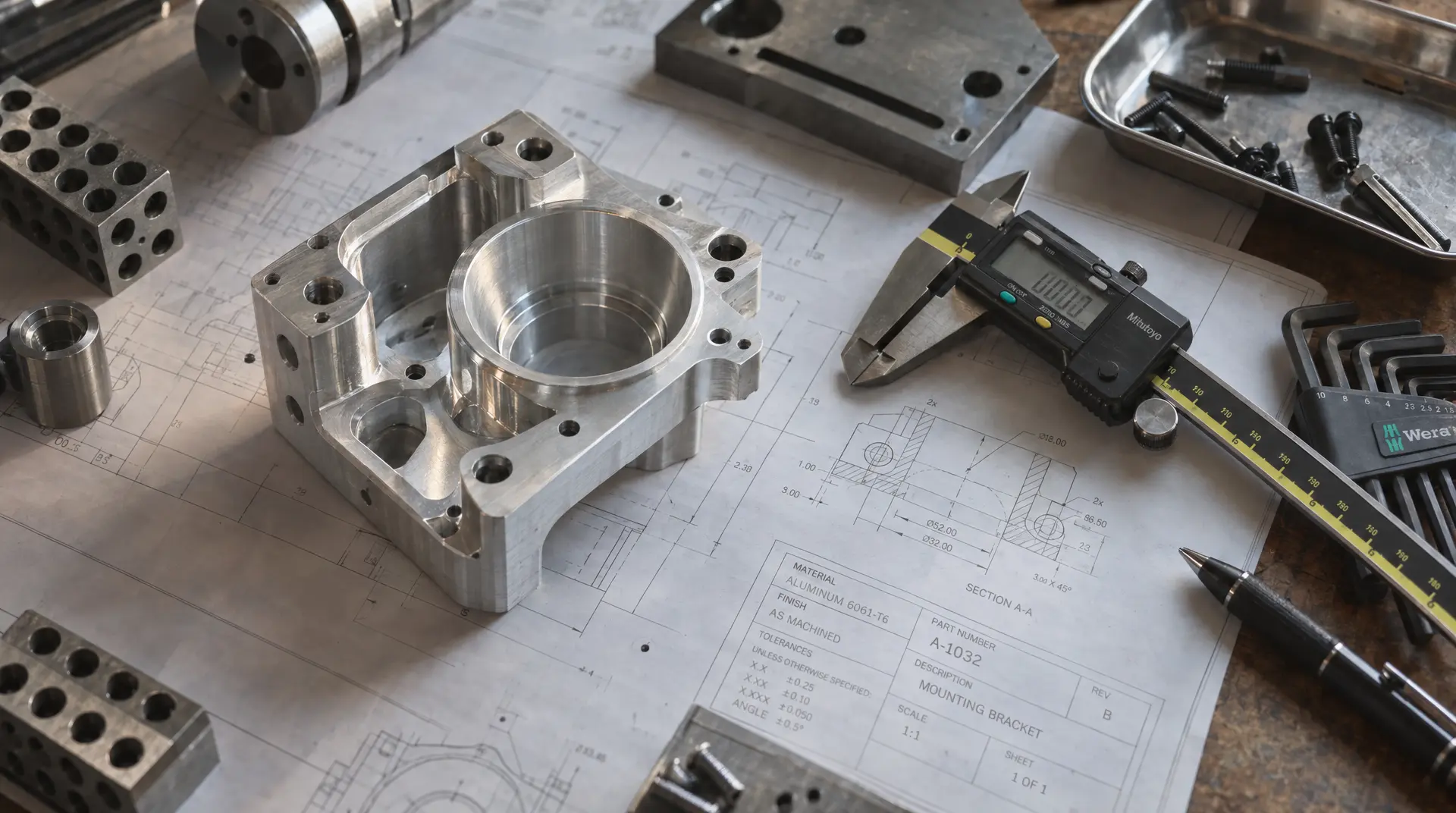
For a manufacturing site I run a six-point test in about 10 minutes, and most manufacturers score a two or three. Is there a starting price anywhere? Are tolerances published per material, thickness, and process, or is the capability page all adjectives? Can I download a CAD file without a form? Are the ISO 9001 or AS9100 badges on the homepage and quote page, where filtering happens, or buried under About?
Pricing is where agencies argue with me. When technical buyers finally contact a rep, the most common reason, 26% of the time, is a pricing or inventory question they could not resolve on the site. Those are the ones who bothered to call. The engineer who could not find a number and assumed you were too expensive never did. Price never came up. You lost that deal in silence.
CAD has the most money behind it. TraceParts surveyed 2,563 designers and engineers and found 92% prefer suppliers that provide CAD models, 54% will go elsewhere if you do not, and 90% of downloaded parts end up purchased. Once your part sits in an engineer's SolidWorks assembly, your competitor has to argue it back out. If the agency's manufacturing site treats CAD as a resource-page afterthought, they built a brochure.
While you are there, look at the type. Fonts wandering off the brand guide from page to page mean the agency built pages and never a system, and inconsistent type is the fastest visual tell that a company is a science project. Ask which device they optimize for first, too. Our deep tech traffic runs about 80/20 desktop to mobile, because big buying decisions are computer buys. Mobile-first for a hardware company is a consumer playbook running on your budget.
Finish with my 60-second test. Hand the homepage to a smart person outside the industry for one minute. If they describe the product, the agency wrote an abstract. If they describe the business, who pays and why now, they passed.
How Do B2B Web Design Agencies Structure Pages for Long Sales Cycles and Buying Committees?
Gartner puts the average enterprise buying group at five to 11 stakeholders across five functions. In hardware and defense I think that is conservative, and the people arrive at your site in order. The engineer first, hunting for a spec. The program manager second, looking for flight heritage and test history. Procurement last, looking for certifications and evidence you will still exist in three years. That is the order they read it in, and the order you lose them in.
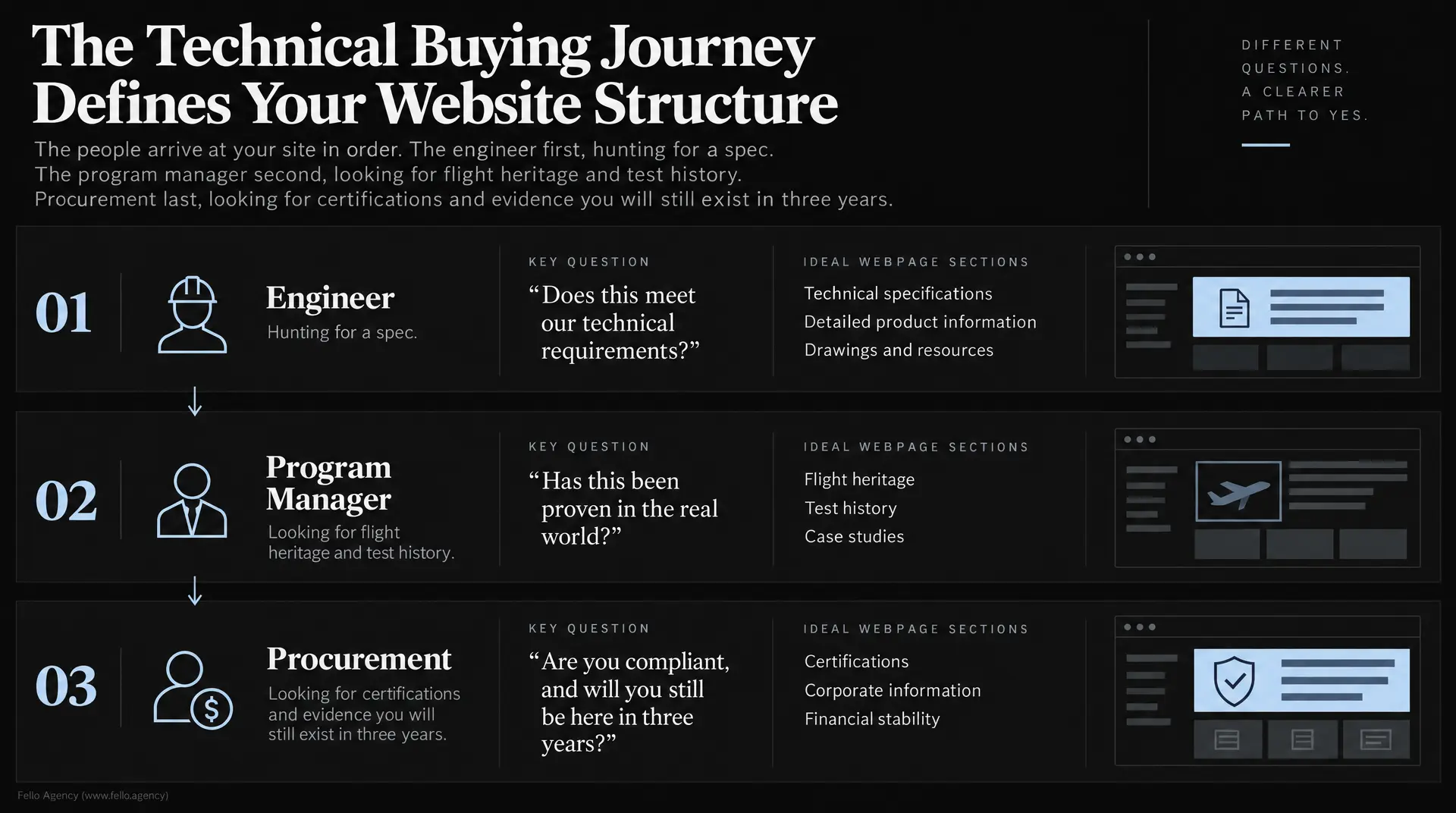
Hardware startups stall because they build one pitch deck for the user, the buyer, the integrator, and the channel partner at once. Websites fail the same way, built for one persona, usually the founder's favorite. So ask how the agency structures a page for a committee. The answer I want sounds like a stack: ungated specs at the top, heritage and what failed in testing in the middle, certifications and supply chain contingencies at the bottom, and discipline about keeping them apart, because a certification badge in the engineer's section is noise to the engineer.
Then ask what a sales rep should be able to do with the site the day after launch. The right answer involves a champion forwarding the URL to their committee without apologizing for it. I have diagnosed more than one failing brand by noticing the reps hide the website and send PDFs, or burn the first five minutes of every call explaining what the company does. I call that scar tissue. A good agency asks to hear your sales calls before writing a word. Mine spends the first month on that, plus lost deals, board interviews, and the plant floor.
What Metrics Should a B2B Web Design Agency Use to Define Project Success?
If they lead with traffic and cost per lead, end the call.
I have a semiconductor client whose real addressable market is 140 companies. We could have pushed their cost per lead down to a number a SaaS marketer would frame, and every one of those leads would have been a student, a consultant, or a competitor. In a market you could fit in a lecture hall, cost per lead rewards volume, and volume is noise. Some of my defense clients have a total market of five people. Five.
What I measure is sales velocity. Faster replies to the first outbound email. Shorter first calls, because the explaining already happened on the site. A champion who can pitch you internally without a rep in the room. Those show up within days of a launch when the positioning is right, and they are the numbers your CRO actually feels.
What Are the Team Red Flags When Evaluating a B2B Web Design Agency?

The people in the pitch are rarely the people in the file. Ask, by name, who designs, who writes, who builds, and what leaves the building after the signature. The most common trick in this business is a senior designer in the room and an offshore dev queue after the contract. You pitched a person and bought a ticketing system in another time zone, and that is how a two-month site turns into six.
The rest of my list is short. Agencies that lead with awards, because a design award means a jury of designers liked it and says nothing about whether a procurement officer trusted it. Agencies that cannot show a live site in your vertical. Agencies whose own deck is full of AI-generated imagery, because if they do that to themselves they will do it to you, and if it looks like bullshit nobody wants to work with it. And agencies that need three months of discovery before telling you what is broken. Someone who needs a quarter to make a recommendation is telling you they have no playbook for your space and plan to build one on your dime.
What Are the Best B2B Web Design Agencies for Technical and Deep Tech Companies?
What Services Does Fello Agency Provide as a Top B2B Web Design Agency?

Disclosure first. This is my shop.
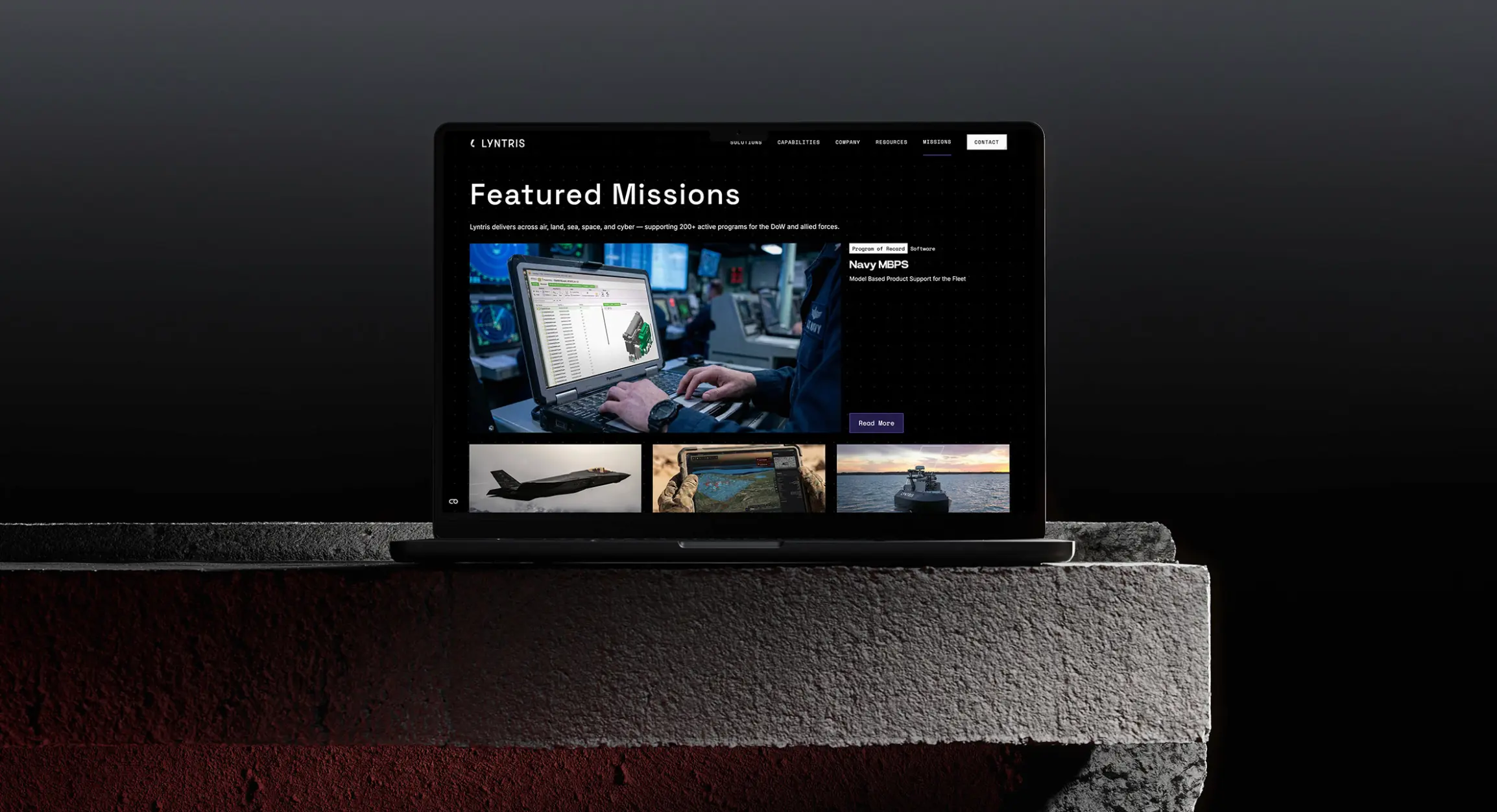
We work with companies that have complicated products and a technical or government buyer. Lenovo, Qualcomm, Mosaic Manufacturing, Sphere, Nord Quantique, and Lyntris are on the public roster. A lot of photonics, medtech, and defense work is not, because many prospects sign an NDA with us before the first real conversation. We do positioning and brand strategy before anyone opens a design file, and we write the copy for engineers, program managers, and contracting officers ourselves. You do not get handed a nice-looking site you cannot fill with credible words.
When Sphere rebranded, we rebuilt the site around industry pages for factories, medical, and defense and led each one with ROI figures. Their Head of Marketing, Alexandra Corey, afterward: "The new website has more than tripled our lead generation efforts." For Mosaic we stopped talking about the printer and told the orthotics business owner's story instead, and inbound leads rose 25% with 15% more booked meetings inside two months. For Nord Quantique, pre-revenue and tackling quantum error correction, we built the narrative around the inventors rather than the unfinished product, and traffic climbed 80% in six weeks. The rest is on (our work)(/work) page, and I will put you on the phone with clients if you want to check any of it.
Most of our builds ship on Framer in about two months. A fully editable system your team runs without a developer costs $30,000 to $60,000, because the custom templating is the actual work. We will also be the ones telling you when Framer is wrong for your security posture, and we are going through ITAR registration so the paperwork matches the access protocols we already run on defense engagements.
The fit is Series A to growth-stage deep tech, hardware, medtech, industrial, and defense companies selling into committees. If your sales team currently hides the website and sends PDFs, we are a good call. We are also in Toronto, where founders ask "why" when they should be asking "why not," and it made us allergic to slow.
The limitation is real. We are 10 or 11 people, all senior, on purpose. It means you talk to the person building your brand. It also means we are the wrong choice for a 200-page enterprise site that has to be rebuilt in six weeks. We move fast on focused scopes, we charge fees when clients go quiet mid-sprint, and we walk from engagements that want six months of research before anything ships.
What Makes HAUS a Top B2B Web Design Agency for Consumer-Facing Tech Brands?
HAUS is a design and development studio with some of the highest front-end craft I have seen. Custom interaction, motion, the kind of site where the product feels like something before you read a word about it. Their roster skews toward consumer technology and lifestyle brands with serious design budgets and serious design opinions.
Hire them if you are a well-funded tech company with a strong in-house product marketing team that will own positioning and copy, and a launch where visual differentiation is the entire point.
Technical copy, procurement-facing messaging, and committee-structured pages are not why anyone hires HAUS. You bring the words. And be careful what you ask them to make beautiful. Too much polish on a pre-product hardware site reads as vaporware to an engineer, and HAUS is very good at polish.
What Makes Bluetext a Top B2B Web Design Agency for Government Contractors?
Bluetext sits where B2B technology meets government contracting, and that intersection is thinner than it should be. They understand that a GovCon website gets read as past performance. A contracting officer or a prime's business development lead decides within about 30 seconds whether you are a real company or a slide deck with a cage number, and Bluetext builds sites that survive that glance.
Mid-size to large technology firms and contractors whose site has to hold up in front of federal evaluators and prime BD teams at the same time are the right client.
The limitation is structural. This is a full-service agency with full-service layers, so expect more process and more people between you and the designer than a boutique would put there. If you are a 30-person company that has to ship in eight weeks, that structure costs you time you do not have.
What Makes Grafik a Top B2B Web Design Agency for Defense and Government-Adjacent Firms?
Grafik has spent decades a few miles from the federal market, and it shows in how they think about brand systems. They build identities for organizations that need to look institutional and stable, and they know that government-adjacent audiences read a website for reliability first and novelty never. Disruptive is a promise of surprise, and in defense a surprise is a mission with your name on it. Grafik understands that a buyer there is choosing the vendor nobody gets blamed for.
Established contractors and professional services firms with complicated stakeholder groups who need one identity to hold across proposals, events, and digital are who they serve best.
Their range is the tradeoff. Associations, real estate, and nonprofits sit next to the contractors in their portfolio. That breadth helps the brand thinking and hurts if you want a shop that only ever thinks about technical buyers. Ask for the live technical sites specifically and do not let the brand book do the talking.
What Makes Gorilla 76 a Top B2B Web Design Agency for Industrial Manufacturers?
Gorilla 76 built an entire practice around industrial manufacturers with complex, considered sales. They understand that the engineer on a manufacturer's site is there to filter vendors and will leave the moment filtering gets hard, and they treat the website as one piece of a longer content and lead program rather than a standalone design project. For a company with an 18-month cycle and a distributor network, that is the correct instinct.
Mid-sized manufacturers selling engineered products who want the site tied to an ongoing marketing motion, with someone accountable for the whole thing, will do well here.
They are a program shop first and a design shop second. If you need a site that competes on visual craft against a venture-backed hardware startup, their work will feel practical rather than striking. Frontier deep tech, pre-product companies, and defense classification constraints are outside their home turf.
What Makes Windmill Strategy a Top B2B Web Design Agency for Technical Companies?

Windmill Strategy specializes in websites for technical and industrial B2B companies, and their opening question is the right one: what does an engineer need to accomplish on this site? Most agencies open with what the CEO wants it to look like. Windmill starts with the spec-heavy catalog, the distributor locator, and the technical resource library, and organizes the complexity instead of hiding it.
The right client is an industrial, scientific, or engineering-driven company with a large catalog and a technical audience that is tired of being told to simplify.
The work is built for mid-market industrials, much of it on WordPress. If you need positioning at the level of a Series A repositioning, or a visual language that stands out on a defense trade show floor, that is a different brief and a different shop.
What Makes Velocity Partners a Top B2B Web Design Agency for Enterprise Technology Companies?
Velocity is a B2B tech marketing agency that has been thinking harder about positioning and content for technical companies than almost anyone, and for a long time. Their strength is the argument on the page. The sharp point of view. The copy a skeptical technical reader keeps reading past the first paragraph. If nobody at your company can explain what you do in one sentence your sales team confirms is true in the market and your engineers confirm is technically accurate, Velocity can get you there.
B2B software and enterprise technology companies whose real problem is messaging, and who want a site with an actual editorial voice, are the fit.
Web design is a means to an end for them. The site will be smart before it is beautiful. If you need deep front-end craft, product visualization, or 3D renders for hardware, plan on a design partner alongside them. Their center of gravity is software. Physical product is a stretch.
What Makes Focus Lab a Top B2B Web Design Agency for Enterprise Software Brands?
Focus Lab is a brand identity firm for B2B technology companies, and one of the best at it. The systems they build survive a Series C, a trade show booth, a co-branded partner deck, and a new CMO without coming apart. That durability is rarer than it sounds. A deep tech homepage is usually a fossil of the seed round, and I have watched plenty of companies pivot the product while keeping the old brand wrapper, with the gap between what they look like and what they do getting more expensive every quarter.
This is the shop for a SaaS or enterprise software company at Series B and beyond that has outgrown a founder-designed logo and needs a complete identity before a website makes any sense.
Sequence is the catch. Brand first, website second. The site is downstream of the identity system, so if you want one shop to own strategy, technical copy, build, and CMS training end to end, ask exactly who does what and when. Deep tech, hardware, and defense are not the bulk of what they show.
What Makes Clay a Top B2B Web Design Agency for Venture-Backed SaaS Companies?

Clay designs websites and product interfaces for SaaS and large technology companies, and the polish is real. Their sites look like the company that already won the category, which is exactly the effect a growth-stage software company wants when a Fortune 500 buyer lands on the homepage and decides in a few seconds whether you are worth a meeting.
Venture-backed SaaS and enterprise software with the budget to match, and a design-literate marketing team to direct them, is where Clay makes sense.
You pay premium prices for a portfolio that skews toward software with a clean UI to show off. Hardware with nothing to screenshot, regulated buyers who distrust shine, and government procurement cycles are further from their experience.
What Makes MetaLab a Top B2B Web Design Agency for Software Product Interfaces?
MetaLab designed the original Slack interface, and that alone still gets them into rooms. They are a product design firm, meaning the software your customer uses every day, and their taste level is among the best anywhere.
For a software company where the product experience is the brand and the marketing site has to be an honest extension of it, they are hard to beat.
They are not a positioning and marketing website shop for technical buyers. If your problem is that your homepage cannot explain who pays you and why now, MetaLab is the wrong door. Expect enterprise pricing, and expect to bring your own strategy.
How Do You Run a B2B Web Design Agency Shortlist Evaluation Process?

You are about to run on these agencies the same process your buyers run on you. LinkedIn's survey of SaaS buyers found that on purchases over $50,000 they research about six suppliers, shortlist three or four, and 63% say the whole thing takes longer than it did three years ago. Run yours the way you wish they would.
What Should You Ask on the First Call of a B2B Web Design Agency Shortlist?
Start with the question I ask every prospect who calls us: how many decision-makers will be involved? More voices at the table means a longer project, and I scope billable hours off that number. An agency that does not ask has never managed a committee. I watched a pharmaceutical company's project stall for two years in stakeholder gridlock until the private equity firm behind them took the product offline. Two years of work, gone. The agency should be afraid of that outcome on your behalf.
Then flip it. Get names, not roles: who designs, who writes, who builds, and what leaves the building after the contract is signed. Get a live URL for a technical or government buyer and look at it before the second call. Push on how they arrive at homepage copy, because the honest answer names the customers, reps, and board members they plan to interview first. Push on how a technical claim gets verified, because the honest answer names an engineer on your side. And ask what happens when your stakeholders go quiet for three weeks.
That last one matters more than it sounds. I charge fees when clients disappear mid-sprint and I say so on the first call, because a construction technology client once vanished for months and came back expecting to pick up the next morning like nothing had happened. An agency with no answer for stakeholder silence will let your project drift for six months and bill you for the drift.
How Should You Evaluate Proposals During a B2B Web Design Agency Shortlist Process?
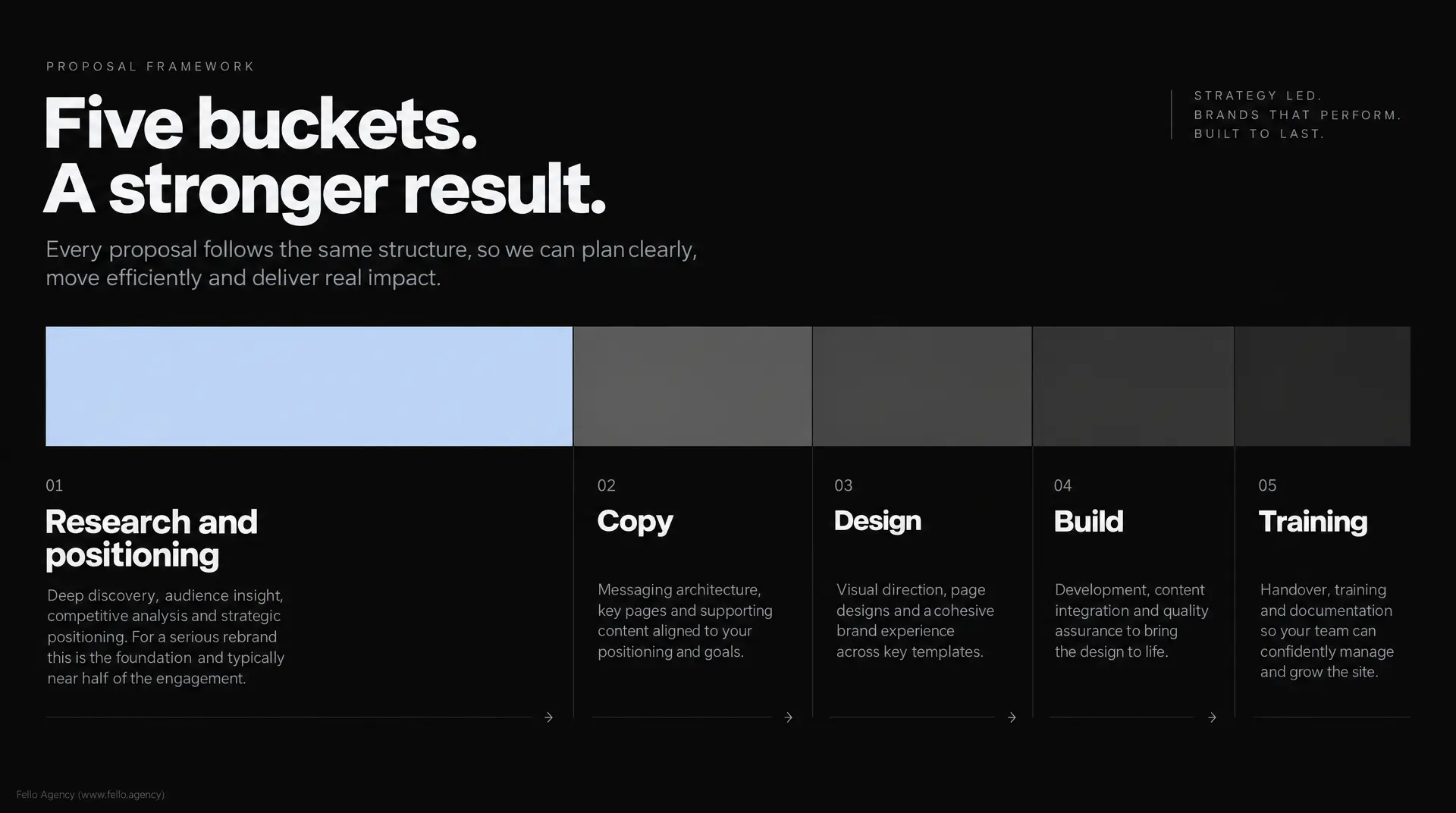
A proposal that leads with page counts is hiding the strategy line. Ask for the split across research and positioning, copy, design, build, and training. For a serious rebrand I want strategy near half, and I want a name next to the technical copy. If that line has no name, it is going to a junior or a tool.
On ranges, I will tell you what I tell prospects. A fully editable site your team runs alone lands between $30,000 and $60,000 for a startup, because custom templating is real work. A Series A rebrand lands between $50,000 and $150,000. Above $100,000 I start worrying about how a technical buyer reads it, because past a point spend looks like compensation. I managed a $100,000 visual identity overhaul for a medical aesthetics company whose engineering was better than their brand, and that budget closed a real trust gap. It would have been the wrong number for a three-person photonics startup.
Two hidden costs blow up budgets every year: the trade show booth and the technical three-pager. Nobody scopes them, everyone needs them the week before launch, and the agency that raises them unprompted has done this before. Refuse the recurring "website service fee" while you are at it. A $500 a month retainer for hosting and vague support is rent on a site you already paid for. A training session on the calendar, with names attached, belongs in that slot instead.
How Do You Compare Pricing Across Mismatched Scopes in a B2B Web Design Agency Shortlist?
Do not compare totals. Compare where the money lands. Break every proposal into the same five buckets and put the percentages side by side. An $80,000 proposal with half in strategy and senior names on every line is a different product from an $80,000 proposal with 70% in development handed to a team you will never meet. The second one produces more pages. The first one produces more meetings.
Then ask the question your board is actually asking: which of these sites makes my sales team stop hiding the URL? Budget for the deal you are trying to win. I had a client lose an Amazon deal because their visuals made them look like a joke, and the Amazon manager was not about to walk that into his boss's office with his own name on it. If you are asking a buyer for a seven-figure contract, the real tuition is the deals you lose looking like a science project, and no agency fee comes close.
A few shops I get asked about did not make this list because I could not point to a live site they shipped for a technical buyer. That was the rule. If you have one, send it to me.
SEO title: Best B2B Web Design Agencies That Actually Understand Tech
Meta description: Building an agency shortlist? Ten B2B web design agencies that have shipped sites for technical buyers, with honest limits and how to compare proposals.
Frequently Asked Questions
How should B2B web design agencies address lengthening SaaS sales cycles?
Buyers are stalling. LinkedIn notes 63% of SaaS purchases over $50,000 take longer today. A top agency builds for committees, putting ungated pricing and specs upfront to unblock researchers, keeping deals moving while competitors hide numbers.
Do top B2B web design agencies recommend building interactive digital tools?
Yes, if they care about revenue. Gartner notes buyers are 1.8× more likely to complete a high-quality deal using supplier digital tools with a rep. Elite agencies don't just design brochures. They build interactive specs that arm sales to win.
How do the best B2B web design agencies balance brand with pipeline?
They know brand is pipeline. When solutions look identical, 70% of technical buyers choose the better-known brand. Good agencies don't just optimize for cost-per-lead. They build an authoritative moat that commands a premium and shortens the first call.
How should agencies design for cross-functional software buying groups?
By assuming nobody reads everything. G2 shows IT is in 47% of software decisions, finance 32%, and execs 31%. A competent agency stacks pages sequentially: features for IT, compliance for legal, and ROI for finance, ensuring no stakeholder blocks the deal.
How does a B2B web design agency solve marketing and sales misalignment?
By treating it as a sales enablement tool. Technical buyers complete 62% of their buying process online. If the agency interviews your reps, listens to lost-deal calls, and addresses upfront pricing, they create a site that generates pipeline instead of friction.
Your Creative Partner for Innovation That Matters
From advanced tech to transformative healthcare, Fello helps visionary teams shape perception, launch products, and lead industries.

Let’s keep in touch.
Discover more about high-performance web design. Follow us on Linkedin and Instagram.