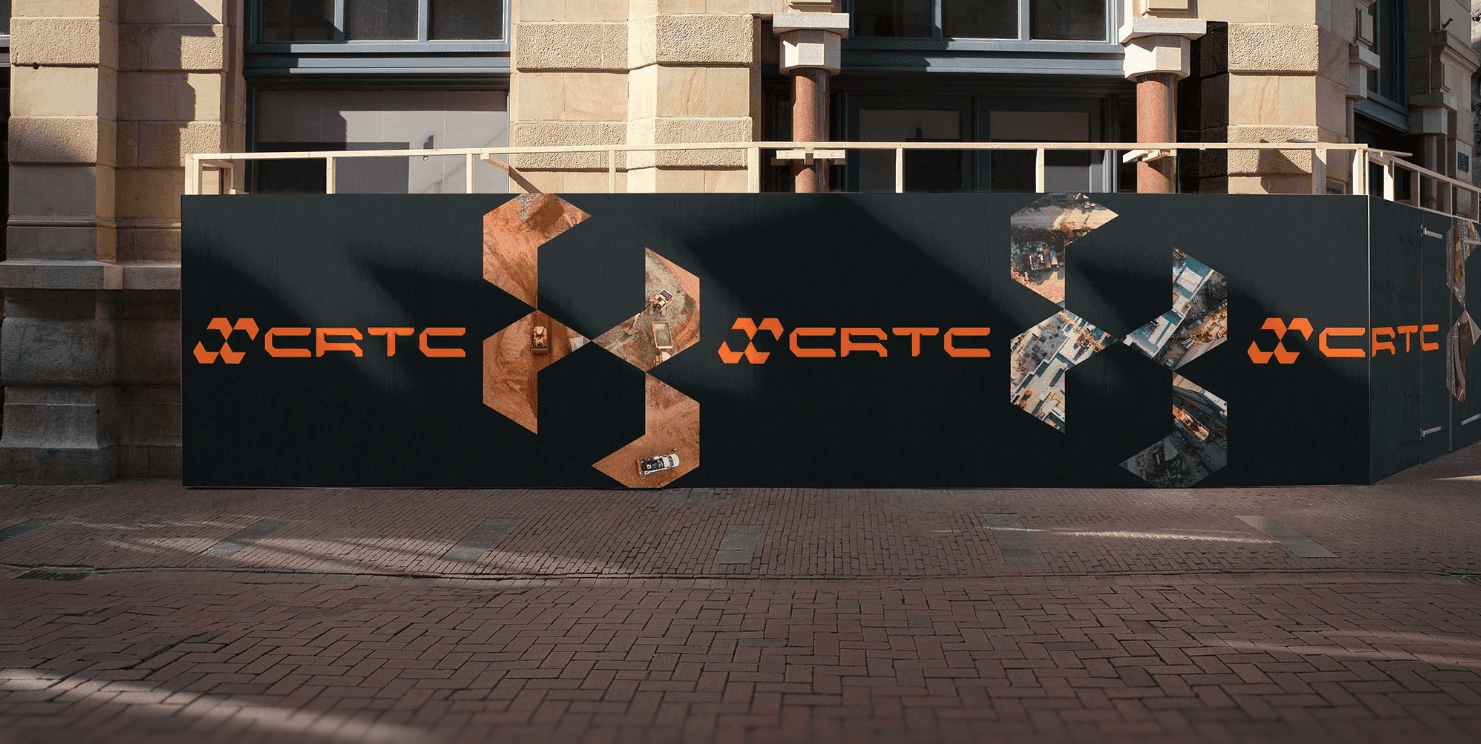


I’ll say it the simple way: if you don’t have a brand, then you’re going to be forgotten.
I spend my time with companies in AI, robotics, quantum, medtech, advanced manufacturing, XR, and defense. The heavy stuff. At Fello Agency, we help them translate complex technologies into brands, websites, videos, and go-to-market systems that instill trust.
I also built Fello organically, without venture capital. So I care a lot about return. I don’t have patience for branding theater. I care about what helps you get remembered, get trusted, and get into bigger conversations faster.
If you’re a CMO or VP of Marketing, you usually feel the pain first. Pipeline gets harder. Sales starts pushing back. Recruiting goes quiet. The CEO wants to know why the market still feels confused. That is usually when the rebrand conversation shows up. In my view, it should show up earlier.
Why Timing Matters More Than Most Teams Think
The simplest way I explain a brand is this: it’s a feeling that somebody thinks about when they see your company. In B2B tech, that feeling should be trust, competence, curiosity, and clarity. If the feeling is confusion, doubt, or “these guys look small,” you have a commercial problem.
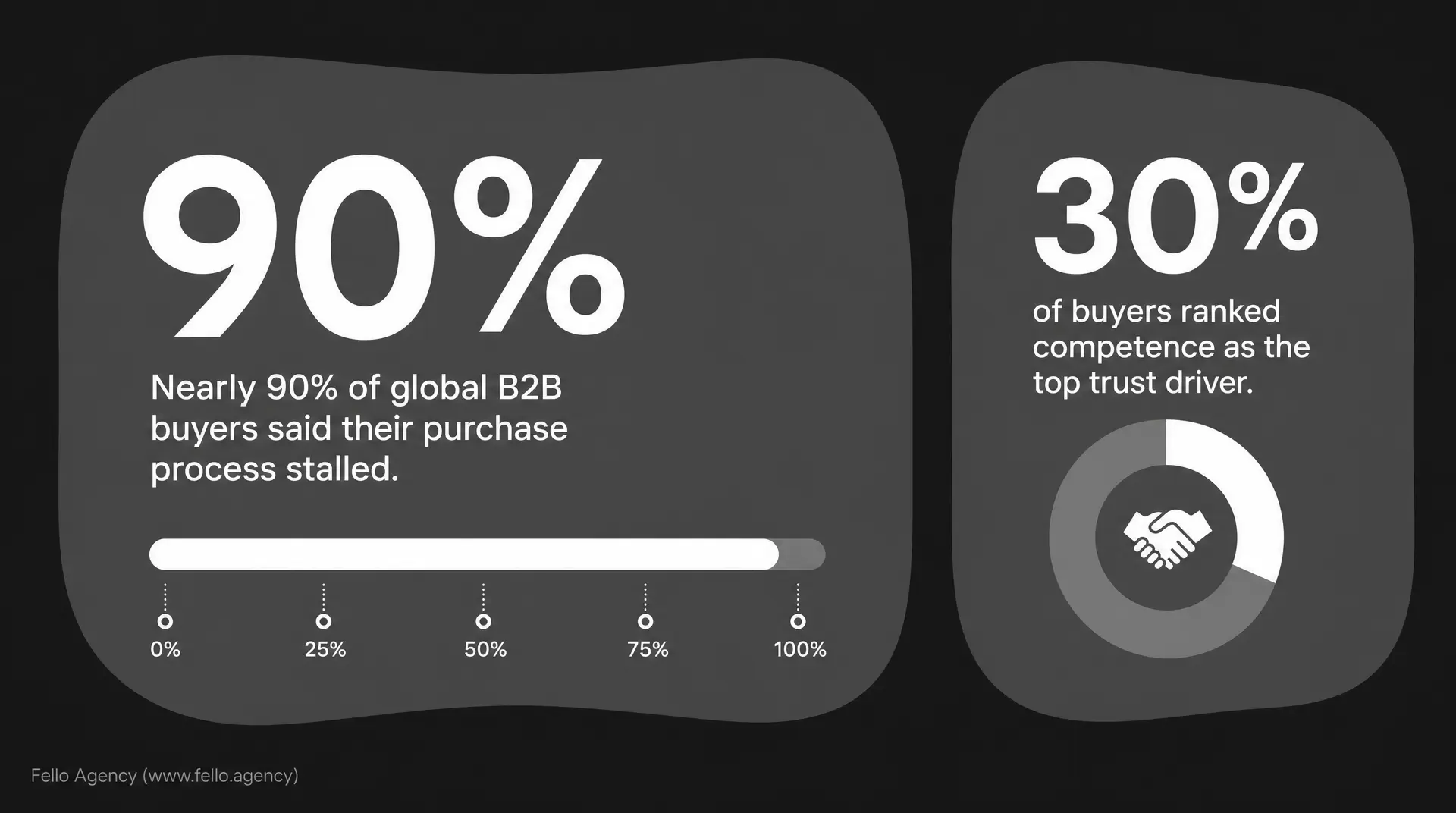
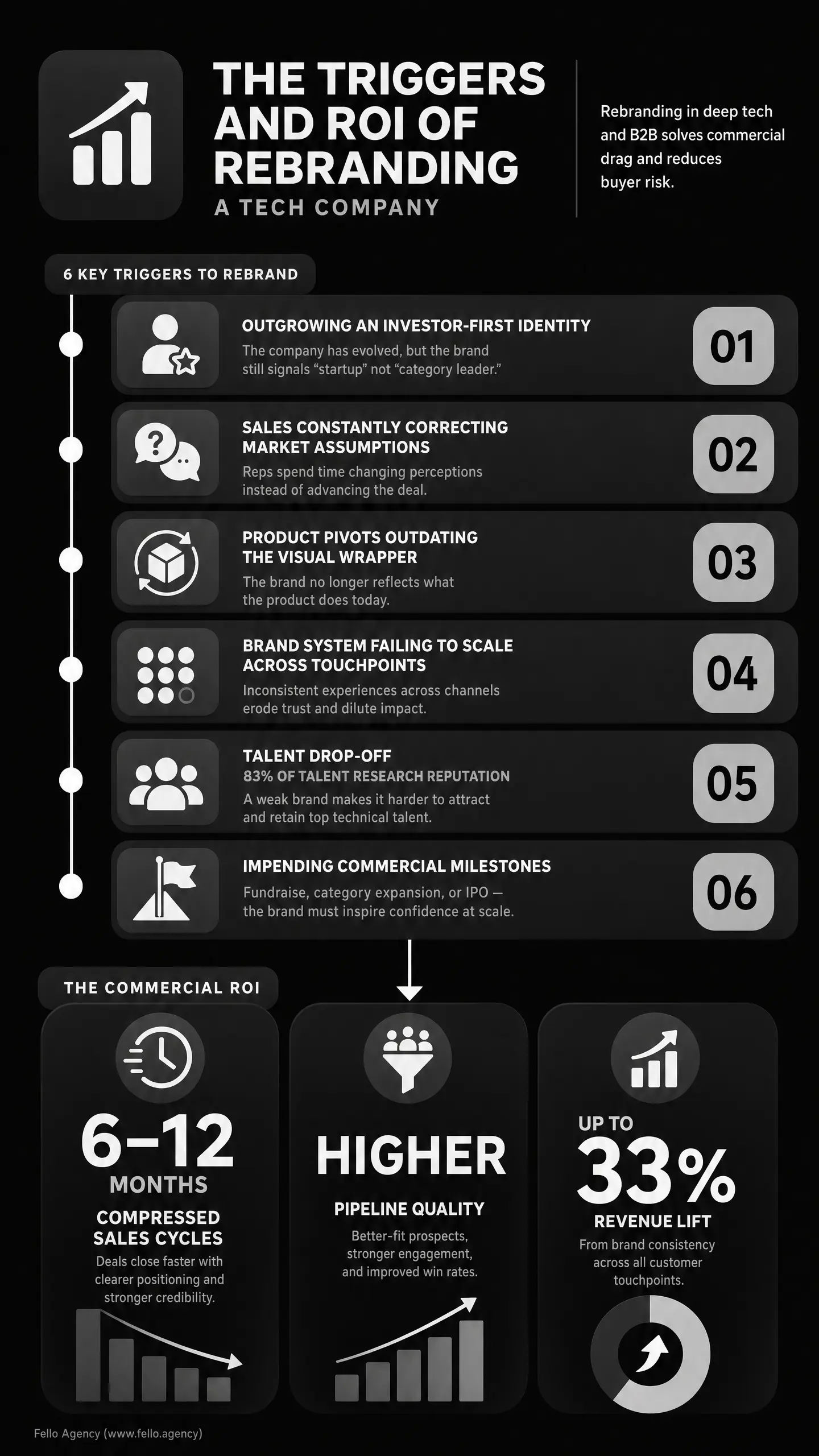
The market already tells us this matters. In 2023, nearly 90% of global B2B buyers said their purchase process stalled. Forrester also found that strong trust in a vendor is essential and often drives purchase intent. In North America, 30% of buyers ranked competence as the top trust driver.
That lines up exactly with what I see in the field. Buyers are reading for risk before they read for detail. In high-risk B2B purchases, brands act as cues for risk-reduction. A good rebrand lowers that fear. It helps the buyer feel safe moving forward.
A lot of technical teams still think branding is a logo and a color palette. Way too small. Brand lives in your communication strategy, your website, your deck, your product pages, your videos, your docs, your recruiting pages, and the way all of it holds together.
Your buyer is still a human. They bring B2C habits into B2B. They compare your company to the best digital experience they saw that week, not just to the other vendor in your category. If you want multi-million-dollar contracts, you are a Michelin star restaurant. Every detail matters. Design is a commercial gatekeeper.
The Clearest Moments to Rebrand
Your First Brand Was Built for Investors
This is one of the biggest triggers I see.
A lot of deep tech companies build their first brand to raise money. It’s clean. It’s aspirational. It sells the future. That works when the audience is investors and early believers. Then the company starts selling to enterprise buyers and everything changes.
Procurement teams do not buy vision, they buy credibility. They want proof, clarity, and a clean read on vendor risk. If your site still feels like a seed-round story while your sales team is sitting in enterprise meetings, the wrapper is behind the business.
I see this all the time. The company has grown up. The brand has not. The deck still sounds like a pitch competition. The site still looks like a lab project. The business is now dealing with committees, procurement, security, operations, and finance. The market needs a different signal.
I’ve even used Fello’s own rebrand when talking to finance teams about this. We moved from a purple-and-black identity to a white, black, and gray palette. Trust improved quickly. Prospects responded differently because the brand felt sharper and more immediate.
I saw a similar shift with Revanesse at Prollenium. The old beauty-led cues were not enough for a science-driven medical brand. We rebuilt the system around science, clinical confidence, and global consistency. That helped the brand connect with higher-value clinics in a stronger way.
Sales Keeps Correcting the Market

This is the next big trigger, and it shows up fast.
If your sales team spends the first part of every call explaining what your company is not, your brand is slowing revenue down. I hear this in stakeholder interviews all the time. Sales says they are cleaning up assumptions from the website, the name, the visuals, or the old story.
When that starts happening, you have a positioning problem sitting inside the identity. The market is reading one thing. The business is selling another. That gap gets expensive.
I’ve had clients in conversations with Amazon where weak branding made it harder for internal champions to recommend them. The product was strong. The problem was perception. The brand was not doing enough to make the company feel legitimate in a high-stakes room.
In robotics, I talk about this as pilot purgatory. A lot of teams think the pilot stalls because the tech is not ready. A lot of the time, it stalls because the internal champion doesn’t have a boardroom-ready narrative. The pilot dies in committee because the story never made it out of the lab and into the buyer’s commercial reality.
That is why I push hard on communication strategy. You need to say the right amount to the right people without saying too much. The VP of Operations, the CFO, procurement, and the technical evaluator all care about different things. One generic message does not carry that load.
The Product Changed, but the Wrapper Stayed Frozen
Deep tech companies pivot. Good ones pivot fast.
The product changes. The use case sharpens. The buyer changes. The old wrapper stays put. I see this constantly. A company starts in one lane, then learns its real opportunity is somewhere else, but the brand still signals the first version.
Every month you wait, that gap gets wider and more expensive to close. Brand serves the buyers, not the founder’s ego. If the business changed, the wrapper needs to catch up.
For Sphere, we moved the story away from vague innovation and raw specs and focused it around collaboration. We used more numbers. We showed the lifestyle of the ideal users. After re-establishing brand guidelines and updating the website, traffic jumped 50% right away. Over the broader refresh, lead generation grew 3x.
With Mosaic Manufacturing, the issue was a little different. The technology was strong, but the value was not landing fast enough with non-engineers. We reframed the message, created cinematic videos, updated landing pages, and tailored the pitch deck to different market segments. Inbound leads jumped 25% and booked meetings rose 15% within two months.
That is why I tell teams to stay broad enough at the top of funnel to catch opportunity, then get more specific lower down. In B2B tech, you often cannot predict every market that will come for you. If you narrow too early, you leave money on the table.
Your Brand System Stops Scaling
A lot of companies say they already have a brand. I look closer and see a logo, two colors, and one font.
That can work when you have a website and a pitch deck. It falls apart when the business starts scaling. Now you need trade show booths, technical briefs, co-branded partner assets, recruiting collateral, product launch kits, sales decks, video templates, maybe API docs, maybe an SDK portal, maybe multiple landing pages for different buyers.
The real question is whether the system can support the next 20 touchpoints while looking consistent. That is where a lot of teams get caught. They think the logo is fine, so the brand is fine. The system underneath is usually too thin.
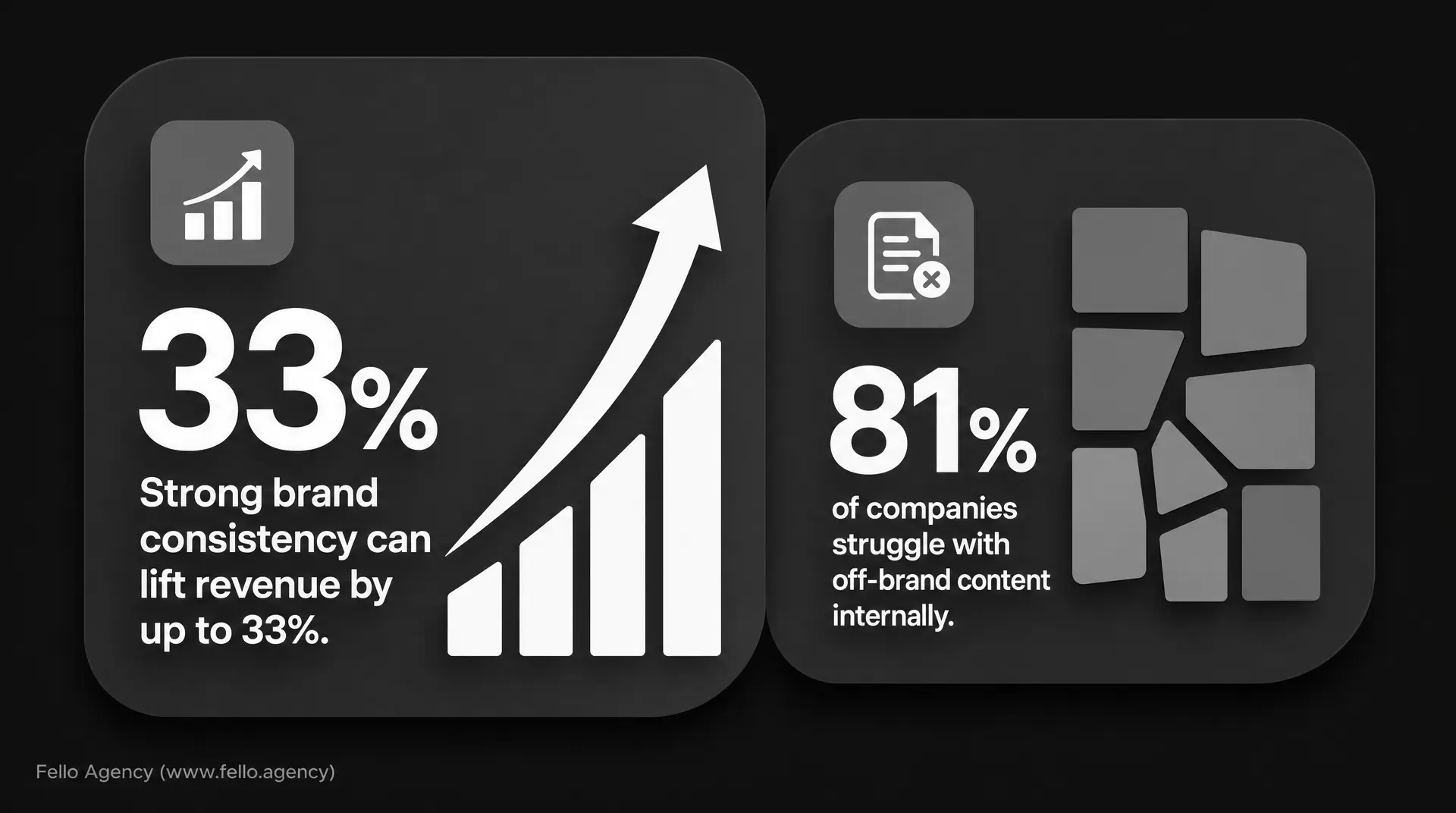
Consistency has real value. A Lucidpress study found that strong brand consistency can lift revenue by up to 33%. The same study says 81% of companies struggle with off-brand content internally. CMOs feel that drift every day.
Even the small details matter more than people think. Typography matters because buyers spend very little time on a page. They subconsciously see whether you’re legitimate or not before they read the copy. I had a manufacturing and medical device client whose brand kept missing the mark until we switched to IBM Plex. It immediately shouted professionalism.
And right now, generic AI design makes this worse. A Claude-generated layout looked fresh for about five weeks. Then everybody had one. Buyers can spot the template. They can spot the repeated stock image too. AI is great for ideation. Human design credibility is still what gives the brand its own signal.
Talent Is Judging You Before They Ever Speak to You
A lot of rebrand conversations start with pipeline. A lot of the real value also shows up in recruiting.
Glassdoor reports that 83% of job seekers research a company’s reputation before applying, and 70% are more likely to apply when the employer actively manages its brand and reputation online. That should matter to every marketing leader in tech.
I say this pretty bluntly: top engineers and operators quietly judge companies by their brand. If the careers page looks like it was built in 2017, or the deck looks like a grad school project, you are losing candidates before they hit apply. Most companies do not even know it because they are not tracking the signal.
Look at Rocket Lab. High-quality weekly content keeps engineers interested. Look at Anduril. They built a brand that made hard-working people want to join the mission. If you are competing against Google, Meta, or OpenAI, you need a stronger reason to join the underdog team.
A Big Commercial Moment Is Close

Sometimes the timing is obvious because the company is heading into a high-stakes moment.
M&A can trigger it. A new product launch can trigger it. A new market can trigger it. A strategic partnership can trigger it. A big trade show can trigger it. At any given moment, a life-changing deal could come in.
We had a haptics company that needed a rebrand done in about a month and a half because OEM meetings at CES were coming. In a sprint like that, I focus on the non-negotiables: logo, visual guide, colors, typography, and communication strategy. You need to move 10 times faster than you think you do, but you still need to stay sharp.
Budget should match the stage. An early deep tech startup can often establish professional credibility with $15,000 to $30,000. Series A and Series B companies usually need more depth, and I often see strong rebrands in the $50,000 to $150,000 range. Huge spend without a clear commercial reason can look suspicious to technical buyers. They spot bullshit a mile away.
What Maximum ROI Actually Looks Like
For me, rebrand ROI shows up in a few very clear places. Sales cycles get cleaner. Pipeline quality improves. Talent gets stronger. Internal alignment gets tighter. The whole go-to-market motion starts working with less friction.
I frame the spend that way when I talk to finance. I don’t pitch a visual refresh. I talk about communication strategy, marketing investment, and credibility infrastructure. A website has a job. It needs to bring in leads, help internal champions sell your story, and reduce vendor risk in front of a committee.
There is outside proof here too. Trust is a core strategic asset because it drives profit, customer acquisition, and long-term brand strength. In deep tech, where 6-to-12-month sales cycles are common, anything that builds trust earlier helps compress the timeline.
I’ve seen it with Sphere. I’ve seen it with Mosaic. I’ve seen it with Revanesse. And I’ve seen it in smaller moments too. A referral lands on the website and keeps moving because the website did not undo the referral. Sales gets on the call and can skip a level because marketing already made the value obvious. Brand credibility is a go-to-market accelerant.
If you want the payoff to be real, the rebrand has to support the whole system. You need awareness, demand, and conversion moving together. Too many teams put energy into one channel, then blame the channel instead of the architecture.
How I Run a Rebrand Without Internal Chaos
A lot of rebrands fail before the work even starts. The brief is wrong. Internal technical language leaks straight into buyer-facing messaging. The story works in the lab and falls apart in the boardroom.
That is why I start with research. At Fello, we usually talk to customers first, then sales, then marketing, then leadership. We benchmark five competitors and interview at least 10 power users. I want to know where the confusion lives, where trust breaks, and where the market already sees value.
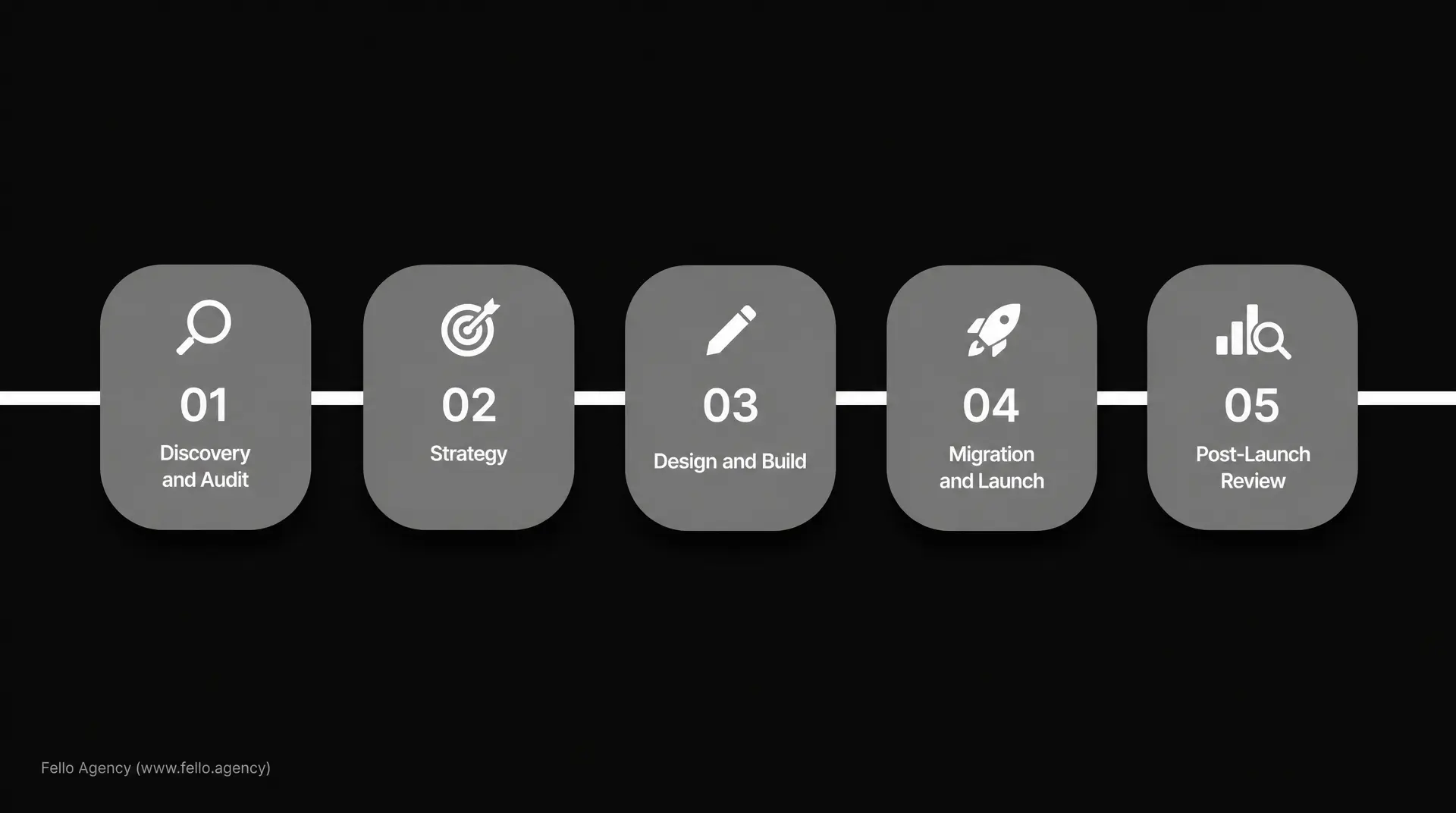
From there, I move through a clear framework: discovery and audit, strategy, design and build, migration and launch, then post-launch review. During strategy, I want direct C-suite sign-off on the narrative, mission, vision, and voice. I also build a brand kill list so old decks, old pages, old naming, and old habits do not keep haunting the new system.
The rollout has to go farther than the homepage. We think through sales decks, partner assets, product touchpoints, and third-party listings like G2 and Crunchbase. If the software itself is branded, we can deploy brand switch features and roll the change out in a controlled way.
Then we train the internal team and set governance. Branding never ends. The companies that win keep the system clean. They keep the messaging concrete. They keep sales, marketing, and leadership aligned on one communication strategy.
When the timeline is tight, I get prescriptive. I’m not interested in endless feedback loops that burn two months. Fello stays lean on purpose. We move faster because clients work directly with the people doing the work, and because we already understand these tech markets.
Final Thought
So when should you rebrand your tech company?
You should rebrand when the current brand starts creating drag. Rebrand when sales is cleaning up confusion. Rebrand when the product has moved and the wrapper has not. Rebrand when procurement needs credibility, when the system cannot scale, when talent is quietly walking away, and when a major commercial moment is getting close.
I’ll keep saying it because it’s true: if you don’t have a brand, then you’re going to be forgotten. Build the kind of brand that instills trust, makes the experience feel legitimate, and helps your team walk into the market with a story buyers can repeat. That is where the ROI lives.
Frequently Asked Questions
How do I justify a high-ticket rebranding budget to a skeptical CFO or board?
Stop pitching a visual refresh and start pitching credibility infrastructure. In B2B tech, trust is a core strategic asset that directly drives profit, according to an IPA/FT study. Frame the spend entirely around compressing long sales cycles and removing buyer friction.
How do we stop the sales team from using off-brand, legacy pitch decks?
You build a strict brand kill list. A Lucidpress report found 81% of companies struggle with off-brand internal content. If sales uses the old wrapper, your new assets aren’t built for their commercial reality.
Our inbound pipeline is completely stalled. Will a rebrand actually fix this?
Only if the stall is caused by a perception gap. Nearly 90% of B2B buyers reported stalled purchases in 2023. If your identity signals risk, a rebrand replaces that friction with competence, pulling deals out of committee purgatory.
How do we accurately attribute closed-won revenue to a new brand rollout?
Look for acceleration in the middle of your funnel. You won’t track brand trust on a single CRM dashboard, but you will see lead-to-opportunity conversion rates improve and sales cycles shorten. When your brand acts as a true commercial accelerant, your team stops defending baseline legitimacy.
Does executing a massive rebrand risk alienating our existing legacy enterprise customers?
Not if you control the narrative. Legacy customers panic when sudden changes feel like instability or a pivot away from their needs. Frame the rebrand as an evolution of your enterprise capabilities. A sharp, competent brand update should validate their decision to partner with you.
Your Creative Partner for Innovation That Matters
From advanced tech to transformative healthcare, Fello helps visionary teams shape perception, launch products, and lead industries.

Let’s keep in touch.
Discover more about high-performance web design. Follow us on Linkedin and Instagram.

