


Commanding the room is the skill that costs you the round. What sold the seed was you, and you do not travel with the deck.
The partners who decide your Series A will never hear you speak. They read the slides cold and in silence, then trust a stranger's ninety-second summary of what you do.
DocSend clocked the average seed deck at under two minutes of attention, and the check you want now runs six times the one that got you here. That premium does not buy a better-told version of the belief you already sold.
Key Takeaways
PitchBook and NVCA data shows the median Series A check is $19.4 million, requiring founders to prove a repeatable customer acquisition system rather than basic scientific viability.
Fello Agency messaging tests show that giving complex technology a human job title, such as an air traffic controller for warehouse robots, significantly improves accurate product retelling by venture capitalists.
DocSend data reveals investors spend 88% more time reviewing pitch deck competition slides year over year, making it essential for deep tech startups to explicitly name direct industry incumbents.
The FDA 510(k) clearance process targets a 90-day decision but allows up to 180 calendar days for inquiry responses, placing the actual Series A revenue timeline on internal turnaround speed.
Deep tech startups successfully validate their geopolitical market timing by citing verifiable government budget shifts, such as the CHIPS Act allocating $39 billion for domestic semiconductor manufacturing incentives.
Carta data reveals the median company waits 774 days between primary funding rounds, often resulting in outdated website visuals that undermine the Series A pitch during venture capital due diligence.
What Are the Key Differences Between Seed and Series A Pitch Decks?
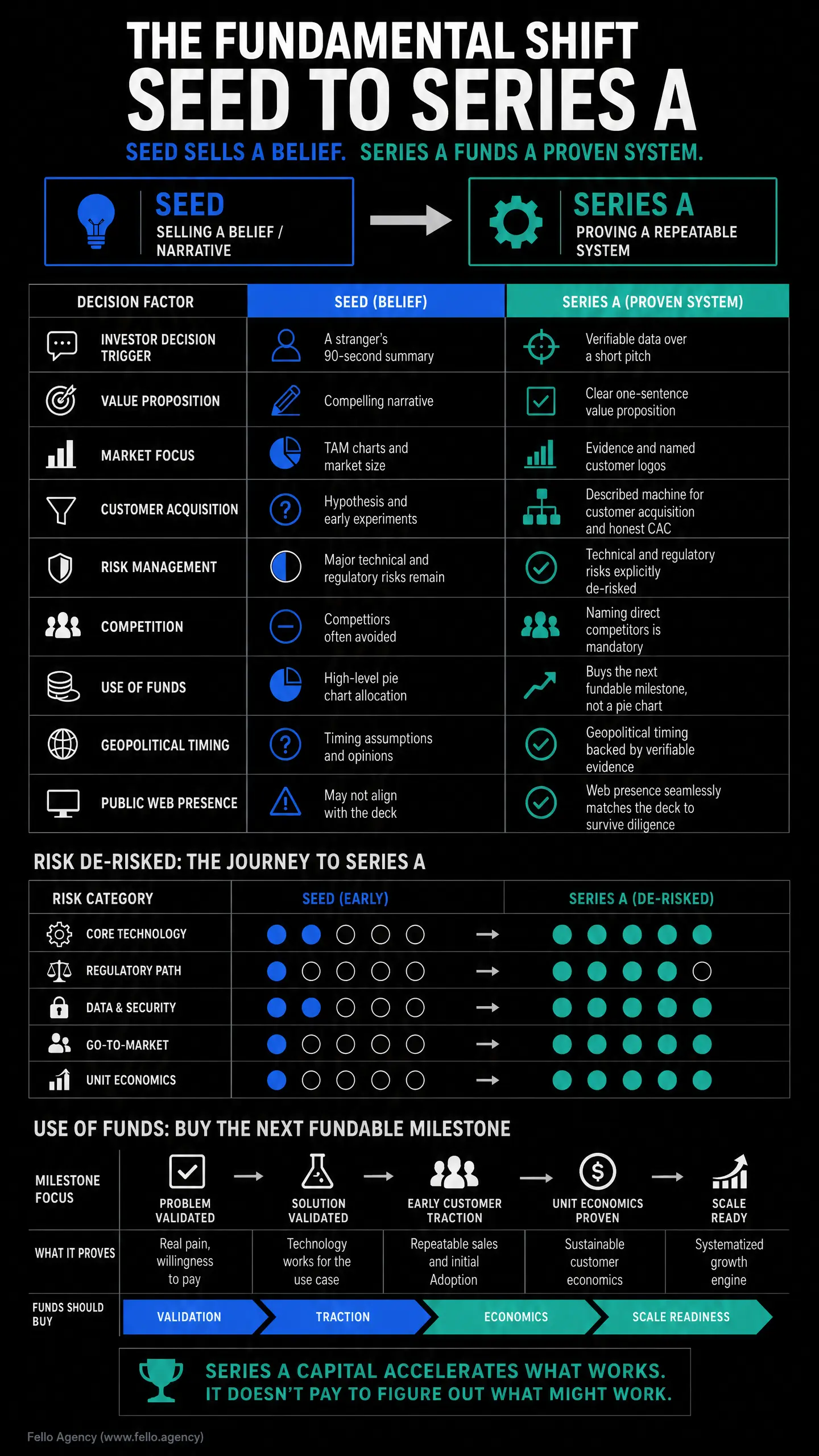
At seed, you asked someone to bet that a thing could work. At Series A, you're asking them to underwrite a system. Money goes in, more of something comes out, and you can show which lever produces what.
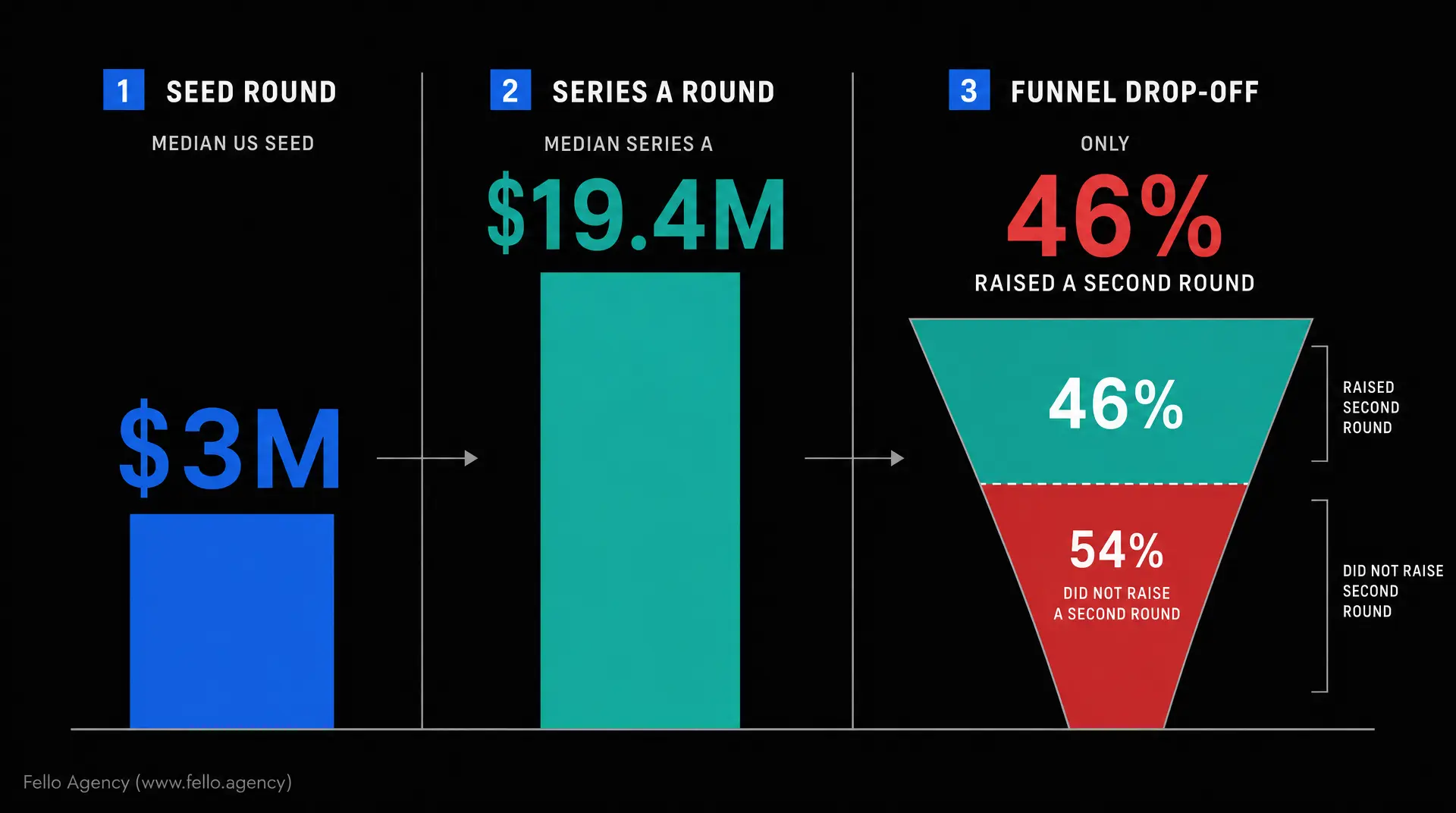
The check sizes explain why the standard jumps. PitchBook and NVCA's latest Venture Monitor puts the median US seed at $3 million and the median Series A at $19.4 million. Nobody writes a check six times bigger for a better-told version of the same belief. And the funnel is brutal. CB Insights followed more than a thousand seeded tech companies and found only 46% raised a second round.
I've spent close to a decade at Fello Agency inside these companies. Quantum, drone defense, medtech, advanced manufacturing. The seed vs Series A shift I watch founders miss is always the same one. At seed, you proved the science could work. At Series A, you have to prove somebody will pay for it, and that you know exactly how to find them. For most technical founders that's a harder slide than the technology slide, and they've spent almost no time on it.
Why Is a Clear Value Proposition Sentence Crucial for a Series A Pitch Deck?

Before any slide does its job, one sentence has to make a stranger understand what you are and why it matters. When the partner describes you on Monday, they get one sentence. If they can't repeat yours accurately, your company is being pitched wrong in every room you're not in.
Founders underinvest here more than anywhere else in the deck. You've said what you do out loud so many times you can no longer hear how it lands cold. I see the same three failures constantly: the line is a mission statement, a category label, or a pile of adjectives. All three die in the retelling.
We worked with a defense company doing autonomous systems, around "from sensing to certainty." Plain words. A partner who half-listened can still carry it into Monday's meeting intact. At Fello we run a blunt internal test on every engagement: a team member has to explain the client's product to a stranger in 60 seconds, accurately, or the messaging isn't done. One compression trick we lean on is giving the technology a human job title. Tell someone your product is an air traffic controller for warehouse robots and they'll repeat it correctly a week later. Hand them "AI-powered orchestration layer" and you're gambling.
How Do Deep Tech Founders Provide Verifiable Evidence in Series A Pitch Decks?
Seed decks run on narrative and team. Series A decks run on proof. Every claim that used to be a belief needs a number sitting under it.
My test is simple. Would the slide survive being fact-checked by a stranger? Series A slide. Does it only work because you're charismatic in the room? Seed slide, and the room is exactly what you no longer control.
Why Are Named Customers More Important Than Total Addressable Market in Series A Decks?
Your seed deck said "the $40B industrial inspection market." Your Series A deck says: these seven companies. Three signed, two in paid pilot, two in procurement.
Nobody kills a TAM slide at Series A. It just stops mattering. Logos and contract stages matter.
I tell clients something that surprises them: I don't care if you practically had to pay your first users. The story of your first customer is worth more than any market chart you'll ever build. If you can't name who's paying, or who's about to, that's the gap to close before you raise. Not during.
How Should Deep Tech Founders Present Their Customer Acquisition Strategy in Series A Decks?

The most common Series A question, and the one deep tech founders answer worst: how do you get the next 20 customers? "We have relationships" is a seed answer. At Series A it reads as "we got lucky three times."
You need a described machine. Who you target, how you reach them, in what order, at what cost. And in deep tech this looks nothing like a SaaS funnel, because your market is countable. I worked with a semiconductor client whose real market was about 140 companies. When they chased cheap leads, the pipeline filled with students, consultants, and competitors. I've had defense clients whose entire viable market was five people. Cost per lead becomes an actively harmful metric at that scale. What a Series A investor wants instead is named accounts, a sequence, and proof that deals 2 and 3 came from a process rather than a friendship.
For a manufacturing client , we went past messaging entirely. We helped them identify a new market, built the videos and landing pages to enter it, and inbound leads jumped 25% with booked meetings up 15% inside two months. A motion you built once, on purpose, is a motion an investor can underwrite.
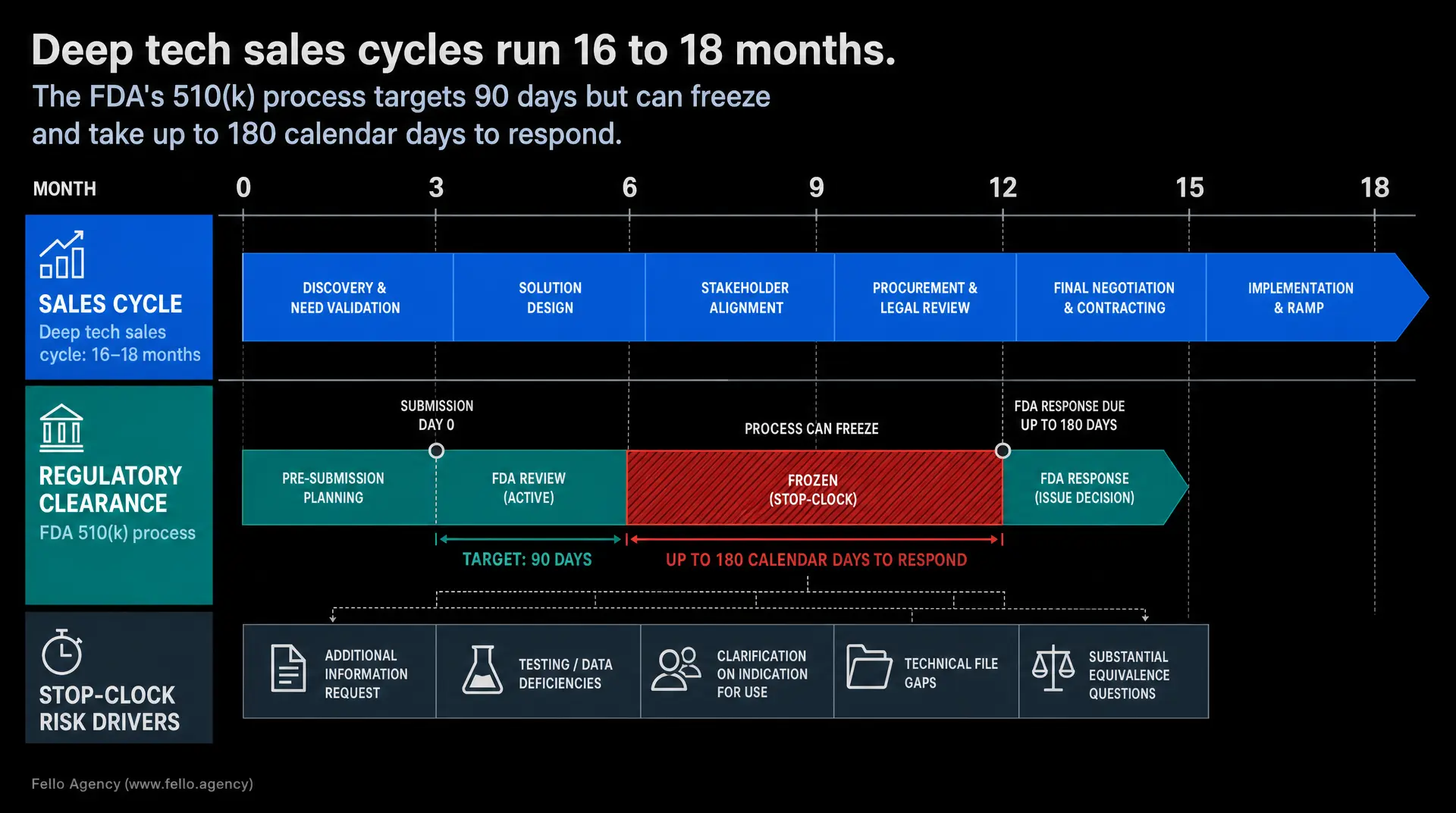
One warning on timelines. Deep tech sales cycles run 16 to 18 months. If your go-to-market slide implies revenue certainty inside two quarters, a sector-literate investor reads the rest of your deck differently from that point on.
Why Should Hardware Startups Include Honest Customer Acquisition Costs in Series A Decks?
Every pitch deck for a hardware startup carries economics that look terrible at low volume. The first units cost more to build than they sell for. The install takes three engineers and a site visit. Everyone at the table already knows this. Show it anyway.
Investors take honest bad numbers with a stated path over silence, every single time. Silence reads one of two ways: you don't know your own economics, or you're hiding them. Both end diligence. Put the ugly CAC on the slide, then show precisely what changes at volume, and which milestone in this round triggers the change.
How Should Technical Founders Present Technical Risk Reduction in a Series A Pitch Deck?
The most deep-tech-specific slide is the one I almost never see: de-risking.
What technical risk existed at seed that you've now retired? What remains? What does this round retire? A deep tech Series A investor is buying risk reduction, and this slide is where you price it. At seed the question was whether the thing could work at all. You answered it, so say so explicitly, with data. Then resist the urge to pretend nothing risky remains. Sophisticated investors know better, and pretending just tells them you don't.
I push clients hard on this because it decides whether you're pitching a business or a research problem. Pivot to an ROI narrative or you're gonna stay in the lab. Investors fund the version of you that already chose.
How Does the Regulatory Compliance Path Impact the Risk Model in Series A Pitches?
FDA clearance. ITAR status. AS9100, ISO 13485, program-of-record pathway, export control. At seed these were footnotes. At Series A they are the risk model, because they decide whether revenue arrives in 18 months or five years, and that one variable reprices your whole company.
The details matter more than founders think. The FDA's 510(k) process targets a decision inside 90 "FDA Days," but the clock freezes every time the agency asks for more information, and you can take up to 180 calendar days to respond. Your real timeline lives in how fast your team turns those responses around, and an investor who knows medtech will ask exactly that. I learned this side of the business working with one of the largest medical device manufacturers in North America, where FDA rules constrain what marketing is even allowed to say.
Defense has its own version. Under ITAR, a company manufacturing defense articles must register with DDTC even without exporting a single unit. We're going through ITAR registration at Fello right now to match the security protocols we already run on defense engagements, and I tell those clients bluntly: your website is an export. Publish the wrong performance spec and you've created a violation, not a marketing asset. If your deck treats any of this as an appendix, a serious investor treats your revenue timeline as fiction.
Why Must Founders Name Direct Competitors and Incumbents in a Series A Pitch Deck?

"We have no direct competitors" kills more Series A decks than bad metrics. It reads as naive or dishonest, and either one ends the conversation. Investors are studying this slide harder than ever. DocSend measured 88% more time on competition sections year over year.
Name them. Include the incumbent doing it badly. Include the status quo of doing nothing, because in deep tech the strongest competitor is almost always the way things currently get done. Then explain why you win specific deals, not why you're better in the abstract.
Anduril is the cleanest example I give clients. They never pretended Lockheed Martin didn't exist. They named the giant, showed exactly how they'd beat it, and it worked well enough that the established primes started copying Anduril's branding and visuals. Naming your competition is a strength signal.
How Should Founders Present Use of Funds and Hiring Milestones in Series A Decks?
Two slides, one discipline. Your seed deck said "we're four engineers." Your Series A deck says: these 11 hires, in this order, and what each one unlocks. The org chart stops being an appendix and becomes an argument.
Same discipline on use of funds. Nobody funds a pie chart. "40% engineering, 30% GTM" tells an investor nothing about what their money buys. "This round takes us to first program award" tells them everything. Or to 510(k) clearance, or to 50 units shipped, whichever milestone makes your Series B raisable. Because a Series A investor is already underwriting your B. Describe the next fundable state, not a budget.
How Should Startups Frame Geopolitical Timing Evidence in Series A Pitch Decks?
At seed, your why-now was a thesis about where the world was heading. At Series A it needs evidence the world actually moved. Deep tech fundraising has had an unusually good run of these lately, and I mean it when I say geopolitics is the new spec sheet. CHIPS carved out $39 billion for manufacturing incentives in domestic semiconductor capacity. The FY 2026 defense request came in at $1.01 trillion, with $3.9 billion for hypersonics and $15.1 billion for cyber.
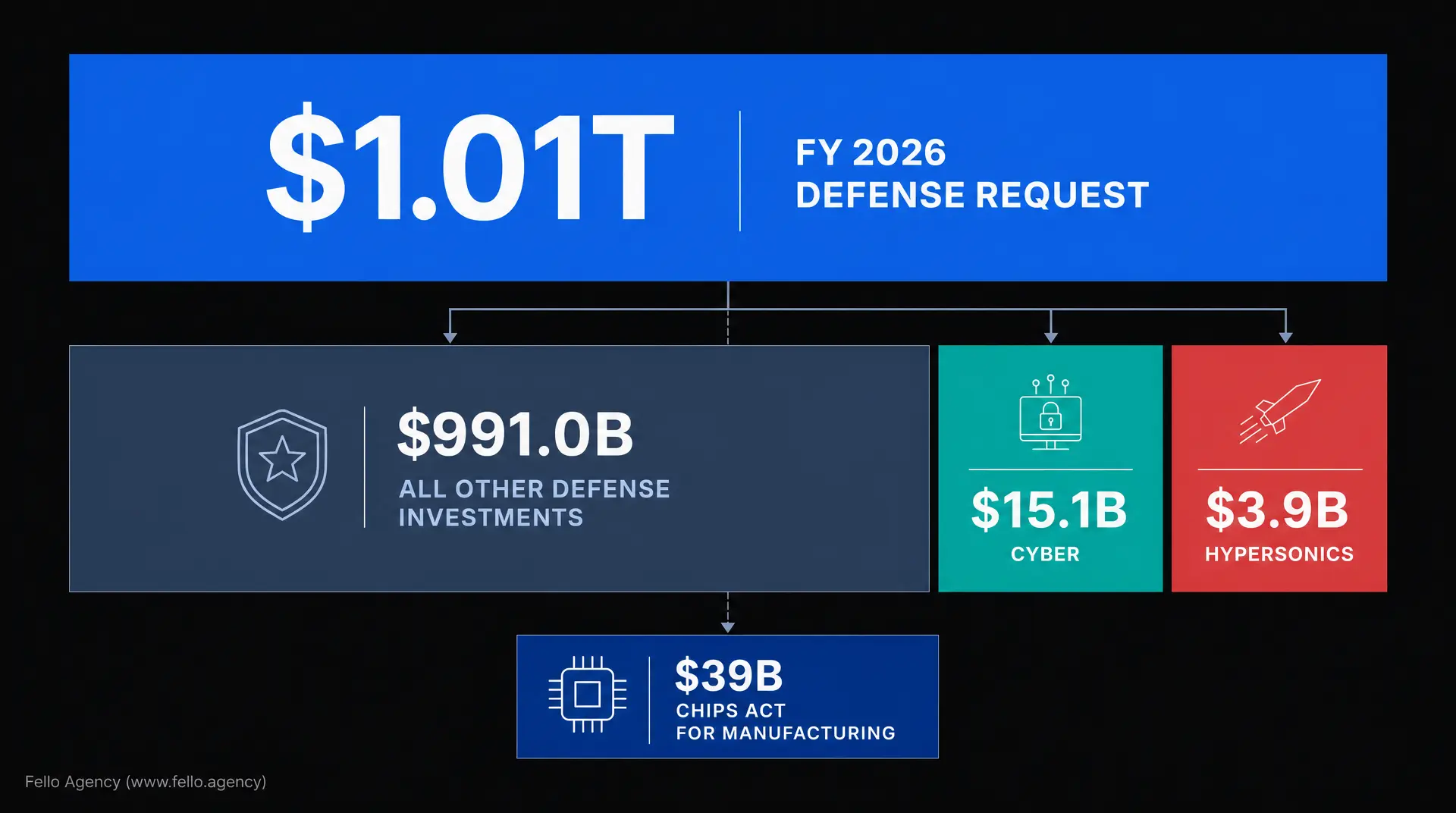
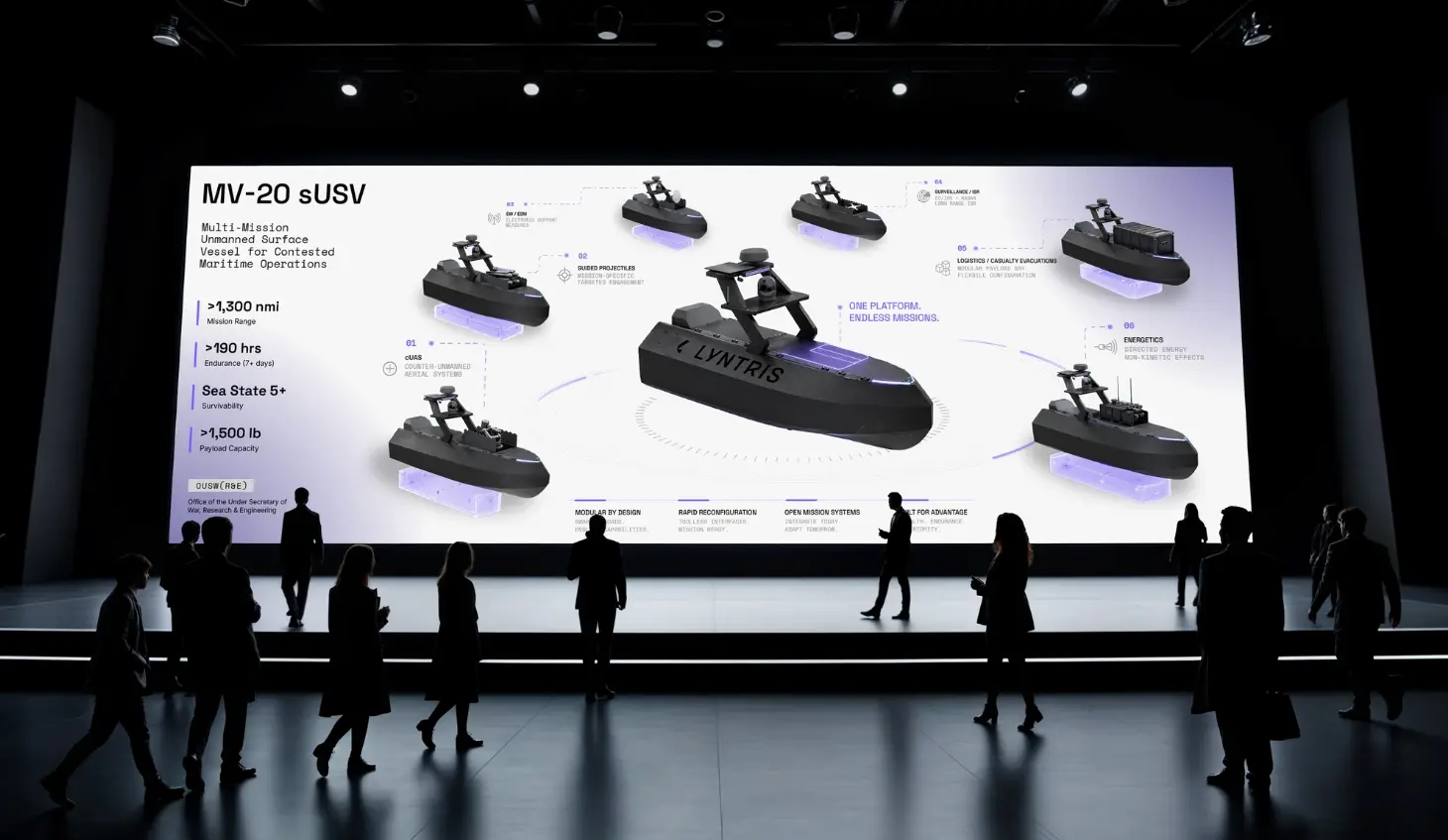
Those are budget lines a stranger can verify in one search, which is exactly the bar your why-now slide should clear. I've watched this work up close. We built product renders for a Canadian drone defense company during the early stages of the Ukraine-Russia conflict, when they had no physical prototype to show. The world had moved, they moved with it, and those renders helped them secure funding. If your why-now slide could have been written two years ago, word for word, then the world hasn't moved and neither has your case.
How Does a Startup's Public Web Presence Impact Series A Venture Capital Due Diligence?
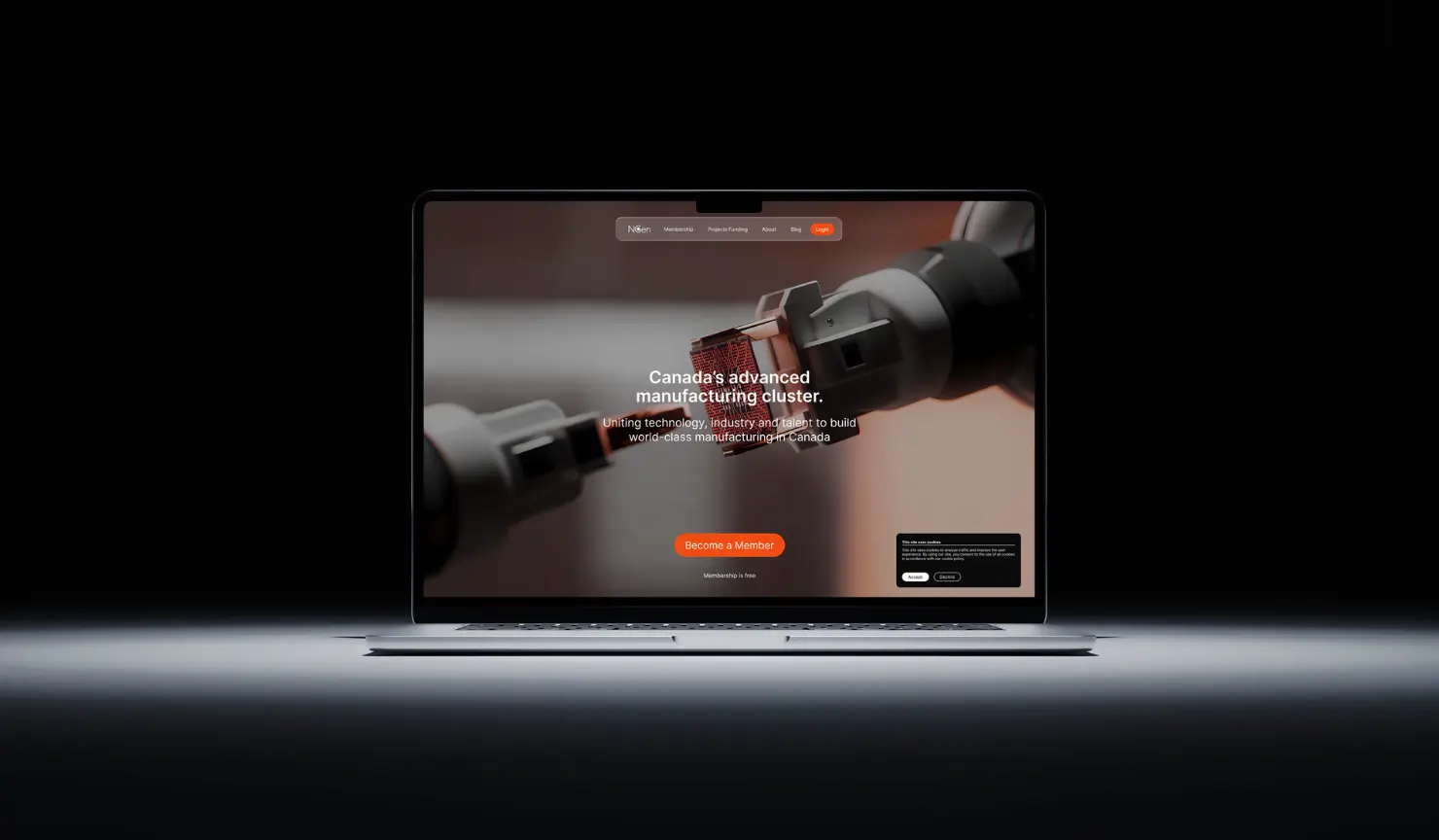
At seed, the deck is the whole company. At Series A, the deck is one input into diligence. The associate pulls up your website. The partner checks LinkedIn. Somebody calls your customers. Somebody searches your category and notices whether you show up at all.
Nobody warns founders about the failure mode here: your deck outgrows your public presence. The deck says "category-defining infrastructure for autonomous defense systems." The website still says whatever it said when you were four people and a demo. That gap gets noticed, and not because anyone is grading your marketing. Inconsistency reads as a company that hasn't decided what it is.
I've watched this exact dynamic cost real money outside fundraising. One of our clients lost a deal with Amazon because their visuals made them look like a joke. The Amazon manager refused to walk an illegitimate-looking company into his boss's office and spend his own reputation doing it. A partner forwarding your deck into Monday's meeting runs the same calculation. Forwarding is vouching.
And you have less excuse on timing than you think. Carta's data shows the median company closing a Series A had waited 774 days since its last primary round. You know roughly when this raise is coming. So dress for the client that you need, and do it early. Just don't overcorrect into a monster rebrand either. For a Series A company, I've seen branding spend past $100K start looking suspicious to technical buyers, like polish sitting where substance should be.
The best time to fix your public presence is the quarter before you raise, not the quarter after. Everyone does it after. That's why every Series A is followed by six months of rebrand.
Frequently Asked Questions
How should marketing leaders justify their budget in a tightening Series A market?
The market is brutal. Carta notes Q4 2024 Series A startups raised 13% less cash and closed 18% fewer deals year over year. You can't ask for budget based on theoretical growth. Show a proven revenue engine. If you can't tie marketing spend directly to closed-won deals, investors will cut your budget first.
How should we frame marketing performance if we took a bridge round before our Series A?
You aren't alone. In 2024, bridge rounds made up 38% of Series A activity on Carta, with a median wait of 774 days between primary rounds. Frame that extra time as ruthless optimization. Show investors how you used that bridge to drastically lower acquisition costs and build a highly scalable, predictable GTM machine.
How does a Series A pitch deck effectively address sales and marketing alignment?
Investors are hunting for friction. If marketing metrics look great but sales cycles stall, the deck fails. DocSend shows investors spent 33% more time analyzing traction recently. Your slides must prove marketing and sales operate as one seamless revenue engine with shared metrics, not warring factions passing bad leads back and forth.
What marketing pipeline metrics matter most to Series A investors?
Forget vanity metrics. Series A investors are underwriting a system. They want to see Marketing-Sourced Pipeline, accurate CAC, and Lead-to-Opportunity Conversion Rates. If you can't clearly demonstrate how a dollar of marketing spend predictably translates into pipeline and shortens the complex B2B sales cycle, your slides will actively hurt the valuation.
Can a strong brand presence actually impact the Series A valuation?
Yes, but only if it acts as a commercial moat. The median Series A check is $19.4 million. Investors don't write that for pretty colors. They write it for market dominance. A premium brand cuts through noise, shortens enterprise sales cycles, and directly accelerates revenue.
Your Creative Partner for Innovation That Matters
From advanced tech to transformative healthcare, Fello helps visionary teams shape perception, launch products, and lead industries.

Let’s keep in touch.
Discover more about high-performance web design. Follow us on Linkedin and Instagram.

