

I've spent the better part of the last decade helping B2B tech companies commercialize. AI, XR, quantum, medtech, manufacturing, defense. Different sectors, same problem. Brilliant teams build something real, then explain it with a case study that reads like an internal recap doc. That kind of content dies fast. It does not help sales. It does not reduce risk. It does not make a buyer feel smart for moving forward. It just sits on the website and collects dust.
If you're a CMO or VP of Marketing, you already know the pressure. You have to prove ROI. You have to support revenue. You have to give sales something they'll actually use. And you have to do it in a market full of AI-generated slop where every company sounds the same.
That's why I care so much about case studies. They're not side content. They're credibility infrastructure.
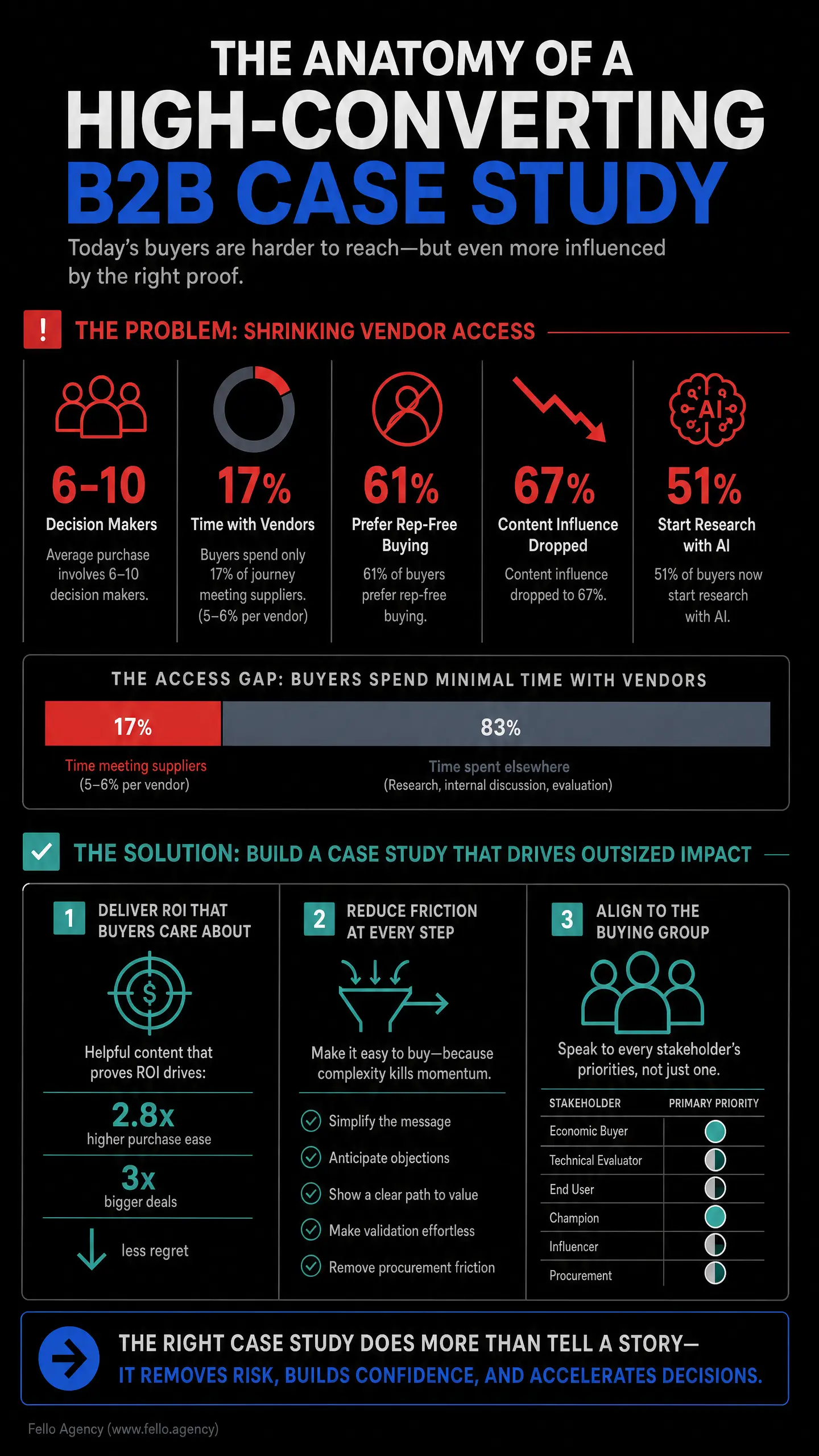
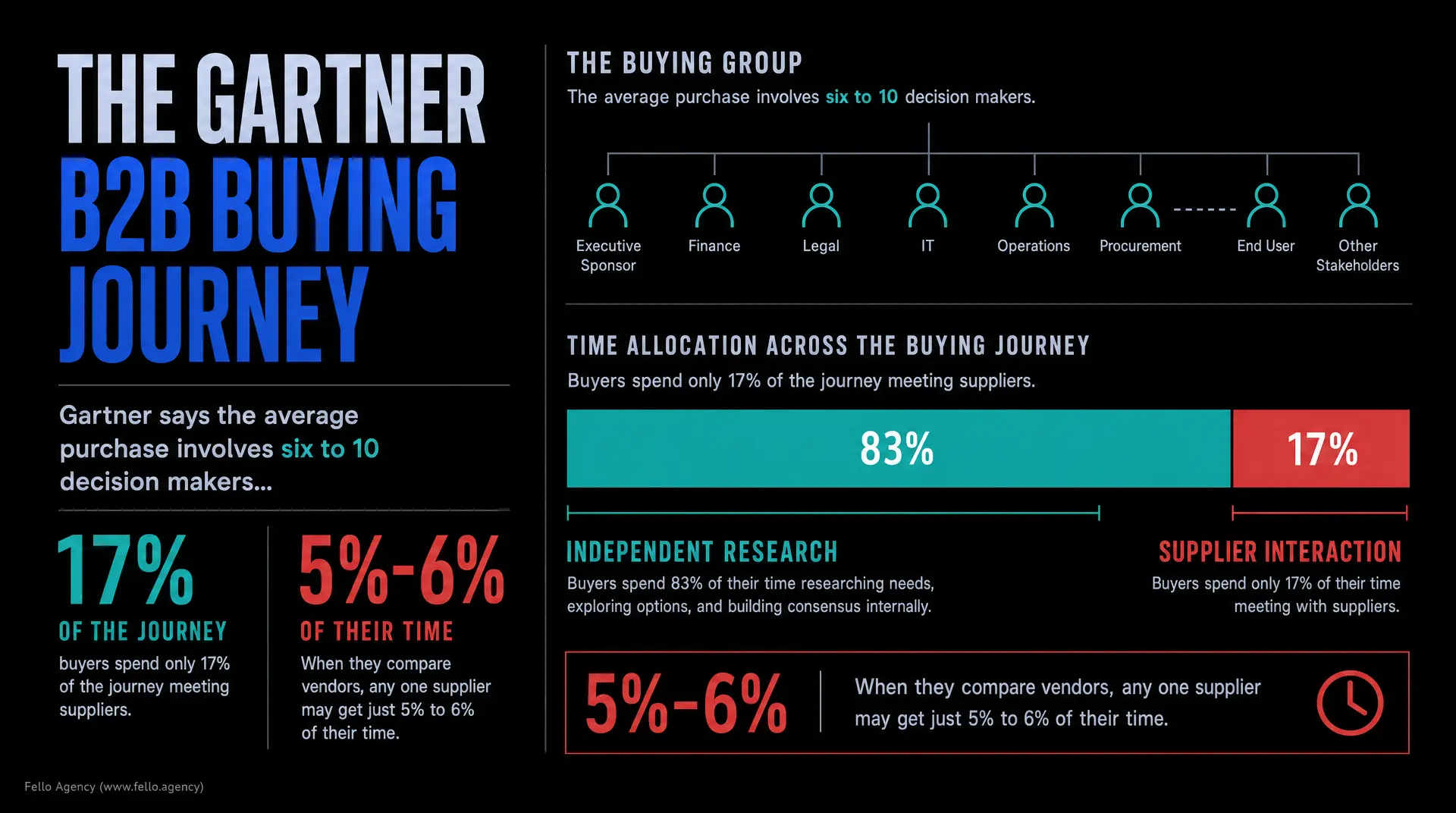
In complex B2B buying, the room is crowded. Gartner says the average purchase involves six to 10 decision makers. Each of those people brings their own research, opinions, and political baggage into the deal. The same research shows buyers spend only 17% of the journey meeting suppliers. When they compare vendors, any one supplier may get just 5% to 6% of their time.
Think about that for a second.
Your case study is doing a lot of the selling while your team is not in the room. In many cases, it is the room.
And buyers want that. A 2024 Gartner survey found that 61% of B2B buyers preferred an overall rep-free buying experience, while 73% actively avoided suppliers sending irrelevant outreach. So if your case study is vague, bloated, or self-congratulatory, buyers don't hang around to decode it. They move on.
That's the frame for 2026. Your case study has to speak business. It has to be useful. And it has to convert without leaning on a rep to explain what the hell the page means.
Key Takeaways
Replacing technical printer specifications with customer-focused workflow videos for Mosaic Manufacturing increased their inbound leads by 25% and boosted booked meetings by 15% within two months.
Restructuring the Sphere website with distinct, ROI-led industry case studies for factory, medical technology, and defense buyers tripled the company's overall lead generation efforts.
Providing helpful B2B content makes buyers 2.8 times more likely to experience high purchase ease and three times more likely to close larger deals with less regret, according to Gartner.
Because 41% of B2B buyers now conduct detailed ROI analysis according to Demand Gen Report, case studies must immediately outline quantifiable business changes rather than leading with product features.
For confidential B2B technology deployments protected by NDAs, publishing the problem-solving methodology and decision logic provides technical evaluators with authoritative proof without revealing sensitive client outcomes.
Stanford research demonstrates that design appearance drives 46.1% of website credibility judgments, meaning poor visual hierarchy and obvious AI-generated imagery in case studies can actively sabotage enterprise deals.
With G2 reporting that 51% of B2B software buyers now begin research using AI chatbots, case studies require clean language and explicit headings to ensure accurate machine summarization.
Most B2B Case Studies Fail Before the Reader Hits the Second Paragraph
Most of them fail because they are written for the company, not for the buyer.
They open with the product. They dump features. They explain architecture. They talk in technical talk because the internal team is proud of the tech. Fair enough. I get it. I work with highly technical founders all the time. But your buyer is trying to answer a different question. They want to know what changed, why it mattered, and how risky this decision is.
That's the whole game.
Your reader does not care how smart your team sounds. They care whether you understand their world. They care whether someone like them used your solution and got a result they can repeat internally. They care whether your story helps them explain the purchase to finance, operations, procurement, and the boss.
That is why generic content keeps losing power. Demand Gen Report's 2024 buyer survey showed that content still matters, but buyers are getting harder on it. They are doing deeper ROI analysis, spending more time researching, and leaning harder on peer recommendations. The same report showed that content influence dropped from 81% in 2023 to 67% in 2024. That tells you something simple. Average content is getting tuned out.
Your case study cannot be average.
It has to help a buyer make progress. Gartner found that when buyers saw supplier content as helpful, they were 2.8x more likely to experience high purchase ease. They were also 3x more likely to buy a bigger deal with less regret.
That's why I don't look at case studies as a content checkbox. I look at them as a sales tool. If they aren't helping you shorten the trust gap, they're not working.
What Buyers Actually Want from a Case Study
Buyers want relevance first. Then they want proof.
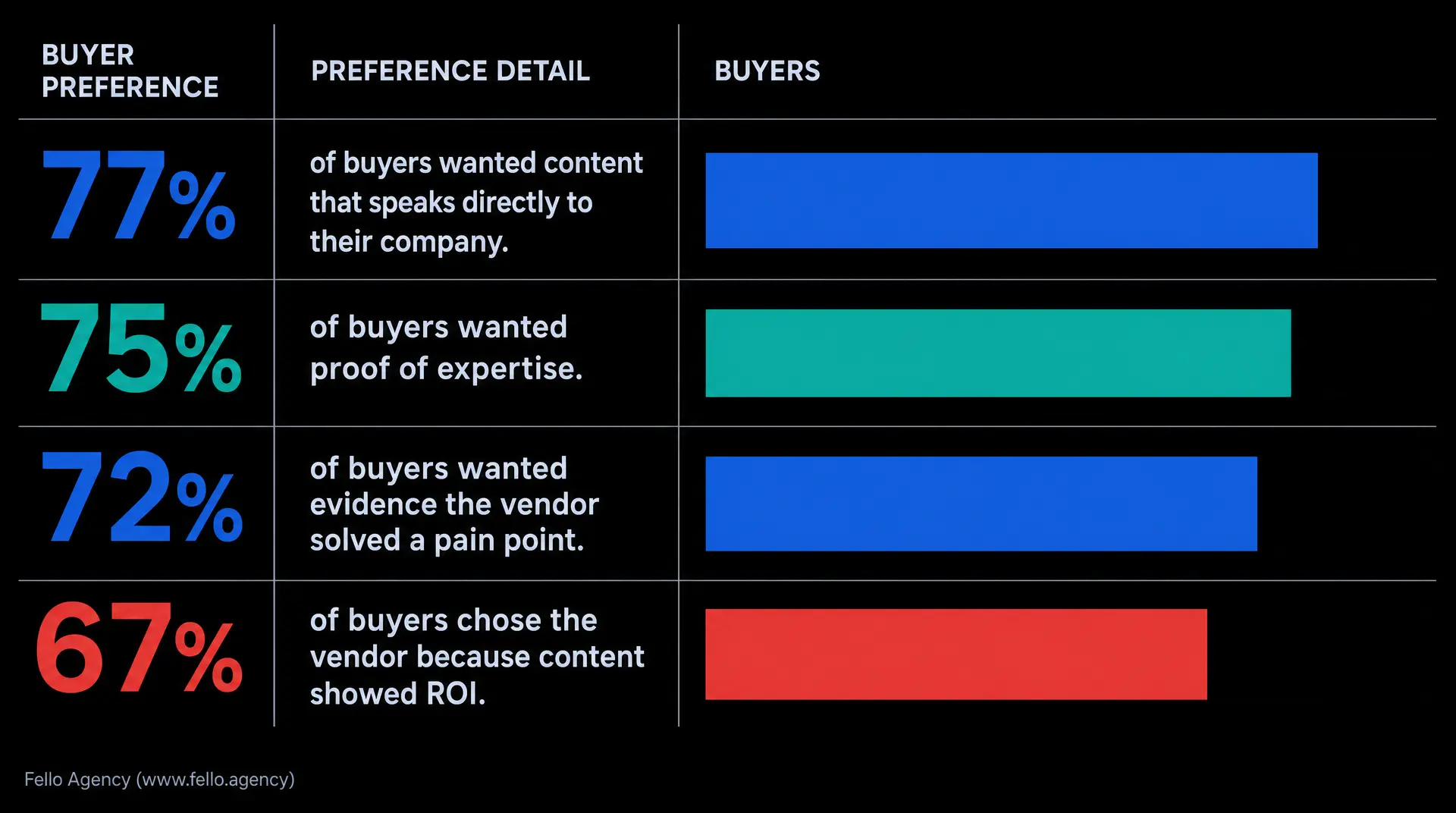
Demand Gen Report's survey found that 77% of buyers wanted content that speaks directly to their company, 75% wanted proof of expertise around their specific industry needs, and 72% wanted evidence the vendor had solved a pain point. Later in the process, 67% chose the winning vendor because the content made it easier to show ROI or build a business case.
That is your blueprint right there.
A converting case study needs to feel like it was written for a buyer in a specific situation, with a specific headache, trying to get a specific outcome past a specific group of people. If it reads like it could apply to anyone, it lands with no one.
This is also where sales and marketing usually get out of sync. Marketing writes a polished story. Sales ignores it because it does not sound like the real objection handling happening on calls. Then everybody wonders why the asset is not moving pipeline.
I hate that.
At Fello, we build case studies into a broader system. Brand, web, growth, and sales enablement all have to line up. If a rep cannot forward the asset. If a buyer cannot pull the key number in five seconds. If the page does not support the business case. You have a pretty page, not a working asset.
Your buyer is your internal champion. Your client is your Padawan. They need something they can carry into the rest of the organization when you are not there.
Start with the Customer, Not the Template
If you want a case study that converts, stop opening Google Docs and asking your team to "fill in the sections."
Start with the customer.
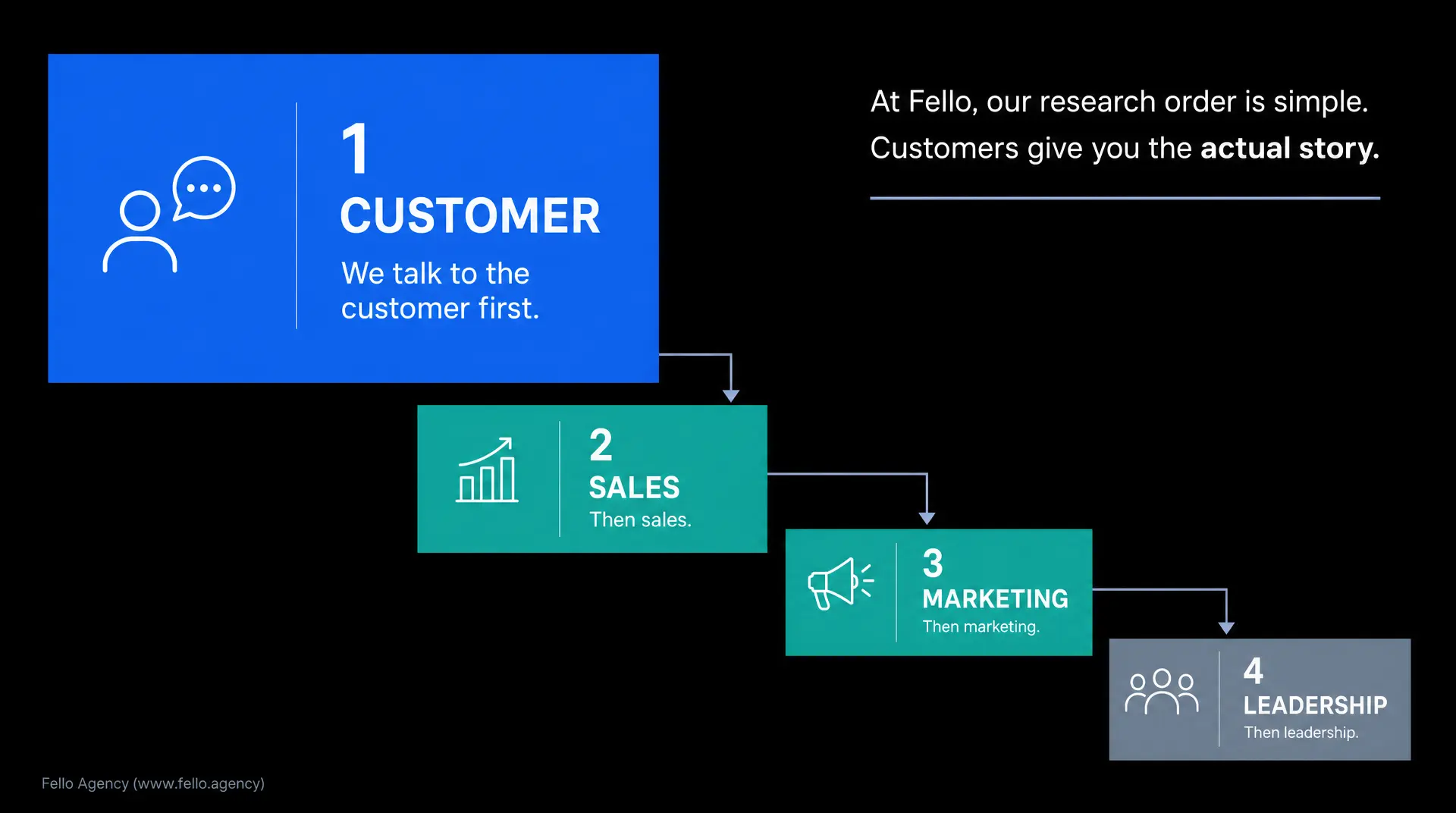
At Fello, our research order is simple. We talk to the customer first. Then sales. Then marketing. Then leadership. I do it that way because leadership usually gives you the cleaned-up version. Customers give you the actual story.
And I want the actual story.
When I interview clients for case studies, I ask one thing over and over in different ways. What pissed you off before this worked? Where was the friction? What was wasting time? What was making money leak out? What was slowing the team down? Why did this become urgent now? What nearly stopped the purchase?
That is where the case study lives.
If all you collect is praise, you don't have a case study. You have a testimonial.
There's a reason I push hard on the "before" side of the story. Buyers need to feel the pain of the old process. They need to see the cost of staying the same. If you skip that, your result feels thin. There is no tension. There is no urgency. There is no reason to care.
This matters even more in deep tech and enterprise. Most of the companies I work with are asking buyers to change an existing way of doing things. The pitch is usually the same at the core. Change this process and you either make more money or save more money. Your case study should carry that point from the first few lines.
And keep it in customer language. Your website needs to speak business. Your case study does too. If you lead with technical specs, you make the reader do translation work. That is lazy marketing.
Pivot to an ROI narrative or you're gonna stay in the lab.
Lead with the Business Change
The first screen matters more than most teams think.
Do not start your case study with a company bio and a product overview. Start with the business change. Show the result right away. Make the reader understand, in plain language, what got better.
A stronger opening sounds like this in spirit: the team entered a new market faster, reduced manual work, improved lead quality, shortened the sales cycle, or made enterprise buyers trust them sooner. It sounds like business. It sounds like movement.
That lines up with what buyers are already asking for. Demand Gen's 2024 survey found that 41% of buyers were doing more detailed ROI analysis than before. So your first paragraph should help them start that analysis, not bury it.
I always come back to one line here. Not how smart the device is, but how much smarter you're going to be.
That shift changes the whole page.
Make the "Before" State Hurt a Little

Most B2B case studies are too polite.
They say the client wanted to "improve efficiency" or "streamline operations." Sure. Fine. But nobody buys because they want to streamline. They buy because something is broken, annoying, expensive, risky, or embarrassing.
Write that part.
This is where I think B2B should steal more from B2C. Sell a lifestyle, even in technology. Show the better operating life on the other side. More clarity. Less confusion. Less back-and-forth. Less manual work. Better confidence when the buyer has to stand in front of the board or the procurement team.
I'm not talking about fluff. I'm talking about consequence.
When I build case study narratives, I want the reader to feel the friction in the old setup. I want them to say, "Yeah, that's exactly where we're stuck." Once that connection is there, the result lands much harder.
Show the Work Without Turning the Middle Into a Spec Dump
This is where most teams lose the reader.
They panic in the middle and start throwing in everything. Product features. Workflow diagrams. Screenshots. Technical details. Internal process notes. Suddenly the case study turns into a kitchen sink document.
You do need proof. You do need enough detail to make the work believable. But you do not need a spec sheet in paragraph form.
What I look for instead is useful proof. What changed in the process. What had to be solved. What got rebuilt. What obstacle had to be handled. What the client saw that made the new direction click. That gives the story weight without drowning the buyer.
And show some friction. I really believe this matters in 2026. Highly technical buyers are not stupid. If you sanitize the whole thing and make it look frictionless, it starts to smell like vaporware. Too much polish will look like bullshit.
I'd rather show a little ugly side when it makes sense. A rough testing moment. A hard decision. A process that needed rework. That kind of truth builds trust with skeptical buyers because it shows you were actually in the dirt doing the work.
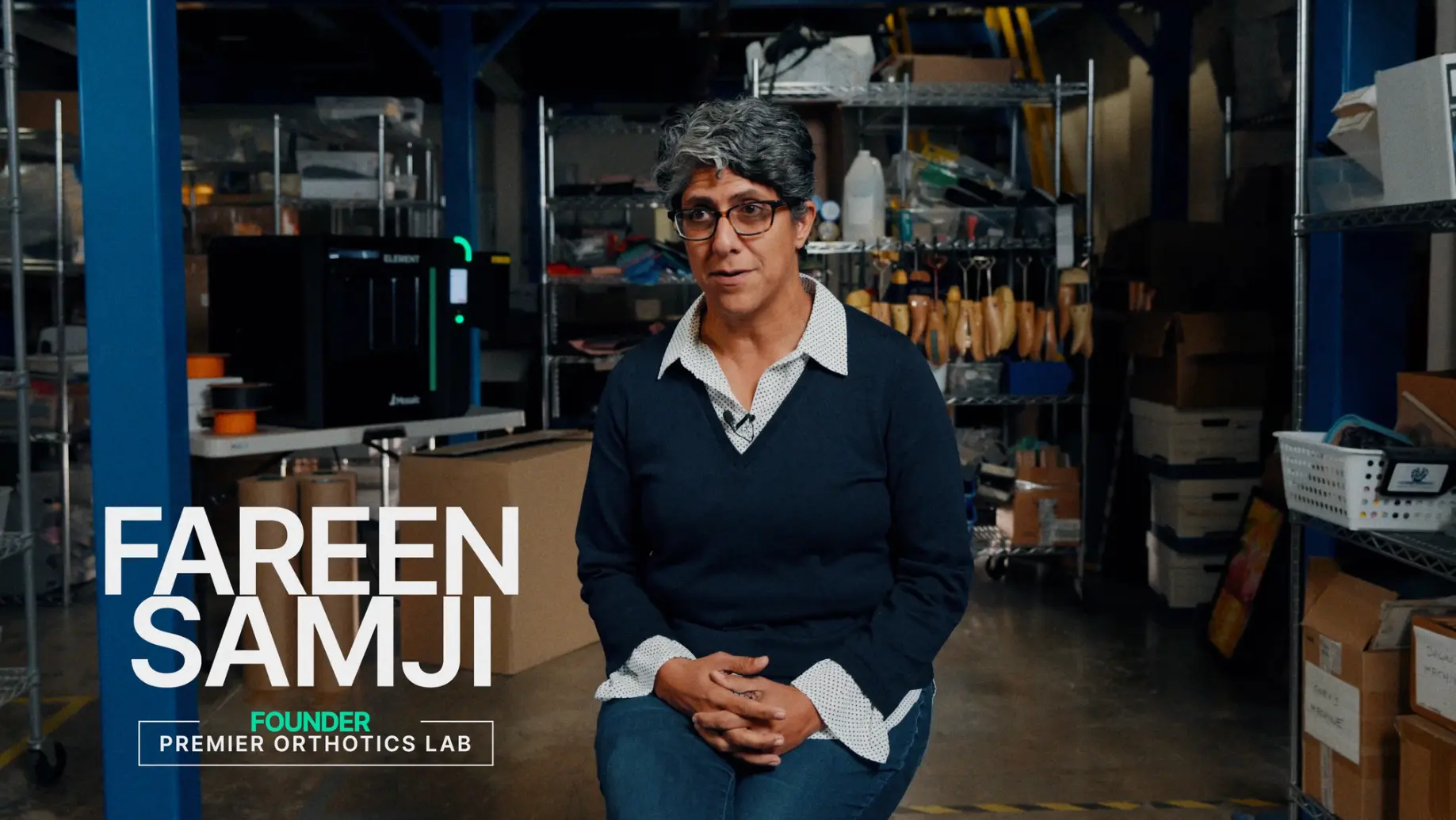
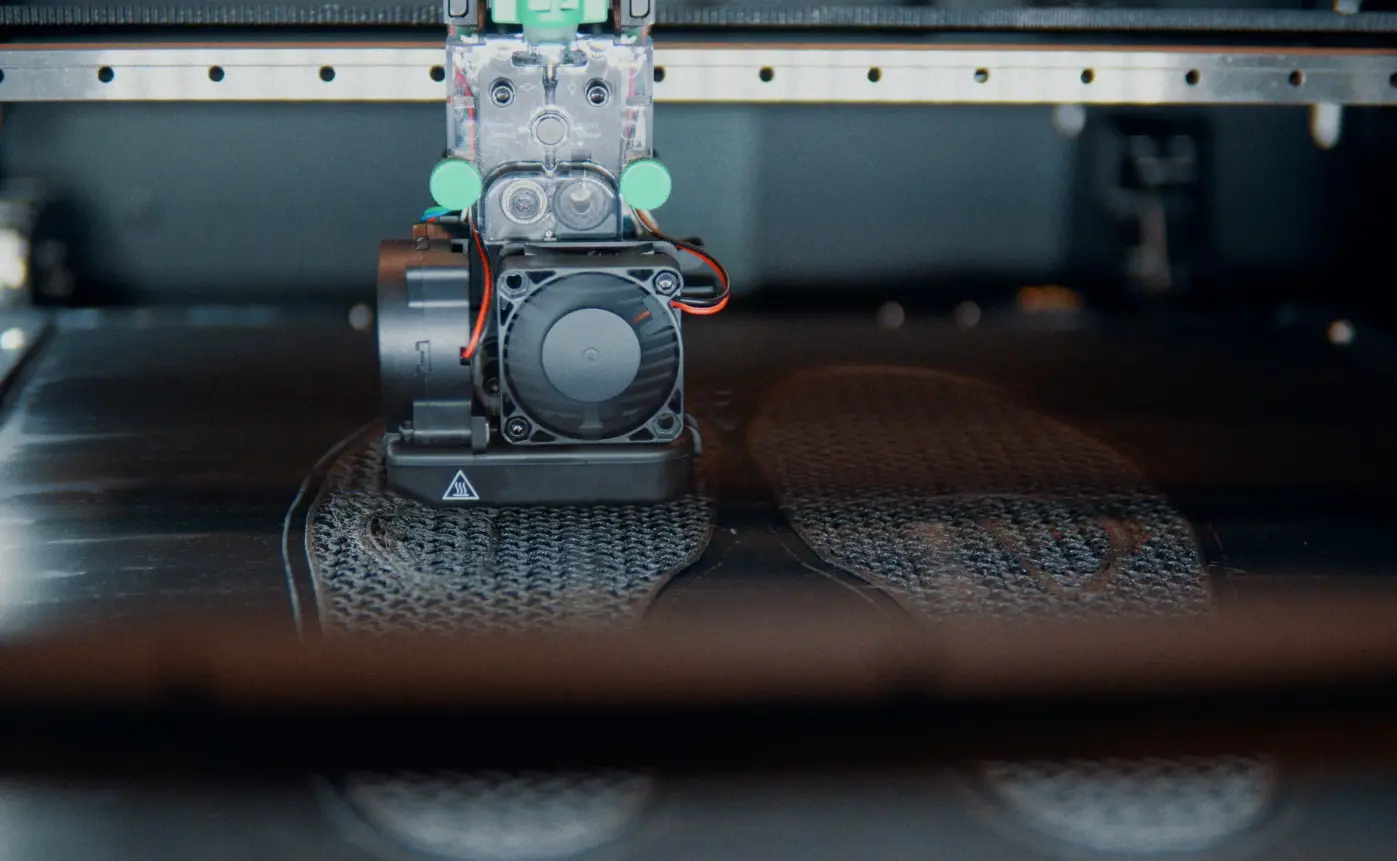
For Mosaic Manufacturing, we used case study video around their orthotics work and told the story from the customer's side. We did not make the printer specs the hero. We focused on the business owner using the device, the workflow, and the operational upside. That helped demonstrate product-market fit in a way buyers could actually feel. The work also supported Mosaic's move into a new market, and the results were real: inbound leads jumped 25% and booked meetings rose 15% within two months.
That's what a good case study should do. It should help the buyer picture the change in their own operation.
Write for the Whole Buying Group, Not Just One Reader
Remember the buying group. You are not writing for one person.
The CFO wants financial logic. The operator wants to know how messy rollout will be. The technical evaluator wants proof that the thing is real. The executive sponsor wants confidence that choosing you will not blow back on them.
Your case study needs to help all of them, even if it starts with one primary reader.
That does not mean stuffing every possible point into one page. It means layering proof in a smart order. Start with the business win. Then show the operational change. Then add the trust signals that make the decision feel safe. Let the reader keep going deeper if they want to.
I've found that this gets even more important when your company sells into multiple verticals. One generic story does not do the job. Different industries care about different pain. Different stakeholders need different proof.
That was a big part of the work we did with Sphere. We built distinct industry pages so the company could speak directly to buyers in factories, medical technology, and defense. We also led with ROI metrics and clear use-case language instead of generic innovation talk. The result was simple and strong. As Alexandra Corey, Head of Marketing at Sphere, put it, "The new website has more than tripled our lead generation efforts."
That is what happens when proof matches the ICP.
End with the Next Conversation, Not a Dead CTA
One of the easiest ways to waste a good case study is to end it with a generic "Contact us."
That is dead space.
A strong case study should create the next logical move. Maybe that is a demo. Maybe it is a technical brief. Maybe it is a downloadable PDF a buyer can forward internally. Maybe it is a deeper case study available under NDA. Maybe it is a piece of content that helps them write their future RFPs.
The next step depends on your cycle, your deal size, and your market. But it should feel connected to the story the buyer just read.
This matters because buyers want help making the internal case. The same Demand Gen research showed that one of the top reasons buyers chose the winning vendor was content that made it easier to show ROI. Your CTA should keep that motion going.
And if you are selling serious contracts, do not be cheap with proof. If you are asking for high-six-figure deals, I do not think written testimonials alone are enough. Get professional video involved once the deal size and stage justify it. CMI's 2025 benchmark found that videos were the most effective B2B content type at 58%, with case studies right behind at 53%. That tracks with what I see. Written proof gives structure. Video gives presence. Use both.
Then squeeze the asset hard. A strong case study video should not live in one corner of the site. Turn it into a written page, a PDF, deck slides, follow-up emails, clips for LinkedIn, and trade show support. That's bang for your buck.
Confidential Work Does Not Mean Weak Proof

A lot of the best B2B work cannot be fully shown. That's normal, especially in frontier tech, defense, enterprise infrastructure, and anything sensitive.
What matters is how you frame it.
Most companies handle confidentiality badly. They sound nervous. They say they cannot share details. They hedge. The whole thing reads like they are hiding something. Buyers pick up on that immediately.
I'd much rather see language like, "This engagement is under NDA at the client's request." Better again, if it is true, say, "One of three North American financial institutions we've worked with in this category." Same absence of information. Much stronger trust signal.
I say this all the time because it keeps proving true. Framing changes everything.
At Fello, prospects often sign an NDA early because of the kind of deals and technologies involved. That doesn't make proof harder. It just changes the shape of the proof.
One of the smartest ways to handle confidential work is to publish the methodology, not the story. Traditional case studies follow a simple arc. Problem, solution, outcome. But if the outcome is sensitive, that arc breaks. So shift the asset into a framework. Show how you solve a class of problem. Show your decision process. Show the sequence, the logic, the thinking. McKinsey and BCG have built whole content machines around this idea. They often publish the framework and let the buyer map their own situation onto it.
That works especially well with technical buyers because they want to evaluate your thinking, not just your history.
There is another piece most companies underuse. The biography is the case study. If the work is confidential or pre-commercial, your team page starts doing a lot of the selling. If you have an ex-Google researcher, an ex-FDA operator, an ex-Boeing engineer, or someone with CERN-level credibility, stop burying that on a generic about page. Put that signal to work.
Then build a validator ecosystem around it. Co-authored research papers matter. Industry awards matter. Speaking invitations matter. Strategic partners matter. These signals create a halo around work you cannot fully unpack in public.
And yes, I love this line for sensitive pages and proposals: detailed case studies available upon request under NDA.
That looks like a disclaimer. It's actually a sales tool. It gives the buyer a reason to start the conversation.
Your Case Study Has to Look Credible
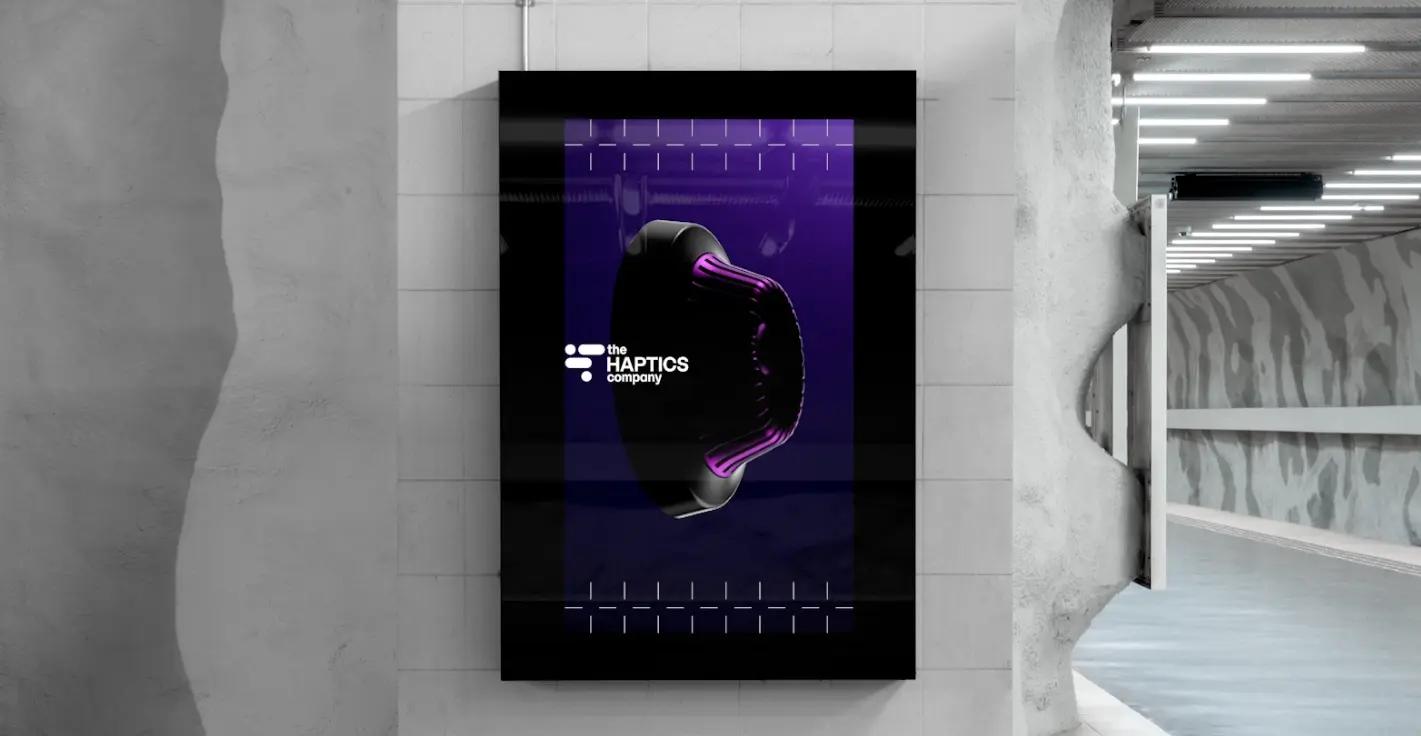
I do not care how strong your story is if the page looks weak.
Visual trust matters fast. Stanford's Web Credibility research found that design look was the most mentioned factor in website credibility judgments, showing up in 46.1% of participant comments. That should not surprise anybody in B2B.
People judge before they read.
I've seen the impact directly. I've seen a company lose a deal with Amazon because the brand visuals were poor. The product was solid. The visuals killed trust. That is the real revenue cost of weak design.
So when you publish a case study, treat it like a deal asset. Use real visuals. Use clear hierarchy. Use clean type. Keep the layout sharp. And if your imagery looks fake, overly polished, or obviously AI-generated, technical buyers will smell it right away. They will start wondering whether your product is generic too.
If it looks like bullshit, no one's gonna want to work with it.
This is also why I care so much about CMS speed and autonomy. If your team cannot publish or update a case study quickly, your content engine is broken. My benchmark is simple. Once the copy is approved, your team should be able to launch a page or blog post in about three minutes. If not, you are dealing with infrastructure debt.
And yes, big buying decisions are computer buys. Optimize the reading experience for desktop first. Make the page easy to scan in a boardroom, on a laptop, with five tabs open and somebody from finance asking questions.
Match the Website, Sales Team, and AI Search Reality
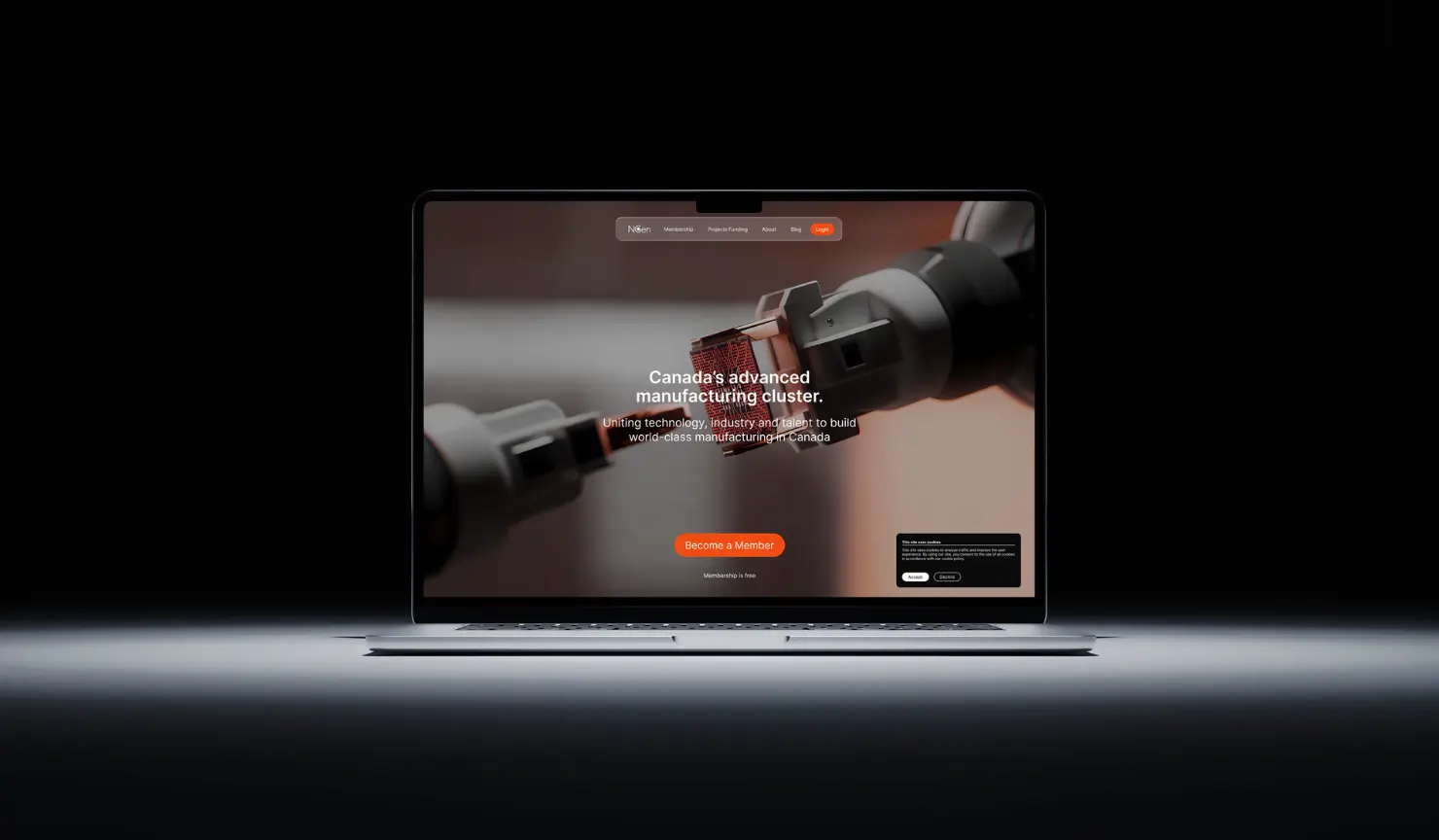
A case study does real damage when the website, the sales team, and the follow-up assets all say the same thing.
That sounds obvious. It still gets messed up all the time.
Gartner found that 69% of B2B buyers reported inconsistencies between vendor websites and seller conversations. That mismatch creates mistrust. If your case study promises one kind of result and your sales deck tells a different story, you have already made the deal harder.
This is why I want sales involved early. They know which proof points buyers actually ask for. They know what gets forwarded. They know where the objections sit.
And now there's another layer. AI search is changing how people find and summarize proof. G2's 2026 AI Search report says 51% of B2B software buyers now start research with an AI chatbot more often than Google. It also says 71% rely on AI chatbots somewhere in the process, and 93% say AI has fundamentally changed how they research.
So your case study has to work for humans and for machines, summarizing your content back to them. That means clear structure. Clean language. Sharp headings. No jargon soup. No bloated intro. No vague claims. Just useful proof.
The Mistakes I Keep Seeing Over and Over
The first mistake is making your company the hero. That usually comes from ego, or from internal politics. The buyer does not care that your team worked hard. They care that someone like them got a meaningful outcome. Keep the customer in the center and your conversion rate will look better.
The second mistake is hiding the friction. A perfect story feels fake. Especially with technical buyers. Give them enough realism to trust you. Show the hard parts. Show the constraint. Show the thinking. That builds belief.
The third mistake is publishing one generic story for every audience. That is lazy. Your industrial buyer, your finance buyer, and your technical evaluator are not reading the page the same way. Tailor the proof. Tailor the examples. Tailor the language.
The fourth mistake is weak distribution. A case study should not be a lonely page. It should show up in sales follow-up, decks, outbound, LinkedIn, trade shows, and resource centers. I've seen sales teams move faster when proof assets are unified in one system. Prep time drops. Rep confidence goes up. That is how marketing starts acting like a revenue engine.
The last mistake is treating case studies like a copywriting exercise only. They are not. They are brand assets, web assets, sales assets, and trust assets at the same time. Strong B2B branding is the last moat standing. A good case study helps you skip a level in the sales cycle because the buyer stops asking if you are real and starts asking how soon you can help.
Final Thought

A B2B case study that converts is not long because it is thorough. It is effective because it is useful.
It starts with the customer's frustration. It speaks business. It shows real work. It gives the buying group proof they can carry forward. And it ends by making the next step obvious.
If you do that well, you feel it quickly. Faster replies. Better conversations. Easier handoff to sales. More confidence from buyers. More trust from the board. That is what I care about. Results should not be measured by website traffic. They should be measured by sales velocity.
At Fello, this is how we treat case studies. Not as filler content. Not as fluff. As commercialization tools.
Write yours that way, and it will start closing.
Frequently Asked Questions
How do case studies impact our chances of making the enterprise buyer's shortlist?
They act as your brand's credibility infrastructure before sales speaks. According to TrustRadius, 78% of buyers shortlist products they already know. Case studies build that familiar trust early. Once on that shortlist, 71% buy their first choice. Win the research phase, win the deal.
Are B2B buyers actually still influenced by vendor case studies?
Yes, but average content is dying rapidly. A recent survey shows content influence dropped to 67% from 81% last year. Buyers are actively tuning out generic fluff. To retain influence, your case study must rigorously prove ROI and address operational friction.
How should marketing leadership measure the actual ROI of a case study?
Stop looking at vanity page views. You must measure sales velocity and pipeline influence. A converting case study should directly shorten your complex sales cycle and dramatically improve lead-to-opportunity conversion rates. Track how often sales reps deploy them in active deals and monitor if those specific enterprise accounts close faster.
Should we shift our case study budget from written content to video?
Do not choose one. Integrate both. Written proof provides the scannable structure executives require, while video delivers human presence. CMI research confirms videos (58%) and customer stories (53%) are your most effective assets. Build the core business narrative in text, but let video carry the emotional weight.
How do we optimize B2B case studies for AI-driven buyer research?
Cut the jargon and structure your data cleanly. Today, 51% of B2B buyers start their research with AI chatbots. Machines cannot parse bloated, self-congratulatory marketing copy. Use sharp headings, bulleted ROI metrics, and plain business language so AI engines easily summarize your proven outcomes for the buying group.
Your Creative Partner for Innovation That Matters
From advanced tech to transformative healthcare, Fello helps visionary teams shape perception, launch products, and lead industries.

Let’s keep in touch.
Discover more about high-performance web design. Follow us on Linkedin and Instagram.

