


I think most B2B marketing funnels are built backwards.
Teams start with channels. They talk about paid search, content calendars, SDR volume, webinar attendance, and MQL targets. Then a quarter later, they are in a room with sales asking the same question: why does pipeline still feel expensive and fragile?
A lot of the time, the company does not have a lead problem. It has a trust problem. Or a clarity problem. Or a sales enablement problem. Usually all three.
I see this constantly at Fello. We work with companies in AI, quantum, medtech, manufacturing, XR, logistics, defense, and a whole slew of other B2B tech markets. Different products. Same pressure. The CMO has to prove revenue impact. The CEO wants a cleaner commercialization story. Sales wants better conversations. The buyer wants to understand the value fast.
That is where the funnel needs to grow up.
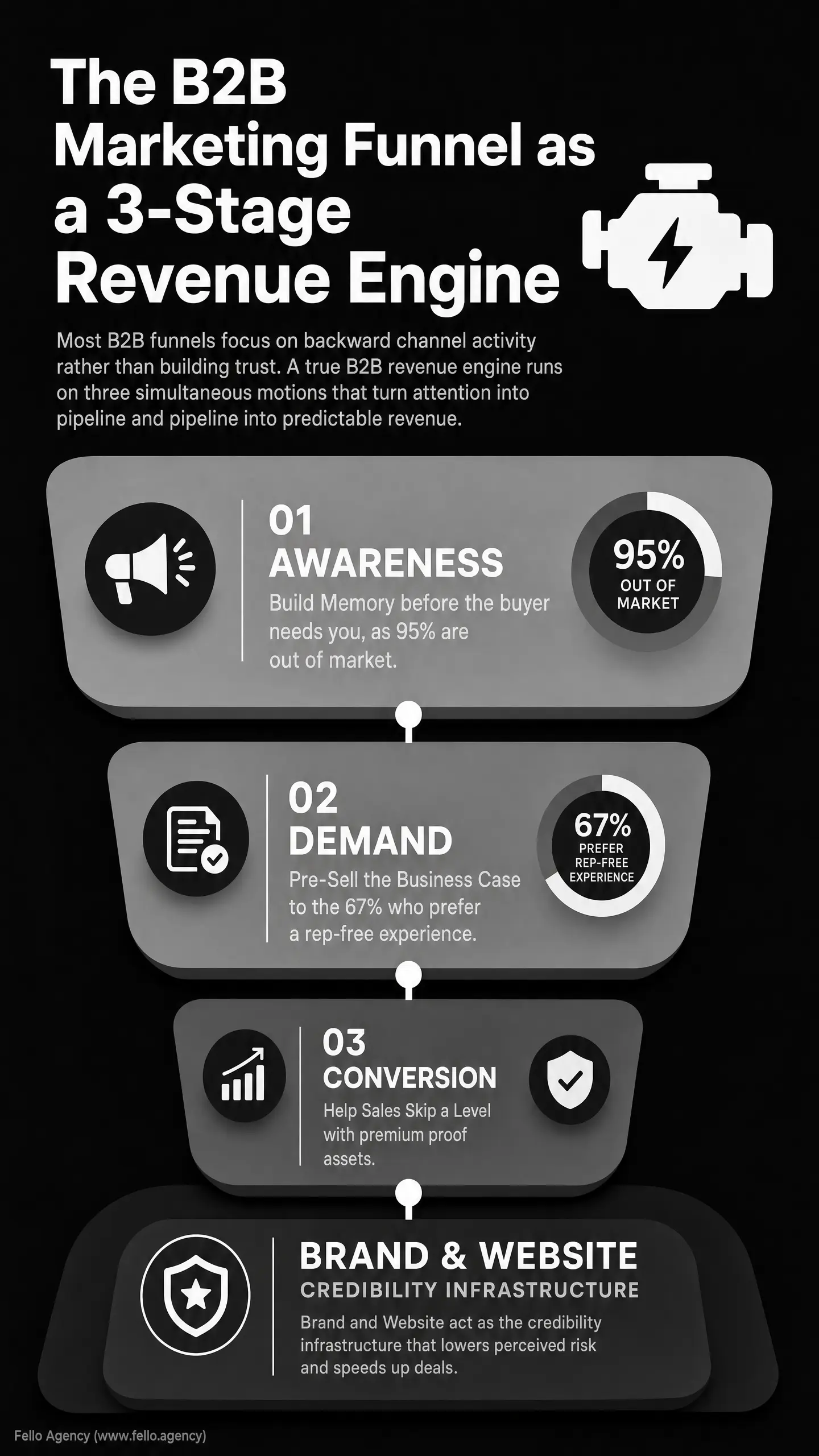
A real B2B marketing funnel is a revenue engine. It builds memory before the buyer is ready. It pre-sells the business case before a rep gets on a call. It gives sales a boardroom-ready narrative that helps internal champions push the deal forward.
If your funnel cannot do that, it is just activity.
Most Funnels Break Before Launch
In my experience, go-to-market strategies fall at the brief, not the launch.
The company writes from the inside out. The homepage sounds like the product team. The deck sounds like the founder. The campaign sounds like the agency. None of it sounds like the buyer.
Then sales gets dragged into cleanup work. Reps spend half the call explaining what the company is not. I pay close attention to that. When sales keeps correcting misconceptions, you are looking at a positioning failure baked into the identity. That gap gets expensive fast.
The market is not making this any easier. Content Marketing Institute’s 2025 B2B benchmarks show that marketers struggle most with attribution, journey tracking, alignment with the buyer journey, and alignment between sales and marketing. That should sound familiar to almost every CMO reading this.
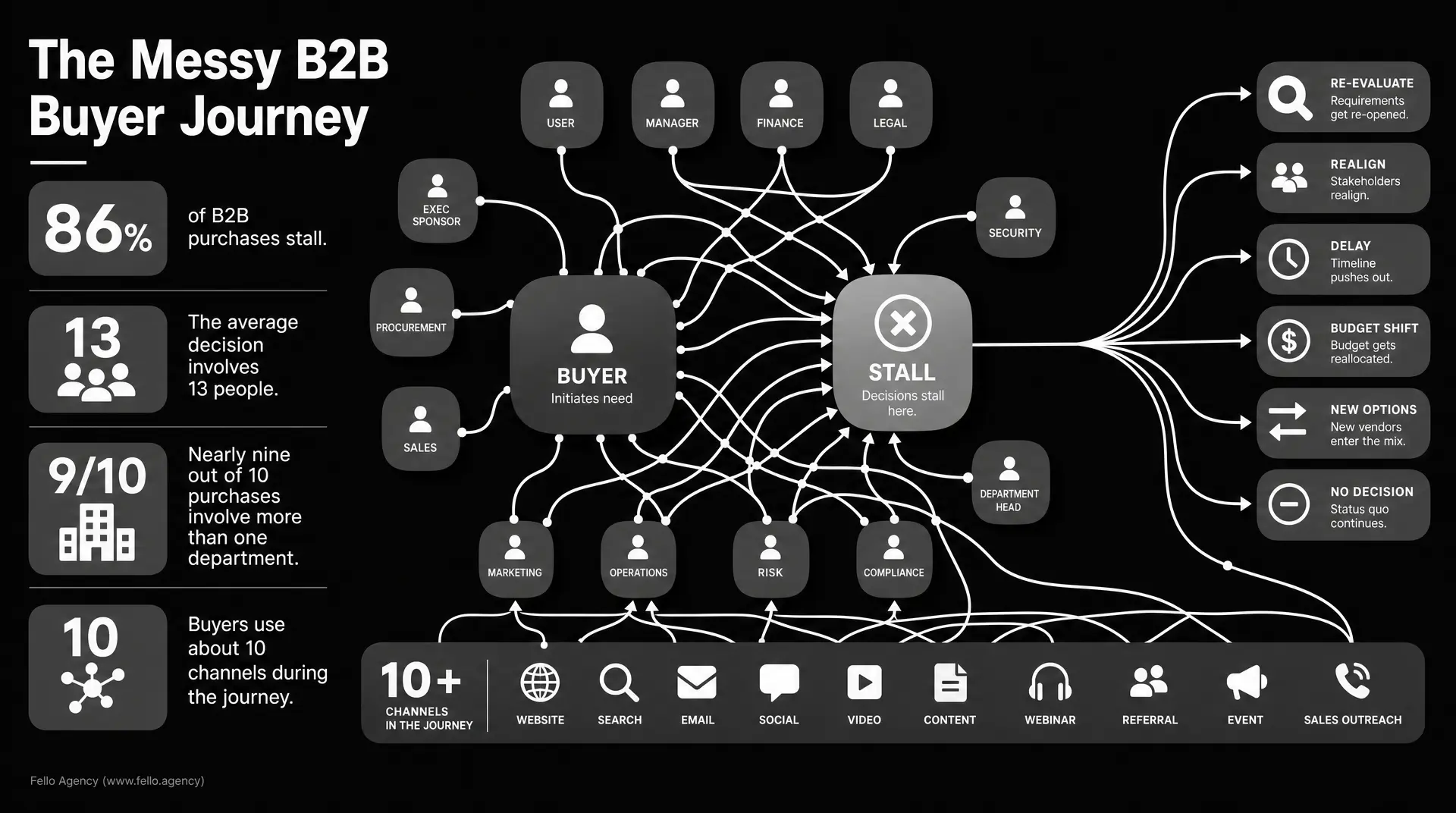
Look, B2B buying itself is messy. Forrester’s State of Business Buying 2024 says 86% of B2B purchases stall. The average decision involves 13 people. Nearly nine out of 10 purchases involve more than one department. So if your story is fuzzy, the deal does not just slow down. It dies in committee.
I talk about this a lot in robotics. People call it pilot purgatory. They think the pilot stalled because the tech was not strong enough. A lot of the time, the pilot dies because the internal champion never got a boardroom-ready narrative. They could not explain the business case upstream. They could not make the buyer’s commercial reality obvious.
That is why brand matters so much in B2B tech.
To me, brand is still the simplest thing in the world. It is a feeling that somebody thinks about when they see your brand. In B2B, that feeling should be trust, interest, and curiosity. It should make the company feel legitimate. When the website, the deck, the colors, the typography, the videos, and the messaging line up, the experience becomes legitimate and absolutely won.
Buyers judge that fast. Stanford’s web credibility research found that 46.1% of credibility comments referenced design look more than any other factor. Layout, typography, white space, images, color. All of it is doing work before the copy even lands.
I have seen this in real sales situations. I have had clients talking to Amazon who had trouble getting champions because the branding did not look strong enough to recommend. Same market. Same need. Weak signal. Harder sale.
For a CMO, this changes the conversation. Brand functions like credibility infrastructure. It lowers perceived risk. It helps the buyer feel safe. It helps your rep walk into a warmer room.
The Revenue Engine Runs on Three Motions at Once
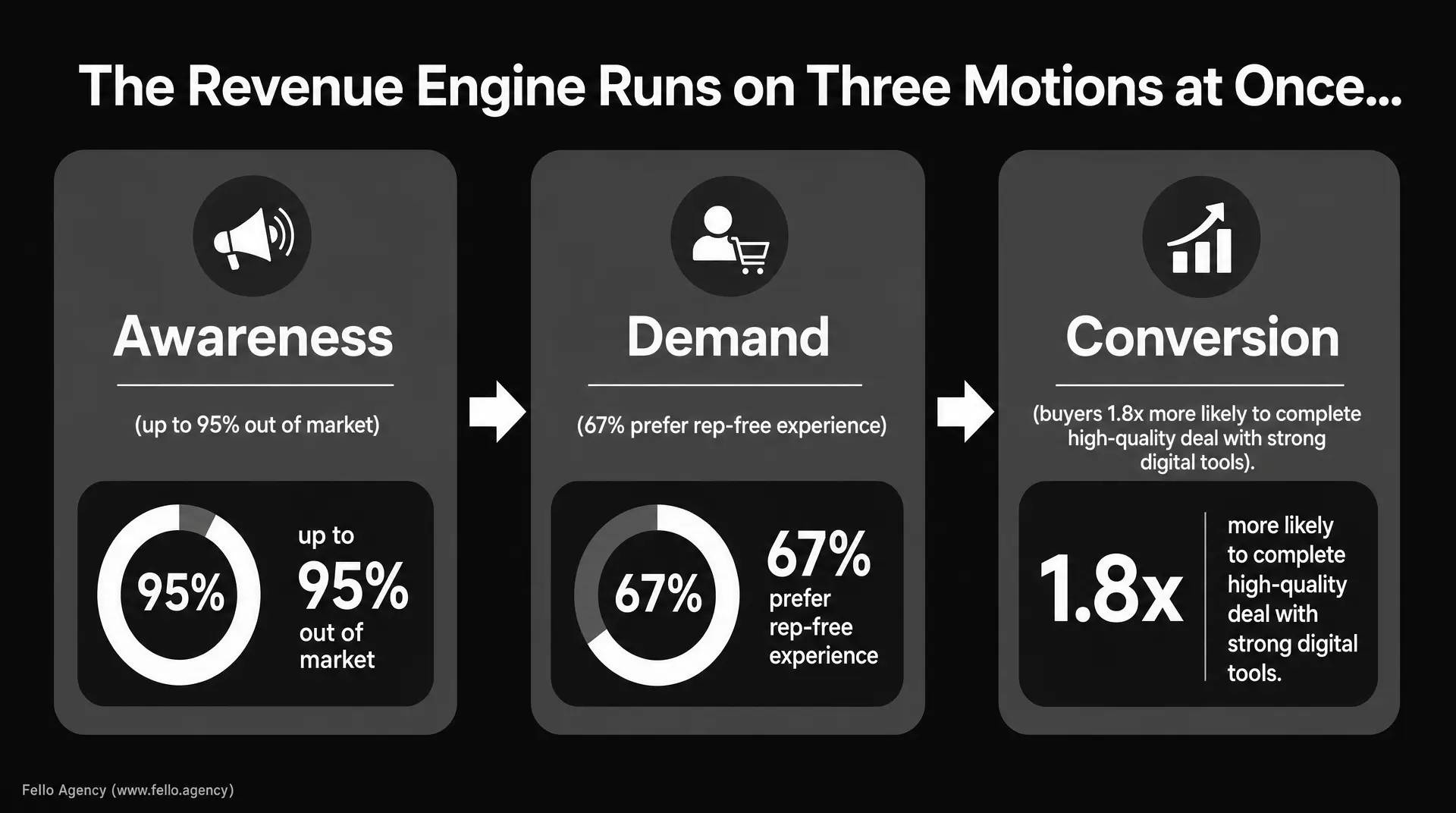
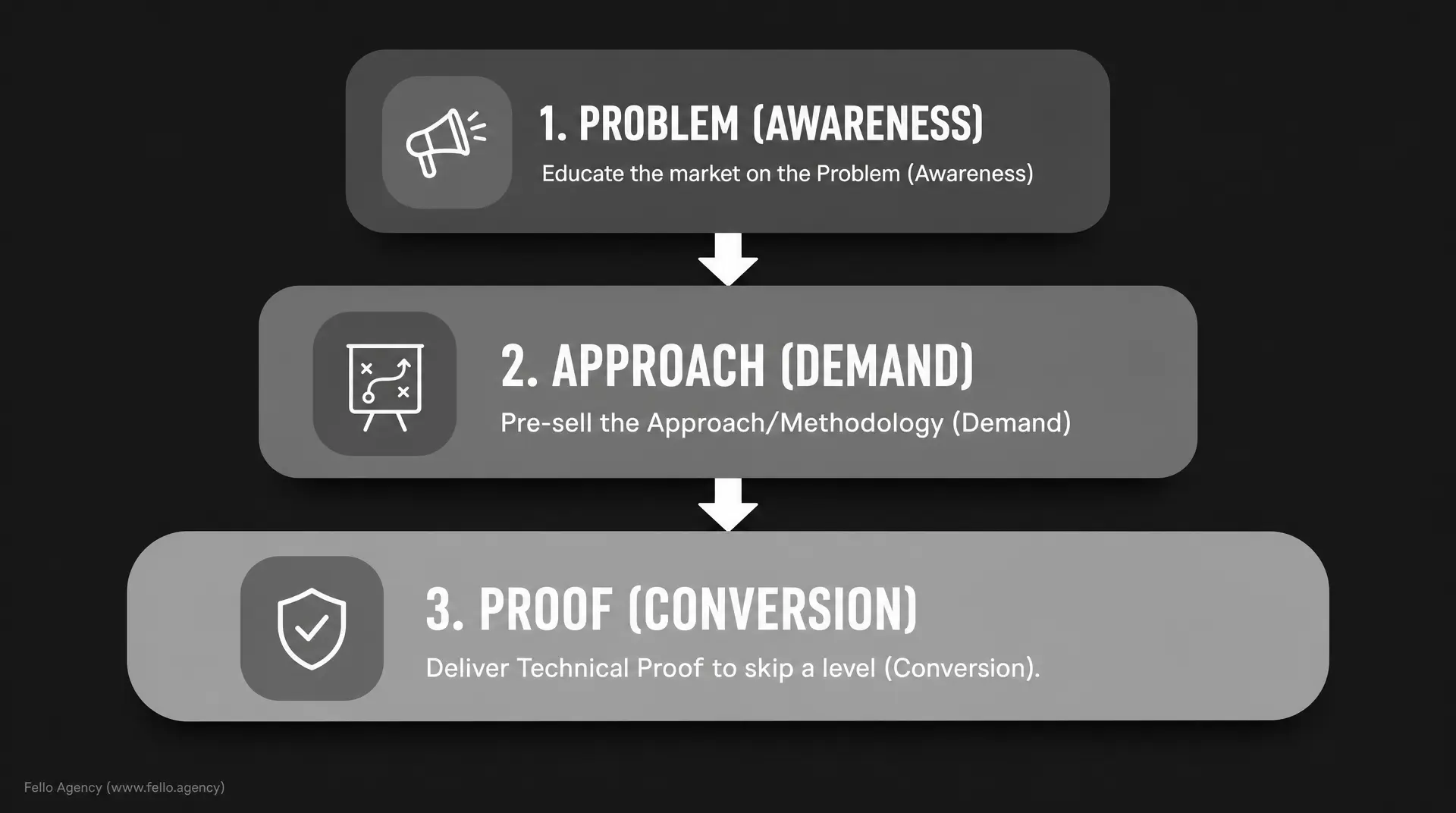
I do not think about the funnel as one straight line. I think about three motions happening at the same time. You need awareness. You need demand. You need conversion.
Most teams pick one. Then they blame the channel.
They run paid search and expect it to carry the quarter. Or they post on LinkedIn three times a week and expect pipeline to show up. Or they obsess over bottom-of-funnel decks while nobody in the market knows who they are. Busy agencies love that kind of activity. Revenue teams should not.
Awareness matters because most of the market is not buying right now. Ehrenberg-Bass points out that up to 95% of B2B buyers are out of market at any given time. If your funnel only chases in-market demand, you are missing the heavy stuff. You are also going to be forgotten when the buying window finally opens.
Conversion matters because buyers do not spend much time with you directly. Gartner found that buyers spend only 17% of their purchase journey meeting with suppliers. If they evaluate three vendors, each one gets roughly 5% of the buyer’s time. That means your website, your content, your demos, and your proof have to do serious work without a rep in the room.
You also have to support different buying styles. McKinsey’s 2024 B2B Pulse research shows a pretty even split between buyers who want in-person interaction, buyers who want remote human interaction, and buyers who want digital self-service. The same research says buyers use about 10 channels during the journey, and 42% use more than 11 touchpoints. Your funnel has to hold together across all of that.
And remember this too: the person who signs the contract is often not the person who first found you. Your top of funnel has to be broad enough to attract interest. Your mid and bottom funnel need to get much more specific. You have to serve three, four, sometimes five stakeholders without becoming a Frankenstein.
That is why I keep saying this is architecture, not activity.
Awareness: Build Memory Before the Buyer Needs You
This is where a lot of B2B teams get impatient.
They want every piece of content to generate a lead this month. I get it. You have targets. But memory still wins. TrustRadius found that 78% of buyers build shortlists from brands they already know. In enterprise, that climbs to 86%. Buyers also tend to choose the product that was already their first choice.
That tells you something pretty brutal. Brand recall is doing work long before the form fill.
This is why I push the technical authority funnel for deep tech, infrastructure, hard software, and complex B2B products. If the market does not fully understand the problem, you need to educate the market before you pitch the product. You cannot create demand for a category that does not exist in the buyer’s mind still.
So write about the problem. If you sell quantum networking, talk about the vulnerabilities in classical encryption. If you sell inspection drones, talk about preventing shutdowns and downtime. If you sell enterprise software, talk about the cost of the broken workflow, the lost time, the operational drag. Sell the sizzle, not the steak, then earn the right to bring in the technical proof.
I also think early-stage teams make a big mistake when they try to create a new category too early. If you do not have the time and budget to carry that, hijack existing search intent. Meet the market where it already searches. Then sharpen your position inside that category.
The channels here are pretty clear. I like SEO, LinkedIn organic, guest posts in niche publications, podcast appearances, and a flagship state-of-the-industry report. That report matters more than people think. It becomes your backlink magnet. It becomes the thing a CTO forwards to a VP with a note that says, we need to read this.
That matters because the 2025 Edelman-LinkedIn thought leadership report found that 71% of hidden buyers have little or no interaction with sales, still 95% become more receptive to outreach when the thought leadership is strong. Those hidden buyers are everywhere in enterprise tech. They do not show up in the CRM until much later, but they shape the deal.
This is also where I tell teams that all modern companies are media companies. Your executives need a point of view. Your engineers need visibility. LinkedIn works well here, but mostly as a buyer verification layer. The company page matters. The personal profiles matter even more. People in B2B tech still buy with B2C habits. They scroll. They watch. They compare. They spot bullshit a mile away.
We have seen this play out over and over. For Nord Quantique, we took dense quantum messaging and turned it into a clearer visual story through video. For DeckLinks, a stronger content strategy helped lift social engagement by 220%. Lidia Vijga, their CEO, said we brought “unconventional solutions,” and honestly, that is exactly what B2B SaaS companies need when every feed looks the same.
I have even validated this with a client that struggled with traction until we pushed more human content. Once they started posting meet-the-team content on Instagram, the following moved. That surprises people. It should not. You are still selling to humans.
Demand: Pre-Sell the Business Case

Once you have attention, you need to turn it into conviction.
This is where mid-funnel content earns its keep. The buyer should be walking into the first serious conversation already pre-sold on the business case. If sales has to educate from zero, marketing has left too much work on the table.
That is exactly where the market is going. In Gartner’s 2025 buyer survey, 67% of buyers said they prefer a rep-free experience, and 45% used AI during a recent purchase. Buyers with high decision confidence were twice as likely to say they landed a high-quality deal. Confidence matters. A lot.
So this stage shifts from problem to approach. I want methodology front and center, with the product name secondary. Show how the problem gets solved. Show what changes operationally. Show how money is made or saved. Show how time gets reclaimed. For a CFO or CTO, that is the lifestyle hook. They want their time back. They want less waste. They want less risk.
This is where I like gated technical briefs, ROI calculators, webinars with named engineers, use-case pages, and case studies that map to specific buying concerns. Keep the heavy technical material available. Just do not dump it on the homepage. Put it where the evaluator expects it.
And segment the message properly. One hero line for every audience usually creates a zero messaging problem. A CFO is reading for cost, speed, and business impact. An IT lead wants to know how support, integration, and security will work. Operations wants to know whether this changes throughput. Procurement wants clarity and confidence. You need to say the right amount to the right people without saying too much.
We have built this kind of structure for clients across sectors. With ACTO, segmenting partner pages by ICP helped balance technical proof with emotional branding. Their VP of Marketing, Wafa Sayeed-Irtiza, said “both marketing and sales teams couldn’t wait to start circulating the videos in campaigns and outreach.” That is what good mid-funnel content does. It moves. It gets used.
Sphere is another good example. We shifted the narrative away from generic innovation and into collaboration, specific user realities, and stronger commercial value. Their traffic lifted quickly once the brand guidelines and site were tightened, and the new website went on to more than triple lead generation. Alexandra Corey, Head of Marketing at Sphere, said it plainly: “The new website has more than tripled our lead generation efforts.”
This is also where I push teams to stop hiding their best thinking inside PDFs. Move technical content onto trackable pages. Add clear CTAs. Let marketing see what people are reading. Let sales know what prospects downloaded. That way the follow-up can actually sound informed.
A good follow-up is simple. “I saw you grabbed our brief on X. We’re working on that exact problem with teams in your world. Worth a 20-minute conversation?” That feels like a consultant reaching out. It does not feel like generic outbound.
Technical buyers respond to companies that demonstrate they understand the problem at a peer level. That is why the technical authority funnel works so well. It earns trust before it even asks for a meeting.
Conversion: Help Sales Skip a Level
Bottom of funnel is where marketing turns into revenue or turns into noise.
If the lead already understands what you do, why it matters, and why your company feels credible, your reps are kind of skipping a level. They can focus on fit, rollout, pricing, implementation, and internal alignment. They do not have to spend the first half of the meeting proving the company is real.
That matters because proof assets carry a lot of weight in buying. TrustRadius found that 71% of buyers who used demos said demos were the most influential resource in the process. In enterprise buying, demo usage climbs even higher. So your bottom-of-funnel assets need to be sharp.
Look, if your reps are still rummaging through folders for old one-pagers, the funnel is leaking. I care a lot about clean decks, clear capability overviews, strong case studies, technical explainer videos, and pages that replace static PDFs so you can actually track engagement. Sales and marketing friction usually drops the second those assets get serious.
This is one reason we built a dedicated Sales & Growth Enablement pillar at Fello. For a field sales software client, we replaced scattered collateral with a unified mobile-first toolkit. That gave reps smoother presentations, less prep time, and more confidence. For Campfire, creative assets used in outbound cold emails improved demo booking conversion by 1.6%, and onboarding videos improved activation and retention by 20% in the first month. The revenue engine should support the whole path, not just the handoff.
Mosaic Manufacturing is another strong example. Their technical specs were drowning the value story. We reframed the message, built better landing pages, upgraded the deck, and produced cinematic content that made the commercial value easier to grasp. Inbound leads rose 25%, and booked meetings climbed 15% within two months.
In a lot of complex B2B categories, the sales cycle runs six to 12 months. I think strong branding and stronger sales assets compress that timeline because they remove early doubt. The buyer spends less time figuring out whether you are legitimate and more time figuring out how to buy.
If you are selling into enterprise or government, I get even more focused. I like a credibility first ABM funnel. Forget mass lead gen. Concentrate your resources on 20 to 50 named accounts. Map and surround them. Exist in their peripheral vision before a rep reaches out. Use targeted LinkedIn, useful content, partner credibility, trade show presence, and account-specific research. Then when your BD person sends the email, the recipient thinks, yeah, I’ve seen these people around.
And remember, the person who signs is often not the person who found you. Sometimes it starts with an engineer or operator who whispers your name upstream. That is why the funnel needs to support the whole buying group.
Your Website Is the Main Piece of Real Estate
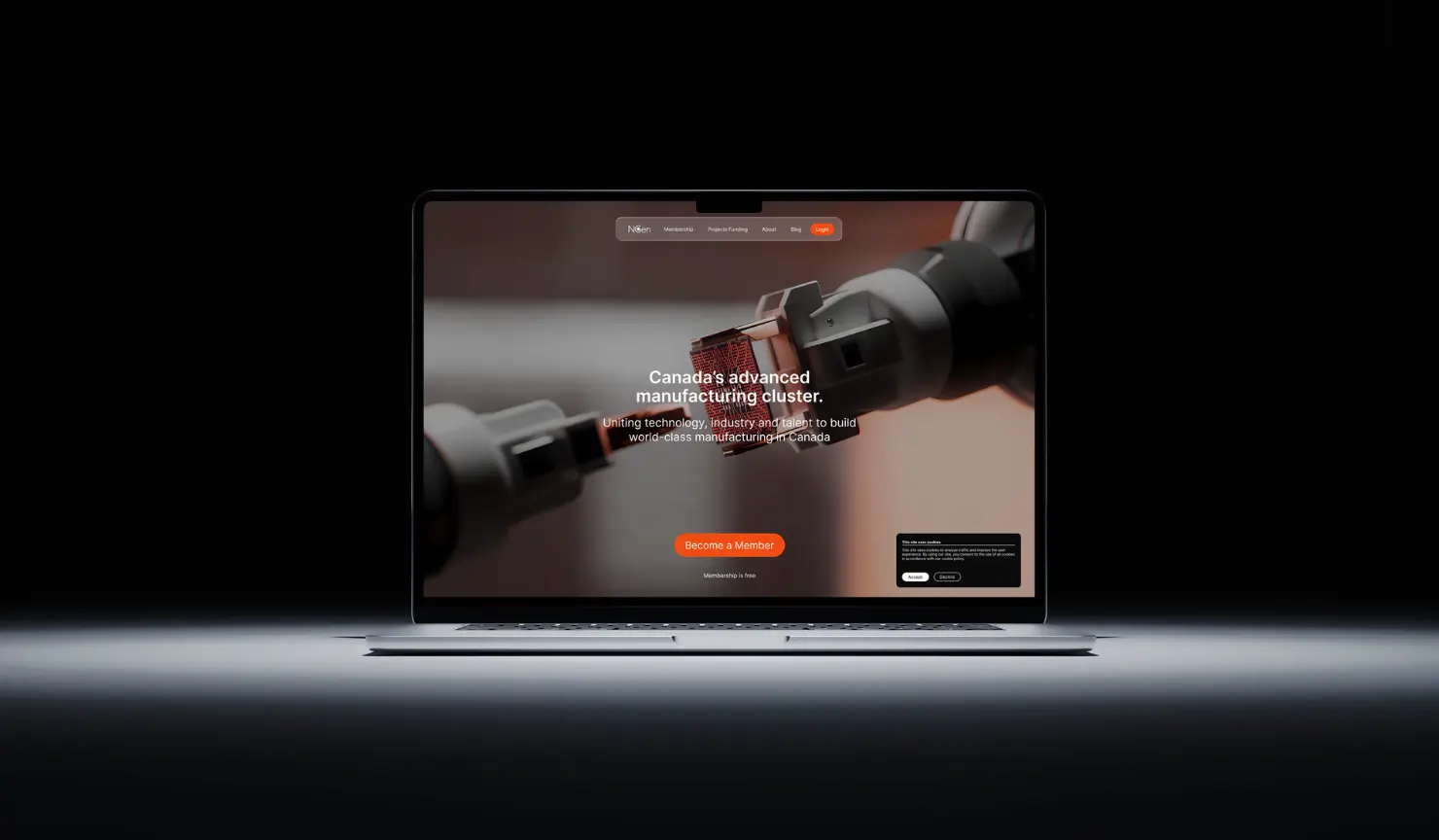
Across all the channels in the funnel, the website keeps showing up as one of the biggest touchpoints. McKinsey’s research says it is one of the top three. I believe that immediately because I see what happens when the site is weak.
If you are asking buyers to spend real money with you, you are a Michelin star restaurant. Every detail has to imply that level of trust. Design is a commercial gatekeeper. The site needs a clean hero, a sharp value proposition, proof early, real product visuals, strong case studies, useful resources, and a clear path to go deeper. The heavy technical stuff should still be there, just in the right place.
You also need a system, not a pretty homepage. The brand has to hold across the next 20 touchpoints. Trade show booth. Pitch deck. Technical brief. Product video. Partner page. Careers page. Co-branded asset. If the system falls apart after the homepage, the market feels it.
And in the new dawn age of AI, generic design is becoming a credibility problem fast. AI can help with ideas. I use it for research and inspiration all the time. But buyers can now recognize the same layouts, the same stock visuals, the same templates. That kills trust.
We felt this in our own business. Fello used to lean into purple and black. We later moved to a white, black, and gray system, and trust improved almost immediately. Same people. Same capability. Better signal.
The smaller visual decisions matter too. I had a manufacturing and medical device client whose brand felt off until we applied IBM Plex typography. The tone corrected right away. For Revanesse, we pushed the brand toward clinical black and white so the science felt stronger, then added controlled orange light in lab visuals so the whole thing did not feel cold. These things matter because buyers make credibility calls fast.
How I Prove ROI to CEOs and CFOs
Look, if you walk into a boardroom and ask for money for “branding,” you are making your own life harder.
I talk about communication strategy, marketing investment, sales enablement, and credibility infrastructure. That is the language finance teams understand. A website is a lead-generation asset. Better messaging lowers perceived vendor risk. A stronger brand shortens the trust cycle and makes procurement easier.
There is data behind that approach. Gartner found buyers are 1.8 times more likely to complete a high-quality deal when strong digital tools work alongside a rep. That is the whole point of the revenue engine. Marketing handles its part of the sale before sales gets involved.
I also show leadership the market landscape. Sit in a room with your CEO and CFO and look at the top three competitors. A lot of the time, the leaders already have top-tier design, stronger positioning, tighter sales materials, and cleaner websites. The market keeps rewarding that.
Then I bring it back to outcomes. Sphere’s new website more than tripled lead generation. Mosaic lifted inbound leads by 25% and booked meetings by 15%. Revanesse moved from beauty language to science-backed medical credibility and gained traction with high-value clinics. Across 50-plus projects, Fello holds a 4.9 out of 5 client satisfaction rating.
I also keep the engagement model lean because budget scrutiny is real. Fello was built organically. No venture money. No bloated account teams. Clients work directly with the people doing the heavy stuff. More of the budget goes into the output. Less gets burned in overhead. Our whole thing is no fluff. Just sharp, strategic creative.
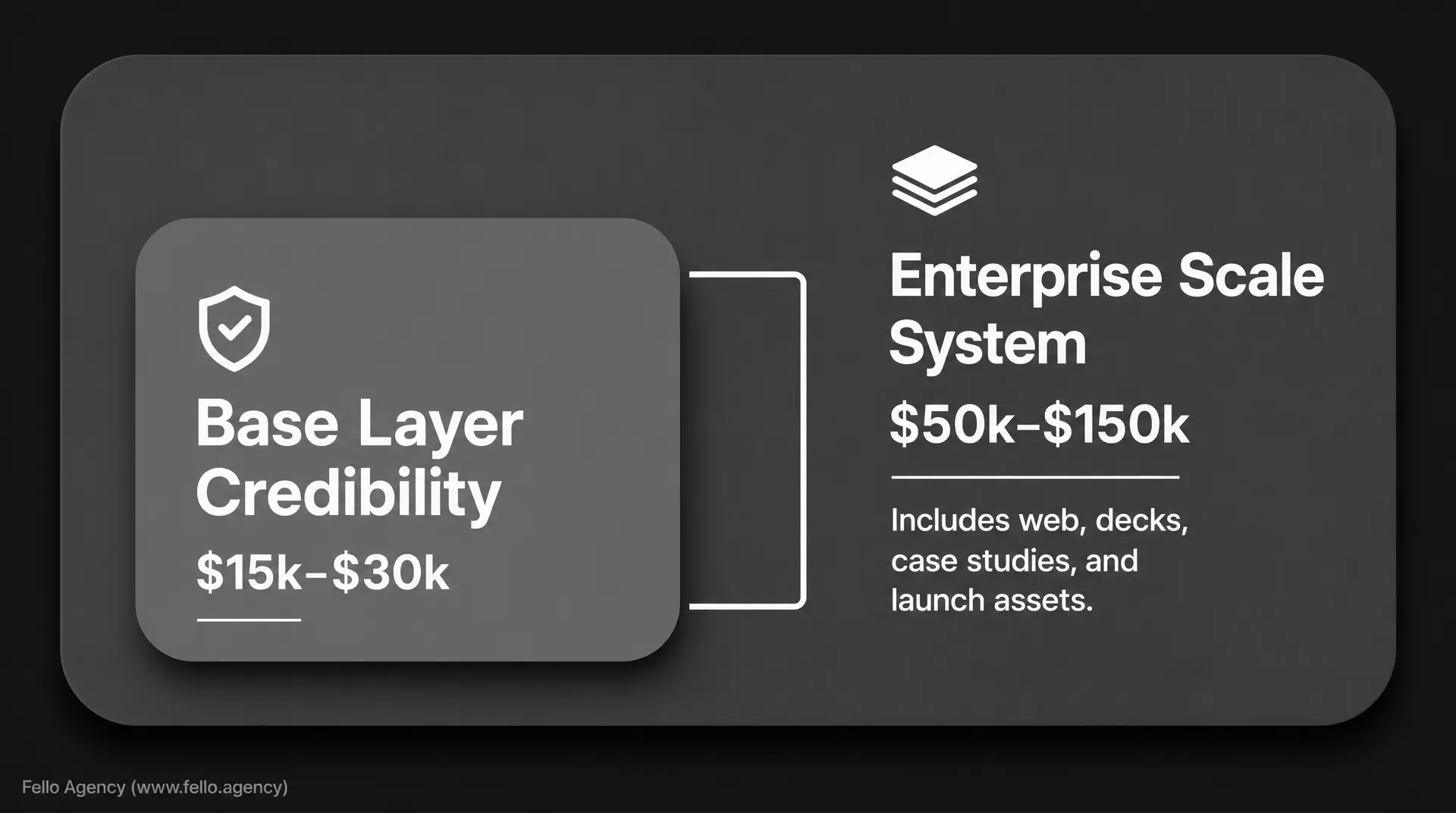
And yes, I talk about stage-appropriate investment. A company can often get a first layer of real credibility with a $15,000 to $30,000 branding investment. Once you are selling to enterprise and need the whole system working across web, decks, case studies, sales material, and launch assets, the number usually moves into the $50,000 to $150,000 range. That is where the revenue engine starts to get built properly.
How I Would Build the Engine
I start with research. Always. We talk to customers first, then sales, then marketing, then leadership. That order matters. Customers tell you where the confusion is. Sales tells you where the friction is. Marketing shows you what has been tried. Leadership tells you where the company is going.
We also benchmark competitors and interview power users because you need to hear the market clearly before you redesign the message. At Fello, strategy and research make up a huge part of the work. A lot of teams want to skip that and jump straight to visuals. That is usually where they get burned.
Then I want one sentence a non-technical executive can repeat. Obsess over that line. If the message is still fuzzy there, the rest of the funnel will wobble. This is also where I create a brand kill list. What old language is dying? What outdated pages are going away? What claims need to disappear? If you do not cut the legacy noise, it leaks right into the new system.
From there, I build the funnel in layers. Awareness gets problem-led content, executive visibility, and a flagship report. Demand gets segmented use-case pages, technical briefs, engineer-led webinars, and better business-case tools. Conversion gets stronger demos, sales decks, case studies, and account-specific materials. I want teams absolutely obsessed with going to market because the early proof, the case studies, and the customer stories are what fuel the engine.
Then I make sure the system is editable and the team can actually run it. I hate funnels that need a developer every time marketing wants to publish. We build website systems clients can manage on their own, and we train teams on the backend so they can move. On our side, we even have setups where a client can publish a new blog post in about three minutes once the copy is ready. That matters because awareness dies when marketing gets stuck in a dev queue.
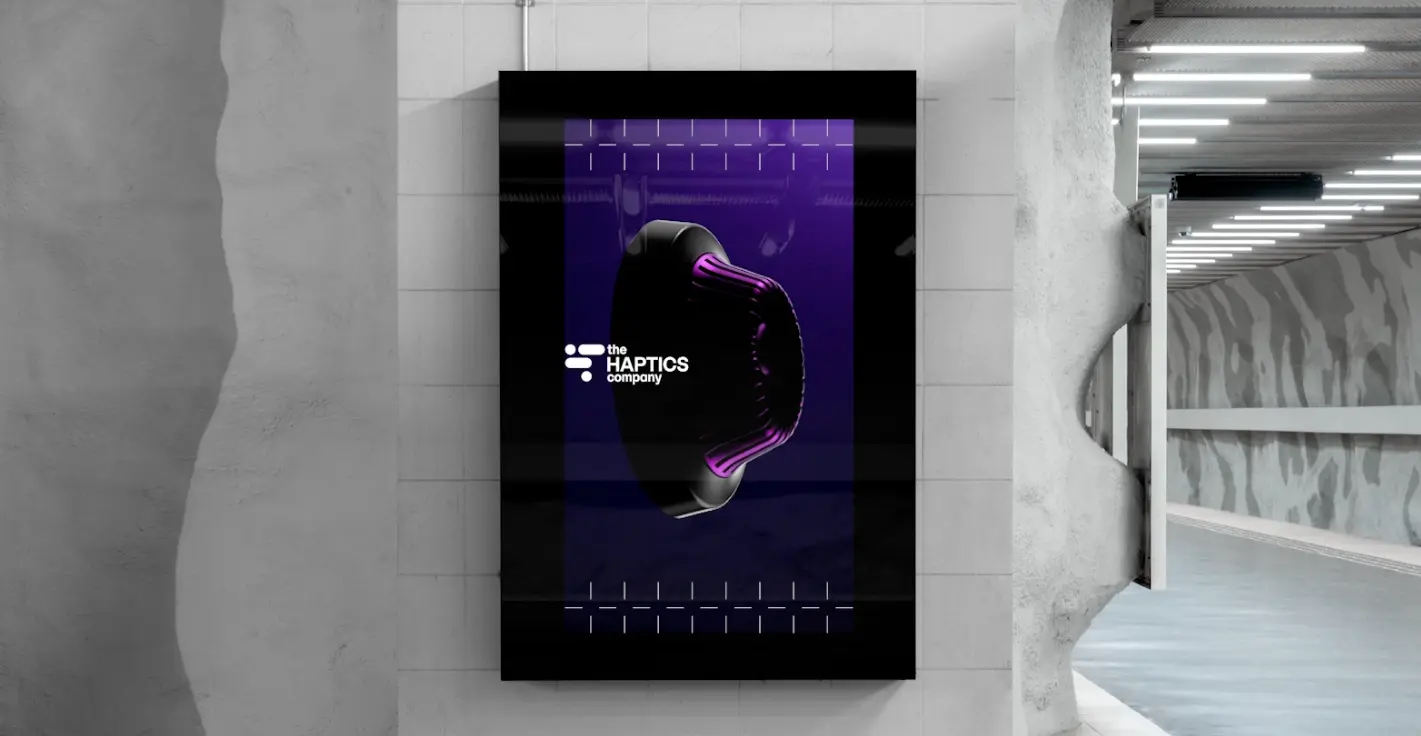
Speed matters too. A product launch waits for no one’s creative review cycle. If you have a funding clock, a trade show deadline, or a new market push, you need to move 10 times faster than you think you do. We completed a rebrand for a haptics company in about a month and a half because OEM meetings at CES were on the line. We have launched highly compressed brand and web sprints for other clients because the market was moving now, not six months later. Busy agencies are not the same as effective agencies.
Post-launch, I watch for leading indicators. Are email replies coming faster? Are demos easier to book? Are better-fit buyers coming in? Is sales finally using the assets? Are people inside the company repeating the same message? When sales, marketing, and the C-suite all land on the same communication strategy, you can feel the machine start to work. That is usually the earliest sign that you are winning.
Final Thought
I think CMOs get put in a bad spot when the funnel is treated like a reporting exercise instead of a revenue system.
You do not need more random activity. You need a market that remembers you, a website that instills trust, mid-funnel content that pre-sells the business case, and bottom-of-funnel assets that help sales close without reinventing the story every week.
That is how marketing stops looking like a cost center. That is how it starts acting like a revenue engine.
At any given moment, a life-changing deal could come in. When that buyer lands on your site, reads your brief, watches your demo, or checks your LinkedIn, what do they feel? Do they trust you? Do they understand you? Can they repeat your value upstream?
If the answer is yes, you are moving.
If the answer is no, the funnel still needs work. And if you do not have a brand, then you are going to be forgotten.
Frequently Asked Questions
How do you build a marketing funnel for a complex buying committee?
You segment the business case. Forrester reports the average decision involves 13 people. Your funnel can’t rely on one generic pitch. The CFO needs ROI calculators, while IT needs security briefs. You build specific mid-funnel assets that equip your internal champion to win over every distinct stakeholder upstream.
Why do so many enterprise B2B deals stall in the mid-funnel?
Deals stall when the internal champion lacks a boardroom-ready narrative. Forrester notes that 86% of B2B purchases stall. If your mid-funnel only pitches product features instead of operational changes and financial impact, your buyer can’t defend the purchase to leadership. It dies in committee.
How should CMOs attribute revenue when buyers use multiple channels?
Move away from first-touch obsession. McKinsey found buyers average 10 interaction channels. If you only measure the final form-fill, you ignore the brand that actually built trust. Attribute success to pipeline velocity, win rates, and inbound growth.
How long should we expect an enterprise B2B funnel to convert?
It requires patience. TrustRadius data shows enterprise buyers take longer, reaching 87% completion by 12 months. Your funnel must sustain memory and trust across that entire year. Short-term performance marketing alone simply won’t survive a complex enterprise sales cycle.
What is the biggest operational bottleneck in scaling a B2B marketing funnel?
It is failing to match content to the buyer’s actual timeline. The Content Marketing Institute found 45% of B2B marketers struggle with aligning content to the journey. If you push heavy conversion assets while the buyer is defining the problem, you burn the relationship early.
Your Creative Partner for Innovation That Matters
From advanced tech to transformative healthcare, Fello helps visionary teams shape perception, launch products, and lead industries.

Let’s keep in touch.
Discover more about high-performance web design. Follow us on Linkedin and Instagram.