

At Fello, I spend a lot of time helping technical companies turn dense, complex work into something the market can actually understand. That includes life sciences, medtech, advanced manufacturing, AI, and a lot of other hard categories.
The pattern is always the same.
The science can be strong. The team can be brilliant. The market still hesitates because trust is weak, the story is muddy, or the digital experience adds work instead of removing it.
If you lead pharma or biotech marketing, 2026 is going to make that gap even more obvious. And if you sit inside a large pharma company, do not treat this like a biotech-only problem. A lot of launches now behave like biotech launches, even when they live inside a massive commercial machine.
That means your HCP strategy has to change.
Key Takeaways
FDA data indicates that 23 of the 46 novel drug approvals in the 2025 CDER review carried orphan designations, requiring pharmaceutical marketers to prioritize specialized mechanism education.
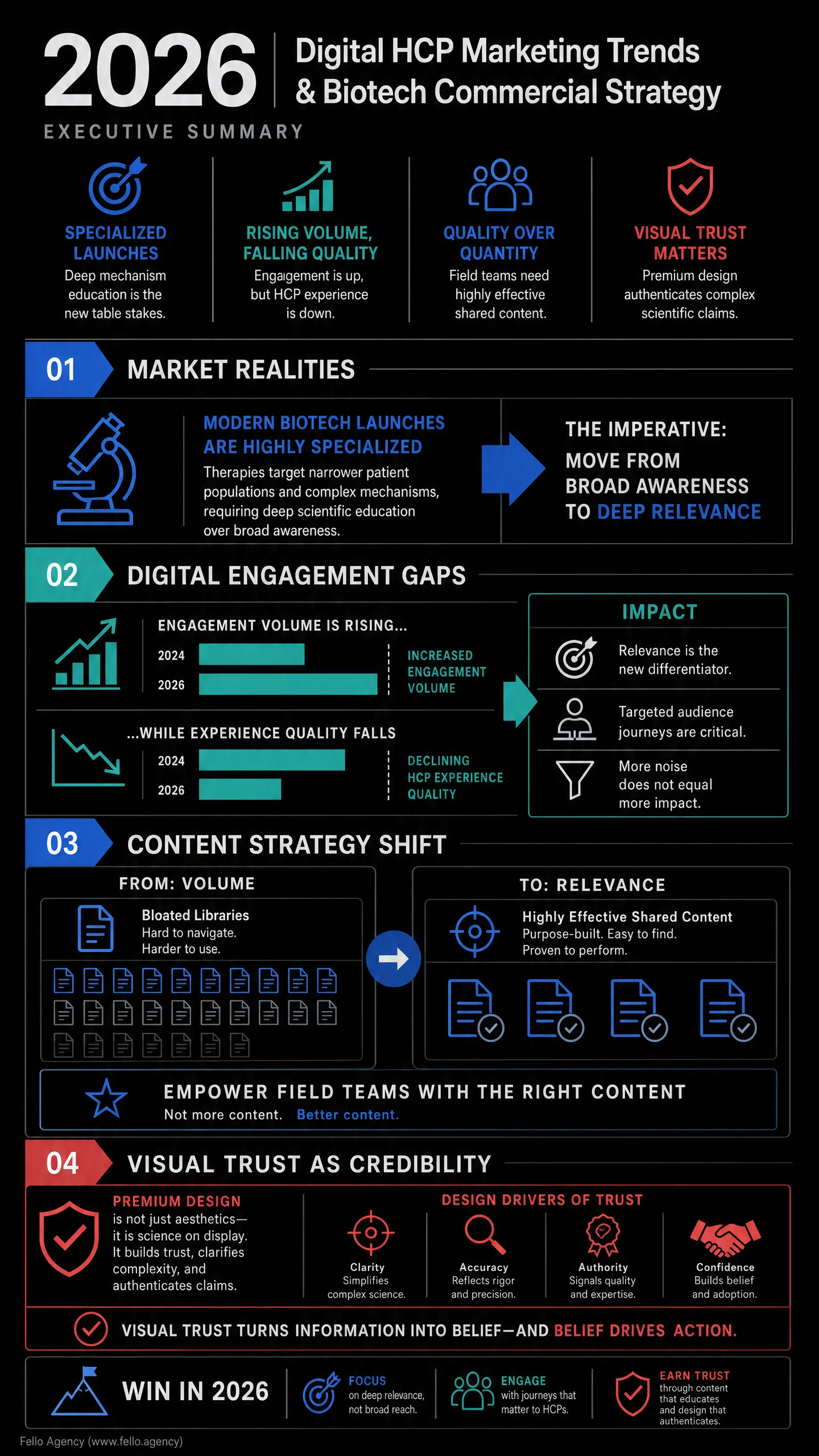
DT Consulting's 2025 benchmark reveals that while digital channels drive 51% of all healthcare provider engagement, the overall quality score for those digital experiences fell to 52.
Veeva reported that United States healthcare provider access decreased to 45% in 2024, with approximately half of those accessible physicians restricting meetings to three or fewer companies.
Healthcare provider satisfaction with adverse-event management and new-indication information dropped by 17 and 15 points respectively, despite an increasing demand for clinical and real-world evidence.
Despite Veeva data showing shared digital content doubles new patient treatment starts, nearly 80% of approved pharmaceutical sales content remained unused by field teams in 2025.
A Deloitte survey highlights a massive perception gap, showing over 80% of pharmaceutical executives are satisfied with customer-engagement strategies while only one-third of healthcare providers agree.
The Market Got Harder
Modern Launches Are More Specialized
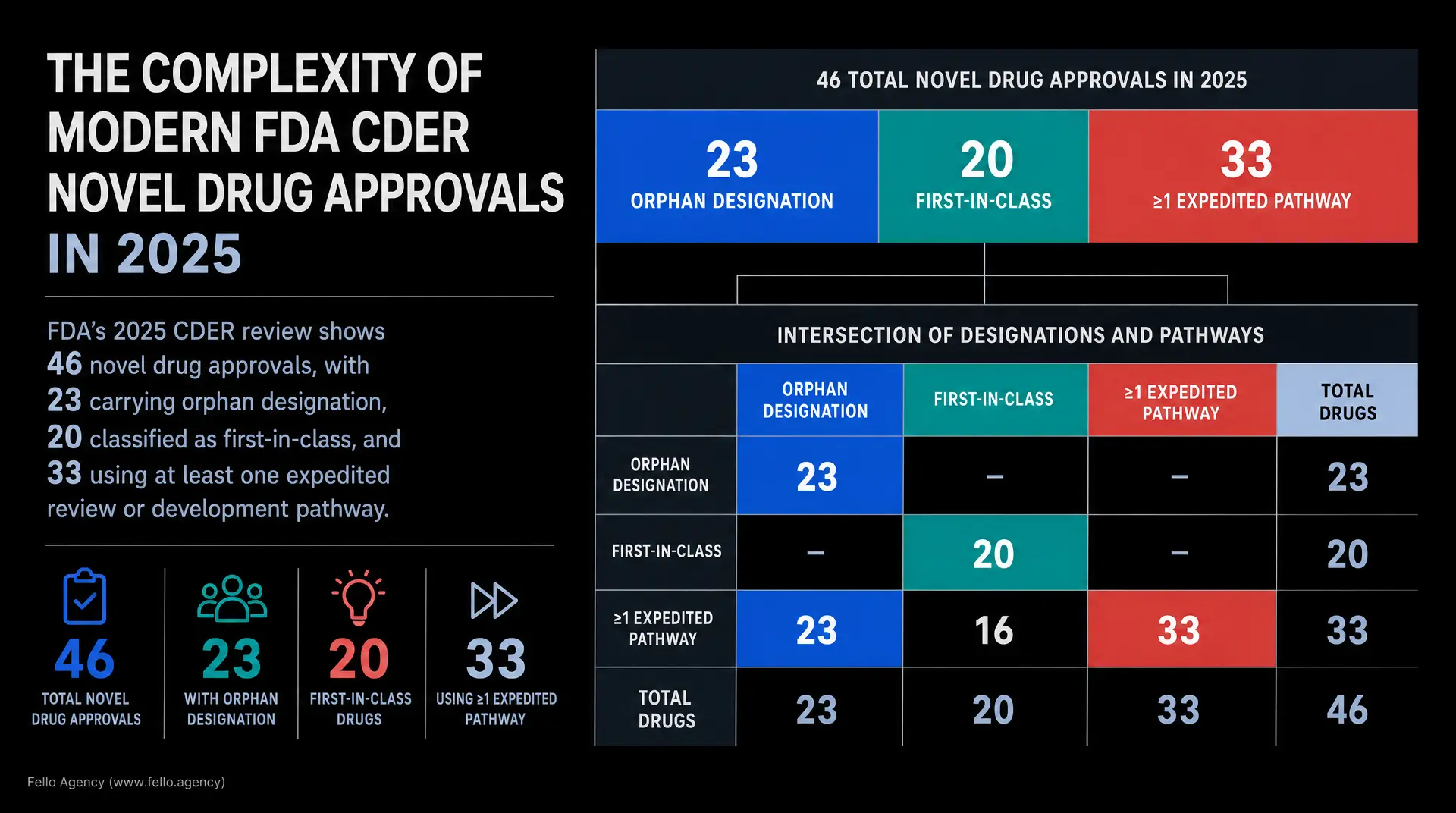
Here is the first thing I would keep in front of the whole team. The approval mix is getting more complex, more specialized, and more education-heavy.
FDA's 2025 CDER review shows 46 novel drug approvals, with 23 carrying orphan designation, 20 classified as first-in-class, and 33 using at least one expedited review or development pathway. The year before looked very similar. FDA's 2024 approvals showed 26 of 50 novel drugs were for rare diseases and 24 were first-in-class.
That changes the job.
You are not just pushing awareness for a familiar category anymore. You are often asking HCPs to understand a new mechanism, trust a narrower evidence package, and move toward a new standard of care faster than they normally would.
You can see the same thing in oncology. IQVIA's 2025 oncology analysis shows oncology represented 41% of all clinical trials, trial starts hit 2,162 in 2024, and 74% of those starts focused on rare cancers. It also showed novel modalities made up 35% of oncology trials.
So yes, brand still matters. Reach still matters. But mechanism education now sits right in the middle of commercial strategy.
Pharma has brand loyalty. Biotech has investor loyalty. A lot of portfolios now sit somewhere in between. That middle zone is where a lot of teams get stuck.
Digital Got Bigger, but Better Did Not
Digital is clearly taking up more of the mix. DT Consulting's 2025 benchmark found digital channels accounted for 51% of all HCP engagement, while digital experience quality fell to 52.
That tells me something very simple. More digital activity did not create more trust. It just created more chances to be average.
And average gets ignored.
Relevance Is Now the Whole Job
HCP Access Is Tighter Than Most Teams Want to Admit

If you are still solving this with volume, you are solving the wrong problem.
Veeva found U.S. HCP access dropped to 45% in 2024, about half of accessible HCPs met with three or fewer companies, and oncology, internal medicine, and psychiatry were among the hardest specialties to reach. On top of that, 45.2% of U.S. physicians reported at least one burnout symptom in 2023.
Your audience is overloaded. They are selective. They are skeptical. They do not need another polished content dump.
They need something useful, fast, and relevant.
This is why I always tell teams to find out what pisses off your clients the most. In HCP marketing, that means the actual friction in care. Where is diagnosis getting delayed? Where is patient selection unclear? Where does the current standard of care create doubt, waste time, or leave the physician exposed to avoidable uncertainty?
Start there.
If you start with a giant wall of science before you have framed the real-world problem, you are making the HCP work too hard.
Split the Journey or You Blur the Story
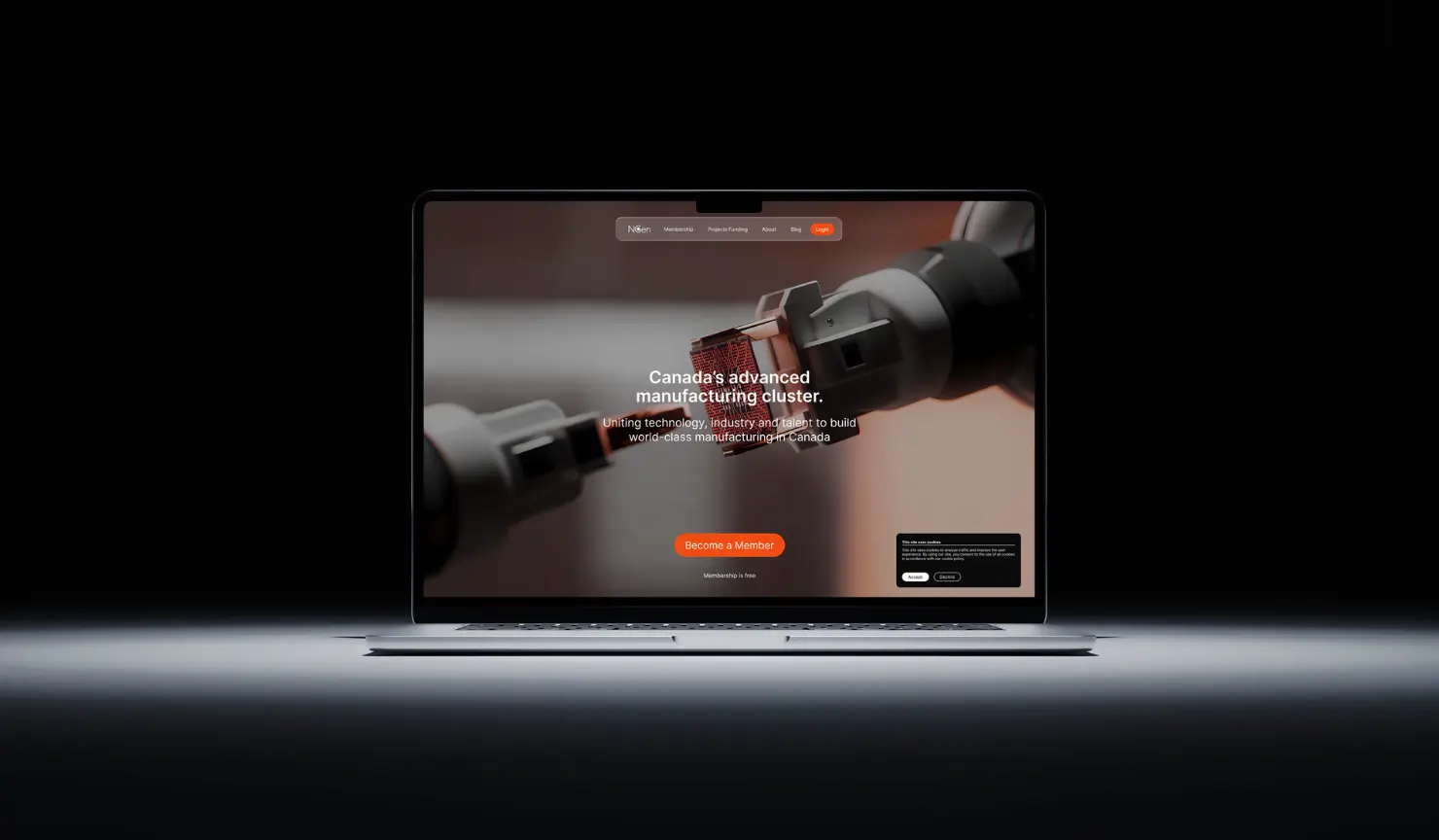
One of the biggest mistakes I see is one digital experience trying to do five jobs at once. It tries to educate specialists, reassure investors, support the field team, answer patient questions, and explain the company platform all on one path.
That usually ends with a page full of respectable language that nobody remembers.
I've seen the opposite work extremely well. With Sphere, we built distinct industry pages for factories, medical tech, and defense instead of forcing one broad XR story on everybody. Once each audience could land on the right story and see the right value, leads moved by a huge amount.
HCP marketing needs that same discipline.
Your community specialist should not get the same journey as an academic KOL. An early-awareness visitor should not hit the same page as someone looking for deeper evidence. A market-shaping disease-state page should not read like a launch page built for field follow-up.
Your website needs to speak business. In healthcare, the business is care delivery. Show the burden. Show the workflow issue. Show the patient-selection problem. Show where confidence goes up. Show where time gets saved. Show where the HCP becomes more certain and the decision becomes easier.
You still have to sell a lifestyle, even in technology. For an HCP, that lifestyle is a better day in practice.
Mechanism Education Is Now Commercial Work
Biotech Sells the Science Before the Product

A lot of teams know the science is strong, so they lead with technical detail and assume that is enough. It is not enough.
HCPs absolutely want scientific depth. But they still need the story structured properly. They need the material to be easy to enter, easy to scan, and easy to go deeper on.
Biotech sells the science before the product. Every biotech company campaign is simultaneously an IR exercise too. Investors, partners, talent, and future acquirers all read the same digital footprint. If the company feels generic or the science feels hard to trust, the damage spreads wider than just HCP engagement.
And in biotech, the company brand is tied much more tightly to the people. In pharma, the institution can carry more of the load. In biotech, the founder, the CSO, and the publication history carry a huge amount of the trust. The biography is the case study.
So for 2026, I think the stronger content model looks much closer to academic publishing than classic ad creative. Build expert roundtables. Build mechanism explainers that respect the reader. Build disease-state education that makes the unmet need obvious. Build sharp evidence summaries. Build materials that help HCPs think clearly.
There is also a real strategic opening here. Regulatory asymmetry creates creative asymmetry. In biotech and pre-approval work, disease-awareness content and unbranded education can do a lot of heavy lifting when they are honest, useful, and built properly.
KOLs Need to Shape the Narrative
The old KOL model was simple. Put a respected expert beside the brand and hope credibility transfers.
That is getting weaker.
The better model is co-authorship. The expert should shape the narrative itself. That can mean how the data gets framed. It can mean the questions being asked. It can mean which objections get answered first and which clinical realities get acknowledged openly.
The market is pushing you this way already. DT Consulting found adverse-event-management information dropped 17 points and new-indication information dropped 15 points in HCP experience quality, while demand for clinical and real-world evidence kept rising.
That does not tell me you need more content.
It tells me you need better content. Sharper content. More useful content. More credible content.
Patient stories still matter too. In biotech, I look at them as policy tools disguised as content marketing. Their job is to make burden visible and make the urgency real. For HCPs, they work best when they sharpen the clinical problem and support the evidence. Cheap emotion does not help. Precision does.
And one warning here. Overselling and underdelivering still kills trust the fastest. If the narrative outruns the evidence, credibility drops hard.
Visual Trust Decides Whether Anyone Believes You
Design Still Shapes Credibility
A lot of technical teams still underestimate this. They should not.
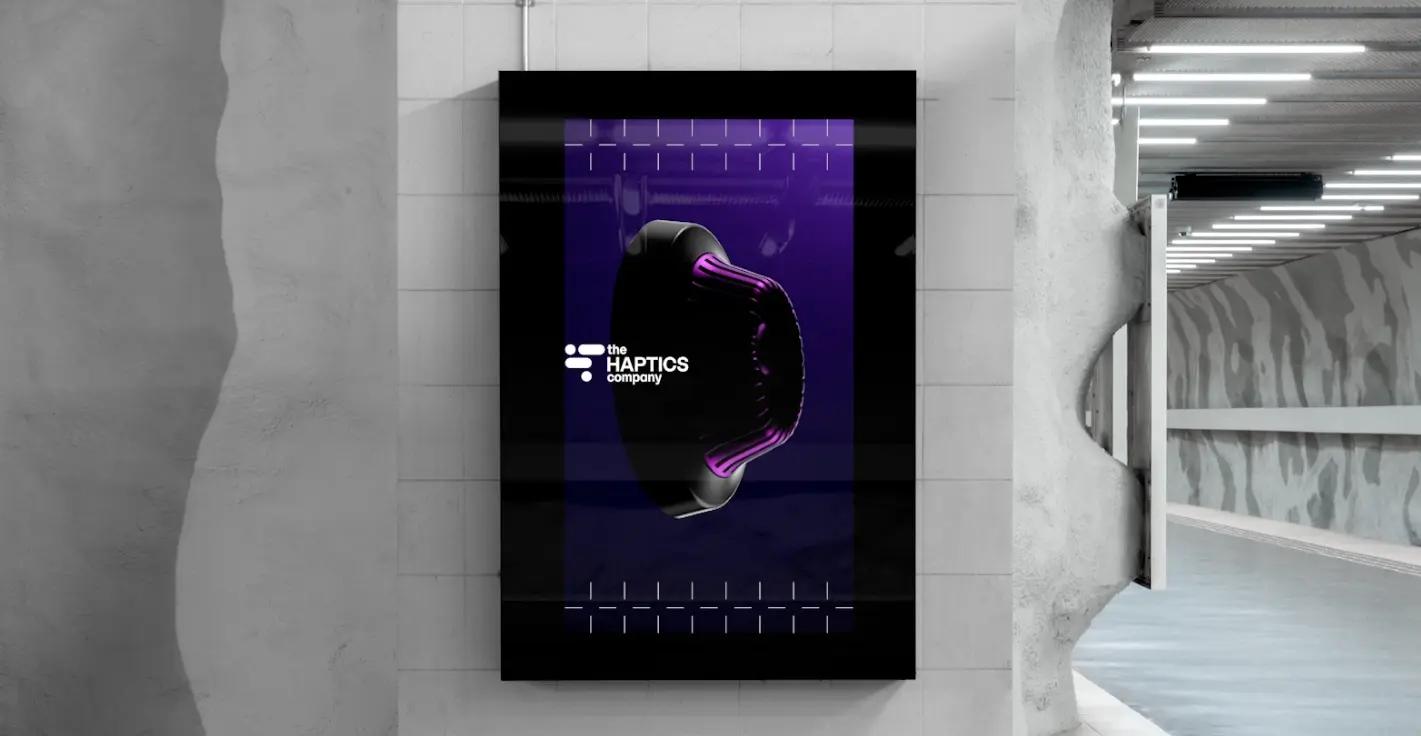
Stanford's web credibility study found that "design look" appeared in 46.1% of credibility comments. Almost half.
That lines up exactly with what I see in the market. If your science is advanced but your digital presence looks weak, people feel the mismatch immediately. Bad visuals, dated layouts, inconsistent fonts, weak decks, or clunky interfaces all chip away at trust before the substance even gets read.
I dealt with this directly when we led the rebrand for Prolinium Medical Technologies. The job was to build an enterprise-level medical device brand with staying power. In healthcare, that kind of work is not cosmetic. It is commercial. It authenticates the claim.
Reliable is a complete brand strategy in this category.
Dress for the client that you need. If your HCP site looks like 2009 trying to sell advanced science, the market feels that tension right away. And if it looks like bullshit, no one's gonna want to work with it.
Real Beats Generic
One thing I would stay very careful with in 2026 is AI generated slop. It makes serious science feel generic.
If your visuals look interchangeable, people start asking whether your claims are interchangeable too.
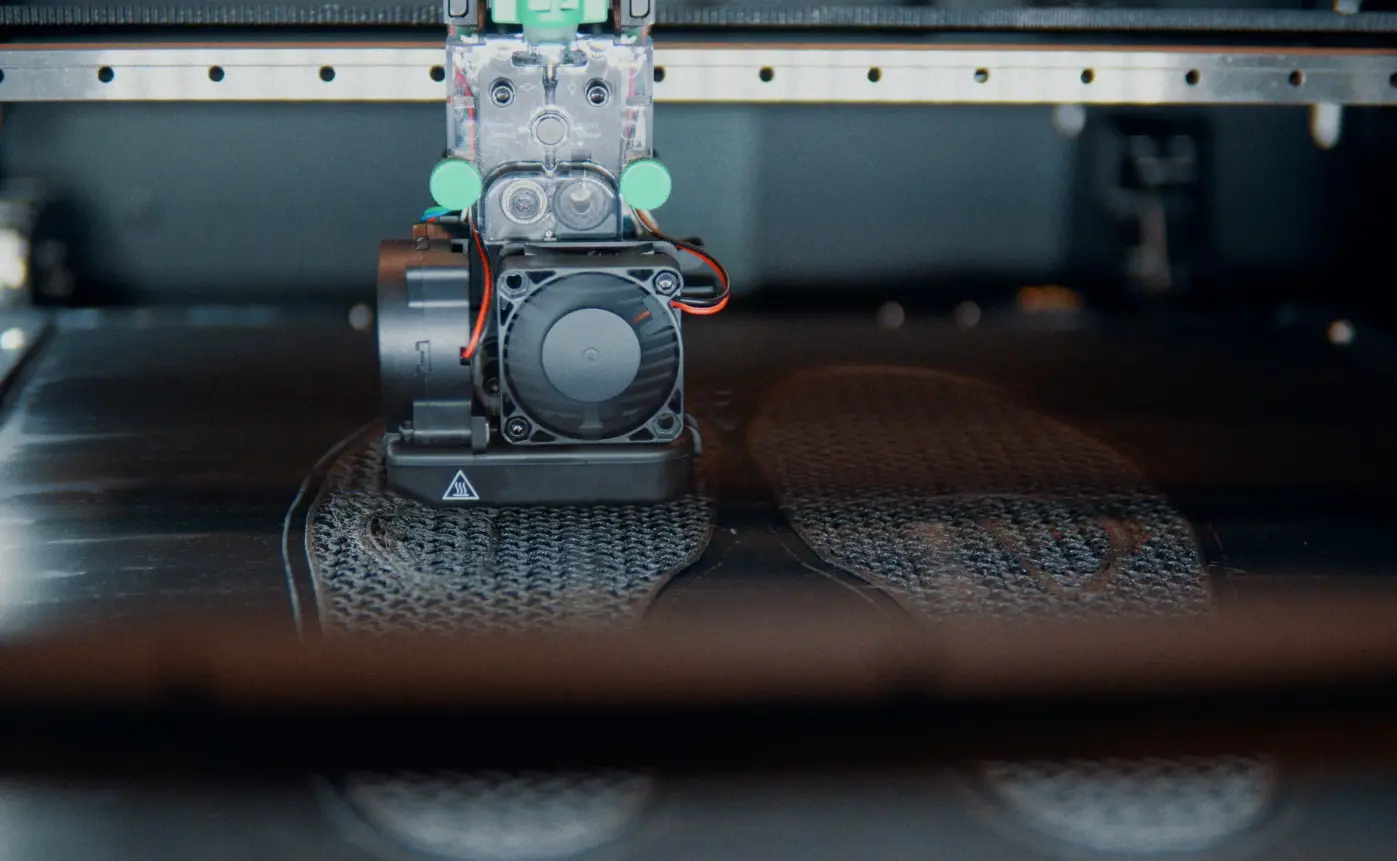
Use strong photography where you can. Use motion and animation to clarify the mechanism. Show the real people behind the science. Show the process. Too much polish will look like vaporware. The best healthcare content feels sharp, high quality, and clearly real.
Field Teams Need Better Content, Not More Content
Shared Content Changes Outcomes
A lot of organizations already know digital support matters in the field. They just are not operationalizing it well enough.
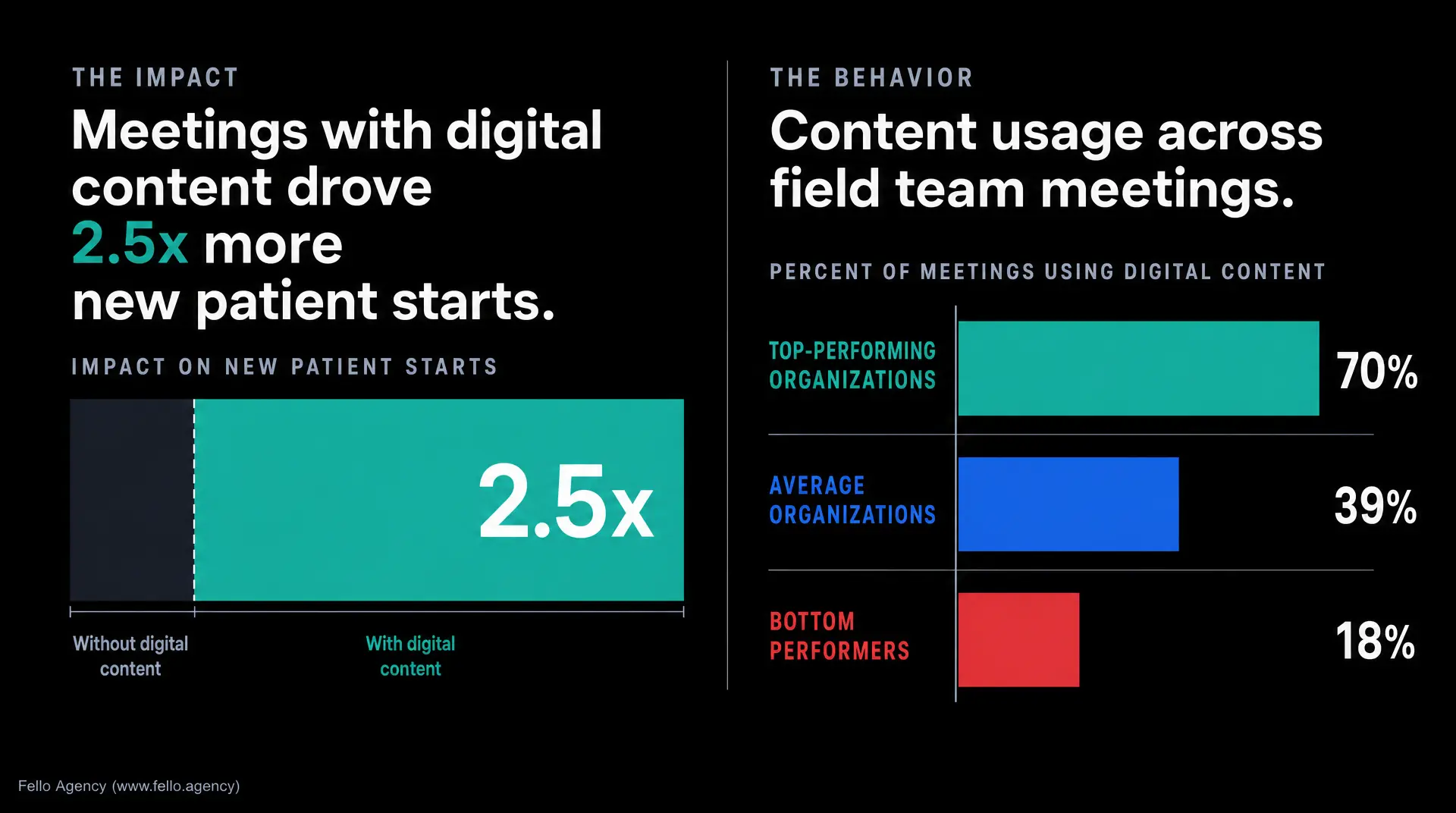
Veeva found meetings with digital content drove 2.5x more new patient starts than meetings without it. Veeva's 2025 Pulse data also showed that HCP engagements with shared content generated more than double the new patient treatment starts, shortened time between meetings by up to 25%, and increased follow-up likelihood by up to 20%.
That is strong. But then you look at how often teams actually use the content.
Veeva's field trends report found digital content was used in only 39% of HCP meetings, while top-performing organizations used it in nearly 70% of meetings and bottom performers only 18%. In 2025, nearly 80% of approved content was rarely or never shared.
That screams content bloat.
Too many teams are producing too much, approving too much, and making it too hard for reps to find the right thing when they need it. I would rather see one strong mechanism explainer, one clean evidence summary, one short KOL clip, and one sharp follow-up asset getting used constantly than a giant content library gathering dust.
Take the flagship asset and repurpose it hard. Turn it into shorter clips. Turn it into a PDF. Turn it into a web page. Turn it into email follow-up. Good copy still matters. Video matters too. The point is to make the next conversation easier.
AI Helps, but Human Selling Still Closes
I am not anti-AI. I am anti-lazy systems.
Accenture found only 1 in 4 field teams felt fully supported by their CRM, while 81% believed AI could elevate HCP engagement strategy and improve collaboration.
I agree AI can help. You still need a driver behind the car.
Human selling is still essential here. Trust builds across a sequence of interactions. The rep matters. The medical team matters. The KOL relationship matters. Digital should warm the meeting, sharpen the conversation, and keep the science alive between touches. It should make the human side work better.
Your Website Should Carry More of the Load
Build Proof Hubs, Not PDF Graveyards
One of the biggest gaps in life sciences right now is the distance between internal confidence and external experience.
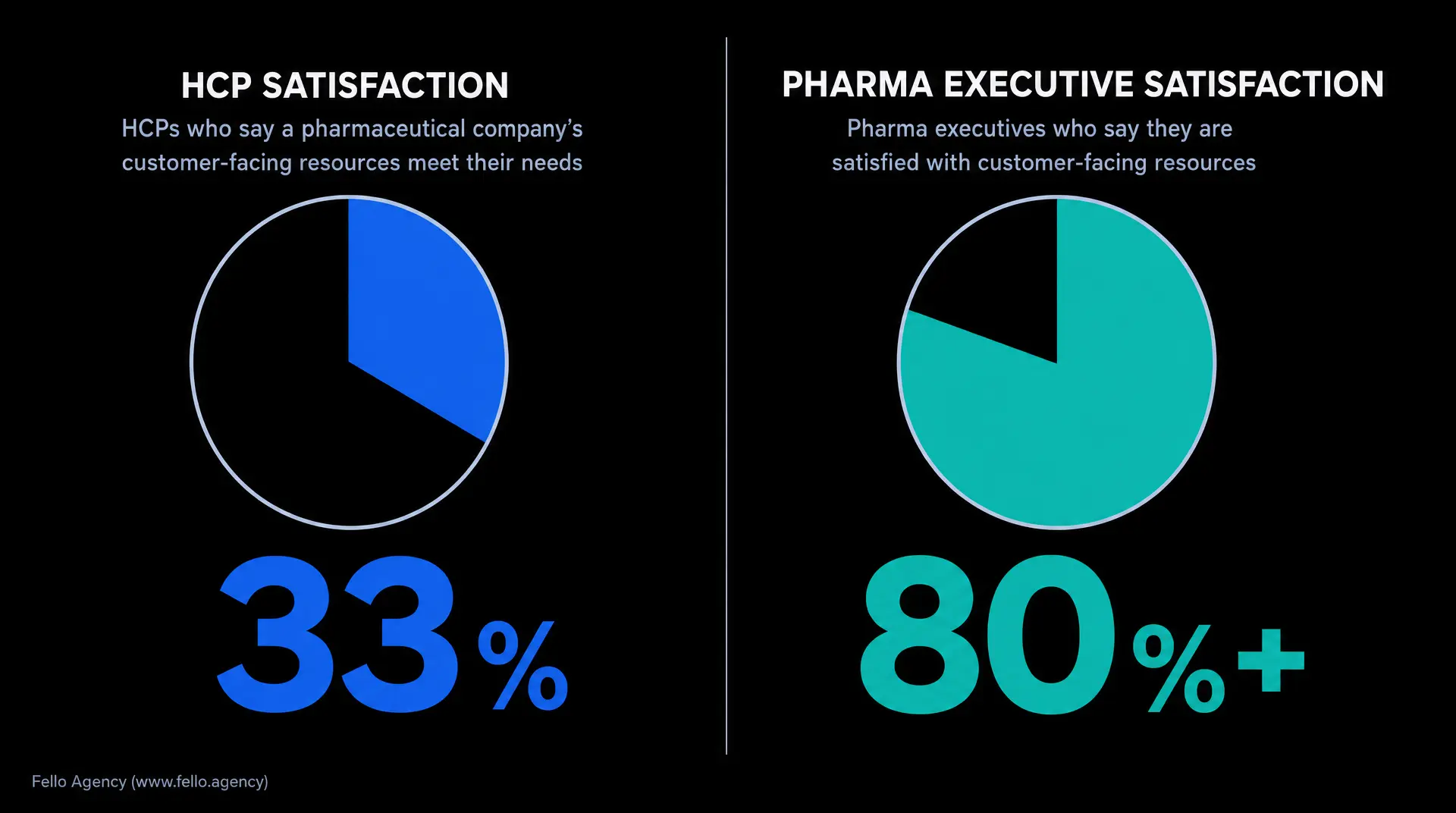
Deloitte found only about one-third of HCPs said a pharmaceutical company's customer-facing resources meet their needs, while more than 80% of pharma executives said they were satisfied with their current customer-engagement strategy.
That gap is brutal.
Your website should be the trust engine. Some pages are there to move action now. Some are collector pages. They build belief over time. In HCP marketing, those collector pages are your disease-state education, your mechanism pages, your publications, your scientific leadership, your advisory board, your evidence tools, and your congress material.
Those pages matter because a lot of decisions do not happen in one meeting. They happen over time, through repeated checks for credibility.
And if you do not have a proper CMS, there is no point of even having a website. Once a piece of content is approved, your team should be able to get it live fast. If med-legal already slows you down, your backend cannot be another bottleneck.
LinkedIn Verifies, Your Site Converts
LinkedIn for me has always been a verification tool.
People discover you in all kinds of ways. Then they go check the company. Then they check the people behind it. They want to know if the medical lead sounds real, if the commercial team understands the market, and if the people involved actually give a shit.
On LinkedIn, passion will actually beat hardcore planning. A real post from a scientific or commercial leader does more than another generic corporate update. But LinkedIn is not the whole strategy. It is the verification layer.
Your serious depth should live on owned channels.
What I Would Fix Before 2026 Planning Gets Locked
If I were sitting with your team tomorrow, I would start by splitting the audience paths. I would make sure each priority specialty, care setting, and stage of awareness has a clean route through the site and through the content. Then I would rebuild the top of every key page so it answers three questions fast: who is this for, why does it matter now, and what proof supports it.
After that, I would cut the content library down hard. Keep the few assets the field can actually use. Rebuild those assets so they are easier to find, easier to share, and more useful in real conversations. Then I would fix the website, the CMS, and the approval-to-publish flow so approved content can move quickly.
Finally, I would change the scoreboard. Results should be measured by sales velocity, not just website traffic. I would watch repeat visits from the right specialties, field content usage, quality of inbound scientific questions, downloads of deeper evidence, follow-up speed, and movement toward the next serious conversation.
Pharma often optimizes for prescription behavior. Biotech often has to optimize for belief first. In 2026, more launch teams are going to feel that pressure.
Final Thought
The big trend for 2026 is simple.
More digital is not enough. Better credibility infrastructure is what wins.
If your science is real, make it easy to trust. Teach the mechanism clearly. Build pages that speak to the exact HCP in front of you. Give the field team content they will actually use. Clean up the brand so the quality of the company shows up before the meeting even starts.
Do that well, and digital HCP marketing stops acting like a content factory. It becomes what it should be: a serious commercial system that builds belief, accelerates adoption, and helps you own the standard-of-care conversation.
Frequently Asked Questions
How can marketing teams bridge the perception gap between executive confidence and HCP reality?
Stop relying on internal echo chambers. Deloitte's 2025 Outlook found over 80% of pharma execs are satisfied with their strategy, but only one-third of HCPs agree. Bridge this by measuring friction in care delivery, not reach. Audit your content's utility in real-world workflows and aggressively kill anything that doesn't solve a clinical problem.
How do we market complex science effectively when our target HCPs are experiencing severe burnout?
You stop pushing polished content dumps. With a Mayo Clinic study showing <span class='stat'>45.2% of U.S. physicians</span> reporting burnout, they have zero tolerance for friction. Strip the generic brand fluff. Deliver hyper-relevant, scannable mechanism explainers that answer clinical doubts and make decisions easier.
What is the commercial priority for launching novel oncology modalities like multispecific antibodies?
Lead with expert-led scientific explanation before you ever sell the product. Novel modalities made up <span class='stat'>35% of oncology trials in 2024</span>, per IQVIA. HCPs won't adopt what they don't understand. Your priority must be co-authoring clear, unbranded mechanism education with KOLs to establish the unmet clinical need.
How should commercial strategy shift when marketing a biosimilar against a heavily entrenched legacy biologic?
You must out-educate the legacy brand on differentiation. The FDA approved <span class='stat'>18 biosimilars in 2025</span>, crowding the space. Broad claims fail here. You win by building polished digital infrastructure that provides sharp, transparent clinical comparisons and flawless visual trust to authenticate your credibility.
How do we improve ROI when expanding our digital omnichannel footprint for a highly specialized launch?
By doing less, better. Expanding digital touchpoints creates average experiences. Focus strictly on arming your field force. Top-performing reps use digital content in <span class='stat'>nearly 70% of meetings</span>, driving 2.5x more patient starts. Build fewer, sharper flagship assets and force ruthless alignment with human selling.
Your Creative Partner for Innovation That Matters
From advanced tech to transformative healthcare, Fello helps visionary teams shape perception, launch products, and lead industries.
Let’s keep in touch.
Discover more about high-performance web design. Follow us on Linkedin and Instagram.

