


If you lead marketing at a robotics company right now, you’re a player-coach.
You’re building category awareness and pipeline at the same time. You’re helping sales close long, messy deals. You’re helping the CEO tell a stronger story for the next round. And a lot of the time, you’re doing it with a founding team that wants the homepage to read like a spec sheet.
I spend a lot of time around this world. Through Fello Agency and the Fello Foundry, I’m in the room with life-changing companies across robotics, AI, advanced manufacturing, quantum, medtech, and defense. The same pattern keeps showing up. The product is strong. The market wants it. The story is still too hard to buy.
Robotics companies love the heavy stuff. Payload. Precision. Uptime. Sensors. Autonomy stack. Fine. That all matters. But if you lead with all of it before the buyer knows why they should care, you create friction. You slow trust down.
To me, brand is simple. It’s a feeling that somebody thinks about when they see your brand. In robotics, I want that feeling to be trust, interest, and curiosity. I want recall. I want the buyer to feel like your company is serious enough to bring into a big operational decision.
That’s what simplifying complex tech means in 2026. You are making the company easier to trust, easier to repeat, and easier to justify inside a room full of stakeholders. If you don’t have a brand, then you’re going to be forgotten.
Look, nobody is arguing about whether robotics matters anymore. The market already decided. Deloitte’s 2025 smart manufacturing survey says companies are seeing up to 20% gains in production output and about 20% gains in employee productivity from these initiatives. The same study found 92% of manufacturing leaders see smart manufacturing as the main driver of competitiveness over the next three years.
Money is moving too. 78% are putting more than 20% of their improvement budgets into smart manufacturing. And Deloitte says 46% of manufacturers plan to prioritize software-driven automation while 37% are prioritizing physical robotics in the next two years.
So yes, the category is real. The demand is real. The pressure on your brand just got a lot higher.
A lot of robotics companies still treat branding like the packaging that comes after the real work. I don’t. Design is a commercial gatekeeper. Communication strategy is part of the go-to-market system. If the first touchpoint feels messy, slow, or generic, your buyer starts backing away before the sales process really begins.
Pilot purgatory starts in the story
One of the most important things I can tell a robotics CMO is this: pilot purgatory is real.
And a lot of the time, it starts in the brand.
I keep seeing technical teams treat stalled pilots like product issues. Sometimes they are. A lot of the time, they aren’t. The robot can work. The demo can land. The internal champion can love it. Then the deal slows down anyway.
Why?
Because now that champion has to go sell the expansion inside their own company.
They have to walk into a room with operations, finance, safety, IT, maybe procurement, maybe the CEO. They need language. They need a clean narrative. They need numbers framed in a way somebody else can repeat. If your brand only gives them specs and demo videos, they have nothing solid to carry into that room.
That’s when the pilot dies in committee.
McKinsey put numbers around this. The firm found that 61% of executives lacked the internal skills to scale robotics beyond pilots. The same research says 40% of executives said the business value was unclear even when the pilot itself looked exciting.
That should hit hard.
The technology can be strong and the business case can still feel muddy. The pilot can prove the robot works and still fail to create enough internal confidence to scale.
This is why I say the lab is very different than the boardroom. In the lab, people care about how it works. In the boardroom, they care about what changes, who owns the risk, how fast it pays back, and whether the person bringing the idea forward sounds prepared.
If you want to simplify robotics branding, start there. Give your buyer a boardroom ready narrative. Show them what their company becomes when your system is deployed at scale. Make the internal champion feel safe selling your solution upward and sideways inside the organization.
One message will not carry a robotics sale
Another thing I see all the time is what I call a zero messaging problem.
The website has one hero line trying to talk to everybody at once. It tries to impress engineers, calm finance, excite leadership, reassure operations, and explain the technical layer all in the same breath. That never lands cleanly.
Think about a normal robotics buying committee. The VP of operations cares about throughput, uptime, labor strain, and rollout risk. IT cares about integration, security, data flow, and fleet management. The floor manager is thinking about training, disruption, and whether the team is going to fight the rollout. The CFO wants the numbers. They want payback, risk, and a clean financial case.
Those people are not reading your website with the same questions in mind.
Say the right amount to the right people
Clear segmentation strengthens the brand. It gives each stakeholder what they need without turning the whole thing into mush.
That usually comes down to message architecture and UX. I think about it like building the highway: the collectors and the express. Executives need the express lane. They want to know what you do, why it matters, and whether you’re credible. Technical evaluators need the collectors. They want the heavy stuff. Integration details. Security notes. Documentation. Deployment reality.
Good robotics branding lets you say the right amount to the right people without saying too much.
This also lines up with what the data says. McKinsey found 77% of companies using direct, one-to-one personalized marketing reported market-share growth. Buyers also move across about 10 channels on average during a purchase journey. And McKinsey’s B2B Pulse research also found 57% of share gainers used hybrid sales teams, compared with 40% of companies that lost share.
So your message has to survive everywhere. On the site. In the deck. On the call. At the trade show. In the follow-up email. In the boardroom.
We’ve done this kind of segmentation under NDA in robotics, and we’ve done it publicly in adjacent deep-tech spaces too. With Sphere, we moved the story away from broad innovation language and toward collaboration, backed by clearer numbers and stronger buyer context. After the brand was tightened and the site was rebuilt, traffic jumped. Then the impact got bigger. As Alexandra Corey, Head of Marketing at Sphere, put it, “The new website has more than tripled our lead generation efforts.”
That doesn’t happen by accident. It happens when the story gets easier to understand and easier to repeat.
One warning, though. Don’t overfit the brand around one narrow persona fantasy. In deep tech, you often can’t predict exactly who will end up using, championing, or influencing the deal. I would rather segment by stakeholder concern than build the whole story around one overly tight lifestyle niche that boxes you out later.
Start with the business case
A lot of robotics companies want to open with the hardest technical detail first. I get it. The founders are proud of the engineering. They should be. Good product matters. It makes my job a lot easier when the product is real and not full of shit.
But if you lead with the technical stack too early, you lose people who could have become your internal champions.
I always want the first line to answer one thing: how does this help the buyer’s business?
Make more money. Save more money. Save time. Lower risk. Improve safety. Increase output. Reduce downtime. Speed up training. Give teams time back.
That’s where the story starts.
Then I layer in proof.
A lot of our robotics work is under NDA, so some of the public examples I can point to come from adjacent deep-tech categories. Same problem. Same fix.
Take Mosaic Manufacturing. The technology was strong, but the value was getting buried under complex specs. At Fello, we reframed the messaging, created cinematic video.
That is what simplification should do. It should help the right people understand why the technology matters without flattening the intelligence behind it.
Keep the specs. Just sequence them properly.
One caution here. Don’t swing so far into lifestyle language that you lose the buyer’s commercial reality. Rethink Robotics had major visibility and huge media coverage, but the market wanted reliable production tools. Friendly positioning can miss the room when the buyer is worried about output, uptime, and risk. I’ve seen this failure pattern across heavily funded robotics and AI companies. Incredible technology. Weak positioning. No clean connection to a buyer’s business.
Your founder does not need to be the storyteller
Some of the strongest brands I work on come from very technical founders. They are not always the best writers. They are not always natural storytellers. Fine. That’s where my team comes in. Our gift is helping translate complex technologies into a commercial story people can actually use.
The red flag is something else. The red flag is when the founder has no clear personality or no real vision. Then the brand has nothing to grab onto.
I’ve also noticed a split over the years. More seasoned founders usually understand branding faster because they have already felt what weak go-to-market costs. Younger founders can get stuck on a pet aesthetic or a research-lab vibe that only makes sense internally. If you’re the marketing lead, part of your job is helping the company move past that.
The brand has to be built for the people who need to trust the company enough to buy, invest, or join.
Design is a commercial gatekeeper
Look, if you’re selling robots, automation systems, or AI hardware into serious organizations, your website matters. Your visuals matter. Your videos matter. Your typography matters.
If your team doesn’t take a great website, great visuals, and great video seriously, you’re going to have a rough time going to market.
I don’t spend much time debating this anymore. The companies that care about it win more business. The ones that ignore it make life harder for themselves.
Why would you ask a client to spend serious money with you if your digital presence looks cheap?
I use a simple analogy with founders. You are a Michelin star restaurant. Every detail has to signal quality. Because at any given moment, a life-changing deal could come in. A procurement lead could land on the site. A strategic partner could open the deck. A recruit could watch the launch video. People subconsciously see whether you’re legitimate or not before they even read the whole page.
The web now carries more weight than old-school teams like to admit. Buyers are comfortable making purchases up to $500,000 through e-commerce. That doesn’t mean someone is ordering a robotics fleet with one click. It means trust is being built online much earlier than people think.
For most B2B robotics brands, I still care most about desktop. That’s where serious evaluation happens. I want the hero to establish credibility fast and give the buyer a clear next step. Then I want proof. Case studies. Strong product visuals. Testimonials. A clean CTA. After that, I want deeper resources for the people doing the heavier evaluation.
When all of that lines up, the experience becomes legitimate and absolutely won. Sales walks into a warmer room. They’re kind of skipping a level.
In 2026, generic creative gets ignored
One thing I care about a lot in the new dawn age of AI is avoiding generic creative.
AI tools are useful. We use them for research and acceleration. But if your final brand looks like it came out of the same prompt library as five other websites, you lose trust fast. People spot bullshit a mile away.
I keep seeing the same stock robot arms, the same chrome nonsense, the same overcooked gradients. It all starts to blur together. For a deep-tech buyer, that repetition is a low-credibility signal.
This is why visual choices need intent. Right now, strict black and white has become the cleanest signal for high-value innovation. I’ve seen it across the market, and I saw it firsthand with Fello. We shifted our own brand from purple and black to white, black, and gray, and trust from prospects improved right away. Black works because it feels like an empty vessel that adapts. It’s premium. It lets the company feel serious.
There’s nuance, obviously. Purple is still the leadership color for AI. Navy blue signals established authority. Electric blue feels more digital and forward. For dual-use technologies with conflicting worlds around them, I like a neutral deep tech blue. It keeps the brand from leaning too hard into one sector and alienating the other.
Anduril does this well. The core system keeps that black-and-white institutional power, then campaign work can go loud when it needs attention.
Typography matters just as much. IBM Plex gives me engineering logic with human rhythm. Space Grotesk feels future scientific. Inter is a clean workhorse. Helvetica Now can blend institutional authority with modern precision. JetBrains Mono is great in documentation when scanning matters more than decoration.
I’ve watched typography fix tone problems almost instantly. On one manufacturing and medical device brand, the whole system felt off until we applied IBM Plex. Suddenly it shouted professionalism. With Revanesse, we pushed a black-and-white, science-led rebrand, then added careful orange light into the lab visuals so the brand didn’t feel cold. Those details are not cosmetic. They shape whether people trust what they’re looking at.
Make invisible ROI visible
Robotics marketing has a very practical problem. The product often needs to be seen in action, but filming on-site is expensive, slow, and hard to control. Sometimes the environment is sensitive. Sometimes the unit isn’t ready. Sometimes the deal you need to win is happening before the full deployment even exists.
That’s why I put so much value on cinematic video, CGI, and 3D motion.
You need a way to show utility before the market has fully experienced it.
This is one of the reasons Fello works well with hardware. We have deep experience in advanced manufacturing and XR, so we’re used to translating physical systems, software layers, and environments into stories that people can absorb quickly. We don’t just film hardware sitting there. We show what the buyer’s world looks like when the product is in use.
Mosaic Manufacturing is a great example. The cinematic assets we built clarified complex specs and became central to trade show presentations and investor decks. That work helped the room understand the value faster.
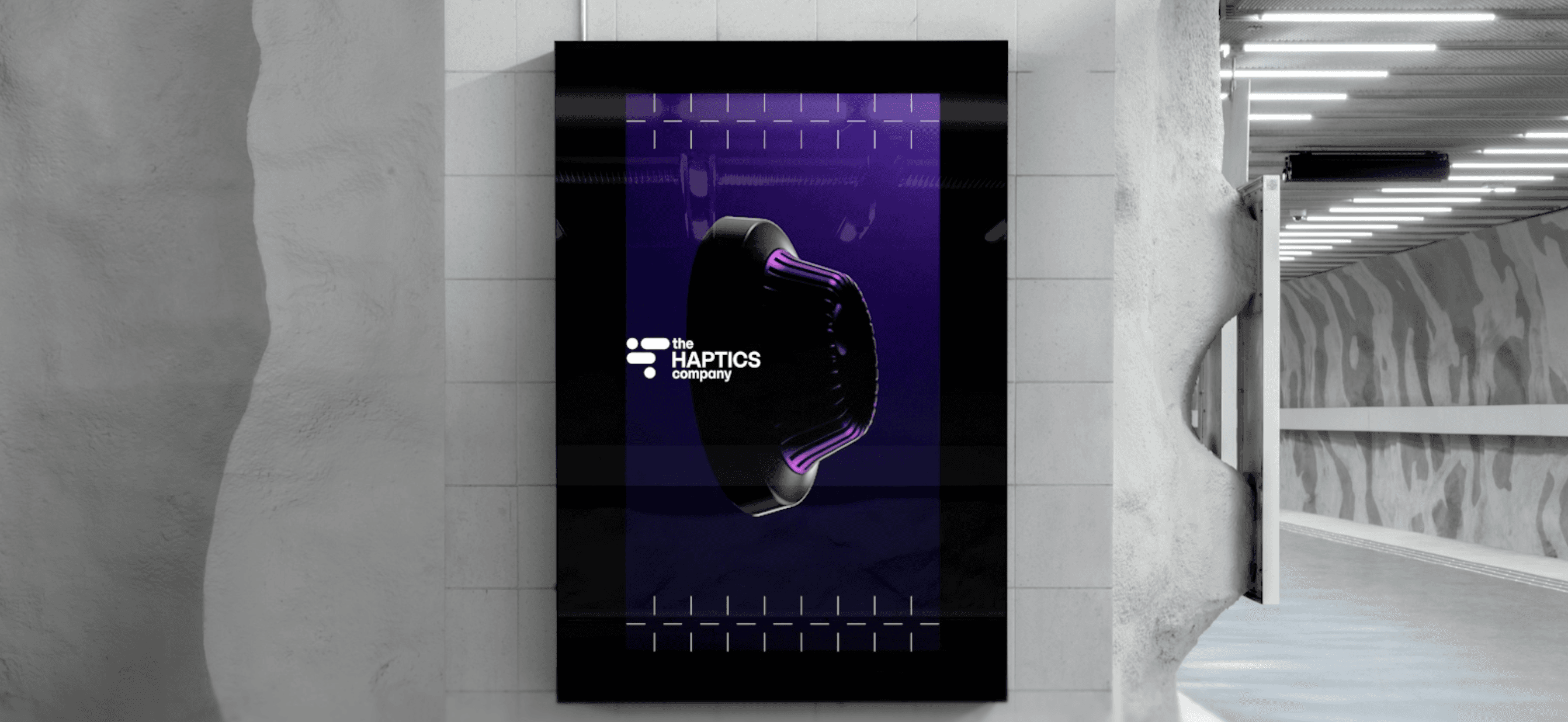
Speed matters here too. I’ve seen a haptics company need a full rebrand in about a month and a half because OEM meetings at CES were on the line. In moments like that, you can’t afford a bloated process. You need the non-negotiables locked down fast: logo, visual guide, colors, typography, and communication strategy.
And sometimes you have to visualize a product before it physically exists. We’ve created images for a counter-drone concept that helped attract engineers to the team. We’ve also produced 3D product renders and pitch decks for a confidential defense client before there was a physical product to show, and that work directly helped them secure a significant funding round.
Robotics buyers need to see the future in a believable way. Good visuals do that. They make the invisible ROI visible.
Build a brand that works through the whole sales cycle
A lot of teams pour everything into launch week. Then the long haul begins, and the system falls apart.
That’s a problem, because most deep-tech sales cycles sit in that six-to-12-month range, and sometimes much longer. Your brand has to keep working after the first meeting.
That means your website cannot be the only polished thing you have. Sales needs decks that make sense. Product needs instruction assets. Partnerships need landing pages. Marketing needs campaign content. The founder needs a story for investors. Trade shows need visuals that can hold attention in a noisy room. Customer success needs material that helps adoption.
When these tools are built together, selling gets easier. The brand has already done part of the education. The best salespeople know this fast because marketing already does half their job. The rep walks into conversations with more trust, better recall, and less friction.
I’ve seen this play out across categories. For a field sales software client, we built a mobile-first toolkit that reduced prep time and raised rep confidence in the field. For ACTO, the goal was to help the commercial team educate the market without dumping screenshots on people. , ACTO’s VP of Marketing, said, “Both marketing and sales teams couldn’t wait to start circulating the videos in campaigns and outreach.”
That is exactly where you want the work to land.
And don’t ignore written content. Video matters a lot, but written copy still does heavy lifting for SEO and for technical buyers who want the details. In manufacturing, white papers and PDF solutions can also help shape future RFPs during long buying windows. If you want to keep momentum alive over time, monthly video updates and lab tours can make prospects feel like internal stakeholders before they’ve even signed.
You are also selling to humans
I don’t believe B2B can act like the internet stopped at LinkedIn.
You’re also selling to humans. B2B buyers still carry B2C habits. They scroll Instagram. They watch short videos. They check Reddit. They notice behind-the-scenes content. That’s why I’ve advised deep-tech companies in spaces like energy and 3D printing to stay active on more consumer-style channels. Selling to B2C consumer habits matters even in B2B.
We validated that with an anonymous B2B client that struggled with traction until meet-the-team content on Instagram started building a real following. Suddenly the brand felt human. Suddenly people cared.
The same logic applies to talent. Everybody wants to work at companies they remember. OpenAI. Meta. Anduril. Colossal Bioscience. Rocket Lab is a great example of how consistent content can pull engineers in. If you’re a smaller robotics brand, lean into the underdog story. Join the underdog team. Push the industry forward. Give people something worth attaching their career to.
How I prove branding ROI to CEOs and CFOs
If you walk into a boardroom and ask for money for “branding,” you’re making your own life harder.
I frame it as communication strategy, marketing investment, and risk mitigation. That’s closer to the truth anyway.
A consistent brand system protects value. It helps sales get into bigger conversations. It helps the company look investable. It reduces the risk that a real buyer lands on your site or deck and leaves unconvinced. That matters a lot in robotics, where the contracts are large and the adoption path is messy.
I usually tell founders and finance teams to think in stages. An early company can often establish basic professional credibility with something in the $15,000 to $30,000 range. A real Series A or Series B rebrand usually sits more in the $50,000 to $150,000 range, depending on scope. If you blow way past that without a real reason, technical buyers can start feeling like the company is over-branded.
Then I tie it back to commercial outcomes. If a website costs $50,000, I’m not selling a website. I’m talking about lead generation, trust, and deal support. You have to speak to CFOs in CFO language.
I even use Fello as a case study when I explain this. We changed our own brand system, tightened the visual standard, and saw immediate trust lift from prospects. I don’t need a giant spreadsheet to know when the quality of inbound conversations changes. You can feel it.
Still, you should measure what matters. Track pipeline influence. Track lead-to-demo conversion. Track booked meetings. Track branded search. Track organic traffic after launch. And if the work touched docs, APIs, or SDKs, track developer adoption too.
The proof usually shows up when the work is done properly. Sphere’s site more than tripled lead generation. Nord Quantique saw an 80% traffic surge in six weeks after we reshaped the narrative. Mosaic lifted inbound leads and booked meetings in a short window.
That’s not vanity.
That’s go-to-market leverage.
And there’s a second layer here. A strong brand helps your CEO tell a bigger story. It helps move the company from “we built a robot” toward “we are building a category.” Investors care about that. They should.
How I build robotics brands at Fello
At Fello, we keep the team lean on purpose. Around 10 or 11 core people. No bloated account teams. No long chain of people between the client and the work. We built the agency organically, without venture capital, and I think that helped us stay sharp. More of the budget goes into strategy and creative. Less gets burned on overhead.
That matters when you’re running marketing at a high-growth robotics company. You do not have time for a six-month onboarding circus. You need people who can move.
Our standard end-to-end rebrand runs across five phases over about 20 weeks when the scope is full. We go through discovery and audit, strategy, design and build, migration and launch, then post-launch measurement and governance. On fast-turnaround work, we compress hard. But the thinking stays the same.
The process starts with research. I always want to hear from customers first, then sales, then marketing, then leadership. That order matters. Customers tell you what they actually understood. Sales tells you where deals stall. Marketing shows you where the current story breaks. Leadership tells you where the company wants to go. In larger rebrands, we also benchmark five competitors and interview at least 10 power users to map sentiment and confusion.
Then I move into strategy. This is where we lock positioning, narrative, voice pillars, message hierarchy, and sometimes naming conventions for features and pricing. It’s also where I like building a brand kill list. I want a document that says exactly which old pages, phrases, assets, and half-baked ideas are dead. If you don’t kill legacy clutter, it keeps crawling back into the system. I also want direct C-suite sign-off here. Everybody has to align.
Then we build. That includes the visual system, the website, templates, decks, launch assets, and content direction. If the scope includes technical surfaces, we’ll touch docs, SDK touchpoints, changelogs, and developer portals too. We often use Framer for speed because it helps us launch quickly and gives clients autonomy later. I care a lot about that. If your team needs a developer every time they want to update a page or publish a blog, the system is too rigid.
When the timeline is tight, I get even more direct. We’ve done six-week sprint work and rush launches tied to major events. The reason we can do that is simple. We are not presenting 15 options and waiting around for endless preference loops. We’re using experience. We’re telling the client what is going to happen and why. That cuts delay. Move 10 times faster than you think you do.
Launch isn’t the end. We handle the migration layer too. Redirects. Directory listings. Brand switch features. Third-party updates on places like G2 and Crunchbase. Training the client’s team on the backend so they can actually run the system.
After that, I want governance. I want a review cadence. I want to know what broke, what surprised us, and what the team should repeat. Branding never ends. The companies that keep winning treat it like a system.
And one more thing. If a prospect still needs to be convinced that brand matters at all, we usually walk away. Fello is past that stage. I would rather work with a company that is absolutely obsessed with going to market than spend weeks debating whether trust matters.

Final word
If you’re leading marketing in robotics right now, you’re probably bushwhacking for a lot of these companies.
There is no clean playbook. You’re building category awareness, feeding pipeline, supporting sales, helping shape the next round, and trying to keep the founder story from collapsing into a wall of technical language. I respect that job a lot.
Here’s what I would keep front and center. Your buyer does not need less intelligence from you. They need less friction. They need a clearer path from “interesting robot” to “I can justify this internally.” They need language they can carry into the next meeting. They need a site, a deck, a video, and a brand system that instill trust fast.
That’s how I think about simplifying complex tech in 2026.
Start with the buyer’s commercial reality. Give each stakeholder the message they need. Make the visual layer feel premium enough to match the size of the decision. Show the product in a way that makes utility obvious. Keep supporting the deal long after the pilot. Treat brand like a real business asset, because that’s exactly what it is.
At Fello, that’s the work we care about most. We help companies translate complex technologies into something the market can understand, remember, and buy.
No fluff. Just sharp, strategic creative.
Frequently Asked Questions
How do you build a robotics brand narrative when your market category doesn’t exist still?
Stop talking about the machine and start framing the business gap. If the category is nascent, your brand must anchor to the buyer’s commercial reality. Educate the market by showing how you solve unignorable problems - like massive labor strain - before naming the category. Don’t invent jargon. Invent obvious utility.
How should a robotics brand adapt its narrative across a fragmented buying journey?
Modern buyers navigate roughly 10 different channels before buying. You build a system, not a single pitch. Your core narrative must survive everywhere - from LinkedIn to the boardroom. Segment your messaging so the high-level business case stays unified while technical depth scales per channel.
Does brand trust translate into digital, self-serve purchases for heavy robotics hardware?
Yes. The web carries massive commercial weight. Nearly 70% of B2B decision-makers will buy up to $500,000 online. Nobody is one-clicking a robotic fleet, but that data proves trust forms digitally. If your site looks generic, you burn pipeline before sales even speaks.
How does the shift toward hybrid sales models impact robotics branding and collateral?
It makes digital assets your primary commercial gatekeeper. McKinsey found 57% of market-share-leading B2B companies use hybrid sales teams. Reps aren’t always in the room to explain dense specs. Your 3D renders and cinematic videos must do heavy lifting independently, ensuring the narrative doesn’t collapse over Zoom.
How do marketing leaders balance long-term category creation with aggressive short-term pipeline pressure?
You stop treating them as separate motions. Brand is the foundational layer of demand generation. If your core narrative is muddy, your performance marketing burns cash. Build the express lane - the high-level business case - fast to capture immediate intent, then build the technical collector lanes to support your long-term category authority. That integrated brand-and-demand model is how our deep tech marketing agency is built.
Your Creative Partner for Innovation That Matters
From advanced tech to transformative healthcare, Fello helps visionary teams shape perception, launch products, and lead industries.

Let’s keep in touch.
Discover more about high-performance web design. Follow us on Linkedin and Instagram.

