


At Fello Agency, we spend a lot of time around companies building hard things. AI. Robotics. Quantum. Advanced manufacturing. Medtech. The pattern is the same more often than people want to admit. The engineering is strong. The go-to-market story is weak.
If you lead marketing inside pharma or life sciences, you already know the pressure. You live with compliance. You need HCP trust. You need executive buy-in. You need the commercial team to move. Medtech has all of that, and then it adds workflow change, training, procurement, and operational risk.
That's why I look at ROI and adoption as the same conversation. Buyers move when the value is clear, the proof is real, and the risk feels manageable. If one of those pieces is missing, deals slow down.
FDA CDRH's 2025 report shows how crowded this market really is. The center regulated 264,670 devices. It handled 21,780 submissions, oversaw 25,530 registered manufacturing firms, and authorized 124 novel medical devices that year. FDA has also already authorized 1,300+ AI-enabled medical devices. Nobody gets rewarded for sounding more technical in a market like that. You win by making the value easier to understand and easier to trust.
Key Takeaways
The FDA regulates over 264,000 medical devices and has authorized over 1,300 AI-enabled tools, forcing medtech marketing to prioritize clear business value over complex technical language to win market share.
Veeva's 1Q24 report reveals healthcare provider access fell to 45%, requiring medtech websites and proof stacks to independently sustain product validation after a single sales call.
Following a medical sales representative meeting with targeted digital content exposure within 10 days increases the likelihood of a resulting prescription by 30%, according to Veeva's 4Q24 data.
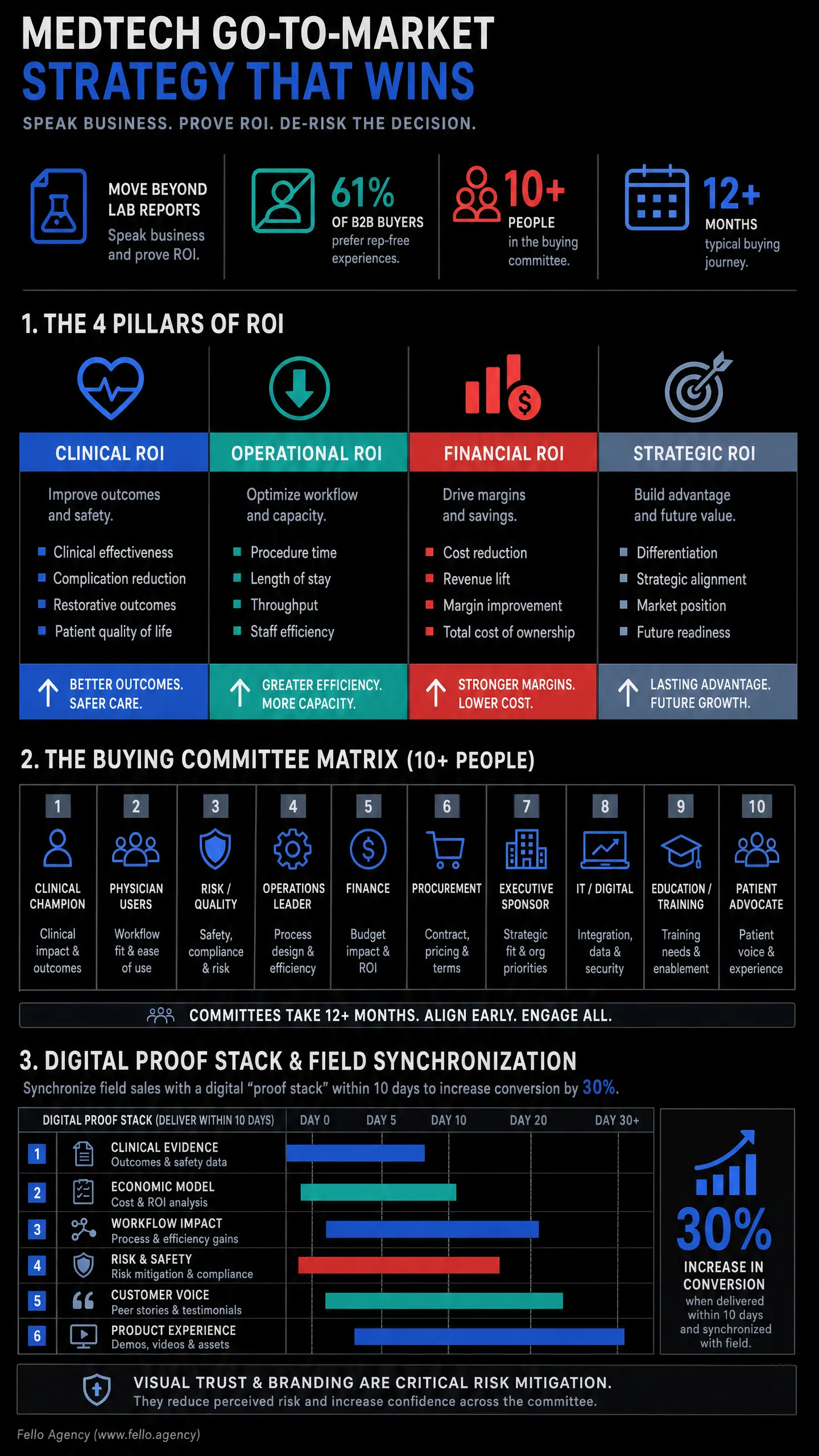
High-cost medical device purchases involve multidisciplinary committees of up to 10 physicians and 6 administrators, necessitating highly segmented landing pages that separate clinical evidence from operational logic.
The World Health Organization advises healthcare systems to evaluate medical devices based on total cost of ownership, requiring marketing teams to explicitly address installation, training, maintenance, and infrastructure requirements.
ROI and Adoption Are the Same Conversation
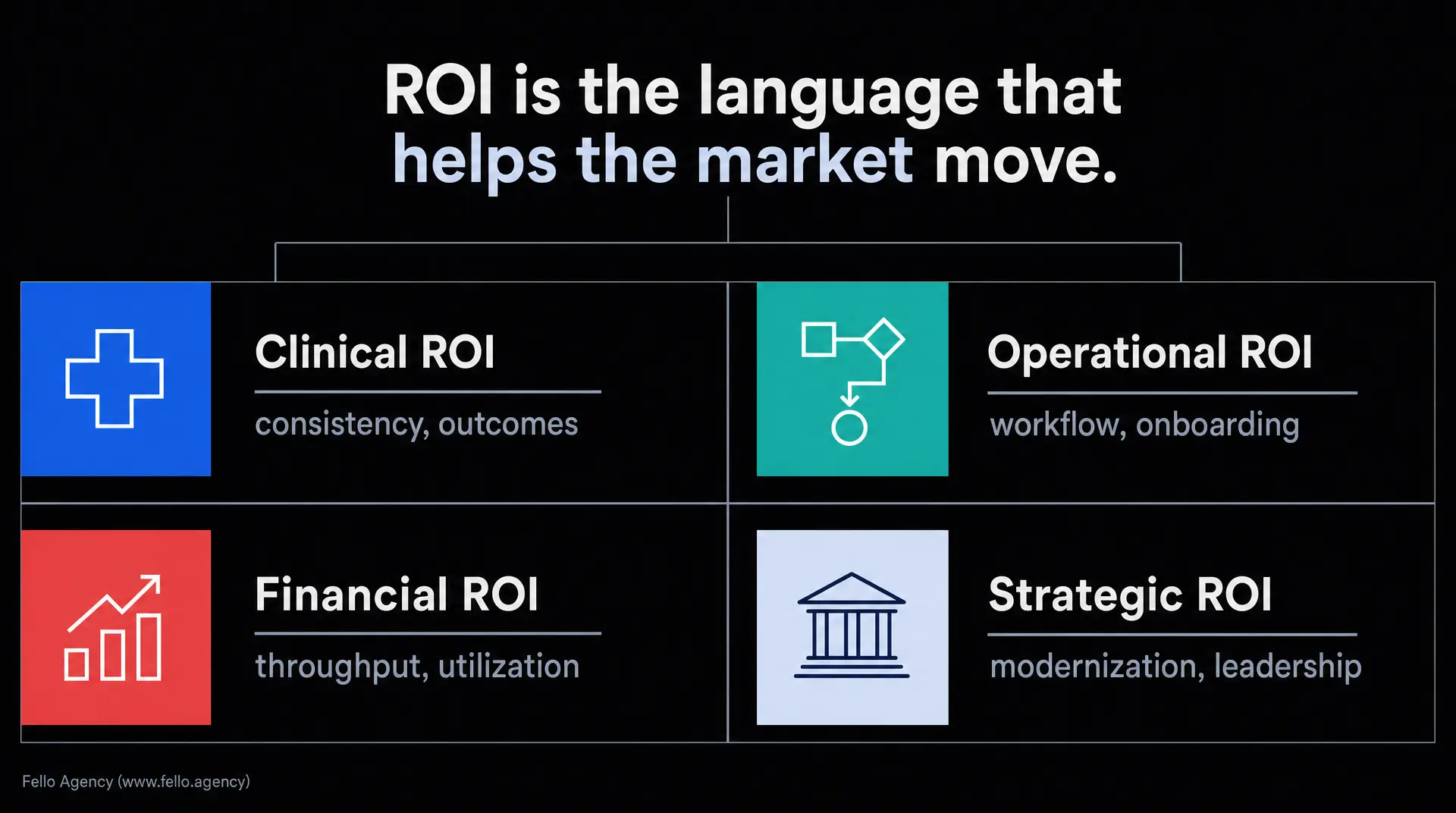
A lot of medtech teams treat ROI like a finance slide at the end of the pitch. I think that's backwards. ROI is the language that helps the market move in the first place. It helps a clinician justify a trial. It helps an operator support rollout. It helps a budget holder defend the spend.
Buyers are looking at more than price. WHO tells healthcare systems to think in total cost of ownership. That means installation, training, maintenance, consumables, energy, and infrastructure. If your marketing only talks about the product and never talks about those realities, you are leaving the hard part of the decision blank.
WHO also treats adoption as a life cycle beyond procurement. Incoming inspections matter. Training matters. Maintenance matters. Decommissioning matters. So if your team is only talking about awareness, the story is too thin. The market wants to know what happens after the contract is signed.
Clinical ROI
Clinical ROI is the easiest place to start because most teams already have the data. Better consistency. Better confidence. Better outcomes. Good. You need that. But you still have to translate what those gains mean in real use. Does the clinician feel more certain? Does variability drop? Does the care team trust the device faster?
Operational ROI

This is where adoption usually lives. Does onboarding get easier? Does the workflow get cleaner? Does the device remove friction between departments? A lot of the time, the buyer is already living with a process they hate. Find out what pisses off your clients the most. Start there.
Financial ROI
Financial ROI goes way beyond the line item on the quote. It touches throughput, utilization, staffing pressure, service burden, and time lost to clunky workflows. If finance has to guess those numbers on their own, fear fills the gap. You want the business case in front of them early.
Strategic ROI

This one gets ignored all the time and still moves deals. Does the purchase help the organization look modern, credible, and lower risk? Does it support standard-of-care leadership? Does it show the market that this team is serious? Buyers care about the science. They also care about what the purchase says about them.
Your Website Needs to Speak Business
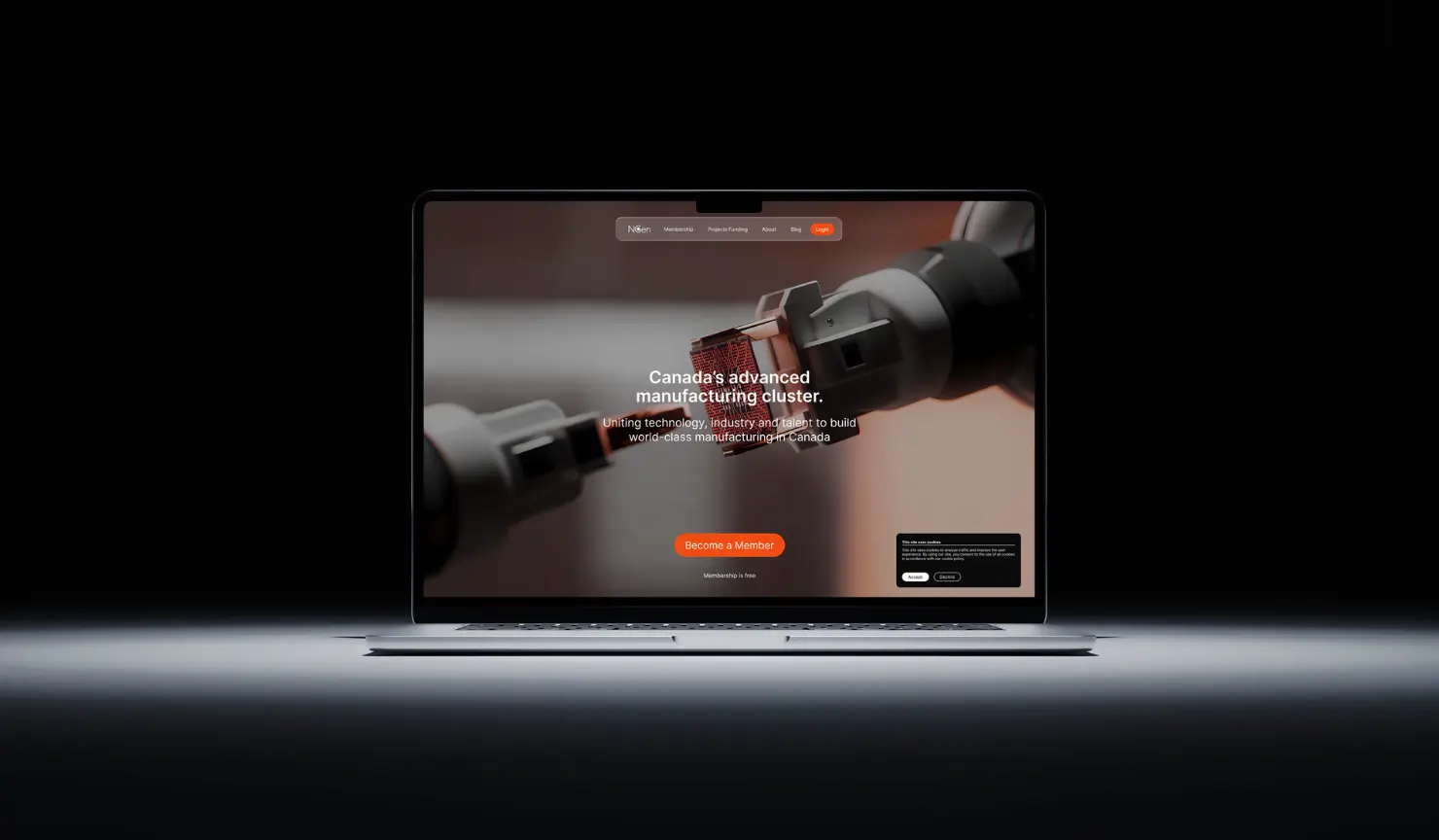
I draw a hard line between technical talk and business talk. Technical talk has a place. Business talk needs to go first. Your website needs to speak business.
Too many medtech sites still read like lab reports. They open with architecture diagrams, feature blocks, or technical language that only the internal team loves. That slows everything down. You are forcing the buyer to do your translation work. Create a business, not a research problem.
The big mistake I see is too much feature and not enough benefit. A buyer lands on your homepage and asks four questions fast. Who is this for? What changes if I use it? Where is the proof? Why should I trust these people? If the page cannot answer that cleanly, you lose momentum.
This matters even more now because buyers do not wait for a rep to teach them the basics. Gartner says 61% of B2B buyers prefer a rep-free buying experience. Your site, landing pages, case studies, and technical resources have to do real selling on their own.
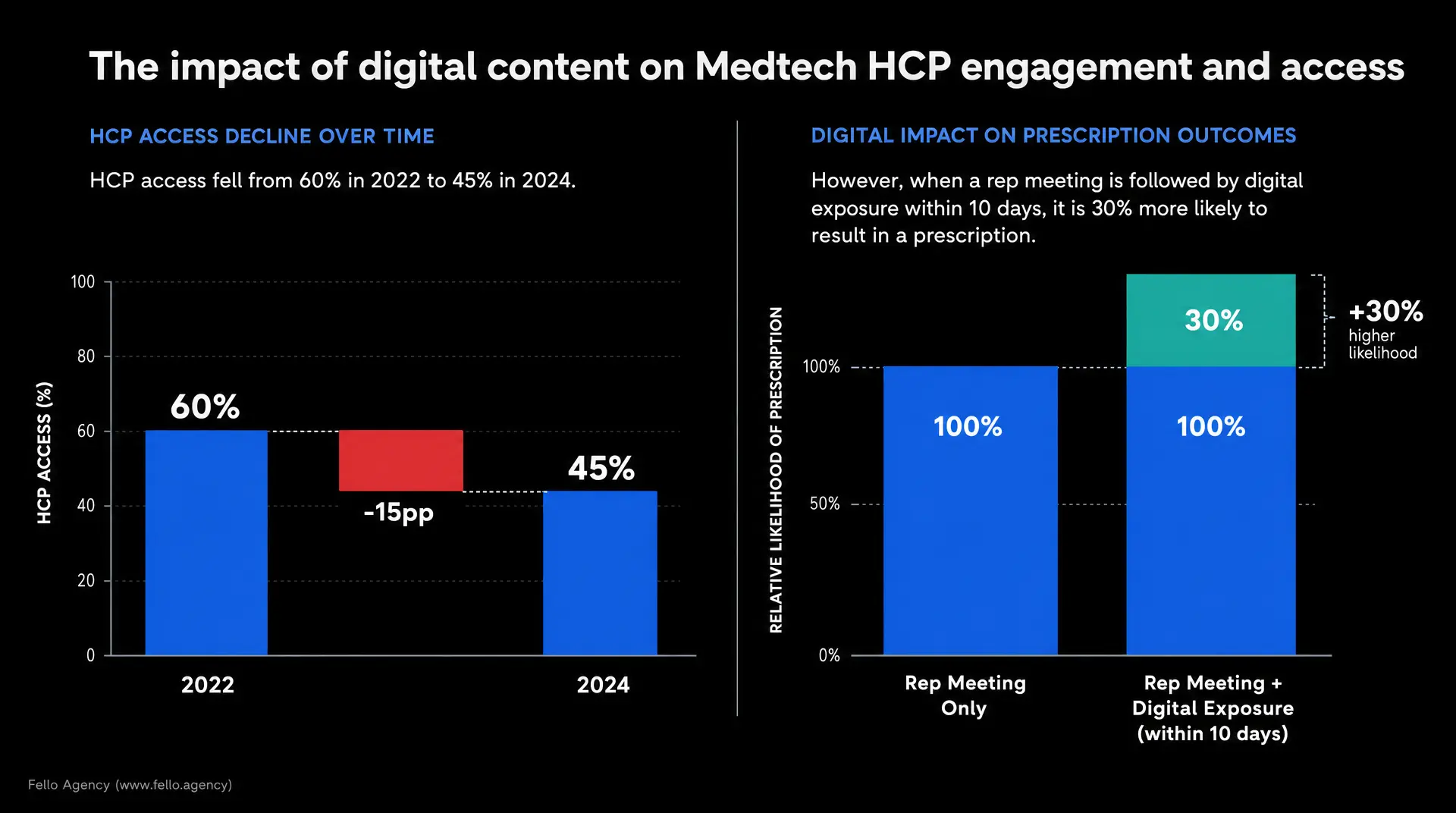
And your window with HCPs is tighter than it used to be. Veeva's 1Q24 field report shows HCP access fell from 60% in 2022 to 45% in 2024, and half of accessible HCPs meet with three or fewer companies. That should change how you think about content. Your rep may get one real shot. The proof has to keep working after the call.
Big buying decisions are computer buys. That's still true. Serious review usually happens on desktop, with tabs open, resources getting forwarded, and someone inside the account trying to validate whether your company looks ready. If the site feels generic, cluttered, or hard to manage, trust drops early.
Compliance Should Sharpen the Story
Look, I've worked inside regulated categories long enough to know where teams freeze. They remove every useful edge from the message. They take out the language that actually helps a buyer understand the value. Then they call the final result safe. It may be approved. It still won't move the market.
The FDA is very clear here. A device becomes misbranded if its labeling is false or misleading in any particular. Material omissions can create the same problem. That should push teams toward sharper claims, cleaner proof, and tighter wording. Compliance should force clarity.
The fastest way to lose trust is overselling and underdelivering. I see this across deep tech all the time. In medtech, the penalty is even bigger because the audience is trained to be skeptical. If you promise the stars and the real experience feels messy, credibility gets crushed fast.
Use the proof you can actually stand behind. The FDA has already used real-world evidence to authorize more than 250 devices. CDRH is also monitoring safety across 20 million lives. Real-world proof matters. Use it carefully. Use it often. Show the market that your story survives real use.
And if you are early, lean harder on the people behind the product. In frontier categories, the biography is the case study. The inventors, advisors, operators, and scientific leaders are carrying trust for you. Put them where buyers can see them. KOLs matter too. Just use them to validate something real, not to decorate weak messaging.
Build Proof That Works When the Rep Is Gone
This is where a lot of teams leave money on the table. They build content for approval. They do not build it for use. Those are very different things.
If you already run HCP marketing in pharma, you know the basic idea. Field and digital have to move together. In medtech, same thing. Veeva's 4Q24 data shows that when a rep meeting is followed by digital exposure within 10 days, it is 30% more likely to result in a prescription. It also shows 65% of HCP engagements are still unsynchronized. The market is telling you what works. A lot of teams still do not operationalize it.
The content gap is even uglier when you look at usage. Veeva's 2025 report found that shared content led to more than double the new patient treatment starts. Field teams still used content in less than half of HCP meetings, and nearly 80% of approved assets were rarely or never used. That tells me most medtech teams do not have a content volume problem. They have a relevance problem and a usability problem.
So what do I want? I want a proof stack. I want one strong flagship story. I want a real case study page. I want a clean forwardable brief. I want a landing page that speaks to the use case. I want the sales deck, the website, and the follow-up email all saying the same thing in the same language.
One of the biggest red flags I see is a medtech website with no case study or testimonial page. Trust drops immediately. If you are asking for serious contract value, a few written quotes are not enough. At that level, professional video earns its keep because it shows the market you take the decision seriously.
That proof stack should help internal champions do their job. It should help them explain the purchase upstream. It should help them answer the questions that show up in procurement and leadership meetings. In a lot of categories, your technical brief is helping write their future RFPs.
Forwardability matters more than most teams think. Demand Gen Report's 2024 benchmark found that 89% of buyers consumed assets they found on their own, 72% shared them with teammates, and 57% of those colleagues consumed them too. Buyers are already moving your content around when you are not in the room. Build for that.
Human selling still matters here too. A lot of these cycles run six months to two years. People still need a real conversation with someone who understands the product and understands the market. Content supports that relationship. It doesn't replace it. You still need a driver behind the car.
I also care a lot about the system underneath the content. If you don't have a proper CMS, there is no point of even having a website. My benchmark is simple. Your team should be able to publish an approved resource fast. If every small update needs a developer, commercialization slows down for no good reason.
One Story Won't Sell the Whole Committee
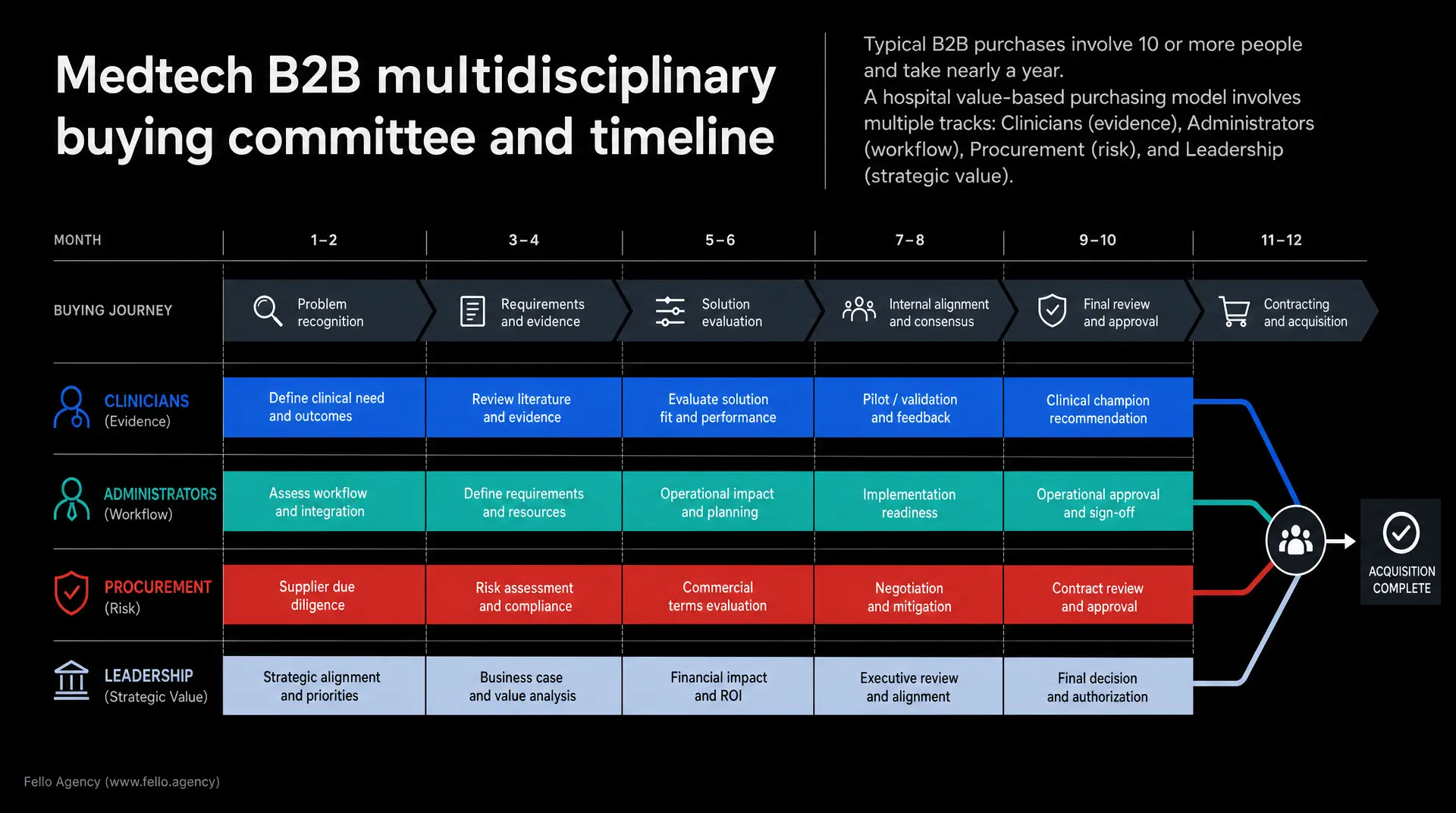
A lot of medtech companies still try to sell the entire buying group with one deck and one message. That is a bad bet. The clinician, the administrator, procurement, and the executive sponsor do not care about the same proof in the same order.
6sense found that typical B2B purchases involve 10 or more people and take nearly a year. Buyers often wait until they are about two-thirds of the way through the journey before talking to sellers. Your message has to survive a long silent period. It has to work across a room before your sales team even gets a proper shot.
Hospital buying data tells the same story. A BMJ Open review found that multidisciplinary involvement improves purchasing for high-cost medical devices. One value-based purchasing model used committees with 10 physicians and 6 administrators. That is a room full of competing priorities.
So build message tracks on purpose. The clinician needs confidence, usability, and evidence. The administrator wants workflow logic, training, and implementation support. Procurement wants risk reduction and ownership clarity. Leadership wants strategic value and commercial confidence. If you collapse all of that into one generic story, adoption slows.
This is why I push segmented landing pages so hard in deep tech. Different audiences need different entry points. The top of funnel can stay broad. Lower down, the story has to get much more specific. That's how you stop message dilution.
Visual Trust Closes the Trust Gap
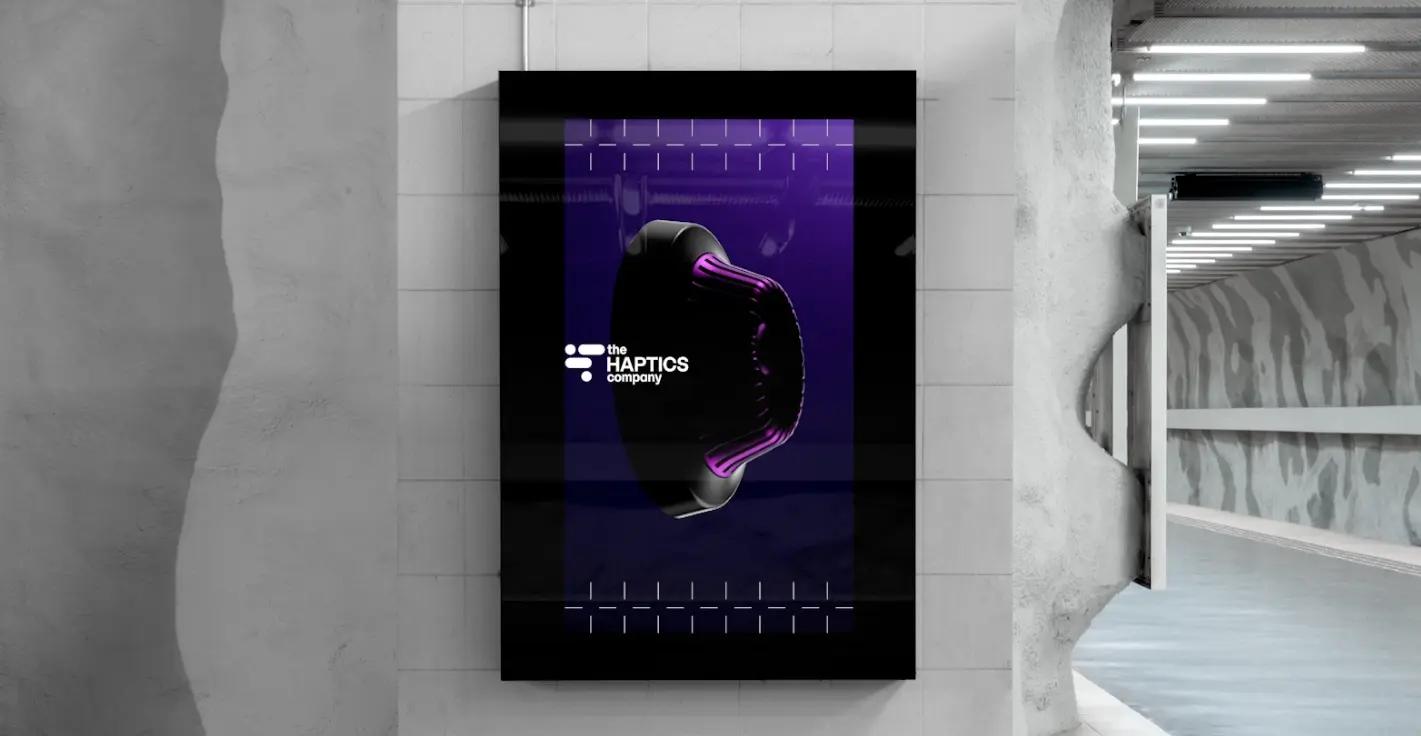
Branding does a hard commercial job in medtech. It helps the buyer decide whether your company looks ready for serious conversations. That is why I view branding as risk mitigation.
I say this all the time because it's true. If it looks like bullshit, no one's gonna want to work with it. Poor visuals make people question everything else. The device. The company. The process. The seriousness of the team.
We saw this clearly in our work with Prollenium Medical Technologies and Revanesse. The engineering was there. The market needed to feel it. We rebuilt the brand around science-focused credibility with custom CGI, macro photography, and a tighter visual system. The point was simple. Close the trust gap. Give high-value clinics a brand that matched the quality of the product.
I have also led a six-figure visual identity overhaul in medical aesthetics for the same reason. The engineering was strong. The brand was not authenticating it. That happens more often than people think. Companies believe in what they built, but they never professionally validate that belief in front of the market.
First impressions matter more than a lot of teams want to admit. 6sense also found buyers shortlist about four of five vendors on day one. They buy from that first list 85% to 95% of the time. The first vendor they contact wins around 80% of deals. Your brand is doing heavy lifting before a rep ever speaks. Dress for the client that you need.
Case Studies Should Sound Like the Customer
My favorite proof asset is still the case study. But it only works when it sounds like the customer. Too many medtech case studies read like product brochures with a quote taped on at the end. That misses the whole point.
When I build a case study, I want the before and after from the user's side. I want the frustrating times before the product. I want the headaches. I want the reason the old way stopped making sense. That is where the emotional truth lives, even in B2B.
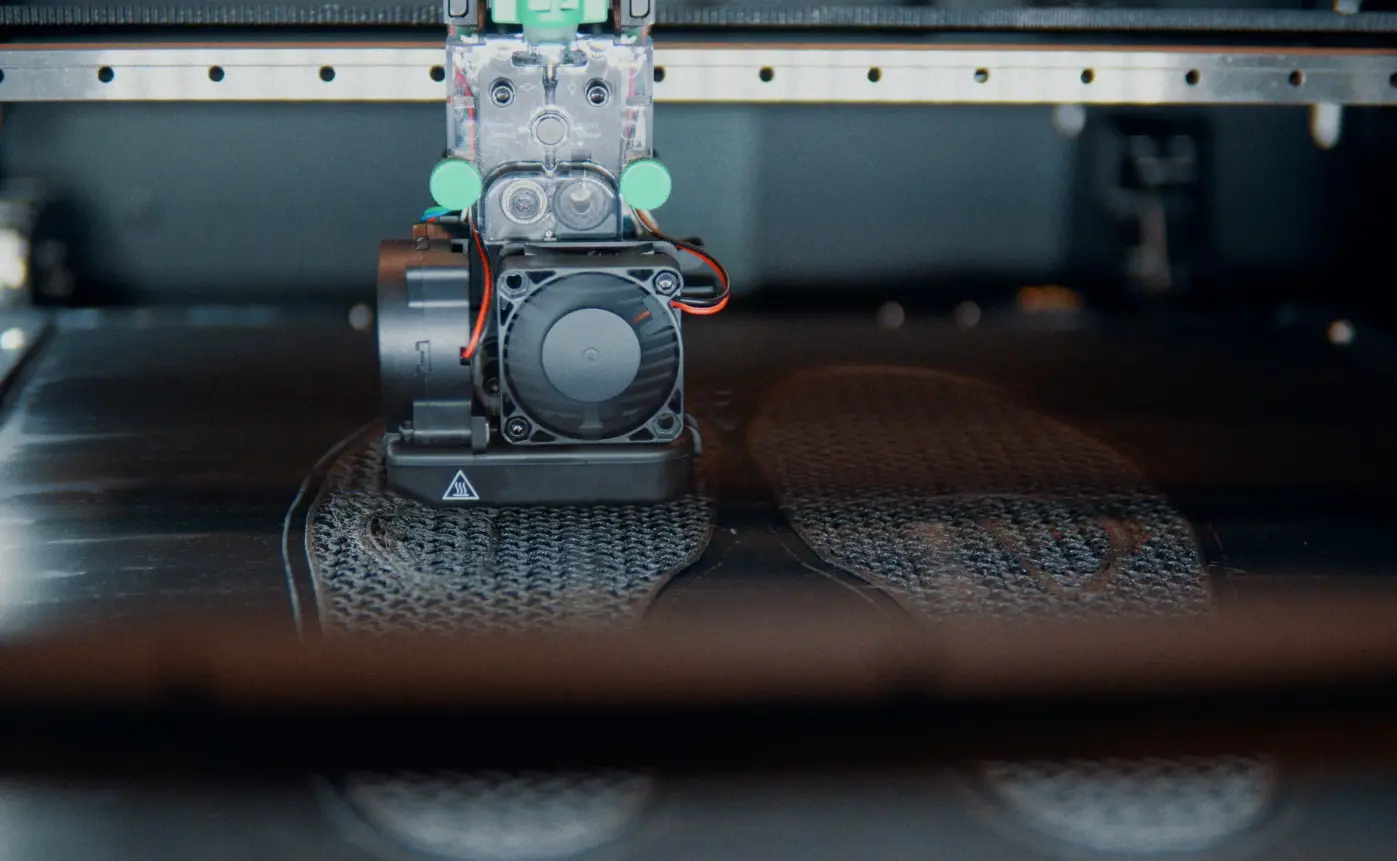
We used that exact approach for Mosaic Manufacturing's orthotics work. The story focused on the orthotics business owner and the workflow impact, not on printer specs. That helped show product-market fit in a way buyers could actually understand. The broader work pushed inbound leads up 25% and booked meetings up 15% within two months.
That is why I say sell a lifestyle, even in technology. Show what life looks like after adoption. Is the clinician more confident? Is the business owner saving time? Is the team moving faster? The market remembers that a lot longer than another feature block.
And one good case study should do real work. I like taking one strong video and turning it into written PDFs, blog posts, trade show loops, sales follow-up, and shorter clips. That is bang for your buck. Video helps trust. Copy keeps the story searchable, usable, and easy to pass around.
If the full customer story is confidential, frame that properly. Say the detailed case study is available upon request under NDA. Serious buyers understand that language. It reads as maturity when you handle it well.
How I'd Fix This in 90 Days
I do not believe in long audit theatre. Ninety days of diagnosis is eternity. If someone needs three months before they can tell you what is broken, they do not have the playbook for your space.
If I walked into a medtech team tomorrow, I would start with research fast. At Fello, we talk to customers first, then sales, then marketing, then leadership. That order matters. Customers tell you where value lands. Sales tells you where deals stall. Marketing shows you where the message is bloated or generic. Leadership tells you what the business actually needs to win.
Then I would fix the core web journey. The homepage. The case study page. The product visuals. The validators. The CTA. The resource pages. I use that hierarchy for a reason. Buyers decide quickly whether you are a real company or a science project.
After that, I would build the assets sales can use right away. A flagship case study. A forwardable technical brief. A landing page for the clinical story. A landing page for the economic story. A follow-up sequence that carries the same message. Most teams overbuild awareness and underbuild demand and conversion. You need all three motions running together.
I would also train the team on the CMS right away. I care about that a lot because internal speed matters. Teams lose momentum when every update gets trapped behind a developer or a messy backend. A lot of medtech marketing problems are really operations problems wearing a content hat.
Then I would measure the thing that actually matters. Sales velocity. Faster email replies. Better quality meetings. More demo requests from the right accounts. More downloads of the proof assets sales actually uses. I care way more about those signals than vanity traffic.
Strong B2B branding is the last moat standing because it helps you skip a level in the sales cycle. You feel it early. Better responses. Less skepticism. Cleaner conversations. That is real progress.
Final Thought
At the end of the day, medtech commercialization is simple to describe and hard to execute. You are trying to get people to change how they work so they can save money, make money, reduce risk, or improve care. That story has to be clear. The proof has to be real. The experience has to feel trustworthy.
If you lead marketing in pharma or life sciences, you already know how hard it is to earn belief in a regulated market. Medtech asks for that same discipline with even less room for confusion. Your website needs to speak business. Your proof needs to travel. Your brand needs to authenticate the product.
When all of that lines up, adoption moves faster. Sales gets better conversations. Internal champions carry your story further. And the market starts to trust you sooner.
That is how you prove ROI. That is how you drive adoption. And if you take it seriously, you can win very heavily.
Frequently Asked Questions
How do we fix the disconnect between marketing content creation and sales team utilization?
Stop building for approval and start building for use. Nearly 80% of approved content is rarely or never used by field teams. Fix this by creating modular, forwardable assets that address specific workflow objections rather than generic brochures. Give reps a proof stack they actually need to close deals.
How should we leverage an FDA Breakthrough Device designation in our go-to-market strategy?
A breakthrough label isn't enough. The FDA awarded 149 Breakthrough Device designations, authorizing 44 in 2025. Translate that regulatory milestone into business language. Frame the designation as a strategic ROI advantage that lowers clinical risk and accelerates standard-of-care leadership for the purchasing hospital.
How do we maintain HCP engagement during the long silent periods of a complex buying cycle?
Build a digital journey that sells for you. Purchases take nearly a year, with buyers silent until two-thirds through the process. Maintain momentum using segment-specific landing pages and trackable proof assets that independently answer financial questions when reps aren't in the room.
How do we ensure our medtech brand makes the buyer's Day One shortlist?
First impressions dictate revenue. Buyers buy from their initial Day One shortlist up to 95% of the time. You make that list by leading with undeniable visual trust, a trackable proof stack, and clear, business-focused ROI messaging before your sales rep ever speaks.
Why must marketing content extend beyond the initial procurement contract?
Adoption is a lifecycle, not a signature. The WHO views health technology management as extending into training, maintenance, and decommissioning. If your marketing only focuses on awareness, the story is too thin. Build enablement content that supports workflow integration, clinical onboarding, and long-term operational ROI.
Your Creative Partner for Innovation That Matters
From advanced tech to transformative healthcare, Fello helps visionary teams shape perception, launch products, and lead industries.


Let’s keep in touch.
Discover more about high-performance web design. Follow us on Linkedin and Instagram.