


I get asked this all the time by founders in AI, robotics, quantum, biotech, MedTech, advanced manufacturing, XR, and defense.
You’ve built something real. The science is hard. The engineering is serious. Then the pressure changes. Your investors want traction. Your board wants a sharper story. Your sales team wants better tools. And suddenly everyone starts asking the same question.
Should we hire a fractional CMO?
Sometimes, yes.
A lot of the time, the better answer is: slow down and figure out what problem you’re actually trying to solve first.
I’ve spent the last decade helping deep tech companies commercialize at Fello Agency. We’ve done more than 50 projects across sectors like quantum, MedTech, XR, manufacturing, and defense. We’ve worked with companies like Nord Quantique, Mosaic Manufacturing, Prollenium, Sphere, Lenovo, and Qualcomm. We’ve built Fello from the ground up without VC money, so I’m very biased toward speed, clarity, and getting real work out the door.
That’s why I have a pretty blunt view on the fractional CMO conversation.
Most founders start with the wrong question.
Start with the Real Question
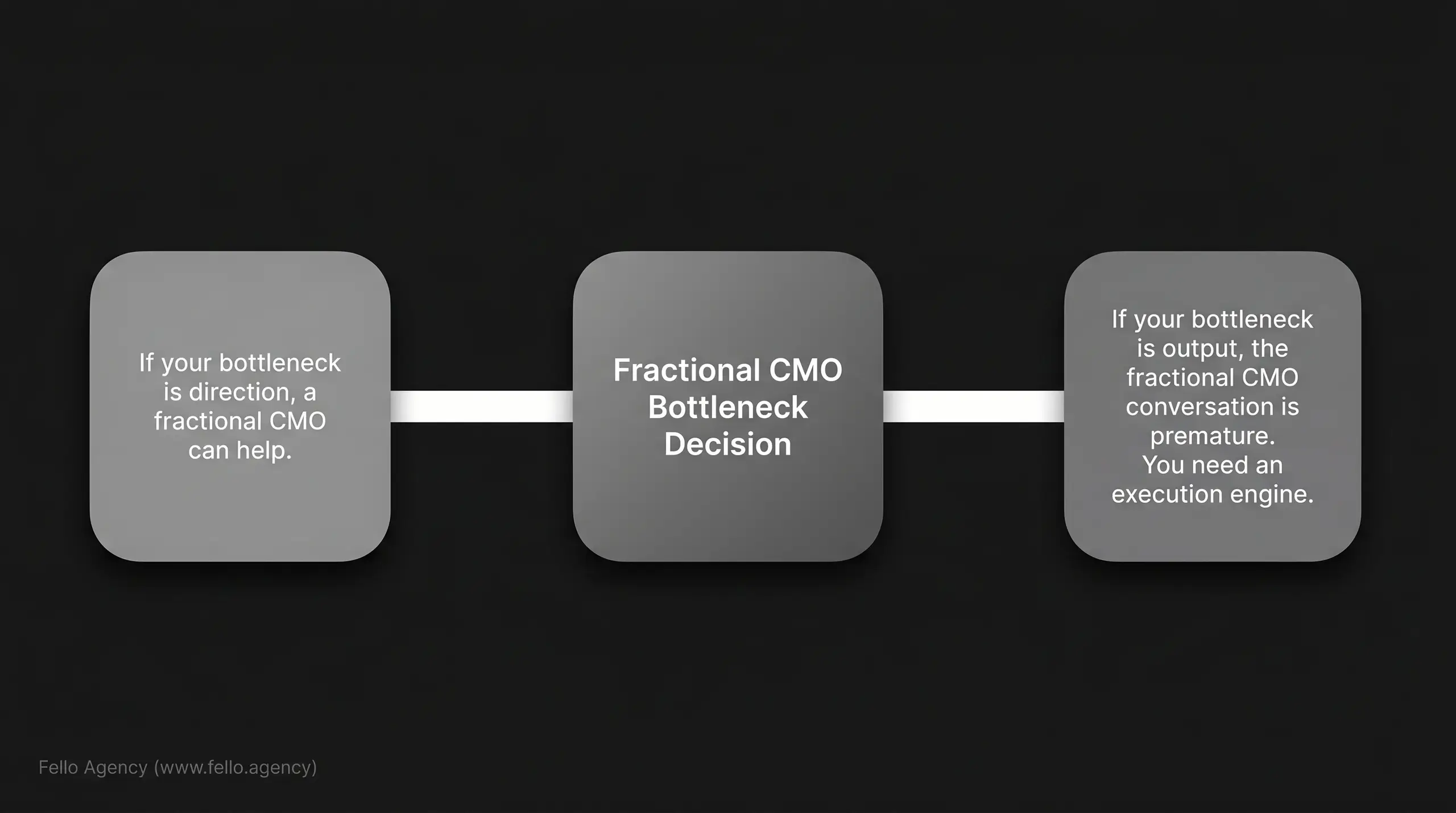
This is the question that changes everything.
A fractional CMO is a leader. They should help you make strategic calls. They should set direction. They should decide what matters now and what can wait. They should help align your founder, your board, your sales team, and your marketing team around one commercial story.
That’s valuable when you already have a team.
Most deep tech companies under $20 million don’t.
They usually have one marketing person, maybe a freelance designer, maybe a founder writing their own LinkedIn posts, and a bunch of assets that don’t match the quality of the technology. The website is old. The deck is weak. The case studies don’t exist still. The CMS is a mess. The company wants leads, but there’s no real engine behind the scenes.
That’s an output problem.
I say this all the time because it’s true: hiring a fractional CMO when you don’t have an execution engine is like hiring a head coach for the team with no players.
If your bottleneck is direction, a fractional CMO can help a lot.
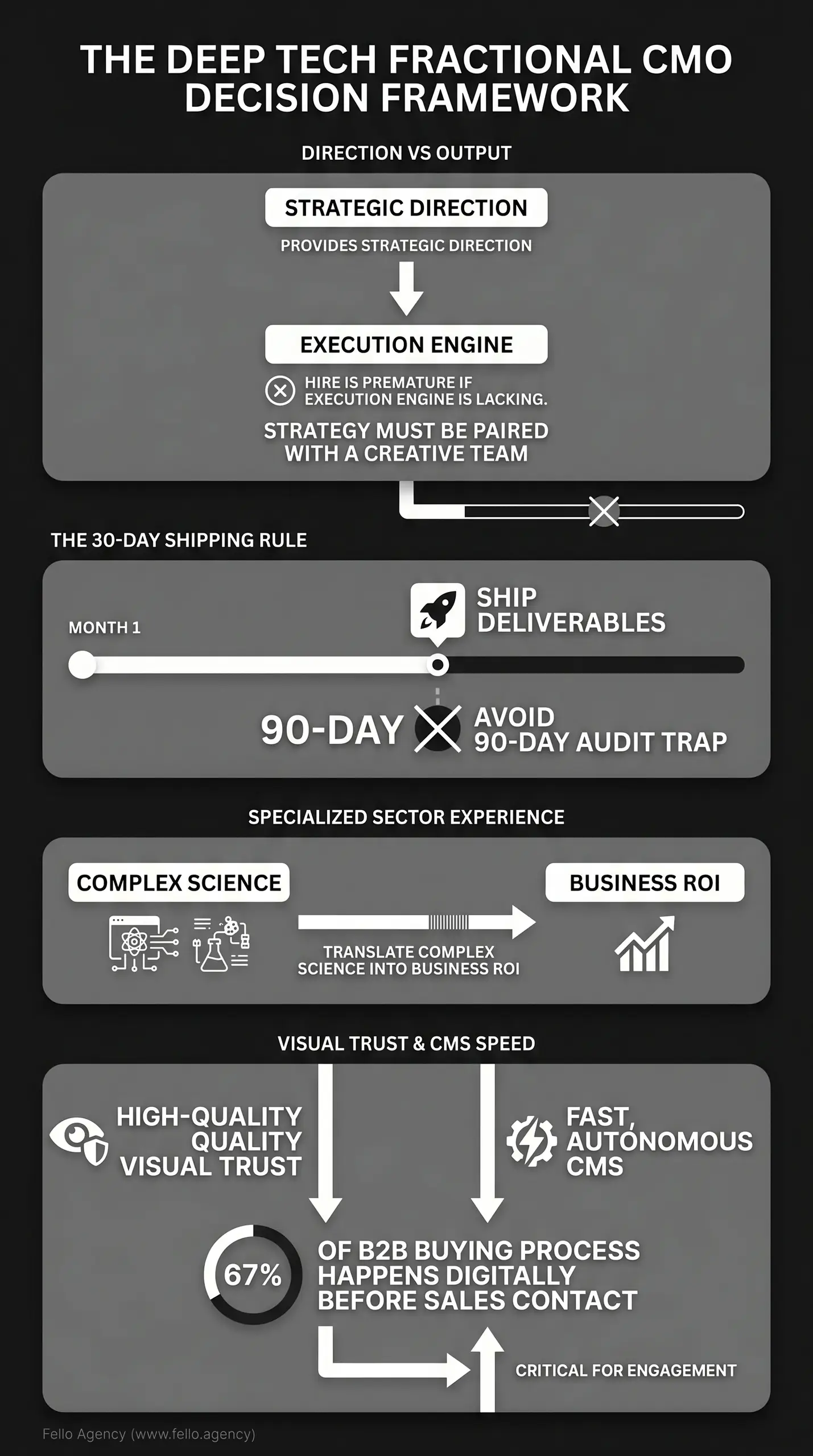
If your bottleneck is output, the fractional CMO conversation is premature.
This is where a lot of technical founders get stuck. You built the thing. You know the mechanism. You know why it matters. Now you’re being forced to think like a CEO instead of a chief scientist. That shift is uncomfortable. It’s also necessary. Investors love IP, but they fund revenue engines. If the company still feels like a science project, the market will treat it like one.
A good marketing hire helps you cross that bridge. A bad one adds meetings, decks, and delay.
The Dirty Secret Most People Won’t Say
I’ve said this before and I mean it: a fractional CMO without a creative partner is just a consultant with a better title.
That’s the dirty secret.
A lot of fractional CMOs are smart people who left corporate roles and hung a shingle. They know how to write a strategy doc. They know how to build a messaging framework. They know how to talk about channels and architecture and positioning. Then they hand that document to your internal team of one or two marketers who can’t actually build the website, produce the video, redesign the deck, create the landing pages, or run the campaign.
So what happens?
You pay $15,000 a month for homework assignments that your team cannot even complete.
The gap between strategy and execution is where most of these engagements quietly die.
The companies that get real value pair strategic leadership with people who can make things. That can be an agency. That can be a creative team. That can be a few strong freelancers. I don’t care what the structure is. I care that the work can actually happen.
At Fello, we’ve kept the team intentionally lean for that reason. Clients work directly with the people doing the work. No bloated account teams. No giant layers of process. That matters in deep tech because commercialization needs momentum.
I’ve seen what happens when that pairing works. At Sphere, we supported a full brand transition, redesigned the website, built new templates, and produced a major promo video. Alexandra Corey, their Head of Marketing, said, “They don’t just talk about being partners - they walk the walk.” More importantly, she said the new website “has more than tripled our lead generation efforts.”
That’s what you want. Real market movement. Not a prettier Google Doc.
Deep Tech Experience Is Not Optional

One of the biggest mistakes founders make is assuming “B2B tech“ is one big bucket.
It isn’t.
Selling quantum computing into enterprise is different from selling SaaS to IT directors. Selling biotech is different from selling robotics. Selling a defense platform to a procurement group or a program manager is a different world again.
The sales cycles are different. The proof points are different. The language is different. The buyers are different.
That’s why I tell founders to ask one question before they hire anyone: name the last three technical buyers you’ve sold to and tell me what those sales cycles looked like.
If the answer is vague, you’re about to pay for someone to learn your market on your dime.
I’ve seen too many generalists who call themselves B2B tech specialists because they worked at one SaaS company. That does not mean they know how to position your autonomous systems platform, your quantum architecture, your device platform, or your advanced manufacturing solution.
At Fello, we built our company around these sectors on purpose. We work in quantum computing, MedTech, advanced manufacturing, biotech, XR, defense, AI, and more because the translation problem is different in each one.
For a quantum client under NDA. The challenge was commercial readiness. Early quantum companies can easily get stuck sounding like a research paper. We took dense technical messaging and turned it into a flagship video, a stronger website, and sharper investor materials. The result was an 80% jump in website traffic in six weeks, doubled social engagement, and coverage in major industry publications. (With good SEO practices).
For Prollenium and Revanesse, the challenge was trust with medical professionals. We moved the brand away from generic beauty language and toward science, engineering, and credibility.
For Qualcomm, the ask was to simplify a complex XR collaboration story through visuals and narrative. Their feedback was clear. We made the innovation feel “clear and compelling.”
That kind of work moves faster when you already speak the language.
Run from the 90-Day Audit Trap
Speed Is Part of the Strategy
I’m hard on this point because I think a lot of founders get burned here.
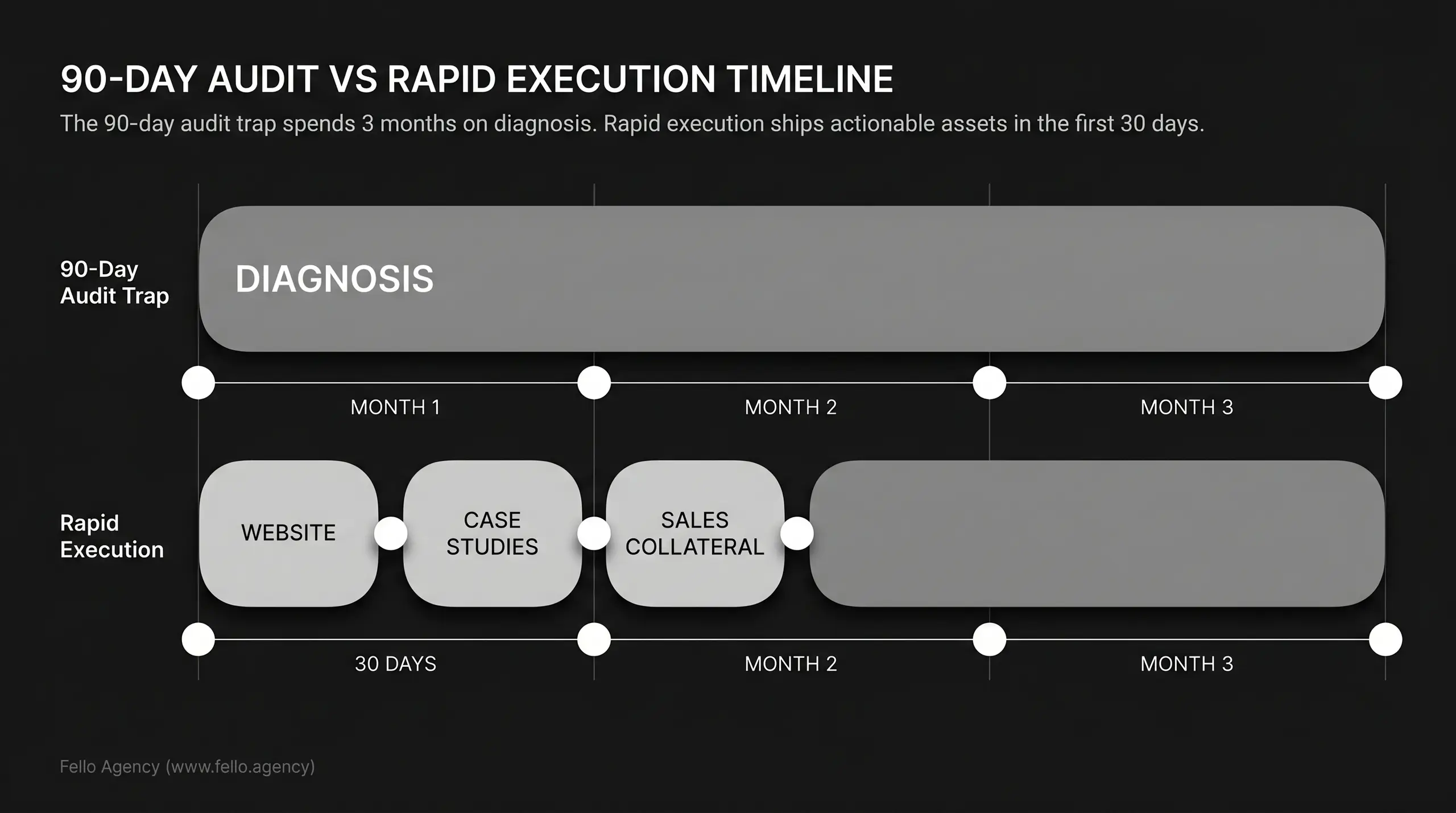
The 90-day audit trap is designed to protect the strategist, not the company.
It sounds smart. Audit the funnel. Interview the team. Review the stack. Build a long report. Present findings. Everyone nods. Three months are gone.
For a deep tech company trying to commercialize, 90 days of diagnosis is eternity.
You can do a lot in 90 days. You can ship a rebrand. You can launch a better site. You can publish case studies. You can clean up SEO. You can build sales collateral. You can get in front of buyers. Meanwhile, your competitor is out in the market and your fractional CMO is still mapping your journey in Miro.
I believe in strategy. At Fello, strategy and research are a huge part of the value. On a serious rebrand, they can represent roughly half the work. I just do not believe strategy needs to sit in a glass box for three months before anything gets shipped.
A lot of that early diagnosis should happen before the deal is even signed.
And time matters more than people admit. A Wifitalents roundup shows that complex B2B purchases usually involve six to ten stakeholders and about 80% of those sales cycles take four to twelve months. If you burn a quarter of that cycle on slow internal analysis, you are handing away momentum.
You don’t wanna be moving slow in tech. You’re gonna get killed.
What the First Month Should Actually Look Like
The first month should create proof, not paperwork.
I like a compressed assessment. Two weeks, maybe. During that time, I want to talk to your customers first, then sales, then marketing, then leadership. That order matters. Your customers tell you how the pain feels. Your sales team tells you where the friction is. Marketing tells you what assets exist and what’s broken. Leadership tells you where the company needs to go.
I want to find out what pisses off your clients the most. I want to hear what almost stopped the deal. I want to know what language buyers use when they talk about the value. I want to see where the current messaging gets too technical and where the team is overselling.
I also want to look at the assets fast. The site. The deck. The case study section. The LinkedIn presence. The analytics. The CMS. The event materials. The nurture content.
Then I want something shipped in month one.
That could be a sharper homepage. It could be an industry-specific landing page. It could be a rewritten sales deck. It could be a case study framework. It could be a downloadable brochure that captures emails while your buyer is still thinking. It could be a founder content cadence on LinkedIn. I don’t care which thing goes first. I care that the market feels movement.
We’ve done this kind of speed work many times. We launched a high-quality website in under two months for a client heading to CES. We helped a dual-use client launch in two weeks using a rapid workflow that usually takes six months. We’ve built industry pages for different ICPs so a company can speak directly to factories, medical buyers, and defense buyers instead of dumping everyone into one vague homepage.
Weeks matter.
Your Website Is Already in the Sale
Buyers Are Doing Their Homework Without You
A lot of founders still treat the website like a brochure.
That’s old thinking.
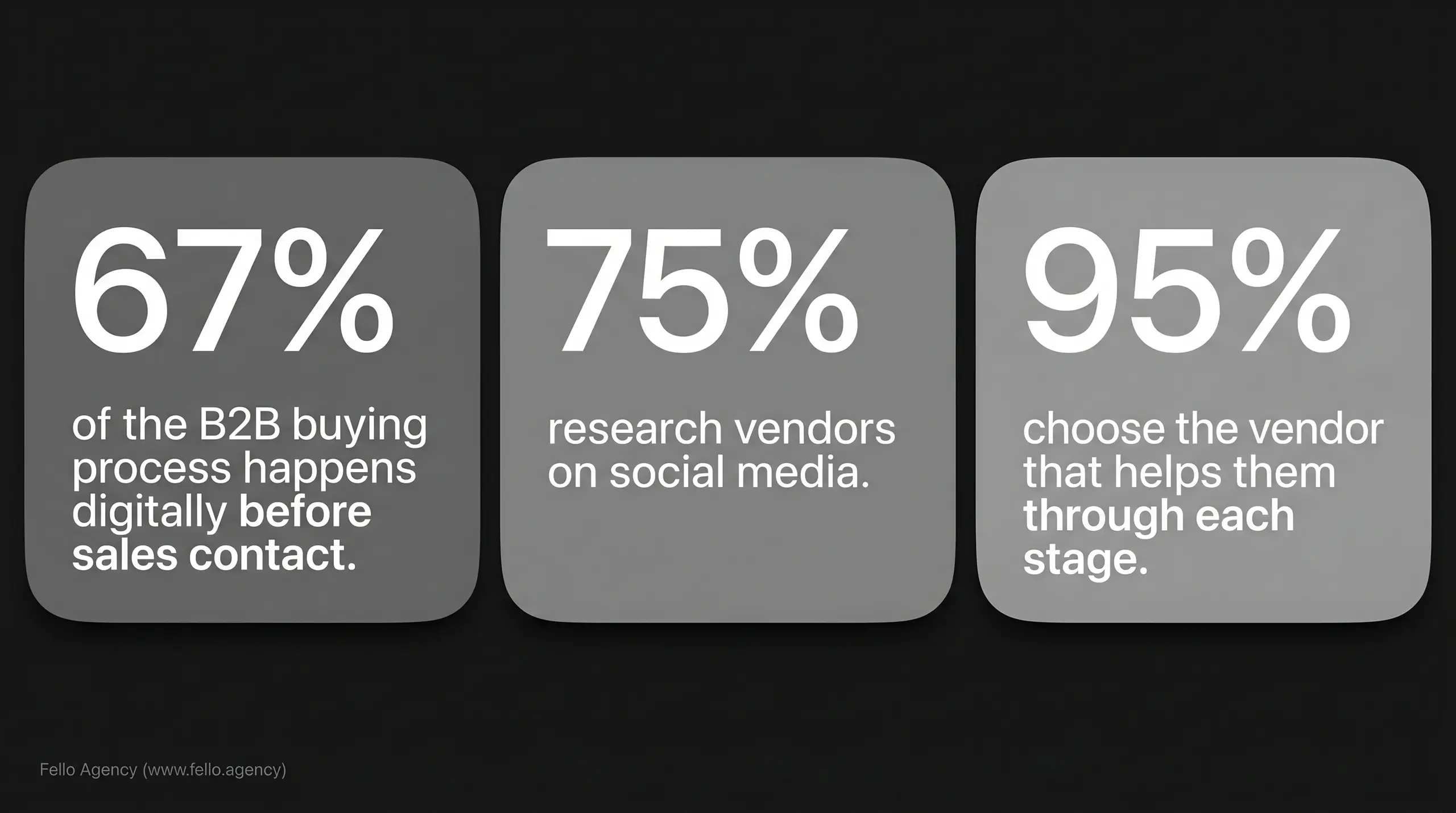
A Wifitalents roundup shows that about 67% of the B2B buying process happens digitally before any contact with sales, about 75% of buyers research vendors on social media, and nearly 47% review three to five pieces of content before they ever reach out. The same source says about 95% of buyers choose the vendor that helps them through each stage of the process.
So your website, your case studies, your PDFs, your LinkedIn presence, your videos, and your resource pages are already in the deal.
Your website needs to speak business.
That means a buyer should understand the value fast. They should see proof fast. They should know who you help and why this conversation matters. They should not have to dig through a wall of technical language just to figure out if you are relevant.
And the quality matters more than people think. BCG found that poor website quality can erase around 20% of your marketing effectiveness. That’s brutal. Broken links, slow load times, bad UX, weak mobile behavior, awkward navigation. It all chips away at trust.
At the same time, about 80% of B2B buyers expect a consumer-grade online experience. They may be buying a complicated piece of technology, but they still expect the digital experience to feel smooth, modern, and easy.
This is why I’m obsessed with websites that are both high-trust and editable.
If Your CMS Is Bad, Your Market Speed Is Bad
I’m very direct about this. If you don’t have a proper CMS, there is no point of even having a website.
I personally manage the blog section of our own site because I want to stay close to the tools I recommend. My benchmark is simple. If your team can’t publish a blog post in about three minutes once the content is ready, the system is weak.
That’s not a small issue. It’s a commercialization issue.
I’ve seen a client stuck on a legacy backend built by a developer who was gone. They couldn’t upload guest blogs about acquired technologies without pain. I’ve seen another situation where a task that should take five to ten minutes dragged out for months. That kind of bottleneck kills marketing autonomy.
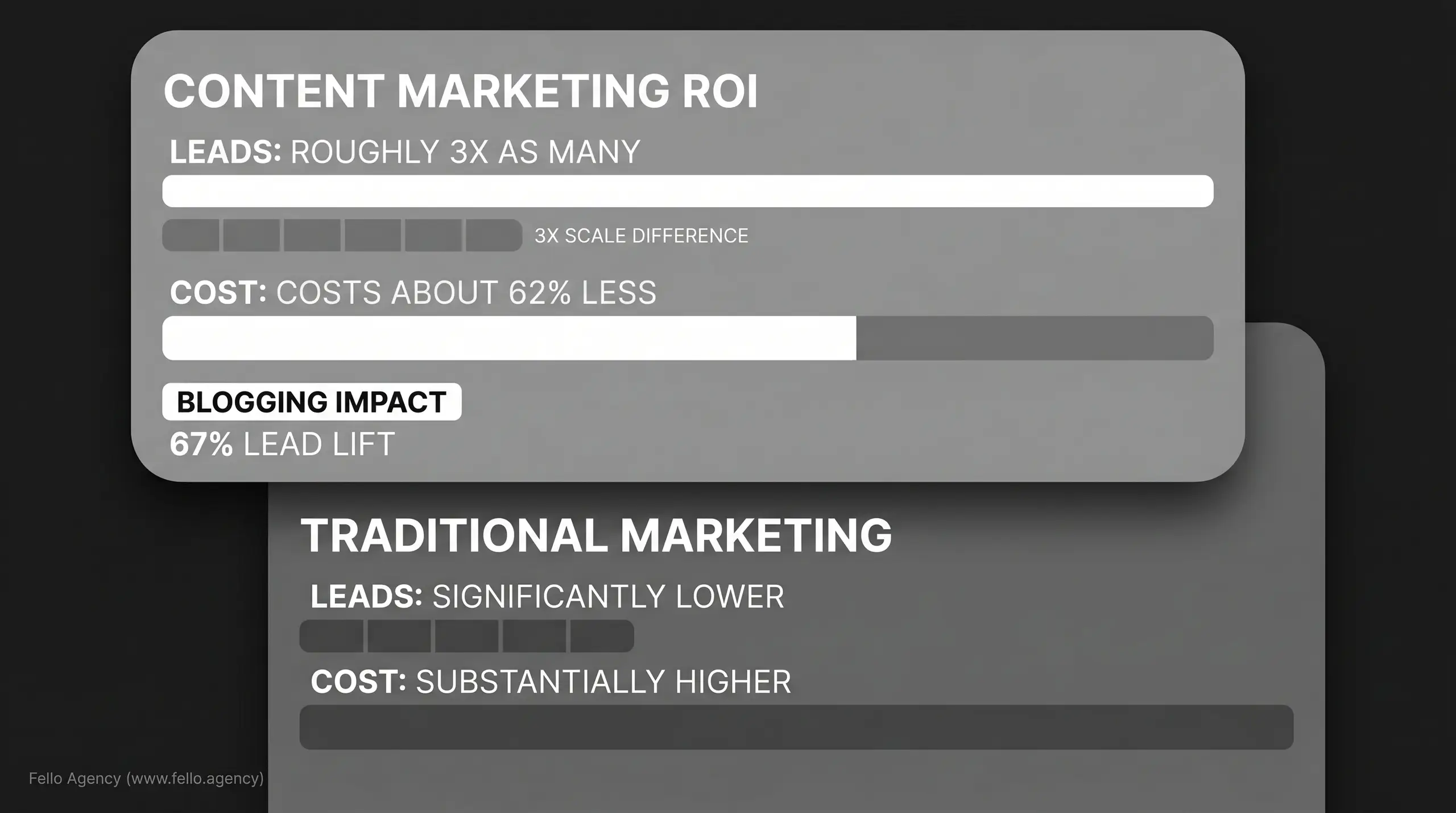
And content still matters a lot. A 67% lead lift from blogging is real. Content can also cost about 62% less and produce roughly three times as many leads than traditional marketing. In deep tech, where buying cycles are long, that compounding effect matters even more.
This is one reason I like building autonomous websites. Marketing should not be waiting on developers every time they want to post a case study, add a landing page, or publish a resource. I use tools like Framer for speed when it fits. I also know when it does not fit. For classified sectors, I won’t recommend it because your site lives and dies on Framer’s server and some clients need self-hosted security.
A good marketing leader should understand both the strategy and the operational side of that decision.
Some Pages Close Deals and Some Pages Build Belief
I think a lot of teams forget this.
Every page on your site does not need to act the same way. Some pages are there to generate immediate action. Those are your landing pages, product pages, and deal-focused pages. Other pages are there to collect trust over time. I call those collector pages. They include your partnership pages, your mission page, your about page, your case studies, and your meet the team content.
You need both.
I often explain this like a highway. You need the collectors for the short-term movement. You also need the express lanes for long-term brand resonance. Deep tech buyers have a long but skeptical attention span. If you help them learn, verify, and trust you over time, you win very heavily.
Translation Is the Real Job
Technical Talk Does Not Close the Deal by Itself
I know why technical founders lead with specs.
You built the thing. You respect the thing. You spent years inside the thing. Of course you want to explain the mechanism first.
The market doesn’t work that way.
Most buyers are trying to answer a simple question. How does this help me make money, save money, reduce risk, or move faster?
That’s the shift. Your website needs to speak business.
I say this a lot because it matters: pivot to an ROI narrative or you’re gonna stay in the lab.
That does not mean hiding the science. It means sequencing it properly. Lead with value. Then layer in proof. Lead with outcomes. Then support with technical detail. Your homepage should not read like a research abstract. Your landing pages should not force a CFO, buyer, or operator to decode the product before they understand why they should care.
At the end of the day, almost every deep tech company I work with is trying to convince someone who has been doing something one way to change it. Why would they change? To save more money or make more money. That’s the business conversation.
I like the old phrase because it still works: sell the sizzle, not the steak.
And yes, even in B2B, sell a lifestyle. Show the buyer how their world improves. Show them how they become faster, smarter, safer, or more efficient. Sell not how smart the device is, but how much smarter you’re going to be.
The Best Case Studies Sound Like the Customer, Not the Company
This is another place where a good partner can help a lot.
Case studies should be told from the customer’s perspective. I do not want a giant self-congratulatory piece full of your product specs. I want the buyer to see themselves in the story.
That means asking the right questions. What was frustrating before the product? Where were you losing time? What risk were you carrying? What changed after implementation? Where did the internal resistance show up?
That emotional side matters because it makes the story feel human and believable.
With Mosaic Manufacturing, we helped identify a new market, created visuals and videos for it, and supported the company as it went after that segment. The work reframed the conversation around business value, not just machine specs. Inbound leads jumped 25% and booked meetings rose 15% within two months.
That’s translation.
We’ve done the same kind of reframing in MedTech. With Revanesse, the job was to move away from beauty-first language and build science-first authority. With Nord Quantique, the job was to make advanced quantum work feel commercially serious. With Qualcomm and Lenovo in XR, the job was to make a complex collaboration ecosystem feel simple and clear through visuals and story.
These are all versions of the same challenge.
Sometimes the Product Is Invisible, so You Have to Make It Visible

This is one of my favourite parts of the job.
Deep tech often sells things people cannot easily see. Algorithms. Chemical reactions. Error correction. Platform orchestration. Detection systems. Infrastructure layers. If the buyer can’t picture it, they struggle to trust it.
That’s why I care so much about visualizing the invisible.
We’ve done this through cinematic product storytelling, technical animation, CGI, 3D renders, live-action lab footage, and hybrid systems that ground futuristic ideas in reality. In a confidential Canadian counter-drone engagement, we created high-quality renders and pitch materials before the company had a physical product ready to show. That work helped them secure funding. In another aerospace and defense project, the founder told us the images helped attract engineers to the team.
That’s real value.
You are building belief before revenue is fully there. In deep tech, that matters.
Visual Trust Wins Deals
Branding Authenticates What You Claim
I have a very simple view of branding.
Branding authenticates belief.
A lot of founders believe in their product. Great. The market still needs proof that the company around that product is serious, credible, and ready for business. Poor visuals tell the buyer you believe your own story but haven’t authenticated it professionally.
If it looks like bullshit, no one’s gonna want to work with it.
I’ve seen this hurt companies directly. I’ve seen a client lose a deal with Amazon because the brand visuals were poor. I’ve seen a logistics client almost get pushed out of a major enterprise meeting because their presentation deck wasn’t cutting it.
That’s why I get very blunt about visual trust. If you’re going after high-six-figure or multi-million-dollar contracts, you need to look the part. Dress for the client that you need. If you can’t visually show the contract that you’re trying to land, you are not getting the contract.
Strong branding also helps sales skip a level. The buyer spends less time trying to verify whether you’re real. That first layer of skepticism gets lowered.
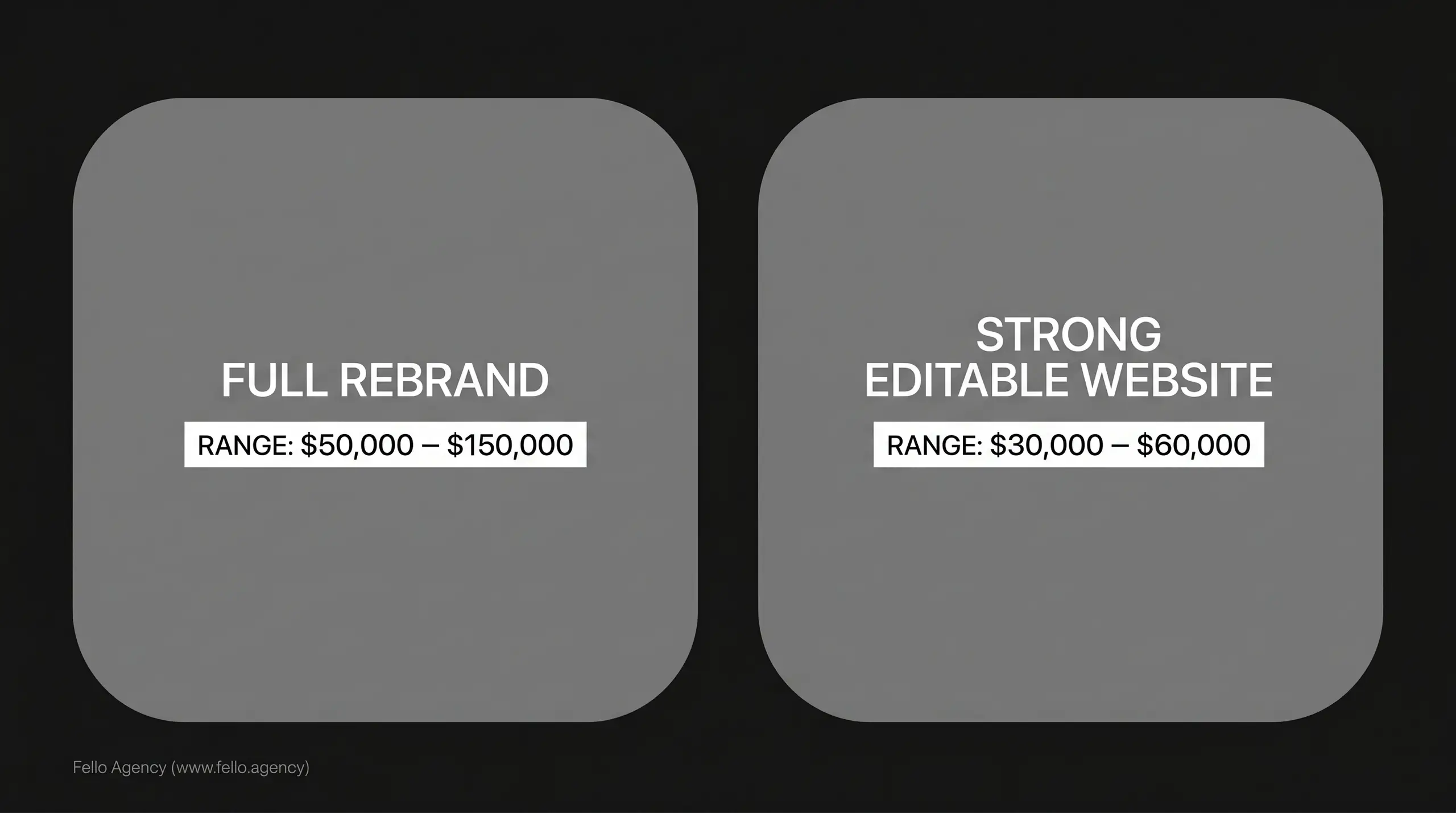
That does not mean setting money on fire. For a lot of Series A and Series B deep tech companies, a full rebrand usually lives somewhere in the $50,000 to $150,000 range. A strong editable website often lands around $30,000 to $60,000. Dual-use companies can need more because they’re building for two very different audiences at once.
If you need internal buy-in for that kind of spend, frame it properly. Talk about communication strategy. Talk about lead generation. Talk about risk mitigation. Those are real business conversations.
Too Much Polish Creates a Different Problem
There’s a line here, and good deep tech marketers need to know where it is.
Technical buyers get suspicious when the brand feels overcooked. Too much polish can smell like vaporware. Overselling and under-delivering will kill trust faster than almost anything else.
So I like balance.
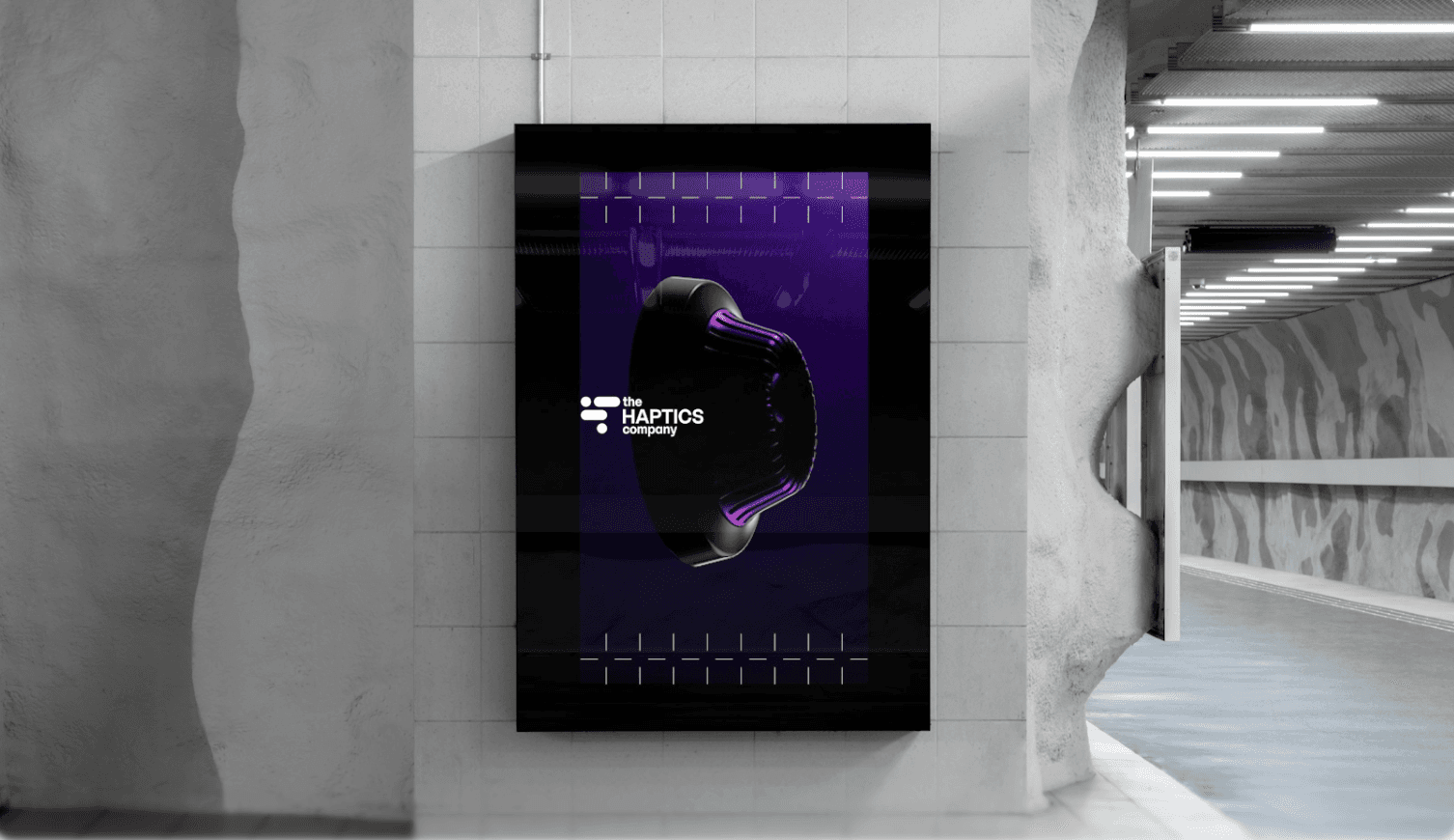
If a company is pre-product, I’m usually pairing strong renders with real lab footage, real team presence, and some kind of grounded evidence. In defense or hardware, I often think too-perfect CGI feels fake. Sometimes rawer field footage, constrained visuals, or a more declassified aesthetic builds more trust because it shows you’re actually in the dirt doing the work.
I also do not like AI generated slop for core brand assets. Use AI for research. Use it to speed up thinking. Fine. But if you have enough money to hire a CMO, you should not be using AI generation for your whole website or your full visual identity. Your stuff is all just going to look the same as everyone else. Buyers feel that immediately.
You still need a driver behind the car.
Measure What Actually Matters
A lot of fractional CMOs love dashboard metrics. MQLs. SQLs. CAC. Pipeline velocity.
Those numbers can matter. I’m not anti-metric.
I am anti-metric worship when the metrics don’t match how deep tech deals actually get done.
Many of these deals come through relationships, conferences, referrals, channel partners, procurement groups, integrators, prime contractors, and remembered conversations. A buyer may watch your trade show reel, read a case study, check your leadership team on LinkedIn, download a brochure, and then disappear for three months before coming back through a partner.
That’s normal.
So yes, track what’s happening in analytics. I’m shocked by how many teams still don’t properly check Hotjar or Google Analytics. But also pay attention to things that don’t fit neatly into a SaaS dashboard. Brand recall matters. Trust perception matters. Share of voice at industry events matters. How often sales uses the new assets matters. How fast buyers move past the “are these guys real?” stage matters.
Human selling still matters too. In deep tech, your client is your Padawan. Guide them. Teach them. Stay close.
That’s why I like content systems built for long cycles. Technical brochures. White papers that help buyers write their future RFPs. Monthly video updates. Lab tours. Behind-the-scenes material. Thoughtful case studies. Video assets that sales can actually use in the field.
And yes, LinkedIn matters. It’s tied to roughly 80% of B2B marketing leads. I still treat it mostly as a verification tool and a top-of-funnel driver, not some magic closing machine. The best LinkedIn content in deep tech usually comes from real people, especially founders and executives, because personal profiles carry more weight and passion will actually beat hardcore planning.
What I Would Ask Before I Signed Anything
I’d keep the questions simple.
Ask them who they’ve sold to. Ask what those buyers cared about. Ask what they will ship in the first 30 days. Ask who is actually writing, designing, building, editing, and publishing the work. Ask how they measure success in a six-to-12-month cycle. Ask how they use AI. Ask who needs to approve the work and how they’ll keep the process from getting bogged down in committee.
If they can’t answer clearly, keep going.
You should also ask what network they bring. Commercialization is not only a messaging problem. It’s a people problem. One reason I built Fello Foundry was to create a real network of founders, engineers, investors, and operators across Canada and the U.S. I’ve had clients value the intros to lawyers, financiers, bankers, and partners just as much as the creative work itself.
That matters more than people admit.
And learn to spot bullshit a mile away. If the person across the table talks in generic buzzwords, hides behind long audits, and cannot connect your product to a real buyer and a real sales path, move on.
My Final Take
A fractional CMO can absolutely help a tech company.
They can bring direction. They can bring alignment. They can help a founder stop talking like a researcher and start talking like a CEO. They can help the company commercialize.
But only when the setup is right.
If you already have a functioning team and you need a captain, a strong fractional CMO can be a very smart hire.
If you have no execution engine, no case studies, no real content system, no editable website, and no one who can ship, then you probably need a marketing machine first. Or you need a leader paired with builders from day one.
That’s how I think about it. No fluff. Just sharp, strategic creative tied to commercialization.
Move in weeks. Build trust fast. Speak business. Give the market proof. Stay honest. Get obsessed with going to market.
Take this stuff seriously because your competitors will, and they will win the deal.
The best technology in the world still needs translation. It still needs trust. It still needs a story strong enough to get bought.
Create a business, not a research problem.
Frequently Asked Questions
How can a fractional marketing leader accelerate a 12-month deep tech sales cycle?
By winning the invisible research phase. Roughly 80% of B2B sales cycles take 4 to 12 months, and buyers make 57% of their decision before ever calling you. A strong commercial leader deploys high-trust content early, answering stakeholder questions upfront so sales isn’t wasting months educating the room.
What is the actual business risk of delaying a website overhaul until our next funding round?
You are bleeding momentum. About 80% of B2B buyers expect a consumer-grade experience, and BCG found poor websites erode marketing effectiveness by 20%. Your site must authenticate your science immediately. Waiting means losing high-value deals because you still look like a lab project.
How do we market to a procurement team when our technology is built for engineers?
By speaking business, not just specs. Complex tech deals average 6 to 10 stakeholders, including CFOs who do not care about your algorithm. A fractional CMO translates engineering into an ROI narrative. You must provide financial and risk-mitigation content to get the entire committee on board.
Should our fractional CMO run the company’s LinkedIn strategy, or should I?
You should be the face, but they build the engine. LinkedIn drives about 80% of B2B leads, and the best content comes from real founders. A good marketing leader builds your framework, edits your raw thoughts, and creates a fast cadence. Passion beats hardcore corporate planning every time.
How do we justify the cost of content marketing when investors want immediate pilot conversions?
Content isn’t a distraction. It is a closer. Nearly 47% of B2B buyers review multiple pieces of content before contacting sales. Furthermore, content marketing costs roughly 62% less than traditional methods while generating triple the leads. High-trust assets compound over time, directly accelerating those critical pilot conversions.
Your Creative Partner for Innovation That Matters
From advanced tech to transformative healthcare, Fello helps visionary teams shape perception, launch products, and lead industries.


Let’s keep in touch.
Discover more about high-performance web design. Follow us on Linkedin and Instagram.