

I'm going to say this cleanly.
In 2026, "B2C tech marketing" isn't a niche topic. It's the default. Even if you sell enterprise. Even if you sell hardware. Even if your product lives in a lab.
Because you're not selling to "a business." You're selling to humans inside that business. Humans with consumer habits. Humans who judge you fast. Humans who can spot bullshit a mile away.
I'm Zach Ronski. I'm a Brand Strategist at **Fello Agency** in Toronto's Art & Design District. We build brands and go-to-market systems for deep tech companies in AI, robotics, quantum, medtech, advanced manufacturing, XR, defense tech. We've done it for years, across 50+ projects, and we've grown Fello organically without VC. Small team. No bloated account teams. No fluff. Just sharp, strategic creative.
So if you're a Series A - C founder trying to turn a breakthrough into real revenue, this guide is for you.
The B2B vs B2C line is gone. Your buyer killed it.
A lot of founders still talk like this: "We're B2B. We don't need consumer marketing."
You do.
I learned this early. "Just because you're selling to B2B doesn't mean you're not selling to B2C consumer habits." That's the whole point. Your buyer scrolls Instagram after work. They read Reddit on weekends. They watch product videos like they're shopping for a phone. Then they show up Monday morning and pretend it's all rational.
It isn't.
Your "buyer" is usually 11 people.
If you're selling anything meaningful in deep tech, you're rarely selling to one decision-maker. You're selling to a committee. And committees move slow when they don't trust you.
6sense pegs the average buying committee at about 11 stakeholders. That's not a small detail. That's the game.
Now stack on timing. 6sense also found the average buying cycle is about 11.3 months in 2024, and it tightened to 10.1 months by 2025.
You feel that pressure, right? Investors want speed. The market wants proof. You still have to ship the heavy stuff.
So how do you compress time?
You build trust before the sales call.
Your buyer decides before you meet them.
Here's the part founders hate hearing. Buyers do roughly 70% of the process before they talk to a seller. They usually show up with their requirements already set. 6sense says 85% have done that.
And it gets worse (or better, if you're prepared). 6sense reports 81% of buyers already have a preferred vendor by first contact.
So if your brand and content aren't doing heavy lifting early, you're trying to win a race after everyone picked their favorite.
Brand starts with a feeling. Not a logo.

People ask me what "brand" means in simple terms.
It's "a feeling that somebody thinks about when they see your brand."
That feeling decides everything that happens next. The meeting. The reply. The intro. The internal champion. The budget approval. The deal size.
And in deep tech, the feelings you need are pretty consistent. Trust is the big one. Interest and curiosity come right after. Then recall. Being remembered matters more than most founders want to admit.
Because if you're mission-driven and building a crazy idea, and you don't have a brand, you're going to be forgotten.
The lab is different than the boardroom.
In the lab, technical truth wins. In the boardroom, perception drives risk.
A buyer's job isn't to pick the "coolest tech." Their job is to not get fired for buying the wrong thing.
That's why I frame design as risk mitigation. Design is a commercial gatekeeper. It helps the stakeholder inside your customer's org feel safe saying, "Yeah, let's bring these people in."
If your site, deck, and messaging feel sloppy, you create friction. You turn your company into a risk. You slow everything down.
Research is the real growth hack. It's boring. Do it anyway.
Most founders want to skip research because it feels like a delay.
Then they waste a quarter shipping marketing that doesn't land. Then they blame "market readiness." Then they blame sales. Then they blame the economy.
Look, you need to know your market. Period.
Our research method at Fello is sequential for a reason. We start by interviewing customers, then we talk to the sales team, then marketing, then leadership. We do it this way because customers tell you what they actually care about, sales tells you what gets deals stuck, and leadership tells you where the company is going.
When those four groups align, you finally get a message that can scale.
No excuses in 2026.
I'm blunt about this: I don't want to hear it from any founder that they "don't know their ICP."
We have Perplexity. We have ChatGPT. We have Google deep research tools. You can map an industry in a weekend if you care enough. You can build industrial matrices. You can figure out who buys, who blocks, who influences, and who signs.
Founders who refuse to do this aren't "too busy." They're choosing to stay in the lab mindset.
Don't hyper-target yourself into a corner.
Here's the trap a lot of deep tech founders fall into. They hear "niche down" and they take it too far. They build a brand voice that only speaks to one narrow persona.
Then a surprise opportunity shows up and the brand can't stretch. Or the brand alienates a different champion inside the same deal.
I warn clients about this constantly. In B2B, you often can't predict exactly who will end up using your brand. You can have a technical user, a procurement owner, a VP sponsor, and a finance reviewer all touching your story.
One tactic we've used is segmentation by ICP on the site itself. I've pointed to our work with Acto as an example of this. We segmented partner pages by ideal customer type so the technical specs had room to breathe, while the emotional story stayed clear. That's how you stay specific without putting all your eggs in one basket.
Your website is your storefront. Buyers judge it like consumer tech.
I compare deep tech websites to Michelin star restaurants.
If you're selling a solution that costs hundreds of thousands, or millions, you can't serve it on a paper plate. You are a Michelin star restaurant. Every detail signals the level you're playing at.
And this isn't just my opinion. One study found 50% of consumers say their impression of a brand depends on the website design. Another stat from the same source shows 42% will abandon a site due to poor functionality.
You think enterprise buyers behave differently? They don't. They're just wearing nicer shoes.
Low-trust signals kill deals quietly.
When I land on a tech startup site, I can tell in seconds if it's going to be a rough go-to-market.
Shitty branding is one. Inconsistent typography and colors is another. Vague messaging is a huge one. You can't tell me you "redefine innovation" and expect a CFO to care.
And in the new dawn age of AI, there's a new trust killer: generic, generated sameness. If your site looks like five other sites, buyers disengage. If they see the same stock-style "friendly illustration" across the internet, they check out mentally. It signals low effort. Low effort signals risk.
Proof makes the experience feel real.
Buyers want to see case studies. They want to see customer stories. They want to see that they're not going to get screwed over.
This is where our work often snaps companies into the next gear. With Sphere, after we re-established brand guidelines and updated the site, they saw an immediate 50% traffic increase. In the broader refresh, their lead generation increased 3x.
With Nord Quantique, we helped transform dense technical messaging into a visual narrative through a flagship video, website redesign, and investor deck updates. Their website traffic surged 80% in six weeks, social shares doubled, and multiple industry publications featured the work.
That's what happens when your site stops looking like a research project and starts looking like a company that can win.
Messaging that grows fast: sell the benefit, then prove the tech.
Deep tech founders love features. Specs. Benchmarks. Architectures.
I get it. You built the thing. You're proud of it.
But buyers don't buy features. They buy outcomes. They buy time. They buy reduced risk. They buy a path to saving money or making money.
I simplify the "lifestyle hook" for technical executives down to one idea: time. If your solution saves time or creates time, that's a lifestyle upgrade. Even for a CTO. Even for a CFO.
You can sell the sizzle, not the steak, without lying. You lead with the outcome. Then you back it up with proof.
Sphere is a clean example of narrative shift.
With Sphere, we moved away from generic "innovation" language. We focused on collaboration. We used numbers. We showed what life looks like for the people actually using the product.
That shift sounds simple. It isn't. It takes research and discipline.
But when it clicks, it clicks hard. Traffic moves. Attention sticks. People remember you.
And when people remember you, sales has an easier job. You're kind of skipping a level.
Content is your trust engine. Build it before you "need" it.
Founders ask me for rapid growth tactics. They want a lever.
Here's a real lever: build a content system that compounds trust for months.
Remember those 6sense stats? Most of the buying journey happens before a call. So if your only story lives in a first meeting deck, you're late.
6sense also found that 95% of deals are won by a company on the buyer's Day-One shortlist. And about 80% go to the "pre-contact favorite."
That's brand. That's awareness. That's content doing its job.
Weekly content beats "big launch" culture.
I point to Rocket Lab as a prime example of how high-quality weekly content can attract engineering talent. It also builds credibility in the market over time.
You don't need to copy their exact style. You need the discipline. Consistent output. Clear narrative. Real proof. No filler.
In deep tech, content also keeps deals warm. Some sales cycles are long. Aerospace and defense can drag. We maintain momentum by distributing monthly video updates and lab tours that make prospects feel like internal stakeholders.
This isn't about going viral. It's about staying present until timing lines up.
Behind-the-scenes isn't fluff. It's commercial.
We've used simple "meet the team" content to build traction for a large B2B company that was struggling. Respectfully, they're under NDA. But the pattern was obvious. Once we started building their Instagram and posting those human moments, the following grew.
People want to know who's behind the tech. They want to see consistent energy and vibes. They want to feel like the company is real.
You're also selling to humans.
Distribution in 2026: show up where humans already scroll.
If you sell 3D printers, energy solutions, robotics, whatever, your buyers still live on consumer platforms. They keep the same habits.
So yes, you should be on Reddit, Instagram, Facebook, LinkedIn. The platforms aren't the strategy. Distribution is.
This is how you create recall. This is how you build familiarity. This is how you end up in the shortlist before the buyer ever fills out a form.
Public company? Your "consumer" is the stockholder.
For publicly traded deep tech companies, especially in quantum and photonics, I've learned to treat stockholders like a primary consumer audience. The B2C strategy here is the stockholders.
That changes the content you produce. It pushes you toward higher polish. Cleaner narratives. More consistency. You look at what leading tech brands put out and you execute at that level.
Look at OpenAI. Look at how ChatGPT stands out. The rebrand, the commercials, the videos, the whole presence. At scale, the best product never hides behind a spec sheet.
Talent is a marketing problem. Treat it like one.
You're not just competing for customers. You're competing for talent.
Everybody wants to work at Meta. Everybody wants to work at OpenAI. People want to work at Anduril. They want to work at Colossal Bioscience.
Why? Because those brands feel inevitable. They feel like momentum. They feel like a career story you can tell.
If you want to win talent as a smaller team, you need an underdog narrative. I literally tell companies: join the underdog team. You compete with speed and personalized service. You move faster. You build a culture people want to be part of.
Anduril's recruiting campaign was a great example of a brand taking a hard stance. It motivated a certain kind of person to apply. That's what strong marketing does. It repels and attracts on purpose.
If your brand is bland, you get bland applicants. Or none at all.
Speed is your advantage. Your brand system has to ship.
Deep tech marketing teams are bushwhacking. There isn't always a clean playbook. You're building category language while you're building product.
That's why speed matters. "Move 10 times faster than you think you do" isn't a motivational poster. It's survival advice.
Fast rebrands work when you focus on the right non-negotiables.
We've done rush rebrands where the core deliverables are clear: logo, visual guide, colors, typography, and communication strategy. That gives you the minimum system to go to market without looking inconsistent.
We also move fast by cutting the classic feedback loop. A lot of the time, we're not presenting ideas. We're telling clients what's going to happen. That's how you avoid six weeks of internal debates about shade-of-blue decisions.
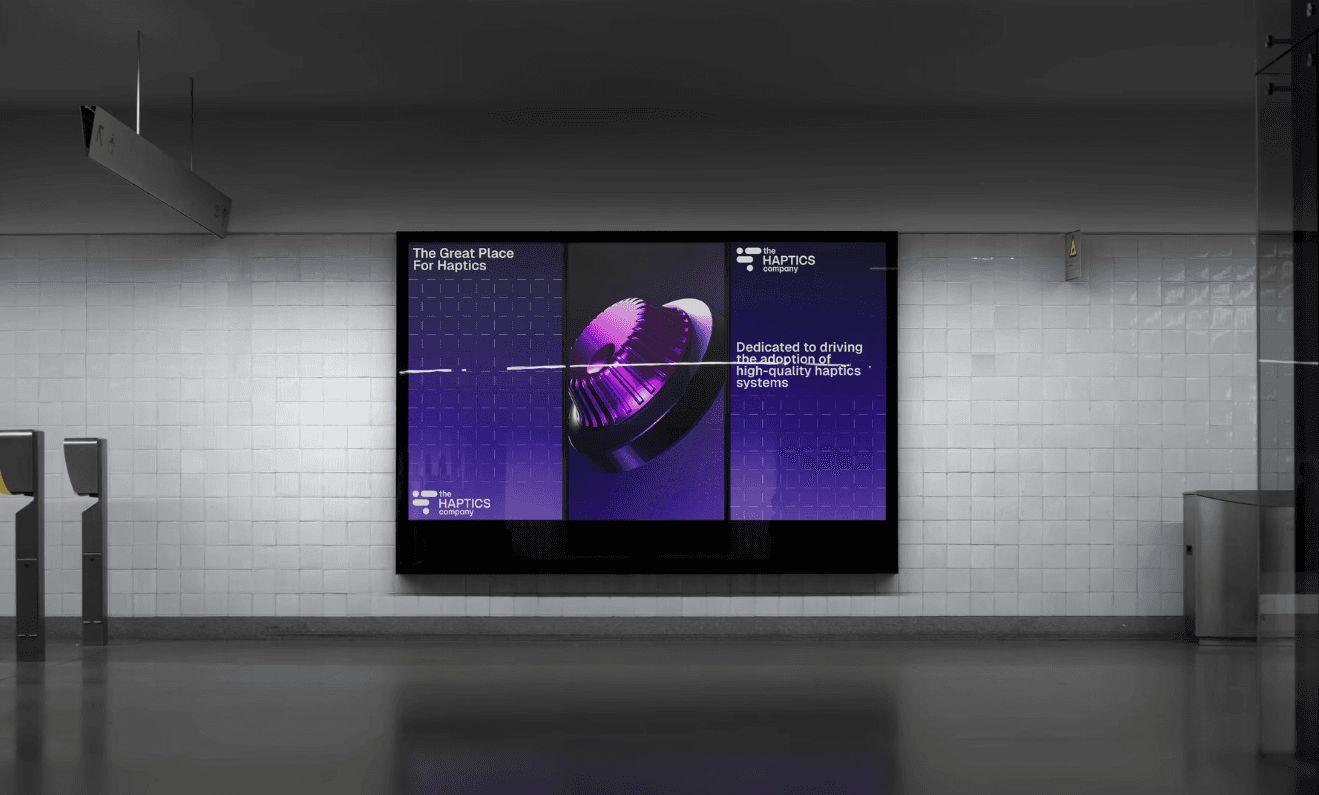
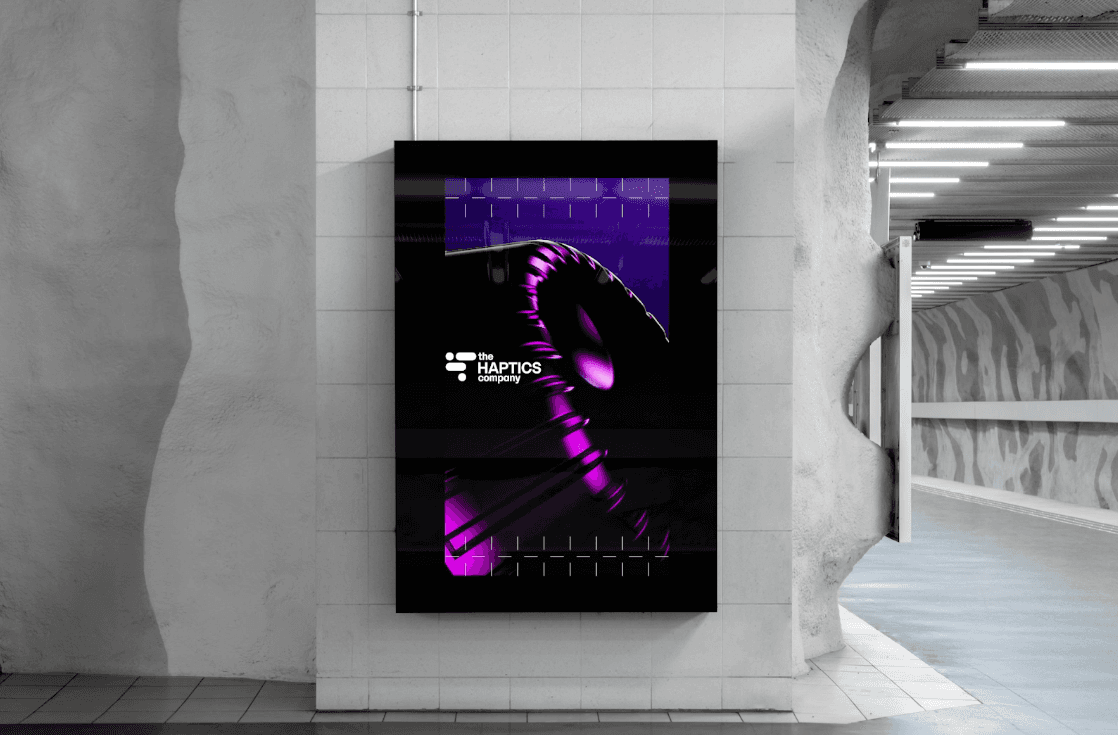
I've seen cases where speed directly affected opportunities. We worked with a haptics company where completing a rebrand in 1.5 months was critical for securing meetings with OEMs at CES. Timing matters. Windows close.
Your website should be editable. You need to publish fast.
One of my biggest pet peeves is when founders get trapped by hard-coded sites and slow updates. You need a system your team can actually run.
We build a lot in Framer because it lets startups move. We engineer SEO and blog structure into the build so teams can publish content quickly. We've built systems where a client can launch a new blog post in about three minutes once the content is ready.
That's not a "nice-to-have." That's how you keep up with the market.
ROI and budgets: talk to the CFO like a CFO.
If you walk into a board meeting and say, "We need a rebrand," you're going to get grilled.
If you walk in and say, "We need a communication strategy and marketing investment to increase inbound and shorten the sales cycle," you'll get a real conversation.
That's how I frame it. Initiatives. Outcomes. Pipeline.
A classic example is a website investment. You don't say, "We're building a website." You say, "We're building a lead generation tool." You tie it to inbound volume and deal quality.
What you actually need to look credible.
In my experience, deep tech startups can establish professional credibility with an initial branding investment in the $15,000 to $30,000 range.
When you're Series A - B and you're chasing bigger contracts, rebrands often land in the $50,000 to $150,000 range. There's also a point where going way over $100K can feel like over-branding to technical buyers. It can raise eyebrows.
Your goal is premium and precise. Not flashy.
And if you're expecting clients to spend their most money with you, why wouldn't you invest to look your best? The companies that take this seriously make oodles of money. That's what the market rewards.
Brand value is real, even when it's hard to measure.
People underrate brand value because it's not always a clean spreadsheet line. Then reality hits.
I've mentioned Hudson's Bay before. They lost everything, and still sold the brand for $10 million. That number gets people's attention for a reason. Brand is an asset.
I've also seen the opposite side. I've had clients talking to Amazon, and because their branding didn't look good, they struggled to get internal champions to recommend them. No champion, no deal. It doesn't matter how good the tech is if nobody wants to stick their neck out.
The 2026 rapid growth playbook (run this for 90 days)
If you want the practical version, here it is.
Start by getting clear on the feeling your brand needs to create. Trust comes first. Then curiosity. Then recall. If the first impression feels like "risky science experiment," you're pushing uphill all year.
Next, do the research properly. Talk to customers, then sales, then marketing, then leadership. Get the real language. Get the real objections. Use modern tools to fill in the gaps. There are no excuses now.
Then tighten your message until a non-technical exec can repeat it in one sentence. After that, put the whole shebang into your website. Make it Michelin-star level. Make it fast. Make it clear. Add proof. Add case studies. Add visuals that feel real, not generic AI filler.
Now build a content rhythm and commit to it. Weekly is ideal. Monthly minimum. Use video when you can. Use behind-the-scenes. Use "meet the team" content. Keep showing up where your buyers already scroll, because that's where familiarity is built.
Finally, measure what matters. Inbound quality. Demo requests. Deal size. Sales velocity. Talent pull. You'll know it's working when your whole company aligns on the story and sales starts hearing, "Yeah, I've seen you guys before."
That's when the experience becomes legitimate and absolutely won.
Final word: be remembered.
I'm in the room with life-changing companies all the time. The tech is real. The mission is real. The ambition is real.
But the market doesn't reward "real." The market rewards what it understands and trusts.
So take B2C tech marketing seriously in 2026. Build the feeling. Build the system. Keep your brand consistent. Stay absolutely obsessed with going to market.
Because if you don't have a brand, then you're going to be forgotten.
Frequently Asked Questions
Why isn't our superior technology winning deals automatically?
Because in the boardroom, perception drives risk. While technical truth wins in the lab, commercial buyers prioritize safety. They don't buy specs. They buy the assurance they won't get fired. If your brand looks like a 'science project,' you create friction. Design is the commercial gatekeeper that proves you are a scalable enterprise, not a risky experiment.
How can marketing actually shorten our 11-month sales cycle?
By building trust before you ever meet the buyer. Data shows that 81% of B2B buyers already have a preferred vendor by the time of first contact. If your content isn't doing the heavy lifting early to make you that pre-contact favorite, you are trying to win a race that is effectively already over.
Does 'B2C-style' design really matter for technical procurement teams?
Yes, because your buyer is a human before they are a CTO. Research indicates 50% of consumers form their opinion of a brand based on website design. If your digital presence feels sloppy or 'low effort,' that skepticism bleeds into their perception of your engineering. Low-trust signals kill deals quietly.
We are still in R&D. Is it too early to invest in brand?
No. Waiting is a strategic error. According to 6sense, 95% of deals are won by a company on the buyer's 'Day-One shortlist.' You need to build awareness and the 'underdog narrative' now so that when you are ready to ship, you are already on that list. Brand also attracts the talent you need to finish the R&D.
How do I justify marketing spend to a board focused on runway?
Stop asking for a 'rebrand' and start pitching 'commercial velocity.' Frame the investment as a mechanism to compress the average 11.3 month buying cycle. A targeted $15k-$30k investment in professional credibility isn't fluff. It's a lead generation tool that prevents you from burning cash on stalled deals.
Your Creative Partner for Innovation That Matters
From advanced tech to transformative healthcare, Fello helps visionary teams shape perception, launch products, and lead industries.
Let’s keep in touch.
Discover more about high-performance web design. Follow us on Linkedin and Instagram.