

I've spent the last decade in rooms with life-changing companies. AI. Robotics. Quantum. Advanced manufacturing. Medtech. Defense tech. The heavy stuff.
The teams are smart. The IP is real. The stakes are high.
And still, I keep seeing the same problem.
Companies don't lose because the product is weak. They lose because the buyer can't trust them fast enough.
That's what this guide is about. Commercial trust.
I'm Zach Ronski. I'm a Brand Strategist and co-founder at Fello Agency, a B2B tech branding and marketing shop in Toronto's Art & Design District. We're intentionally lean (about 10 - 11 core people) because speed matters. We've done 50+ projects, hold a 4.9/5 rating, and we've been recognized by Clutch as a top creative, branding, and web design agency in Canada.
We work with companies building real technology. The kind you can spot bullshit a mile away in.
So if you're a B2B CMO or VP of Marketing and you're trying to build pipeline in a long sales cycle, justify budget to a CFO, and keep sales aligned without losing your mind - this is for you.

The job of your brand is to reduce risk
In B2B, nobody is "buying software." Nobody is "buying a platform."
They're buying risk.
They're buying the risk of implementation. The risk of switching costs. The risk of security reviews. The risk of downtime. The risk of looking stupid in front of their boss.
And here's the part most teams miss: your buyer is not one person.
It's a chain of people. Champions. Skeptics. Legal. Finance. IT. Procurement. The person who signs. The person who has to live with it.
So when people ask me why branding matters in B2B tech, I don't talk about aesthetics. I talk about trust.
Because trust is what makes a champion say, "Yeah, bring them in." Trust is what gets a prospect to take the second meeting. Trust is what turns a maybe into a deal.
And this isn't some fluffy opinion. A 2025 survey found that 50% rank trust above cost, innovation, and speed when choosing vendors. That's wild. That's also exactly what I see.
If your category is noisy, trust wins. If budgets are tight, trust wins even harder. In the same data, 49% said trust matters more in down markets when deals are big.
So no, brand isn't optional. It's a commercial tool.
Your buyer forms an opinion before your SDR ever gets a reply
Most marketing teams still act like the buying journey starts when someone fills out a form.
That's not how it works anymore.
Edelman found that about 95% of business buyers aren't actively looking at any given time. That means your market is mostly "not shopping." They're busy. They're heads down. They're dealing with internal chaos.
But they're still forming opinions. Quietly.
And when they do enter a buying cycle, deals stall constantly. Edelman also reported that nearly 90% of buyers said their process stalled last year. So you don't just need demand. You need momentum. You need internal alignment. You need a narrative that survives committee decision-making.
If your brand doesn't create confidence early, you're asking sales to do a month of credibility work before they can even sell.
One more thing: trust gets won or lost before the call.
That same EC-PR study found 28% say the hardest trust hurdle happens right at the start, during independent research. Not during negotiation. Not during procurement. During the "let me check these guys out" phase.
That's your website. Your deck. Your LinkedIn. Your case studies. Your videos. Your reviews. Your third-party presence.
That's brand.
What I mean when I say "brand"
Here's my simplest definition, and I stand by it.
Brand is a feeling that somebody thinks about when they see your brand.
In B2B, the feelings you're chasing are not complicated.
Trust. Interest. Curiosity. Recall.
You want the buyer to feel like, "Okay. These people are legit. They get it. They'll deliver."
And yes, the logo matters. Colors matter. Typography matters. Video matters. Your pitch deck matters. Your UX matters. The way you talk about yourself matters.
All of it rolls up into one thing: the assumption someone makes about you before you speak.
If that assumption is weak, sales is in hell. If it's strong, you're kind of skipping a level.
Design is a commercial gatekeeper (and the lab is different than the boardroom)
I run into this all the time with technical founders. Especially younger ones.
They cling to the "research lab" look because it feels authentic. It feels like science. It feels honest.
But your customer isn't buying authenticity. They're buying certainty.
So when an engineer tells me, "Looking expensive undermines credibility," I give them the same answer every time.
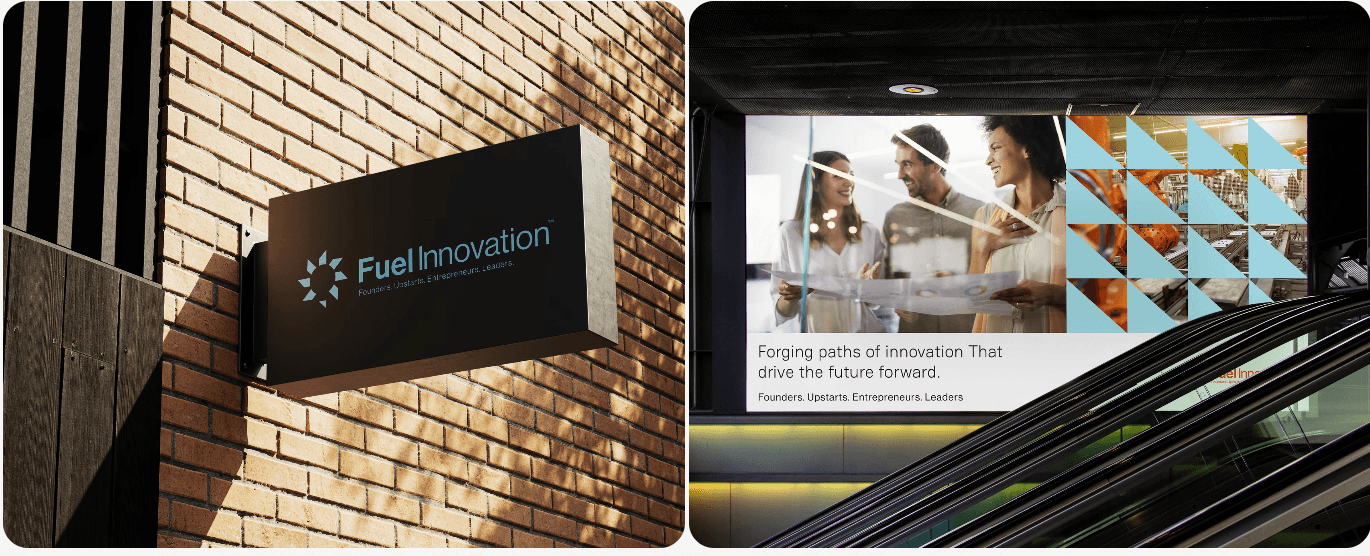
Design is a commercial gatekeeper because you're not building for you. You're building for your client. You're building for the stakeholders inside their org who are taking a risk to give you a chance.
If someone's about to spend real money bringing your solution into their lab, their factory, their stack, they need to feel safe. They need to feel like you're a grown-up company.
And if you want multi-million dollar contracts, you need to look like you belong in that room.
I use a blunt analogy for this because it lands fast.
You are a Michelin star restaurant.
If you're asking someone to spend millions, every detail of your digital presence needs to feel top tier. Not because it's pretty. Because it signals reliability.
Even basic stuff matters more than most teams think. An industry analysis showed that 52% of buyers check the About page before talking to sales, and 54% lose faith if company details are incomplete.
So when your About page reads like a resume from 2019, you're not being "minimal." You're creating doubt.
Start with research that hits revenue
At Fello, we don't start brand work with "what vibe do you want?"
We start with research. A deep one.
And it's not random. We do it in a sequence because it keeps us honest.
We talk to customers first. Then we talk to sales. Then marketing. Then leadership. We've learned over years how to ask the right question to the right people, in the right order.
Why do I care so much about this?
Because if you skip it, you end up with a brand that feels good internally and falls flat in the market. Your team will love it. Your buyers won't get it. Then your pipeline won't move.
When you do the research properly, you learn the real blockers. You learn what prospects don't understand. You learn what sales keeps repeating. You learn what the CFO is scared of. You learn what the security team always flags.
That becomes your communication strategy. And your communication strategy becomes your brand system.
This is where a lot of CMOs are bushwhacking. There's no clean playbook in emerging categories. You're paving the way in real time. Research keeps you from making it up.
Clarity beats features (and "sell the sizzle" still applies)
B2B tech teams love features. Engineers love features. Product teams love features.
Buyers love outcomes.
If your homepage reads like a spec sheet, you're dragging your sales cycle out for no reason.
I say this constantly: too much on the features and not the benefit.
You still need proof, obviously. The buyer will ask. Procurement will ask. Security will ask. The technical team will ask. But you earn the right to go deep after you've made the commercial value obvious.
A simple test I use is the one-sentence test.
Can your CEO repeat what you do in one sentence without stumbling? Can a salesperson repeat it without adding three disclaimers? Can a customer repeat it to their boss?
If the answer is no, your GTM is going to feel like you're dragging a trailer through mud.
And you're not just speaking to one persona, either. That's a common mistake. Some teams build messaging only for the technical user. Others only for the executive buyer. In reality, you need a story that survives the whole committee.
That means your messaging has to flex. It has to speak to strategic impact for leadership, ROI and risk for finance, and real details for technical evaluators.
We've done this kind of structure in real projects. With Acto, for example, segmenting partner pages by ICP helped balance specs with emotional trust. That's what good B2B brand work looks like. It respects the brain and still sells.

Lifestyle marketing in B2B: use it, don't abuse it
I'm a big believer that B2B can learn from B2C. Especially in deep tech and hardware.
That doesn't mean you turn your robotics company into a sneaker ad.
It means you understand that people remember stories, not datasheets. People remember energy. People remember consistent vibes.
Rocket Lab is a great example of how high-quality weekly content can attract engineering talent. It signals momentum. It signals competence. It makes people want to be part of it.
But there's a line.
B2C can target narrow because you usually know who's buying. In B2B, if you get too narrow on a "lifestyle niche," you're putting all your eggs in one basket. Half the time, you don't even know who will end up using your product, who will approve it, or who will champion it internally.
So yes, go lifestyle. Just don't lose the technical gravity that makes you credible.
The "skip a level" effect in long sales cycles
A lot of deep tech sales cycles run 6 to 12 months. That's normal. It's also expensive.
What does a high-trust brand actually do to that timeline?
It removes the legitimacy phase.
You know the phase I mean. The part where the buyer is silently thinking, "Are these people real? Can they deliver? Will they be around? Will I get blamed if this goes sideways?"
When your brand is tight, those questions calm down fast.
The website looks legitimate. The deck is clear. The message is consistent. The case studies show proof. The video makes the tech feel real. The team looks like they've done this before.
Now the meeting shifts. Instead of "prove you're legit," it becomes "show me how this fits."
That's what I mean when I say you're kind of skipping a level.
We've seen this play out with Sphere. XR is complicated. It's tough to explain, and it's even tougher to sell into serious orgs. When we came in and fine-tuned their brand and messaging, it helped them get trust with next level clients. We also saw a 50% traffic increase right after re-establishing brand guidelines and updating the site, and in the broader engagement Sphere's lead generation increased by 3x.
That's not magic. That's trust, packaged properly.
I've also had clients in conversations with huge companies like Amazon where weak branding made it hard to get champions internally. It's brutal. Your buyer might like you, but they won't stick their neck out if your brand makes you look early.
Your website is your best salesperson before sales shows up
I don't care how strong your SDR team is. If your website doesn't hold weight, you're losing winnable deals.
And it's not just "make it pretty." It's the whole system. Messaging, design, structure, proof, clarity, conversion, SEO, speed, and consistency with what sales is saying.
Nord Quantique is a good example of this type of work. Quantum computing is abstract. It can sound like science fiction if you don't translate it. We helped turn dense technical messaging into clearer visual narratives through a flagship video, a website redesign, and investor deck updates. Their website traffic surged 80% in six weeks, social shares doubled, and five major industry publications featured articles on their work.
Mosaic Manufacturing is another. They had cutting-edge 3D printing tech, but the value was buried under specs. We reframed the messaging, built cinematic video, updated landing pages and decks, and helped identify new segments to enter. Inbound leads jumped 25% and booked meetings rose 15% within two months.
You can call it branding. You can call it marketing. I call it building a trust machine that helps revenue move.
Budget approval: speak CFO, not "brand"
CMOs get squeezed because "branding" sounds like vibes. CFOs want numbers. They want risk management. They want a plan.
So I change the language.
I talk about communication strategy. I talk about marketing investment. I talk about lead generation systems. I talk about sales enablement that helps close bigger deals.
If you're pitching a $50,000 website, don't pitch "a new website."
Pitch what it does. How many inbound leads it will drive. How it will improve conversion. How it will support enterprise deals. How it will shorten the early trust phase.
And I'll say the quiet part out loud: good CFOs get it. Senior CFOs get it even faster.
Trust has bottom-line impact. PwC found 93% of executives agree building and maintaining trust improves the bottom line.
The danger is internal overconfidence. PwC also found a 60-point gap in perceived trust between executives and customers. That's a massive blind spot. Your leadership might feel trusted while the market feels uncertain.
This is why I don't love "we think our brand is fine." The market decides. Always.
As a baseline, I've said before that deep tech startups can often hit professional credibility with an initial branding investment in the $15,000 to $30,000 range. Not because there's a magic price tag, but because credibility costs money. You're buying trust.
Speed matters: move 10 times faster than you think you do
A lot of agencies move slow because they live in revision cycles.
We don't.
When speed is the priority, we cut the feedback loop and get prescriptive. We're not presenting five directions. We're telling you what's going to happen, because we understand tech and we know what the market needs.
We've turned around a rebrand for a haptics company in 1.5 months because CES was coming and they needed OEM meetings. Timing was everything.
In a rush rebrand, the non-negotiables are simple: a solid logo, a visual guide, colors, typography, and a communication strategy that sales can actually use. Once that's locked, everything else moves faster because the system is clear.
That speed is also why Fello stays lean. We were built organically, no VC, and we don't run bloated account teams. You work with the people doing the work. That's how you ship.
Brand also wins talent (and "underdog" works when it's honest)
Talent is part of this conversation, whether you like it or not.
Everybody wants to work at Meta. Everybody wants to work at OpenAI. People want to work at Anduril. They want to work at Colossal Bioscience.
A big part of brand is the passion of the team that shows up every day. People want to join momentum.
Anduril proved how powerful brand can be for recruiting with campaigns like "Don't work at Anduril if you're lazy." It polarized hard. It attracted the right kind of people.
If you're not a giant, you can still win. I often advise non-defense deep tech companies to use an underdog narrative, but it has to be built on honesty. You're not trying to trick anyone into joining. You're trying to pull in the people who want the mission and the pace.
Speed and personalized service are also real differentiators when you're competing against established giants. Big companies move slow. You don't have to.
What success looks like: alignment across the whole company
I know a brand engagement worked when the company speaks with one voice.
Sales, marketing, and leadership all aligned on a clear communication strategy. Not "aligned" in a slide deck. Aligned in real conversations with real prospects.
Then you start hearing it in the market. Sales says leads come in already understanding the value. Marketing sees stronger demo requests and better quality conversations. Leadership hears the company name coming up in rooms you weren't in.
That's when the experience becomes legitimate and absolutely won.
A trust audit you can run this week
If you want something practical, do this without overthinking it.
Start with your homepage. Read it like a stranger who is risk-averse and busy. Ask yourself if it feels like a company that can deliver. Then look at your About page and company details, because buyers do check. Make sure it's complete, current, and confident.
Next, pressure-test your one-sentence value prop. If your own team can't repeat it cleanly, the market definitely can't. Tighten it until it's obvious. Then let your proof do the talking.
After that, look for consistency. Your website, deck, LinkedIn, and product UI should feel like the same company. When they don't, trust drops. People don't always explain why. They just drift away.
Then go talk to sales. Not for opinions on design. For friction. Where do deals stall? What confuses buyers? What objections repeat? Brand work should remove those blockers.
Finally, decide what you're optimizing for in the next quarter. Pipeline quality, sales cycle length, category leadership, talent - pick the priority and build the system around it. If you try to do everything, you'll do nothing.
Final thought: trust is the product before the product
Your technology can be world-class and still get ignored.
That's not fair. It's also reality.
The market rewards trust. The market rewards clarity. The market rewards companies that look like they can execute.
So build the brand like it's part of the product. Because it is.
Be absolutely obsessed with going to market. Build the highway for your buyers. Instill trust early. Keep it consistent. Keep it real.
If you don't have a brand, you're going to be forgotten.
Frequently Asked Questions
Why is third-party validation essential for B2B brand guides?
B2B buyers now prioritize external validation over vendor-produced content. Research shows decision-makers value third-party sources 1.4x more than direct supplier interactions for 'value affirmation.' A modern brand guide must strategize these external signals (analyst reports, user reviews) to build a competitive moat.
How does internal brand alignment prevent stalled deals?
A shared brand guide acts as the single source of truth to prevent narrative fragmentation. Data indicates that over 40% of enterprise deals stall specifically due to internal misalignment among stakeholders. By standardizing the message between sales and marketing, you reduce friction and accelerate consensus.
What is the most trusted attribute in a B2B brand profile?
While innovation drives interest, operational certainty closes contracts. Industry analysis reveals that 90% of decision-makers rank reliability as the top factor for trusting a vendor. Your brand guide must prioritize consistent, risk-reducing technical communication over purely aesthetic messaging to satisfy skeptical buying committees.
How does a brand guide reduce Customer Acquisition Cost (CAC)?
Strong branding lowers CAC by increasing inbound efficiency and referral velocity. When a brand guide enforces consistent messaging across all channels, it creates a 'surround sound' effect that permeates the market faster. This distinctiveness shortens the 'legitimacy phase,' allowing paid spend to convert skeptical prospects with significantly less friction.
Why is a brand guide critical for Sales Enablement?
A brand guide bridges the gap between marketing promise and sales reality. It equips SDRs and AEs with pre-approved, high-trust language that mirrors what buyers research independently. This alignment ensures the buying committee hears a consistent value proposition, preventing the confusion that often kills pipeline momentum in late-stage negotiations.
Your Creative Partner for Innovation That Matters
From advanced tech to transformative healthcare, Fello helps visionary teams shape perception, launch products, and lead industries.


Let’s keep in touch.
Discover more about high-performance web design. Follow us on Linkedin and Instagram.