

If you’re reading this, something feels off.
Maybe your pipeline is fine, but you know your brand looks smaller than the deals you’re trying to win. Maybe conversion rates are stuck. Maybe sales is saying the leads “aren’t it.” Maybe your CEO wants to go upmarket and the current story can’t support it.
Whatever the trigger is, here’s the point I want you to keep in your head the whole time:
A B2B rebrand is a commercialization move. It should make it easier to win trust, tell the story fast, and close better-fit deals.
I’m Zach Ronski, Marketing Director at Fello Agency. We work with companies in AI, robotics, quantum, advanced manufacturing, pharma, MedTech, and defense tech. The heavy stuff. The “how do we even explain this?” stuff.
And the funny thing is, B2B SaaS teams deal with the same core problem.
You’re trying to convince someone to change how they operate. So they can save money or make money. That’s the job.
This guide is how I’d run a rebrand with you, step by step, with the goal of building a brand that actually performs.
Why B2B SaaS rebrands get messy fast
You’re not selling to one person. You already know that, but it matters more than most teams admit.
Forrester reports that 94% of B2B transactions involve buying committees of three or more people, and 38% involve teams of 10+.
So when someone says “the brand doesn’t resonate,” the real translation is: the brand doesn’t work across the committee.
The CFO wants to see risk reduction and ROI. The operator wants to see the workflow and time saved. The technical lead wants to see how it works and what breaks. The exec sponsor wants to look smart for picking you.
If your rebrand only speaks to one of those people, you’ll feel it in the funnel. You’ll get curiosity clicks, then stalled deals.
Step 1: Decide what the rebrand needs to change (and put it in writing)
I start every rebrand the same way: research, clear objectives, and realistic expectations around budget and timeline. You can’t skip that. It’s the foundation.
If the objective is “look more modern,” you’re setting yourself up for a project that turns into taste debates. It’ll drag. It’ll annoy everyone. And it won’t move the numbers you’re judged on.
In SaaS, your objectives should connect to revenue. That can mean higher demo conversion on high-intent pages. Better MQL-to-SQL conversion because the positioning filters out junk. Shorter sales cycles because buyers “get it” faster. More enterprise credibility so your team can stop discounting to win.
Write the objectives down. Then write what’s in scope. Then write what’s not.
Because “rebrand” can mean anything. Sometimes it’s positioning and messaging. Sometimes it’s a full identity system. Sometimes it’s the website, sales deck, templates, and launch content. If you don’t define it early, scope creep will define it for you.
And you’ll pay for it later.
Step 2: Pull the real decision-makers in from day one
This is the step most teams try to cheat.
They involve the C-suite at the end, because everyone’s busy, and it feels easier to “just bring them the final.” Then the CEO sees it and says, “This isn’t us.” Now you’re redoing work you already paid for.
I’ve lived this. It causes delays. It burns trust. It kills momentum.
So I’m blunt about it: the highest people in the decision-making tree need to be involved from day one.
The way I keep alignment tight is simple. I invite them to key meetings. I send updates so they’re never surprised. And when it’s time to review brand directions, I treat it like a discussion, not a presentation.
Presentations put leaders in judge mode. Discussions put them in builder mode. Builders commit. Judges nitpick.
You want commitment.

Step 3: Do discovery that actually helps you make decisions
A solid rebrand strategy depends on synthesizing a ton of different research. Not vibes. Not “we feel like…” research.
For a B2B SaaS team, discovery should come from four places: your internal team, your customers, your market, and your data.
Internally, you want the truth from sales, CS, product, and leadership. Sales will tell you what prospects get stuck on. CS will tell you what customers actually value after the purchase. Product will tell you what’s real versus what’s aspirational. Leadership will tell you where the company is going and what the brand needs to unlock.
From customers, you want language. Real words. The phrases they use when they explain you to their boss. The outcomes they care about. The anxieties they have before buying.
From the market, you need to know what your category looks like right now. What everyone claims. What everyone’s visual style is. Where the whitespace is. Where you can actually stand out without looking like a clown.
And from the data, you need a baseline.
This is where I get a little fired up, because it’s way more common than it should be: teams will complain the website isn’t converting, but they’re not even checking Google Analytics or Hotjar. They don’t know what pages drive pipeline. They don’t know where people drop. They don’t know what messages keep people scrolling.
If you don’t baseline the funnel before the rebrand, you’ll never know what improved after.
Step 4: Build positioning for the committee, not the champion
Most SaaS messaging is built for one person: the champion who already wants to buy.
That’s great for activation. It’s terrible for the enterprise.
You need positioning that works across the buying group, because the buying group controls the deal.
6sense research shows that only about 52% of B2B buyers are the ultimate decision-maker. The rest of the influence gets split across procurement, champions, financial approvers, and internal influencers.
So your rebrand has to answer multiple questions at once:
What do you do? Who is it for? Why should anyone believe you? What changes when you’re in place? What’s the risk of doing nothing?
This is also where I push teams to stop leading with features.
Technical founders love features. Technical product marketers love features. The market does not love features.
One of the biggest mistakes I see is too much focus on the steak. The specs. The “look how smart we are.” At the end of the day, you sell the sizzle. The experience. The outcome. The benefit that someone can repeat in one sentence.
Then you back it up with proof points.
Step 5: Use a mood board to align visuals before design starts
This is one of the most underrated steps in a rebrand.
Before you design anything, you need visual alignment. If you skip this, you end up debating personal taste for weeks. You’ll hear things like “make it pop” and “it feels too cold” and nobody can explain what they mean.
A mood board gives the room something real to react to.
I describe it as a messy area. It’s a bunch of visual references that help you see where the brand could go. It might include competitors. It might include inspiration from totally different industries. It might include typography, color palettes, photography style, motion references, layout patterns.
Then you talk it out. A lot.
Narrowing it down takes discussion between your internal team and the stakeholders who matter. And the best questions aren’t “do you like it?”
The questions that get real answers are external. What do you think your competitor thinks when they see this? What do you think your customer base thinks when they see this? What does this communicate about trust?
Rebranding has to stay focused around the customer. If the mood board is built to impress internal people, you’ll build a brand that the market doesn’t care about.
Step 6: Build an identity system that looks as credible as your price point
In B2B, especially when you’re going after bigger accounts, the visual bar is not forgiving.
Your buyer might love your product. Procurement might love your pricing. The security team might love your controls. Then someone clicks your website and it looks like a side project. You just introduced doubt into a deal that was already hard.
So when I say “visual identity,” I don’t mean a logo.
I mean the whole system: typography, color, layout rules, icon style, illustration style, photography direction, and how it all shows up across web, decks, templates, and product touchpoints.
Quality matters because you’re dealing with multiple decision-makers. A rebrand has to hold up in a boardroom and on a landing page. It has to feel aligned across the organization. It can’t look great on the homepage and sloppy in the sales deck. That mismatch is a trust killer.
And if you’re in SaaS, don’t ignore the product UI. You don’t need a full UI redesign for every rebrand, but you do need basic visual alignment. If the website screams “premium” and the app looks like 2018, buyers notice.

Step 7: Translate the brand into pipeline assets right away
This is where SaaS teams win, because you’re built to ship and test. Use that.
Your brand needs to show up where revenue happens. That usually means your website, your highest-intent landing pages, your demo request flow, your sales deck, your outbound templates, your case studies, your product marketing pages, and any event or webinar assets your team uses to drive meetings.
There’s also a reality most teams forget: buyers want relevance.
A Demand Gen Report survey found 66% say it’s very important that a vendor’s website speaks directly to their industry. The same survey found 75% say relevant content tailored to their company is crucial.
That means your rebrand can’t just be “new look.” It needs a content and page strategy that helps different industries and personas see themselves in your story.
It also means your sales team needs better ammo.
That same Demand Gen Report found 92% of buyers say it’s increasingly important that sales teams have personalized insights about their needs. Your rebrand should make that easier. Better narrative. Clearer proof. Cleaner decks. Stronger case study structure.
At Fello, we build across brand, web, content, sales enablement, and growth for a reason. In B2B tech, none of these things live alone. They stack.
And when they stack, you feel it.
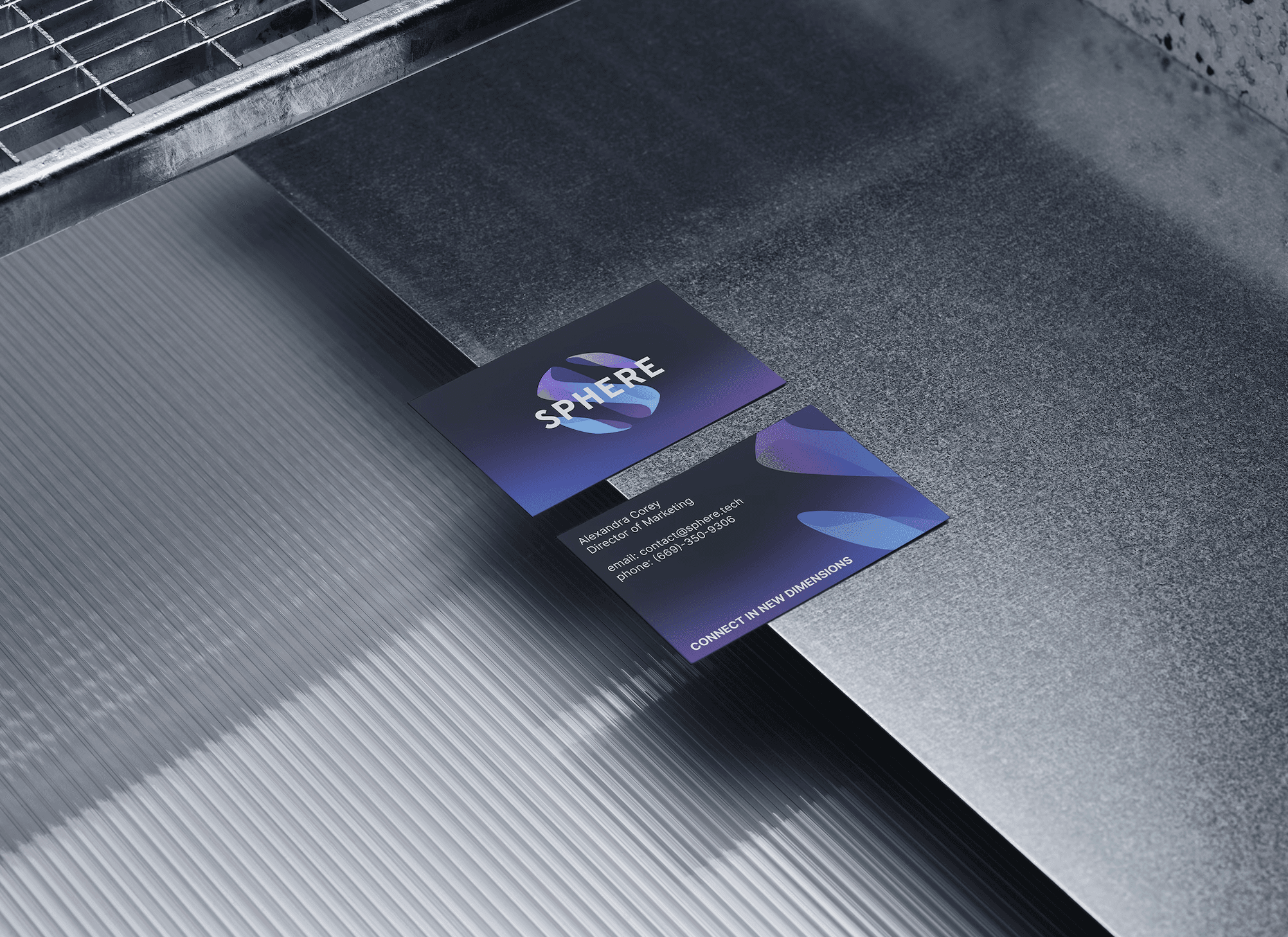
We’ve seen it with Sphere Tech, where a brand identity refresh and website redesign led to lead generation increasing by 3x. We’ve seen it with Nord Quantique, where transforming dense technical messaging through a flagship video and website redesign drove an 80% traffic surge in six weeks, doubled social shares, and earned features in five major industry publications. We’ve seen it with Mosaic Manufacturing, where reframing messaging with cinematic videos and landing pages helped increase inbound leads by 25% and booked meetings by 15% within two months.
Different industries. Same pattern. Clarity and credibility create momentum.
Step 8: Ask customers what they think before you launch
Want a simple way to sanity-check a rebrand?
Show it to customers.
I’m a big believer in this. A great way to test brand resonance before launch is to actively ask existing customers what they think about the new look and identity. Our clients do it. We’ve done it ourselves at Fello.
Keep it tight. You’re not running a year-long research project. You’re looking for signal.
Show them the new direction with context. Ask what it communicates. Ask what it makes them feel about your company. Ask if it matches the experience they’ve had with your product and team.
When you hear excitement from customers, you capitalize on it. You move quickly and you build the launch around that energy.
Step 9: Launch fast, but don’t break the funnel
Rebrands lose power when they drag.
People get tired. Decisions slow down. Stakeholders disappear. Then you end up launching a half-finished brand. The website is new, but the deck is old. The LinkedIn banner changed, but the product one-pagers didn’t. Sales keeps using outdated slides because the new ones aren’t ready.
This is where milestones matter.
One of the simplest ways to stop a rebrand from dragging forever is to set clear dates and milestones, then stick to them. Brand work expands to fill whatever time you give it. If you don’t force decisions, you’ll live in revision land.
I also push teams to roll out internally first. Get sales, CS, product, and leadership on the same page. Make sure people know what to say. Make sure they understand the new story. Then go external.
And keep an eye on the basics during launch week. Watch conversion rates. Watch demo volume. Watch lead quality. If something dips, you want to know fast.
Step 10: Measure impact like you actually want the truth
Here’s the frustrating part of modern marketing: everyone has dashboards, but a lot of teams still can’t explain what’s working.
A Funnel & Ravn survey found 86% of in-house marketers couldn’t determine the impact of each marketing channel on overall performance. The same study said 72% have “mountains of data” and still struggle to pull out actionable insights.
So post-rebrand, keep it simple. Track the stuff that matters.
Watch your high-intent page conversion rates. Watch your MQL-to-SQL conversion rate. Watch sales cycle length if you can get it. Watch win rate in your target segment. Watch branded search and direct traffic over time.
And please, don’t get lost in KPI theatre. Measurement is important. Chasing random KPIs without a strategy is a waste of time.
One more thing: the brand will decay if nobody owns it. Templates will drift. New slides will get made in a rush. Product screenshots will look off. Suddenly the brand “doesn’t feel consistent” again.
Assign an owner. Keep guidelines usable. Enforce the basics. That’s how you protect the investment.
Why brand matters even when you’re performance-obsessed
A lot of SaaS teams want short-term wins. I get it. Investors want leads. Sales wants meetings. You want to prove ROI.
I use a simple analogy for this: building a highway.
You need the collectors that get people onto the highway. Those are your direct-response campaigns and fast sales wins. You also need the express lanes that keep people moving smoothly over and over. That’s your brand. It makes everything else work better over time.
Brand also matters because buyers aren’t robots.
FleishmanHillard put it well: B2B tech buyers still buy with “hearts and minds”. Trust, confidence, and perceived risk all show up in a buying decision, even when the buyer is “data-driven.”
A good rebrand reduces perceived risk. It makes the decision feel safer.
That’s not fluffy. That’s revenue.
The one-page rebrand plan (copy/paste to a PDF)
If you want to turn this into an internal PDF, copy this section into a doc and keep it as your rebrand spine.
Start by writing down the business objectives in plain language, tied to revenue. Decide what the rebrand includes and what it doesn’t. Lock a timeline that forces decisions instead of letting the project drift.
Next, bring the real decision-makers in immediately. Invite them into the process early, keep them updated, and run reviews as working discussions so you don’t get late-stage surprises.
Then run discovery that pulls from internal stakeholders, customer language, competitive research, and your funnel data. Baseline performance before you change anything so you can measure impact after.
From that discovery, build positioning that speaks to the buying committee. Make the value clear enough that a non-technical exec can repeat it. Support it with proof points that are real and honest.
Before design starts, create a mood board. Use it to align the room on visual direction. Ask questions focused on customer perception and competitive perception to keep the discussion grounded.
Build the identity as a full system, not a logo. Make it consistent across web, decks, templates, and any critical product touchpoints. Aim for the quality level your price point demands.
Translate the brand into revenue assets immediately. Update the website and high-intent pages, then update sales tools so the story is consistent everywhere a deal can be influenced.
Before you launch, show the new direction to a small set of customers and listen for what it communicates. If the reactions are strong, move quickly and build the launch around that momentum.
Launch internally first, then externally. Watch the funnel closely during launch week and be ready to adjust fast if conversion rates dip.
Finally, measure impact using a few core metrics that connect to pipeline. Assign a brand owner and keep governance simple so the brand doesn’t decay three months later.
Final note
I work with companies that are doing things most people can’t explain. Quantum, robotics, advanced manufacturing. If there’s one lesson that shows up every time, it’s this: clarity wins.
If you keep your rebrand tied to commercialization, keep the C-suite involved early, focus on customer perception, and ship with speed, you’ll build a brand that doesn’t just look good.
You’ll build a brand that sells.
Frequently Asked Questions
How long does a typical B2B SaaS rebrand take?
A comprehensive B2B rebrand typically requires 3 to 6 months from discovery to launch. Timelines vary based on stakeholder alignment and asset volume, but rushing the process often results in disjointed messaging that fails to convert.
What is the difference between a brand refresh and a full rebrand?
A brand refresh updates visual elements like logos, colors, and typography without changing the core positioning. A full rebrand fundamentally shifts the company’s narrative, value proposition, and market positioning to target new segments or correct revenue stagnation.
How does brand awareness impact B2B vendor selection?
Brand visibility is often decisive before the sales cycle begins. Research indicates that 95% of B2B deals involve a vendor that was already on the buyer’s shortlist, proving that ‘Day One’ mental availability drives pipeline.
Does being the first vendor contacted increase win rates?
Yes, speed and top-of-mind awareness are critical competitive advantages. Data shows that roughly 80% of deals are won by the vendor the buying group contacts first, making brand recall a primary revenue lever.
How do deal sizes influence B2B buying committee structures?
As deal value increases, so does stakeholder complexity. For purchases over $5,000, 84% of B2B buyers report involving a group of three or more people, requiring messaging that appeals to diverse roles simultaneously.
How do we protect SEO rankings during a website rebrand?
Implementation of 301 redirects is the most critical defense for preserving SEO equity. Map every old URL to its most relevant new counterpart before launch. Failure to execute a precise redirect map can cause organic traffic to drop by 40% or more immediately post-launch.
Should we change our company name during a rebrand?
Only rename if your current name legally restricts growth, carries negative reputation, or misrepresents your product category. A name change adds significant complexity, requiring legal trademarking, domain migration, and extensive customer education campaigns to transfer brand equity.
How do we budget for a B2B SaaS rebrand?
Budgets typically range from 5% to 15% of the annual marketing budget, depending on agency tier and scope. Costs must cover research, strategy, visual identity design, and the often-overlooked expense of updating all assets, from sales decks to product UI.
How should we handle rebranding after an acquisition?
The ‘Endorsed Brand’ strategy (e.g., ‘Product by Company’) often works best during transitions to retain existing customer trust. Over time, migrate the acquired product into the master brand architecture once the unified value proposition is clear to the market.
What are the legal requirements for a B2B rebrand?
Before falling in love with a new name or logo, conduct a full trademark clearance search in all target jurisdictions. Securing IP rights early prevents costly cease-and-desist orders and ensures you own the digital footprint (domains and social handles) for the new identity.
Your Creative Partner for Innovation That Matters
From advanced tech to transformative healthcare, Fello helps visionary teams shape perception, launch products, and lead industries.


Let’s keep in touch.
Discover more about high-performance web design. Follow us on Linkedin and Instagram.