


What pressure do both airlines and deep-tech CMOs face? They both deal with slim margins, strict oversight and customers who judge in seconds. That is why I spend so much time studying the way deep-tech and AI companies craft their brands.
OpenAI turned a research lab into a household name almost overnight. Palantir secured government contracts that outweigh entire airline balance sheets because its story screams mission-critical. When Colossal Biosciences convinced investors to fund the return of the woolly mammoth, they didn't lead with gene sequences. They led with a feeling - hope wrapped in science.
Airlines face the same challenge every day. Your aircraft may come in on time, but the customer never sees the control tower charts, the dispatch algorithms, or the labor you pour into a single flight. They see one thing: brand. If that brand projects reliability and inspiration, price stops being the lead actor. If it doesn't, you live in a fare war you can't win.
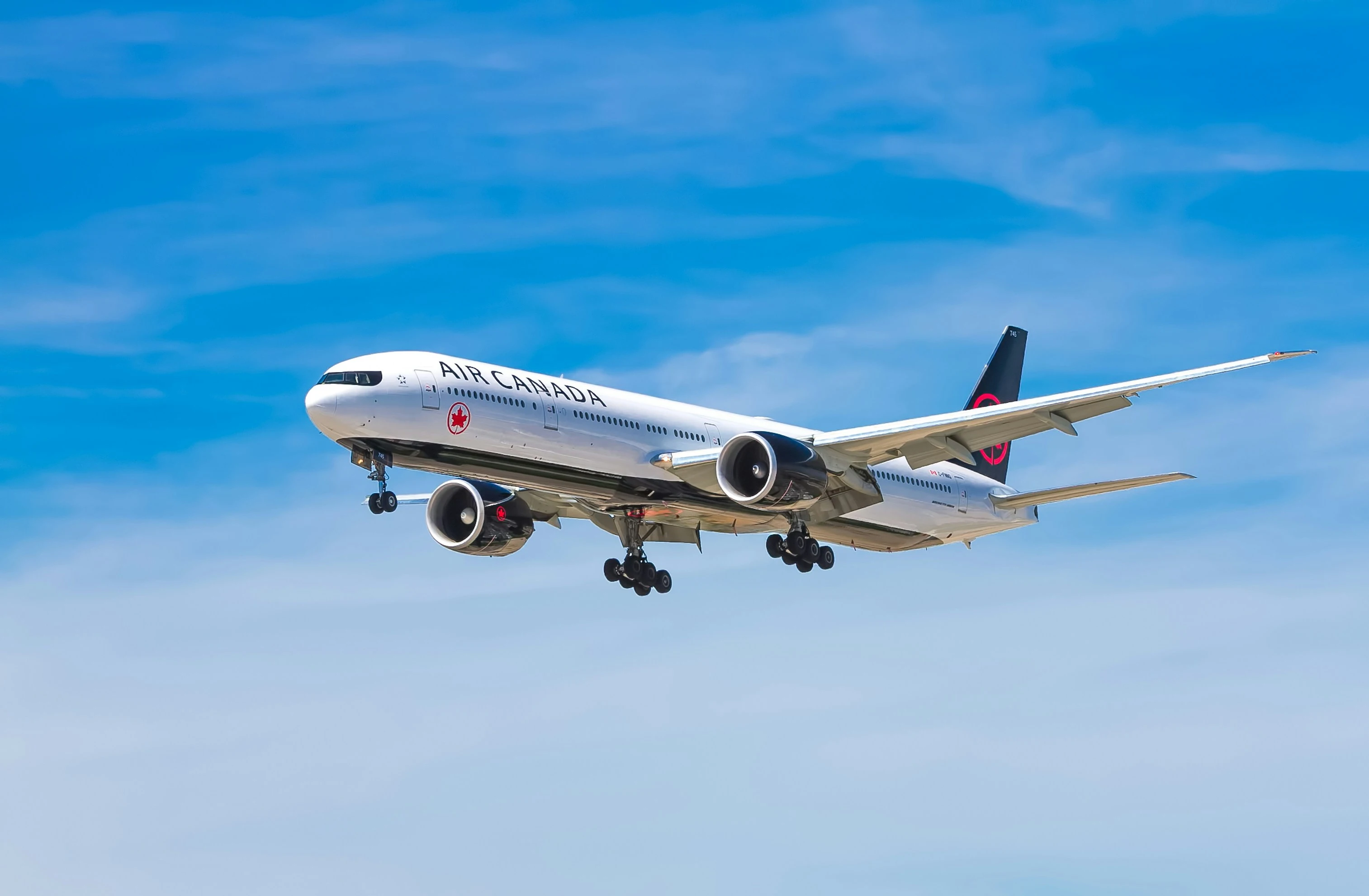
Engines and Qubits: Two Sides of the Same Branding Problem
A Boeing 787 Dreamliner is a marvel. It floats because roughly 2.3 million parts fall into perfect alignment. A quantum computer works only when its processor sits in a fridge chilled to 5 - 10 millikelvin, colder than outer space. Customers understand neither, still they board the jet and buy the compute time.
Complexity hides under glossy shells and fancy marketing pages. Brand is the bridge between that invisible complexity and a traveler's gut instinct. Get the bridge right and you gain pricing power. Get it wrong and you compete on coupons.
The parallel goes deeper.
Both industries operate under brutal regulation, both tolerate zero catastrophic failures, and both face social-media courts that judge instantly. A single cracked turbine blade or a delayed flight can tank sentiment just as quickly as a data breach can bury a start-up. Brands must shoulder that risk. Done well, it acts as an insurance policy - one that pays out in forgiveness and repeat purchase.
The Trust Stack: Key Elements
Trust does not appear in one dramatic moment. It builds layer by layer, like a composite wing. I break it into four simple layers: narrative, design, experience, and proof.
Narrative is the story you plant in a traveler's mind. Design is the visual and verbal system that tattoos the story into memory. Experience is every interaction that confirms the promise - website speed, boarding music, seatback cleanliness. Proof is the hard data, third-party validation, and press coverage that shuts down skeptics.
Deep-tech founders obsess over these layers because venture capital demands it. The lesson holds for airlines. Nail the layers and a delayed drink cart won't kill you. Miss a layer and even perfect on-time performance feels forgettable.
Brand Identity: Story First, Seats Second
OpenAI does not greet you with a wall of parameter counts. They greet you with "Bring ideas to life." That single line frames everything else.
Most airline taglines reduce to "We'll get you there." Of course you will. Every carrier's timetable promises the same. A better story taps into something larger - climate progress, human comfort, or technical mastery.
Take "climate-positive aviation" as an example. It stakes a claim bigger than the ticket. It also invites hard questions, which is good. Answering them with data builds proof. When a traveler can recite your larger mission before they board, you own a slice of their identity. That is impossible to undercut with a 10-dollar fare drop.
Ask yourself one question: if I strip your logo off every surface, can someone still identify the airline in three seconds? If the answer is no, the story is missing.

Visual Identity as Memory Engineering
Design is not decoration. It is neuroscience in action. Palantir's all-black interface signals covert precision. Tesla's minimalist "T" sparks recognition even on a tangled traffic map. These outcomes are deliberate. Choice of color, pace of animation, and even the silence between UI sounds are tuned to forge memory.
Airlines often default to soft sky blues and swoopy tails. Nothing wrong with blue, but if everyone does it, nobody remembers who did it first. Think about Etihad's geometric tail or the matte-black livery Air New Zealand rolled out a few years back. One glance and passengers know exactly who owns that fuselage.
Digital touchpoints deserve the same rigor. Tiny loading animations on your app can convey speed and tech fluency. A purposeful font choice can make a boarding pass look like a precision instrument rather than a grocery receipt. Each visual cue either adds to the trust stack or drains it. Pick the additive cues.
Tech Fluency in Micro-Moments
When I watch an AI demo glide without lag, I trust the code underneath. The same logic applies to your app. If the in-app boarding pass refreshes instantly, customers assume the rest of your operation is just as slick.
Think small but telling gestures. A luggage tracker that shows real-time position relieves anxiety and broadcasts operational mastery. A chatbot that already knows a traveler's loyalty tier feels like a private concierge, not a marketing script. These micro-moments telegraph competence better than any brand film.
Remember, the average U.S. airline NPS swings between roughly 25 and 50. You do not need to become Apple overnight. Raise your score by five points through tighter digital moments and you juice lifetime value more than a million-dollar billboard campaign ever could.

Building a Platform, Not Just a Route Map
Deep-tech winners rarely travel alone. NVIDIA dominates GPUs because researchers build on CUDA. OpenAI now hosts an ecosystem of plugins. The model is simple: become the platform, take a cut, and let partners amplify your reach.
Airlines already have the skeleton of a platform in their loyalty programs. The next step is to open the door wider. Imagine letting any fintech app issue or redeem miles in a week of dev work. Imagine a climate-tech firm integrating your fuel data to help travelers offset in real time. Hackathons with university AI labs could squeeze fuel burn on long-haul flights while generating buzz that money can't buy.
The more partners ride on your rails, the less you spend on acquisition. Partners become your media channel, your R&D lab, and your safety net when a route underperforms. Platform thinking always pays out in cheaper CPAs and fatter CLVs.
Data That Talks Human
A quantum start-up I once advised wanted to open every pitch with qubit coherence times. We flipped it to "simulate molecules that cure disease." Series B closed in six weeks. Same numbers, better story.
Airlines drown in data: load factors, RASM, OTP. Passengers hear static. Translate the numbers. 92% on-time arrivals becomes "Dinner at Grandma's, not gate C19." A 30-percent sustainable fuel blend becomes "Your carbon footprint fell while you watched a movie."
Data gains power when it triggers emotion. It loses power when it sounds like actuarial sludge. Next time you push a metric, wrap it in a plain-language benefit and watch engagement climb.
Crisis Playbook
Deep-tech firms fear failed launches. Airlines fear videos of fistfights in seat 14C. Both must respond before the internet sets the narrative in concrete.
Borrow the start-up playbook. Maintain a living incident log that updates in real time. Put your CEO on Instagram Live within the hour. Build a micro-site that collects every fact you know, updates as you learn more, and answers questions before journalists ask them.
Measure rebound by NPS. If sentiment returns to baseline in 30 days, the firewall held. If it doesn't, you left a hole unpatched. You cannot hide from a crisis. But you can choreograph the response so tightly that the market applauds the transparency.
The Loyalty Flywheel
Deep-tech SaaS companies live on monthly recurring revenue. They obsess over activation, engagement, expansion, and retention. Your loyalty program is a SaaS funnel in disguise. Treat it like one.
Make joining frictionless - ideally one tap and an Apple Wallet pass. Drive engagement with in-app challenges that swap badge cosmetics for real-world seat upgrades. Encourage expansion by granting miles for EV charging or streaming subscriptions. Predict churn and issue surprise perks to frequent travelers before they try your competitor.
Each stage of the funnel links back to brand. You are not handing out points. You are selling identity and status. Tie that identity to a clear story, and your loyalty program turns into an engine that beats any fare sale in raw profitability.
Brand OPS Manual
I have walked into labs where PhDs outnumber marketers ten to one. We still get everyone to rally around a brand because we present it as a tool, not a poster.
Airlines run complex operations manuals for everything from de-icing to evacuation drills. Slide a brand OPS manual beside those checklists. Boil your story into a single mission statement, lock your tone of voice, and supply decision filters so a gate agent in Denver mirrors HQ's intent without a phone call.
When brand guidance sits next to safety protocols, employees treat it with the same respect. Alignment follows. So does consistency, and consistency is the mother of trust.
Making Technology Visible
Boston Dynamics didn't convince the world with white papers. They posted videos of robots dancing to K-pop. Visibility sparks belief.
Your technology hides behind bulkheads and cockpit doors. Bring it into the cabin. Show a live fuel-savings tracker on seatback screens. Add an augmented-reality overlay on window shades that displays route, speed, and carbon impact. Let travelers watch quick-turn maintenance bots through a glass wall at select gates.
When passengers can see, touch, or film your innovation, they become your marketing team. You pay nothing for that exposure, still the reach often outperforms paid media.
Sustainability Without Spin
Deep-tech investors sniff out vaporware. Travelers smell greenwash just as fast. If you claim progress on climate, back it up with numbers visible to anyone, anytime.
Global production of sustainable aviation fuel sits at only 0.3% of total jet-fuel supply. Admit that reality. Then show what you are doing to beat the average - purchase deals, engine retrofits, route optimization. Publish monthly dashboards, not annual PDFs.
Call the hub "Route to Net Zero" and let critics test the math. The more open you are, the more regulators and travelers trust that you mean it.
Strong Brand Velocity and Pricing Power
When we rebranded a quantum hardware firm, its average deal spiked 38% in six months. Same chips, higher perceived value. I describe that lift as brand velocity - the speed at which trust converts to revenue.
Airlines feel brand velocity in yield management. High velocity means passengers pay a premium even on soft routes. Low velocity drags you into price wars at the first sign of market turbulence.
You can throttle velocity upward. Strengthen each layer of the trust stack, sharpen your digital moments, and amplify the loyalty flywheel. You will not see the effect only in marketing dashboards. You will see it in revenue per available seat mile when your competitors slash fares and you hold firm.
Metrics a CFO Cannot Ignore in Aviation Industry
Talk to finance in their language. One additional NPS point can translate into millions in repeat revenue based on your own elasticity curves. A 10-percent swing toward direct bookings saves a fortune in OTA fees. Proving that brand elevation lowers cost of capital is not fantasy either. Green bonds often price tighter for firms with transparent ESG dashboards.
Present brand initiatives as revenue accelerators, cost reducers, or risk mitigators. When you do, budget sign-off becomes a lot less painful.
3 Aviation Branding Errors That Kill Trust
Treating brand as a campaign. Campaigns end. Brand endures. If the budget orbits around seasonal promotions, you will never win sustained preference.
Over-promising technology and under-delivering reality. Travelers will forgive a delay faster than they will forgive an app that crashes when they need it most. Ship stable tech before you shoot cinematic ads.
Siloing ownership. When brand sits only in the marketing wing, operations act with impunity and the story fractures. Put brand in the cockpit, the hangar, and the treasury office. Alignment is non-negotiable.
The Coming Wave of Flight Tech
The next decade will compress the past 50 years of aviation progress into a single sprint. Supersonic prototypes aim for New York to London in three and a half hours. SpaceX toys with orbital point-to-point cargo. AI copilots are inching toward certification.
Each leap ratchets up public anxiety. Your brand must calm fears while stoking wonder. That means transparent human-in-the-loop messaging, immersive pre-flight briefings, and loyalty tiers that reward early adopters without alienating cautious travelers.
Remember, Colossal convinced the world that resurrecting the dodo bird is reasonable science. You can convince travelers that Mach 2 at 60,000 feet is a sensible commute. It all hinges on brand.
Final Words
Deep-tech founders spend fortunes translating complexity into trust. They do it because ideas without belief never scale. Airlines face the same math. Complexity lives in your engines, your crew scheduling software, and your route economics. Brand turns that complexity into instinctive confidence.
By acting decisively now, you establish dominance and reshape traveler perceptions, leaving competitors who delay far behind.
I know which side of that line I want you on. Let's make it happen.
FAQs
How do you measure aviation branding ROI versus performance marketing campaigns?
Measure aviation branding through leading indicators like brand loyalty and target audience preference shifts. Connect these to financial metrics: lower acquisition costs, higher customer lifetime value, and improved direct booking ratios. These prove investing in brand delivers long-term value beyond short-term campaigns.
How can aviation companies gain leadership buy-in for brand strategy investments?
Frame aviation branding as business strategy. Show finance how strong brand identity creates pricing power and reduces marketing budget waste. Demonstrate to operations how consistency streamlines service protocols and improves customer experience, reducing complaints and operational disruptions at airports.
What key elements of aviation branding differentiate airlines beyond logo and color palette?
Focus on sensory brand identity beyond logo and color palette: signature cabin scents, boarding music, crew uniforms, and consistent voice across touchpoints. These key elements create emotional connections and differentiate your aviation company from competitors more powerfully than visual identity alone.
How does aviation branding strengthen customer loyalty programs and increase profitability?
Aviation branding transforms loyalty programs from transactions into aspirational communities. By weaving brand mission and values into tier benefits and exclusive experiences, you create emotional connections with loyal customers. This drives higher ancillary sales, repeat business, and member lifetime value.
What role does brand identity play when aviation companies face operational crises?
Your aviation brand acts as a trust reservoir during crises. A swift, transparent response aligned with established brand values and mission stabilizes customer sentiment and controls the narrative. This protects loyal customers and prevents drops in brand loyalty when operational failures or safety issues arise.
Which digital touchpoints maximize aviation branding impact with limited marketing budget?
Prioritize your website and mobile app over social media accounts. Focus on booking process and flight-day features like real-time tracking. These high-stress moments let seamless digital experiences reinforce your reliability promise, boosting customer loyalty and driving direct bookings for business growth.
How can airlines communicate sustainability authentically through aviation branding?
Embrace transparency in your marketing strategy. Acknowledge aviation industry sustainability challenges, then showcase specific, verifiable actions through branding: fleet modernization, green fuel innovation, route optimization. Prove tangible progress to position your airline as a trusted leader.
Why is employee engagement crucial for successful aviation branding execution?
Your team is your most critical brand touchpoint. When pilots, crew, and airport staff understand and embody brand mission and values, they deliver consistent, authentic service. This internal alignment creates successful aviation branding by turning employees into powerful advocates at every customer interaction.
How can aviation companies execute a digital rebrand despite legacy IT system constraints?
Focus on agile front-end experience layers that sit atop legacy systems. Using modern APIs, you can rebrand customer-facing interfaces like your website and mobile app without complete backend overhauls. This process delivers immediate improvements to digital brand identity while positioning your business for future growth.
Your Creative Partner for Innovation That Matters
From advanced tech to transformative healthcare, Fello helps visionary teams shape perception, launch products, and lead industries.


Let’s keep in touch.
Discover more about high-performance web design. Follow us on Linkedin and Instagram.